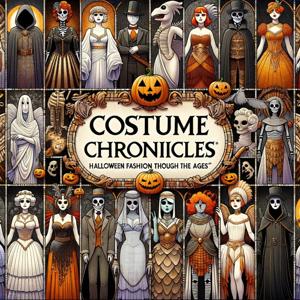
As the autumn winds whisper tales of ghosts and goblins, and jack-o'-lanterns flicker to life on porches across the land, we find ourselves once again on the cusp of Halloween. This beloved holiday has captivated imaginations for centuries, and at its heart lies the art of transformation through costume. From its ancient Celtic roots to the modern-day extravaganza of creativity and commerce, Halloween fashion has undergone a fascinating evolution that mirrors the changing face of society itself.
Our journey begins in the mists of time, with the Celtic festival of Samhain. On this night, when the veil between the worlds of the living and the dead was believed to be at its thinnest, people donned animal skins and heads to disguise themselves from wandering spirits. These early costumes were not meant for fun or frivolity, but as a means of protection against supernatural forces.
As Christianity spread across Europe, the pagan festival of Samhain merged with the Christian observances of All Saints' Day and All Souls' Day. The practice of disguising oneself continued, but took on new forms. People began to dress as saints, angels, and demons, blending religious iconography with folkloric traditions. This period saw the emergence of the "souling" custom, where poor folk would go door-to-door on Hallowmas (November 1), offering prayers for the dead in exchange for food. Many would dress in simple costumes, often just rags or old clothes, to play the part of the souls they were praying for.
The tradition of dressing up and going door-to-door eventually evolved into "guising" in Scotland and Ireland. Young people would dress in costume and perform songs, poems, or jokes in exchange for food or money. This practice laid the groundwork for what would eventually become modern trick-or-treating.
As European colonists brought their traditions to the New World, Halloween customs began to take root in America. However, it wasn't until the massive wave of Irish immigration in the 19th century that Halloween truly began to flourish in the United States. The holiday's popularity grew, and with it, the complexity and variety of costumes.
The late 19th and early 20th centuries saw a shift towards more whimsical and fantastic costumes. Witches, ghosts, and goblins became popular choices, reflecting the holiday's associations with the supernatural. Homemade costumes were the norm, often crafted from whatever materials were at hand. Paper masks, bed sheets for ghosts, and creative use of everyday clothing allowed people to transform themselves into an array of characters.
The 1920s and 1930s marked a turning point in Halloween fashion. The rise of mass production techniques meant that commercially produced costumes became increasingly available and affordable. Companies like Ben Cooper, Inc. began manufacturing boxed costume sets, complete with plastic masks and printed fabric outfits. These costumes often featured popular characters from comics, radio shows, and
This content was created in partnership and with the help of Artificial Intelligence AI.