
Sign up to save your podcasts
Or

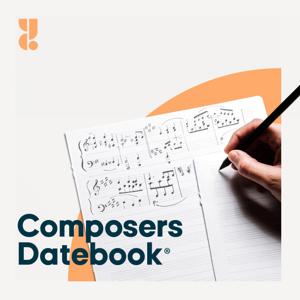

We’re cranking up the Datebook time machine today to take you back to a charity concert that took place in Hamburg on today’s date in 1786. The concert was organized and conducted by 72-year-old composer Carl Philipp Emanuel Bach, who had been producing new sacred music in Hamburg for many years.
But instead of new works, for the charity concert C.P.E. Bach programmed some music that in 1786 was almost 40 years old: he opened with the Credo from his father J.S. Bach’s Mass in B minor, followed by two excerpts from Handel's Messiah, namely the Hallelujah Chorus and I Know that My Redeemer Liveth, both sung in German, and then his own setting of the Latin Magnificat, a work he had composed back in 1749 when his father was still alive.
C.P.E. Bach’s Magnificat is not heard as often as J.S. Bach’s more famous setting, which is a shame, since, like his father’s Magnificat, C.P.E.’s is a festive, exciting piece of sacred music with trumpets and drums and tuneful vocal solos, along with great choral writing — and we suspect papa J.S. Bach would have nodded with approval that his son’s version concluded with a well-constructed choral fugue.
C.P.E. Bach (1714-1788): Sicut Erat In Principio, from Magnificat; RIAS Kammerchor & Akademie für Alte Musik Berlin, Hans-Christoph Rademann; Harmonia Mundi 902167
 View all episodes
 By American Public Media

4.7
176176 ratings
We’re cranking up the Datebook time machine today to take you back to a charity concert that took place in Hamburg on today’s date in 1786. The concert was organized and conducted by 72-year-old composer Carl Philipp Emanuel Bach, who had been producing new sacred music in Hamburg for many years.
But instead of new works, for the charity concert C.P.E. Bach programmed some music that in 1786 was almost 40 years old: he opened with the Credo from his father J.S. Bach’s Mass in B minor, followed by two excerpts from Handel's Messiah, namely the Hallelujah Chorus and I Know that My Redeemer Liveth, both sung in German, and then his own setting of the Latin Magnificat, a work he had composed back in 1749 when his father was still alive.
C.P.E. Bach’s Magnificat is not heard as often as J.S. Bach’s more famous setting, which is a shame, since, like his father’s Magnificat, C.P.E.’s is a festive, exciting piece of sacred music with trumpets and drums and tuneful vocal solos, along with great choral writing — and we suspect papa J.S. Bach would have nodded with approval that his son’s version concluded with a well-constructed choral fugue.
C.P.E. Bach (1714-1788): Sicut Erat In Principio, from Magnificat; RIAS Kammerchor & Akademie für Alte Musik Berlin, Hans-Christoph Rademann; Harmonia Mundi 902167

6,774 Listeners

38,890 Listeners

8,772 Listeners

9,216 Listeners

5,777 Listeners

928 Listeners

1,388 Listeners

1,287 Listeners

3,156 Listeners

1,975 Listeners

523 Listeners
183 Listeners

13,770 Listeners

3,082 Listeners

248 Listeners

28,116 Listeners

430 Listeners

5,467 Listeners
2,196 Listeners

14,146 Listeners

6,417 Listeners
2,513 Listeners

4,840 Listeners

575 Listeners

243 Listeners