CRAFTSTEADING - Use Plants to Make Anything

CRAFTSTEADING - Use Plants to Make Anything

By Sally GardensLeisureCrafts
Download on the App Store

CRAFTSTEADING - Use Plants to Make Anything episodes

  • 6. DYE PLANTS: Grow dye plants in your own garden, to dye textiles in a rainbow of beautiful natural colours.
    Cornerstone dye plants
    Throughout history the plants that produce the best dyes include indigo, madder, woad, weld, turmeric, saffron, noni, and henna. I’m growing many of these cornerstone dye plants in my garden, and depending on your climate, you might be able to grow them too. 
    I'll tell you about these wonderful dye plants and some of the dyeing basics you need to know.
    Non-cornerstone dye plants
    A huge range of other plants, not usually considered dye plants, contain substances that impart colour to textiles. Some work better than others. Your colour results will be best if you use white or unbleached natural material such as cotton, linen, or wool. The colours you’ll end up with will vary greatly depending on such variables as the plants used, the time the fabric spends in the dye bath, the mordant you use and whether you do more than one dip. 
    I'll give you a list of colours, along with the plants that can produce those colours for you to use in your home made dye bath.
    See our photos on Instagram at Mill Cottage, the Little House on the Peninsula
    Watch our videos on YouTube at Craftsteading
    Visit our website at www.craftsteading.com

    17 min
  • 5. LAVENDER - Learn more about one of the world's favourite plants. It's fragrant, edible, medicinal and can be used in many ways you might not have thought of!
    In this episode I speak to gardening expert Kurt, of Berryman Gardens, about lavender. 
    Sweet-scented lavender (Lavandula angustifolia), also called English Lavender or True Lavender, is one of the world's most beloved plants. IN your garden, it attracts bees and other beneficial insects. It also makes a lovely hedge. The leaves, petals and  flowering tips can be eaten raw, used (in small quantities, because the flavour is strong) as a condiment in salads, soups, and stews. You can make a fragrant tea from the fresh or dried flowers, and add the fresh flowers to jams,  ice-creams, or vinegars as a flavouring. Some people crystallize lavender flowers to use as a delicious and beautiful purple cake topping. Essential lavender oil is often used as a food flavouring.
    Lavender has been shown to have a soothing and relaxing affect upon the nervous system, and it is often used in aromatherapy. You can use lavender oil on your skin as an antiseptic to help heal wounds and burns, or pour it into your bathwater for a calming bath. Its powerful antiseptic properties are said to be able to destroy many common bacteria such as typhoid, diphtheria, streptococcus and pneumococcus. 
    The sweet-smelling essential oil extracted from the flowers has a wide  range of uses in the home and commercially. 
    It is used for soap-making, perfume-making, (it's one of the ingredients in 'Eau de Cologne'), as an ingredient in detergents and cleaning products, a food flavouring and as an insect repellent in linen cupboards and wardrobes. The aromatic leaves and flowers are added to pot-pourri. You can add lavender leaves to your bathwater for a soothing bath. 
    After you've dried and stripped off the flower-heads you're left with the bare stems, but even these are useful. You can tie them in small bundles and burn them as  incense sticks.
    See our photos on Instagram at Mill Cottage, the Little House on the Peninsula
    Watch our videos on YouTube at Craftsteading
    Visit our website at www.craftsteading.com
    7 min
  • 4. NATURAL DYES The three sources of natural dyes, the accidental discovery of manufactured dyes, and the strange stories of Carmine and Tyrian Purple.
    Beautiful dyes have been obtained from plants throughout human history. You can grow your own dye plants or use a wide range of other plants as a source of dye.
    Archaeologists have found evidence of textile dyeing dating back to the Neolithic period. In China, dyeing with plants, barks and insects has been traced back more than 5,000 years.
    Natural dyes are derived from three sources. These are plants, invertebrate animals such as beetles or shellfish, or minerals such as ochre, malachite and cinnabar. The majority of natural dyes are vegetable dyes from plant sources—roots, berries, bark, leaves, and wood—and other biological sources such as fungi.
    This episode's topics include the three sources of natural dyes, the accidental discovery of manufactured dyes, and the strange but true stories of Carmine and Tyrian Purple. 
    See our photos on Instagram at Mill Cottage, the Little House on the Peninsula
    Watch our videos on YouTube at Craftsteading
    Visit our website at www.craftsteading.com
    19 min
  • 3. BOTANICAL JEWELLERY: The traditional craft of making necklaces, bracelets etc. out of seeds and other plant materials.
    For as long as human beings have walked the earth people have decorated themselves with jewellery. The earliest was made from natural materials such as shells, bamboo, bone, tusks, claws, teeth, wood, coral, gemstones, pearls, the fossilized resin we call amber, and seeds. I’ll explain how to  make your own botanical jewellery, and even how to grow your own beads!
    The Craftsteading podcast Is hosted by Sally Gardens and produced at Mill Cottage, the Little House on the Peninsula. 
    See crafty pictures on Instagram at Mill Cottage, the Little House on the Peninsula
    Watch our amazing videos on YouTube at Craftsteading
    Visit our website at www.craftsteading.com

    21 min
  • 2. CORDAGE: how to make string, twine and rope out of natural plant fibres growing in your garden.
    Plants for cordage 
    You can make useful string and twine and rope out of plant fibres.  
    The term cordage encompasses everything from fine string to cords to thicker ropes. All of these things begin with strands of fibre twisted or braided together in a way that gives them strength and length. You can start by making thin string, then twist lengths of this string together to make cord, then twist lengths of the cord together to make rope.  
    You’d be surprised how many plants have leaves or stems that contain fibres tough and long enough to be turned into useful cordage - plants that grow in your garden or in the wild, or weeds that grow by the roadside. You can grow your own fibre plants or forage for them. 
     You’ll never run out of cordage again!  
    See crafty pictures on Instagram at Mill Cottage, the Little House on the Peninsula
    Watch our amazing videos on YouTube at Craftsteading
    Visit our website at www.craftsteading.com

    9 min
  • 1. GOURDS: growing, drying, carving, cutting and decorating gourds to make useful containers and more.
    Grow your own gourds and use them to make and decorate handy household containers, bowls, bird houses, soup ladles, dippers, scoops, musical instruments, table décor or even tiny earrings.  
    A gourd is the hard-shelled fruit of any of various plants, in the botanical family Cucurbitaceae. 
    If you want to grow your own gourds you can buy seeds online. They grow well in climates from warm temperate to sub-tropical to tropical. So you can grow them pretty much all over Australia as long as you plant the seeds after frost danger has passed. They are suited to cultivation in USDA Hardiness Zones 2 to 11. If you’re in the UK you might have to grow them in a hothouse. 
    All they need to grow is soil, water and sunlight (and plenty of space). The plants grow as vines, so you can either let them crawl along the ground our train them to climb supportive frames. They look greatl climbing on garden archways or tepees, or a fence or trellis.
    See crafty pictures on Instagram at Mill Cottage, the Little House on the Peninsula
    Watch our amazing videos on YouTube at Craftsteading
    Visit our website at www.craftsteading.com
    7 min
  • CRAFTSTEADING INTRO
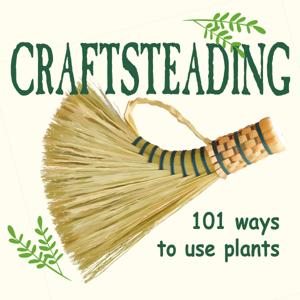
    101 ways to save money, get happy, relax and find your creativity by making stuff out of plants you grow, forage or buy. And even monetise your hobbies! Craftsteading is about self-sufficiency and handcrafts and gardening.It’s about prepping for the apocalypse or relaxing with therapeutic mindful handcrafts.Are you looking for something engrossing to take your mind off daily worries? Would you like to learn a relaxing but exciting new skill or craft? Ever wished you could find out how to thriftily make useful and beautiful things to share with your friends and family?Grow your own brooms, baskets, jewellery, containers or whatever you need. You won’t need to buy them from shops any more!There are so many happiness-inducing craft projects that start with planting a seed. For example, I’ll explain the way I’ve made containers from gourds, jewellery from seeds called Job’s tears, baskets from cattail bulrushes and brooms from sorghum. All home grown. And if you’re not into gardening , no stress, you can buy supplies from craft stores or online. 
    See crafty pictures on Instagram at Mill Cottage, the Little House on the Peninsula
    Watch our amazing videos on YouTube at Craftsteading
    Visit our website at www.craftsteading.com
    ~Thanks to Nat Keefe & Hot Buttered Rum for "Slow Rabbit", our theme tune!~
    3 min

About CRAFTSTEADING - Use Plants to Make Anything

From the publisher's feed

Save money, get happy, and expand your creativity by making stuff out of plants you grow, forage or buy. And even monetize your hobbies! Craftsteading is about self-sufficiency and traditional skills. It’s about prepping for survival or enjoying calming handicrafts.