
Sign up to save your podcasts
Or



Welcome! and Happy St. Patricks Day!
Hey everyone please go out and support your local businesses today by ordering St. Patrick Day meals. Many were completely stocked for large crowds for this holiday and have terrific specials on these meals for take-out or delivery.
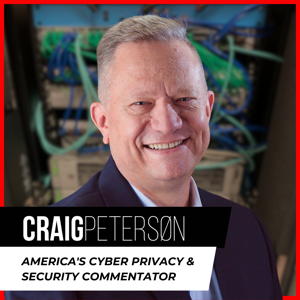
Good morning, everybody. I was on with Jim Polito who was sitting in his kitchen under self-quarantine because he recently traveled overseas. We discussed some of the ways people can make this new remote work, work for them and keep their employer safe. So, here we go with Jim Polito.
For more tech tips, news, and updates visit - CraigPeterson.com
---
Automated Machine Generated Transcript:
Craig
And you take a 10-minute break, and then you sit down again, set yourself another 20-minute goal, and get it done. It is amazingly effective. And I want people to think of social media a little bit differently when you're working from home. That 10-minute break. You could go on social media because that might be the only way you have contact with another person. There are some of my top tips
Craig
There are some of my top tips with Mr. Jim Polito this morning. You notice none of them had to do with security because I think the most significant issues people have when working from home, typically are the mental issues. So that's kind of what I went over with Jim this morning. If you want to attend one of my webinars, these free webinars I'm doing all week this week, probably into next week as well. Make sure you sign up go to Craig Peterson comm slash subscribe. By the way, Jim is just back From Italy in self-quarantine in his kitchen, it yeah, it Yeah, I don't want you to think about that too much. Okay, here we go.
Unknown Speaker 1:12
Joining us now is our good friend and tech chalk guru, Craig Peterson. Good morning, sir.
Unknown Speaker 1:19
Hey, good morning, Jim. Yeah, I've been doing this work-at-home thing now for well over 20 years, and my wife and I have learned a lot of lessons. I've learned a lot of lessons about productivity and tools. And, of course, you mentioned the security side of it, which is a big deal. And so what I started doing this week is I started on Sunday, I held a kind of free for all webinar where I invited people to, and we spent a couple of hours together. In fact, in this webinar, we talked about people's situations. What the issues were. I'm going to be doing it again today. I think what I'm going to try and do is something at about three o'clock this afternoon, and then probably at about seven o'clock this evening, and I'll do it two or three more times this week, just going over what tools can help them. One of the tricks I've learned over the years? What do you need to worry about from a security standpoint? You know, when should you be using that laptop? When should you remote to a desktop at work? Why is the remote desktop one of the most prominent security exploits known to man? And how can you work around that? So obviously, Jim, as usual, this is just all for free. I'm not trying to, you know, beat you down and sell you something. If you want my services, that's fine. I'm even offering 15-minute calls with anybody that needs some tech support to help them try and figure stuff out, and all of that you can get Just go to my website that Craig Peterson dot com make sure you sign up there. It's on the homepage and every page. If you scroll down a little bit, you'll see a pop up at the top of the screen and just put your name and email address in there. As Jim's always telling everybody, I'm not one to spam you. But I do want to keep you guys informed. I am offering this for free. I have courses that you can buy that go into more depth, but I do take time to answer everyone's question during these webinars. I got a lot of great, positive feedback.
Jim
We're talking with Craig Peterson, our tech talk guru. Now, Craig, what's probably the most important thing people should do while working from home. Now I know our company has set up, what are these VPNs and all this stuff? What's the most important thing people should do?
Craig
Well, also, as part of the webinar, I went into some details about why VPNs' can make it worse for you and your security for your business. So don't think that a VPN is a panacea. All those paid VPN Services that you hear advertised on the radio are not going to help you get into the office. They're designed to provide a little bit of security. But, in a more direct answer to your question, what's the most important thing? I think personally, with over 20 years of experience doing this, that it has to do with separation. So President Trump is right. You have to separate yourself from your usual living area if you can. All separating has to mean is something that's going to give you that psychological hint. That's going to help with your subconscious too. Okay, I'm sitting in this chair facing this direction in this part of the room. That helps a lot to train your body as to what you should be doing. Then you also need to get a whip and, and use that lightly on any family members that decide to walk-in because now look at mom and dad are home now so I can just walk in anytime and ask any question, right? In the honey-do list, I'm going both ways. So make sure they understand, hey, I'm working to leave me alone. Here's another thing that I found to be extremely helpful when working from home. And that is to use a technique that came from Italy. It's called the Pomodoro Technique. You might want to look that up that's Italian, very poorly pronounced on my part.
Jim
Italian for Tomato, and tomatoes are the best.
Craig
Yeah, exactly. Think about you and I, were younger, our moms had these kitchen timers shaped like tomatoes, or maybe you had an egg one. You twist the top of it, and it was a 30-minute timer. The Pomodoro technique is simple enough, and you set yourself a 15-minute or 20-minute goal. 20 -minute seems to be optimal, at least for me. Okay, I'm going to do this particular piece of research to get this part done, right. It's something you can do in 20 minutes. You set that timer and let it run for 20 minutes. When it goes off, the task over whether or not it is done. You finished that work for this time period. You can extend a little bit if you'd like to, but no more than about 10 minutes, get up and walk around. It is time to go and get your glass of water, to go and chat with the spouse or kids, whatever it might be. You take a 10-minute break, and then you set down again, set yourself another 20-minute goal, and get it done. It is amazingly effective. I want people to think of social media a little bit differently when you're working from home. That 10- minute break. You could go on social media because that might be the only way you have contact with another person if you're at home working alone. It's not necessarily an evil thing. Just make sure you don't get sucked into it. They design social media to be sticky and to keep you around. So those are the big ones. Also, again, if you're on my email list, just go to Craig Peterson dot com and sign up. I'll be going through the more technical side of working at home. What you can do, what you shouldn't do, to make working at home, work for you without creating problems not just for you, but security problems to the business's network.
Jim
All right, Craig, this is great. I know we wanted to touch on the coronavirus, not the virus itself, but I know included in the information you'll be sending to people. So you add my name to this number,
Craig
855 385 5553. I'll be sending out a text to everybody on and texts today as well. Just text Jim to 855 385 5553
Jim
Standard data and tax rates apply. As you know, Craig Peterson will always take care of you. He is a calm and reassuring voice and presence in all the chaos. Craig, Thank you so much. Well, Catch you next week.
Craig
Take care. Bye-bye.
Jim
All righty. Okay when we return
Transcribed by https://otter.ai
---
More stories and tech updates at:
www.craigpeterson.com
Don't miss an episode from Craig. Subscribe and give us a rating:
www.craigpeterson.com/itunes
Follow me on Twitter for the latest in tech at:
www.twitter.com/craigpeterson
For questions, call or text:
855-385-5553
Welcome! and Happy St. Patricks Day!
Hey everyone please go out and support your local businesses today by ordering St. Patrick Day meals. Many were completely stocked for large crowds for this holiday and have terrific specials on these meals for take-out or delivery.
Good morning, everybody. I was on with Jim Polito who was sitting in his kitchen under self-quarantine because he recently traveled overseas. We discussed some of the ways people can make this new remote work, work for them and keep their employer safe. So, here we go with Jim Polito.
For more tech tips, news, and updates visit - CraigPeterson.com
---
Automated Machine Generated Transcript:
Craig
And you take a 10-minute break, and then you sit down again, set yourself another 20-minute goal, and get it done. It is amazingly effective. And I want people to think of social media a little bit differently when you're working from home. That 10-minute break. You could go on social media because that might be the only way you have contact with another person. There are some of my top tips
Craig
There are some of my top tips with Mr. Jim Polito this morning. You notice none of them had to do with security because I think the most significant issues people have when working from home, typically are the mental issues. So that's kind of what I went over with Jim this morning. If you want to attend one of my webinars, these free webinars I'm doing all week this week, probably into next week as well. Make sure you sign up go to Craig Peterson comm slash subscribe. By the way, Jim is just back From Italy in self-quarantine in his kitchen, it yeah, it Yeah, I don't want you to think about that too much. Okay, here we go.
Unknown Speaker 1:12
Joining us now is our good friend and tech chalk guru, Craig Peterson. Good morning, sir.
Unknown Speaker 1:19
Hey, good morning, Jim. Yeah, I've been doing this work-at-home thing now for well over 20 years, and my wife and I have learned a lot of lessons. I've learned a lot of lessons about productivity and tools. And, of course, you mentioned the security side of it, which is a big deal. And so what I started doing this week is I started on Sunday, I held a kind of free for all webinar where I invited people to, and we spent a couple of hours together. In fact, in this webinar, we talked about people's situations. What the issues were. I'm going to be doing it again today. I think what I'm going to try and do is something at about three o'clock this afternoon, and then probably at about seven o'clock this evening, and I'll do it two or three more times this week, just going over what tools can help them. One of the tricks I've learned over the years? What do you need to worry about from a security standpoint? You know, when should you be using that laptop? When should you remote to a desktop at work? Why is the remote desktop one of the most prominent security exploits known to man? And how can you work around that? So obviously, Jim, as usual, this is just all for free. I'm not trying to, you know, beat you down and sell you something. If you want my services, that's fine. I'm even offering 15-minute calls with anybody that needs some tech support to help them try and figure stuff out, and all of that you can get Just go to my website that Craig Peterson dot com make sure you sign up there. It's on the homepage and every page. If you scroll down a little bit, you'll see a pop up at the top of the screen and just put your name and email address in there. As Jim's always telling everybody, I'm not one to spam you. But I do want to keep you guys informed. I am offering this for free. I have courses that you can buy that go into more depth, but I do take time to answer everyone's question during these webinars. I got a lot of great, positive feedback.
Jim
We're talking with Craig Peterson, our tech talk guru. Now, Craig, what's probably the most important thing people should do while working from home. Now I know our company has set up, what are these VPNs and all this stuff? What's the most important thing people should do?
Craig
Well, also, as part of the webinar, I went into some details about why VPNs' can make it worse for you and your security for your business. So don't think that a VPN is a panacea. All those paid VPN Services that you hear advertised on the radio are not going to help you get into the office. They're designed to provide a little bit of security. But, in a more direct answer to your question, what's the most important thing? I think personally, with over 20 years of experience doing this, that it has to do with separation. So President Trump is right. You have to separate yourself from your usual living area if you can. All separating has to mean is something that's going to give you that psychological hint. That's going to help with your subconscious too. Okay, I'm sitting in this chair facing this direction in this part of the room. That helps a lot to train your body as to what you should be doing. Then you also need to get a whip and, and use that lightly on any family members that decide to walk-in because now look at mom and dad are home now so I can just walk in anytime and ask any question, right? In the honey-do list, I'm going both ways. So make sure they understand, hey, I'm working to leave me alone. Here's another thing that I found to be extremely helpful when working from home. And that is to use a technique that came from Italy. It's called the Pomodoro Technique. You might want to look that up that's Italian, very poorly pronounced on my part.
Jim
Italian for Tomato, and tomatoes are the best.
Craig
Yeah, exactly. Think about you and I, were younger, our moms had these kitchen timers shaped like tomatoes, or maybe you had an egg one. You twist the top of it, and it was a 30-minute timer. The Pomodoro technique is simple enough, and you set yourself a 15-minute or 20-minute goal. 20 -minute seems to be optimal, at least for me. Okay, I'm going to do this particular piece of research to get this part done, right. It's something you can do in 20 minutes. You set that timer and let it run for 20 minutes. When it goes off, the task over whether or not it is done. You finished that work for this time period. You can extend a little bit if you'd like to, but no more than about 10 minutes, get up and walk around. It is time to go and get your glass of water, to go and chat with the spouse or kids, whatever it might be. You take a 10-minute break, and then you set down again, set yourself another 20-minute goal, and get it done. It is amazingly effective. I want people to think of social media a little bit differently when you're working from home. That 10- minute break. You could go on social media because that might be the only way you have contact with another person if you're at home working alone. It's not necessarily an evil thing. Just make sure you don't get sucked into it. They design social media to be sticky and to keep you around. So those are the big ones. Also, again, if you're on my email list, just go to Craig Peterson dot com and sign up. I'll be going through the more technical side of working at home. What you can do, what you shouldn't do, to make working at home, work for you without creating problems not just for you, but security problems to the business's network.
Jim
All right, Craig, this is great. I know we wanted to touch on the coronavirus, not the virus itself, but I know included in the information you'll be sending to people. So you add my name to this number,
Craig
855 385 5553. I'll be sending out a text to everybody on and texts today as well. Just text Jim to 855 385 5553
Jim
Standard data and tax rates apply. As you know, Craig Peterson will always take care of you. He is a calm and reassuring voice and presence in all the chaos. Craig, Thank you so much. Well, Catch you next week.
Craig
Take care. Bye-bye.
Jim
All righty. Okay when we return
Transcribed by https://otter.ai
---
More stories and tech updates at:
www.craigpeterson.com
Don't miss an episode from Craig. Subscribe and give us a rating:
www.craigpeterson.com/itunes
Follow me on Twitter for the latest in tech at:
www.twitter.com/craigpeterson
For questions, call or text:
855-385-5553
Welcome! and Happy St. Patricks Day!
Hey everyone please go out and support your local businesses today by ordering St. Patrick Day meals. Many were completely stocked for large crowds for this holiday and have terrific specials on these meals for take-out or delivery.
Good morning, everybody. I was on with Jim Polito who was sitting in his kitchen under self-quarantine because he recently traveled overseas. We discussed some of the ways people can make this new remote work, work for them and keep their employer safe. So, here we go with Jim Polito.
For more tech tips, news, and updates visit - CraigPeterson.com
---
Automated Machine Generated Transcript:
Craig And you take a 10-minute break, and then you sit down again, set yourself another 20-minute goal, and get it done. It is amazingly effective. And I want people to think of social media a little bit differently when you're working from home. That 10-minute break. You could go on social media because that might be the only way you have contact with another person. There are some of my top tips
Craig There are some of my top tips with Mr. Jim Polito this morning. You notice none of them had to do with security because I think the most significant issues people have when working from home, typically are the mental issues. So that's kind of what I went over with Jim this morning. If you want to attend one of my webinars, these free webinars I'm doing all week this week, probably into next week as well. Make sure you sign up go to Craig Peterson comm slash subscribe. By the way, Jim is just back From Italy in self-quarantine in his kitchen, it yeah, it Yeah, I don't want you to think about that too much. Okay, here we go.
Unknown Speaker 1:12 Joining us now is our good friend and tech chalk guru, Craig Peterson. Good morning, sir.
Unknown Speaker 1:19 Hey, good morning, Jim. Yeah, I've been doing this work-at-home thing now for well over 20 years, and my wife and I have learned a lot of lessons. I've learned a lot of lessons about productivity and tools. And, of course, you mentioned the security side of it, which is a big deal. And so what I started doing this week is I started on Sunday, I held a kind of free for all webinar where I invited people to, and we spent a couple of hours together. In fact, in this webinar, we talked about people's situations. What the issues were. I'm going to be doing it again today. I think what I'm going to try and do is something at about three o'clock this afternoon, and then probably at about seven o'clock this evening, and I'll do it two or three more times this week, just going over what tools can help them. One of the tricks I've learned over the years? What do you need to worry about from a security standpoint? You know, when should you be using that laptop? When should you remote to a desktop at work? Why is the remote desktop one of the most prominent security exploits known to man? And how can you work around that? So obviously, Jim, as usual, this is just all for free. I'm not trying to, you know, beat you down and sell you something. If you want my services, that's fine. I'm even offering 15-minute calls with anybody that needs some tech support to help them try and figure stuff out, and all of that you can get Just go to my website that Craig Peterson dot com make sure you sign up there. It's on the homepage and every page. If you scroll down a little bit, you'll see a pop up at the top of the screen and just put your name and email address in there. As Jim's always telling everybody, I'm not one to spam you. But I do want to keep you guys informed. I am offering this for free. I have courses that you can buy that go into more depth, but I do take time to answer everyone's question during these webinars. I got a lot of great, positive feedback.
Jim We're talking with Craig Peterson, our tech talk guru. Now, Craig, what's probably the most important thing people should do while working from home. Now I know our company has set up, what are these VPNs and all this stuff? What's the most important thing people should do?
Craig Well, also, as part of the webinar, I went into some details about why VPNs' can make it worse for you and your security for your business. So don't think that a VPN is a panacea. All those paid VPN Services that you hear advertised on the radio are not going to help you get into the office. They're designed to provide a little bit of security. But, in a more direct answer to your question, what's the most important thing? I think personally, with over 20 years of experience doing this, that it has to do with separation. So President Trump is right. You have to separate yourself from your usual living area if you can. All separating has to mean is something that's going to give you that psychological hint. That's going to help with your subconscious too. Okay, I'm sitting in this chair facing this direction in this part of the room. That helps a lot to train your body as to what you should be doing. Then you also need to get a whip and, and use that lightly on any family members that decide to walk-in because now look at mom and dad are home now so I can just walk in anytime and ask any question, right? In the honey-do list, I'm going both ways. So make sure they understand, hey, I'm working to leave me alone. Here's another thing that I found to be extremely helpful when working from home. And that is to use a technique that came from Italy. It's called the Pomodoro Technique. You might want to look that up that's Italian, very poorly pronounced on my part.
Jim Italian for Tomato, and tomatoes are the best.
Craig Yeah, exactly. Think about you and I, were younger, our moms had these kitchen timers shaped like tomatoes, or maybe you had an egg one. You twist the top of it, and it was a 30-minute timer. The Pomodoro technique is simple enough, and you set yourself a 15-minute or 20-minute goal. 20 -minute seems to be optimal, at least for me. Okay, I'm going to do this particular piece of research to get this part done, right. It's something you can do in 20 minutes. You set that timer and let it run for 20 minutes. When it goes off, the task over whether or not it is done. You finished that work for this time period. You can extend a little bit if you'd like to, but no more than about 10 minutes, get up and walk around. It is time to go and get your glass of water, to go and chat with the spouse or kids, whatever it might be. You take a 10-minute break, and then you set down again, set yourself another 20-minute goal, and get it done. It is amazingly effective. I want people to think of social media a little bit differently when you're working from home. That 10- minute break. You could go on social media because that might be the only way you have contact with another person if you're at home working alone. It's not necessarily an evil thing. Just make sure you don't get sucked into it. They design social media to be sticky and to keep you around. So those are the big ones. Also, again, if you're on my email list, just go to Craig Peterson dot com and sign up. I'll be going through the more technical side of working at home. What you can do, what you shouldn't do, to make working at home, work for you without creating problems not just for you, but security problems to the business's network.
Jim All right, Craig, this is great. I know we wanted to touch on the coronavirus, not the virus itself, but I know included in the information you'll be sending to people. So you add my name to this number,
Craig 855 385 5553. I'll be sending out a text to everybody on and texts today as well. Just text Jim to 855 385 5553
Jim Standard data and tax rates apply. As you know, Craig Peterson will always take care of you. He is a calm and reassuring voice and presence in all the chaos. Craig, Thank you so much. Well, Catch you next week.
Craig Take care. Bye-bye.
Jim All righty. Okay when we return
Transcribed by https://otter.ai
---
More stories and tech updates at:
www.craigpeterson.com
Don't miss an episode from Craig. Subscribe and give us a rating:
www.craigpeterson.com/itunes
Follow me on Twitter for the latest in tech at:
www.twitter.com/craigpeterson
For questions, call or text:
855-385-5553
Welcome!
Today's show is a repeat of the Show aired on February 15, 2020. There is a ton of stuff going on in the world of Technology, and this show will hit several topics today. If you are on my email list, it has current articles that you need to read. If you are not on my email list, sign up at Craig Peterson dot com slash subscribe.
There are some scams that are getting more and more prevalent with Airbnb and VRBO that we will talk about. Also, phishing scams using the Coronavirus as a way to trick you into clicking. The ACLU is filing suit against DHS. China is stealing our Intellectual Property. Shadow IT becoming more and more of a problem and even more on Tech Talk With Craig Peterson today on WGAN. It is a busy show -- so stay tuned.
For more tech tips, news, and updates visit - CraigPeterson.com
---
Related Articles:
Is it possible to secure our Elections using Technology
The security mistakes made by the Iowa Democratic Party in creating their App
Coronavirus bringing out opportunistic Hackers
Extensive US Intellectual Property theft by Chinese being investigated by FBI
Scammers have found a fertile field in Airbnb
DHS wants to track illegal aliens using available cell-phone location data. ACLU says Whoa!
Shadow-IT: Employees putting Business at Risk
Ransomware rings adapt to business declarations by Revealing Stolen Data
---
Automated Machine Generated Transcript:
Hey everybody, welcome, welcome. Craig Peterson here on, WGIR, you can also hear me every Monday morning at 737 with Jack Heath, where we discuss some of the latest topics in technology. Of course, nowadays, you can't talk about technology without security, which is what I've been doing in my business now for about 30 years. I was coerced into it. Maybe one of these days, I'll share that whole story with you. It can get to be kind of a long one. But today we are going through some of the problems that I've seen out there lately. I have on my podcast this week that you can get at Craig peterson.com slash Iheart, Craig peterson.com slash Iheart. I spent quite a bit of time talking about recent problems people have been finding with Airbnb with VRBO, and I go through some of the problems I recently have had with both of those services. And I think it's well worth listening to because I've gotten to the point right now where I will not use either Airbnb or VRBO, I don't think ever again. My experiences with them have just been so overwhelmingly negative, anyhow you'll find that online, and you can subscribe there as well at Craig peterson.com slash I heart. That like is going to take you to the I heart app. You might be listening to me right now, in fact, on Iheart streaming on these AM and FM stations. If you are, kudos to you, but you can also get all of my content by going and subscribing, Craig peterson.com slash I heart, and I'm also on every other major podcast streaming platform that's out there. But first, I just want to make mention of this other article that came out last month in January. It's talking about computer literate millennials and Generation Z. These are the people that grew up with the internet. They've had the internet pretty much their whole lives. They've found meaning the Federal Trade Commission found that people ages 39 and under are more likely to report fraud than the 40 plus crowd. Now, here's the thinking here. It isn't that the younger kids millennials and Generation Z, it isn't as though they are less afraid to report that money stolen from them. It appears that they are more likely to fall victim to fraud. 25% more likely. Now the millennials are less likely to fall for a scam over the phone and people over 40, but 77% More likely, Millennials are 77% more likely to get duped by email scams and 90% more likely to lose money on a fake check scam. Now, the thinking behind this is that those of us who are a little bit older, we hold the whole internet thing with a little bit more skepticism than our children and grandchildren do. Because we know that there are scammers out there and we've heard all the horror stories, whereas the younger kids are looking at it as well. It's the internet, and they just give their stuff away. We already know that there are studies that show that the millennials will give their email address or weigh in trade for a single donut. Okay. They don't value a lot of this stuff. And, you know, to me, well, it's a little bit concerning, and it should be to you. But let's get into the latest scam that's out there right now. It isn't the Airbnb scam, which has been out there for a few years now. As I said, hey, I've been burned, what, four or five times by this overall personally. I am jaded, and I just don't use it anymore period. It's a real shame because there are some good people out there. But this has to do with what's been happening with the Coronavirus. It is a huge deal. We had one day this week, where 15,000 new cases were reported. The Chinese changed how they tracked and diagnosed cases. So they're saying hey, listen, it's you know, it's Change. Don't expect this to indicate that more viruses are spreading out there. And frankly, I look at it and say, Well, maybe there are there aren't. But what we're seeing are some rather sophisticated phishing scams going on. Phishing, of course, this is the one spelled with a Ph. It is where an attacker tricks you into doing something. It might be
clicking a link. It might be responding to an email. It might also be a phishing scam over the phone or, you know, SMS a text one which is called smishing. A whole new type of phishing this going on right now. Well, last week, IBM and Kaspersky now Kaspersky is an anti-virus company. They are also trying to stop the general spread of malware. They are a Russian firm, and the State Department and FBI have warned us about using their software, but they do have good information. When I see Kaspersky combined with IBM, a company I do respect, then that does kind of make my ears stand up, if you will. IBM and Kaspersky caught hackers in Japan, trying to spread malware through emails. And the emails had links about the coronavirus outbreak that started Of course and won China last month in January. And now adding cell phones to the list. Of course, Cisco, to the list, they have found phishing emails from cybercriminals, purporting to be from the Center for Disease Control, as well as the World Health Organization and what they're trying to do the bad guys his deal your email credentials and other information. The emails are coming from several domains, including CDC dash gov.org, which, of course, is not the real CDC website. So be very careful if you are trying to find out information about the CDC, or about the spread of Coronavirus about flu in general. For instance, in my home state of New Hampshire, we have I think it's seven deaths so far this year reported g attributed to the flu in general, not the Coronavirus. Every year about 12 to 16,000 people in the United States die from the flu. So far we've only got 14 cases reported of Coronavirus So, at this stage everybody, this is nothing to get all freaky worried about. Okay, so calm down. If you want more, go to CDC.gov. CDC Centers for Disease Control cdc.gov. And it tells you what to do now this Coronavirus has an official name now it's called Covin-19, co vi d dash 19 because there are multiple versions of Coronaviruses and viruses. And we have had a report in the past about Coronaviruses, and they have killed people previously. So you'll see right at the top of the CDC, gov website, information about the Coronavirus and it spread. It is a respiratory disease. It is potentially fatal. It doesn't seem to be any more fatal than some of the other viruses that we've had. So let's put all of this in context. And when you get an email from someone saying hey, Look at this, click on this link, it's going to get you information about the Coronavirus, it's going to let you track the spread of, etc. don't respond. And you, if you get a text message, don't respond. I got one because I'm a member of the Great and Powerful media, right. I got one last week that was sent out to members of the media saying, Hey, we got this new tracking site. You just can't be cautious enough when it comes to this. So if you go to CDC Gov at the top, you'll see the description here about the Covin-19. And you can click on that, and it'll show you a global map about where it has been reported what is happening. I'm looking at one. It's about one day behind it looks like right now for Covin-19. But you can see all of the countries that have been reporting it and then you can also So look at the hard statistics. People under investigation in the United States exactly how many 14 positives you'll see that there. Of course, it changes daily. How many negative how many pending? The people are under investigation. Remember, the airplane full of workers from the State Department that came back from China. They have now been under quarantine for more than 14 days. They released them all from quarantine because it turns out that nobody had that virus, so just because you have the flow doesn't mean it's Coronavirus. More cases over on the left coast and the Midwest, which is kind of surprising to me than there are on the East Coast or the Mid Atlantic, etc., etc. So have a look there. Do not respond to emails or texts or phone calls. Okay. Just be very, very careful. Hackers are imitating this sort of thing. Then the other side of this is they are sending out messages, seeking donations, and they're asking for Bitcoin donations to the World Health Organization. I can tell you right now, the World Health Organization, the CDC, they are not taking Bitcoin donations, okay? Don't go and donate, right. Again the CDC gov.org is the bad guys cdc.gov is the good guys. The scam page is elementary. it might have taken the scammers just a few minutes to put together. It's very effective. It looks legit. And the FBI and, of course, also Homeland Security are taking down these pages as soon as they can, but they can't always get rid of them right away. And companies we got to be proud. We've got a chain, train our employees not to follow up on these scams. So again, that's part of why I publish my newsletters. I report on the biggest scams that are going on. I try and keep it down to just a few a week. You can share them with your employees, share them with your family, but you have to get them to share them. Go to Craig peterson.com slash subscribe. Now, we're going to talk a little bit about this whole thing with the ACLU and their current fight. I spoke about something similar to this a couple of years ago, man, maybe actually the first time was probably about ten years ago. There are companies out there, and they gather information about us. They're called Data brokers. And I have visited some of these data brokers sites themselves. I mean physical site, where the company operates where they have their data collections, to help them with security problems that they have. And to help prevent problems from occurring, right. That's what I do for a living full time. And it was probably ten years ago, the radio show that I talked with some of these companies. But what they do is they take what's called open source information that's used a lot by government or investigations. And you can use open-source information yourself. All you do is go to Google, for instance, and do a search. That's the open-source information. It's anything that anyone can gain access to, without having to be a police officer without having to go and really kind of, you know, get a court order kind of be surreptitious and how you gather that's open source. So the data break brokers will take all of that, and that can include depending on States your living driver's license information. It can include information about the mortgage for your home. It can include you know the ownership of your home, and it can include just all kinds of stuff. And that becomes very, very difficult to control. Because all of your information is out there. It's available for free or for cheap on the internet. So these data brokers, they might buy it from the county, they might get it an open-source. Some of these documents are going to contain like your mortgage is going to contain your signature. The deed to your home is going to contain the signature, the automobiles that you own. There's going to be UCC filings with the Secretary of State's office, detailing what cars you own, who the lien holders are, and how much money is involved, all of this stuff. So it all gets pulled into these days. databases I mentioned on the show a few months ago, a couple of months ago that we were out in Las Vegas at a wedding. And of course, you know, doing work while I'm out there sitting on the couch, doing work for some of our Las Vegas clients when there was a knock at the door. Who's there? Well, it's an insurance investigator investigating an accident that had a fatality. And of course, the insurance company had been asked to payout.
They came to this home because they had information that the person involved had contact with someone at this address, which indeed she did. It was her sister, and the driver had been responsible for this fake fatal death. The driver listed was one of my sisters in law, who had died six months before the accident. It was all fake. The insurance investigator showed my wife all of this information she had that they had purchased from one of these data brokers. It had listed my deceased sister in law's relatives, everybody every address she had ever had. It had names and contact information for some of my kids as well. Now, it was not all correct or organized. When I've looked at the data brokers' information about me, only about half of it is right, but the other half is entirely incorrect. That's still the case because they had a lot of utterly false information. People that they said were relatives that weren't. People we'd never heard of before, they identified as direct relatives of hers. The insurance company purchased all of this information from a Data Broker, in collections, this is called a skip trace. It's called a skip trace for people who jumped bail, etc. Man, we should talk about this whole bail thing, and the idiocy and New York state that is spreading countrywide dog, the bounty hunter and his wife Beth had been fighting this for a long time because it's making us much, much less safe. But anyhow, that's not a topic for today's show. It's not a political topic, because it's undeniable what's already happening with the increase in the crime rate, New York anyways. What the government is doing now and this is part of what I was warning about a decade ago, is the federal government, the FBI, the NSA, the CIA, of the IRS, you name it. They are limited in how they can collect information, we kind of already knew that, right? They knew that they had to get a search warrant for certain things, right? They can follow you around if you do not expect privacy, etc., etc. So obviously, federal government agencies can use open-source information to see what you're doing online. But how about the closed source stuff? How about this information that the data brokers are collecting? Some of it comes from the people who lent you money. Some of it they're getting from places where you have to pay to get that information. What's happened here now is that the ACLU has filed a suit, according to The Wall Street Journal, against Homeland Security and Homeland Security through its Immigration and Customs Enforcement Agency. As well as Customs and Border Protection, is buying Gilo geolocation data from these data brokers. It's using it to investigate suspects who have allegedly committed immigration violations. So let me boil all that down into plain English.
You might be using games on your smartphone, and you might be using all kinds of apps on your smartphone. If you have a smartphone, you probably are, frankly, not using 90-95% of those apps that you have downloaded. But many of those apps are tracking you. And that information is being sold to data brokers. So think about that for a minute. Remember that free app and how you've heard me and many others for so many years. Say, hey, you're not the customer. You are the product. But what's happening here now is that the ACLU is saying to the federal government, hey, you cannot, you cannot buy this information that you are not allowed to collect yourself. You cannot buy it from data brokers or these app developers who are selling it. Interesting question, interesting problem, isn't it? What should they do? What should you do? What can you do?
It is going to play out in court. I suspect it's going to come down on the side of the Department of Homeland Security because this information is generally available to anyone willing to pay for it. So now the government stepped forward, saying we are will pay for it. By the way, it's down to local law enforcement as well, who, in many cases, are also buying information from the data brokers. Have you ever set up a company Amazon account? Have you ever set up an account for a company account for Uber? Maybe it's not a company account. Perhaps it's your account that you're using for Uber or something else? How about using something like Constant Contact to send out emails to your customers? How about salesforce.com, where we've seen a shift over the years from what used to be kind of the glass castle, where you had a central computer room in that computer room was a mainframe. And those mainframes were astounding. They still are. And that mainframe in that glass room was controlled by professional Information Technology people, people that knew what they were doing at least at the time, right? Then we started seeing some changes. You remember the apple two and VisiCalc Visicalc was kind of the killer application. And if you wanted to do numbers, then you bought an apple, you purchased a little apple two. And you then pulled data and people were asking that glass house, they were asking it, Hey, can you give us data because we want to put together some spreadsheet. People put together spreadsheets without really understanding the implications of the numbers they were using without understanding how to audit a spreadsheet to make sure that the figures included were correct. They didn't understand the double journaling. They didn't understand the cross-referencing of the information. They started a bit of a movement away from that glass house from that glass castle from it. They said hey, we could figure this out, why are we going to pay it all of this fake budget money to do something for us and we can do it for ourselves and do it cheaper. Frankly, that's a problem I still face with many organizations, if you can believe it, who think they can do security themselves, which is impossible for almost any organization. In this day and age, any small-medium business must have full-time external professionals who are helping your internal IT people. The internal IT should be doing what they do best, which is helping your business use information technology, to its best use, assisting people to be more efficient, finding new ways of doing things, etc. Instead of that, what most businesses do is they have these various silos, like sales and marketing and accounting. And each one of those silos, those lines company does things their way. So the sales guys, they're out, and they said, Hey, we're going to use Salesforce. And we're going to tie that into Constant Contact. And then you have your accounting people saying, well, we're going to use QuickBooks Online. Or maybe they're going to use one of Oracle's accounting systems. And then the manufacturing people say, Well, we are going to use this particular era p program, which is going to be great for manufacturing. And we've decided that we're going to use Survey Monkey to collect information from our customers from our vendors. You see where I'm going, each one of these lines of business is going out there and making what are in actuality, information technology decisions. They're making decisions about what type of technology to use, which is one level, but then the next Next Level is they're using it. And they're putting the business's information at risk. It is a huge, huge problem. It's something that I'm going to be addressing with some of this training that I have coming up with a couple of these tutorials correctly tackle these problems. And so if you're on my email list at Craig Peterson comm slash subscribe, you're going to find out about these, and I'm going to give you some great cheat sheets and other things. But all of those again, Craig peterson.com slash subscribe.
All of those different lines of business, all of those different functional responsibilities within an organization larger small, are adding up and adding up hugely. And there is a massive problem behind this. Now you know, that I use one password, and I recommend it, and we typically Use one password in conjunction with Duo to help secure login information. But because one password is used so frequently by companies to keep track of logins, they have kind of a unique view into the risks of all these different accounts. And what we're talking about where these lines of business are making Information Technology decisions that they're not qualified to make, and frankly, in most small-medium companies, there's probably no one in the organization that's fully qualified. Still, at least it has a better idea, but then a marketing person or an accounting person would have. So this is called shadow it and it's absolutely something that we have to be careful of and we have to watch for and if you are one of these people who is using one of these third-party services, and you have not informed your IT person. Do it right now. All right, thanks. Okay, hey, we have a lot more content that you can get online. Just go to Craig Peters on.com. You'll find it right there in my weekly newsletter that you can use to help educate other people inside your company. Maybe family, maybe friends, and indeed, educate yourself and the things that you need to know security-related or just the newest and latest greatest technology. Now I got an email here just while was Facebook a couple of weeks ago a message about a story that I had reported on about Tesla before, and I try and answer those I dig them up I get them for you. But I want to make sure you are subscribed at Craig Peterson comm slash subscribe, so you get all of that. Thanks for being with me here, WGIR, and we'll be back Monday morning with Jack Heath at 737.
Hey, welcome back Craig Peterson here on WGAN and online Of course, Craig peterson.com. If you want to, you can subscribe to my email list you'll find out about the free tutorials that pop up training, courses, everything that I do to help make you and your business more secure. So again, Craig Peterson, dot com slash subscribe. I got to read this to you right now. I decided to cancel through Airbnb and tell them about what had happened. He went off at me, berated me for not handling in it privately, and told me I was acting in my self-interest, and belittled me. I ended up having to pay the first full month even though I stayed one night. His listing is still up, and a review posted after my state also mentioned the silverfish. Isn't that something? Now, this is from a report that came out from vice. Now you might be familiar with vice.com. There's a lot of decent stuff up there. But I want to tell you a little bit about my own experience I've had with Airbnb and VR Bo now VR Bo is vacation rentals. It's it has been used more, I think, by businesses from what the stuff I've read than it is by individuals. But I have had bad experiences with both of them. Every time I have had an Airbnb, I have had a bad experience. So let me tell you what I mean by a bad experience. For instance, I was out of Vegas at a conference, and we thought, you know what, let's try Airbnb. I'm the tech guy, right? I need to understand this. Why wouldn't I go ahead and use Airbnb in make sense, right? So here the tech guy goes, and we poke around read reviews we read ratings. We found an apartment, not far at all, I mean like half a mile from the convention center. We thought, okay, this is going to be perfect. It says it's right by the strip we could walk over there, hop a cab or, or grab a ride and enjoy The Strip, and then the morning we can just walk over the convention center. We're not going to have any problems parking because it said it is an apartment. Let me start with parking. By the way, parking is another thing in the second Airbnb story. There was no parking. You had to park a half a mile away sometimes because people were just parking in the parking lot of the apartment building. There were no reserved parking slots for the apartment. So there's number one — number two. When we go into the apartment, and it's quite nice. We find out that it has two bedrooms. We had only booked one bedroom because that's all the listing talked about the one-bedroom.
We get there, and we find, okay, so this is our bedroom over here. Well, the bedroom did not have an ensuite bathroom. The bathroom for the bedroom was across the hall. So there we go, we get in there and okay, fine. So our bathrooms across the hall, and we end up going to bed. We enjoyed it was a nice place relatively clean, quite old. It was probably a 40-50-year-old apartment. In the layout that you would expect there in the southwest where there's kind of a courtyard in the middle, and it's a little two-story thing and, you know, kind of reminded me when I lived in LA back in about 1980 late 70s early 80s. You know it's that part was quite nice. You know brand new shag rug in there, well you know not brand-new but quite new and clean. That part result was good. We go to bed and then we there we hear just tons of commotion because somebody else who didn't speak English very well had come to stay at the apartment as well. We hear them going into our bathroom, using our towels. They are very, very loud talking on the phone, and they get a hold of the owner right of this Airbnb. They got the same impression we did, which is there's one-bedroom in this place. So they had an ensuite bathroom. We did not, but they were using our bathroom the whole time and our towels, there's only one set of towels. It wasn't a great experience at all. They kept us up for quite a while because they were just so loud. Now you know me, I'm not an outgoing guy. You might not believe that, but I'm a little bit of an introvert. And as an introvert, I didn't want to go out and confront these people who were I'm guessing, or you know, from Asia, they were speaking Chinese or Korean or Japanese, I have no idea. I just didn't want to mess with it. So we get up in the morning, we and everything is okay-ish. We go to the conference and then that night, I guess these people only there for one night. That night, we had the whole place to ourselves, which is okay. Knowing that with Airbnb, I rate the place after I stay there, but the owner of the place rates me and so there have been a lot of issues of retaliation when it comes to Airbnb. If you stay at one of these places and you don't give them this glowing five-star review, then you're not going to get reviewed while and other people might not want you to stay at their place. So I gave it a reasonable rating. I can't remember what I gave it, you know, places clean and, and, you know, it was a nice place and there is another bedroom. You know, just kind of hint into anybody reading this. It isn't going to be dedicated to you and maybe your loved one you're staying with and left it at that. That's my first Airbnb story. And then my second Airbnb story, as I mentioned, had a lot to do with parking as well. And in this case, it was in the Toronto area, up in Brampton, and we rented a place on Airbnb, you know, I figured, well, we'll give another chance, see what happens. It was a three-bedroom place, and they said it sleeps like eight or something like that. What you did if you include the fold-out couch, and so we figured, okay, we need some parking. So I had sent them a message saying, hey, it's going to be myself and a couple of my kids and some grandkids. You know, I want to make sure that there's plenty of parking. Is it? Oh, yeah, plenty of parking, buddy parking, no problem. And so we get there, and there is one parking spot. And it's in one of these. I don't know if you know much about Canada and how they build their housing there. But one of the reasons I'm not that fond of it, right. I grew up there. It was these townhouses that are built right on top of each other, you know, the zero property line homes there. Three, four, or five of them attached. The only place you can park is in the little garage place. Well, the garage itself was full of stinking
trash. Who knows how long it had been there. You couldn't use the garage. It had hared the driveway with the condo next door to you. It had one parking spot. I had my car, my daughter's car for her, her husband, and a couple of her kids. And then one of my other kids also drove up there. We had to find a place to park. Now the good news was that the whole neighborhood was under construction. They were able to park in the mud. in one area where construction wasn't happening right then, of course, the next morning, what shows up big dump trucks, excavators, everything else to work across the street from us. That wasn't fun. Let me tell you that it was not fun. We were quite worried about our cars, with all of this heavy equipment on this little narrow street designed for one car to go down the street when cars park on the street. We have to go right now when we come back, and I'm going to finish what happened with my air mean being being being a story, as well as my VR Bo story. And we got a whole lot more to cover. We're going to get into this Homeland Security thing with the ACLU and more but stick around, listening to Craig Peterson a course on WGAN online at Greg Peterson dot com is where you'll find me. Make sure you subscribe so that you get all of my free tutorials, training courses. Everything, Craig Peterson dot com, stick around.
Hey, welcome back. Craig Peterson here on WGAN and of course online, at Craig Peterson dot com. I was in the middle of telling you my stories about Airbnb. If you have ever thought about staying at Airbnb, or VRBO, or any of these types of places, right, obviously you're not staying at a website, but you're booking through a website, somebody's home, somebody's rental, whatever it might be then this is for you. I have done it for personal reasons. I have done it for business reasons as well. I told you the beginning of my story in Toronto, and I told you the last segment about my story in Las Vegas. We didn't have the parking, and the kids are all worried, and I was concerned about our cars getting destroyed by the heavy equipment. Were we going to have to move them because they were working on the lots across the street? It's incredible how fast the housing is going up there and how expensive it is to it's, it's just not how pricey it is. We get inside the place. Now, remember, I said that the garage was full of trash which was, and it stunk to high heaven, which it did. Okay, so some of that leaks into the house, which makes the house kind of smell too, which is just plain old, no fun. We get into the house, and I go and sit on this folding couch. And remember, the house is supposed to sleep eight, and it has a fold-out sofa. I sit on the couch. It reeks of BO, body odor. Right? I mean reeks.
One of the first things I have to do is I want to make sure that they know that this is a problem so that maybe they can take care of it. I call, and I don't get any answer because it's the weekend, right? Nobody's around. We head out to the local grocery store, and we get some odor killer stuff, and we bring it back, and we drench the couch in it. And we're able to get rid of most of the BO you know, and its underarm smell is what it is. Someone with some nasty underarm odor was sitting on that couch. They put their arm up on the back of the sofa and left all of their BO behind them. Then they did the same thing on the couch itself and somebody supposed to sleep there, right?
Oh, it was just incredible. Then we go upstairs and upstairs that we noticed that the fire alarms had tape all around the sides of them. Now, if you're not familiar with the way firearm alarms work, they have to be able to have air flowing through them to sense that There's smoke in the air or carbon dioxide, carbon monoxide, whatever the type of detector is. And it had been it had tape all around it. Now it looked like it was painters tape right that blue tape that you use as you can pull off that isn't going to leave residue behind. So maybe it was the painters perhaps it was the owners, I don't know, perhaps it was a previous occupant, but I warned them about that as well as saying hey listen, your fire alarms are not going to work because it blocks the airflow on the fire alarms by this tape that's on them. I never got a response on anything there. So what do I do when it's time to leave a review? Well, I said the place was in perfect shape. It's brand new. I had to do a little bit of cleaning. The cleaning crew in because the carpets upstairs all had the markings of a, you know, a vacuum cleaner. You can see the wheel marks on the floor and everything else. So you see it's not as though a rip them a new one like I have seen done before. And you never get to see your ratings by the way from these Airbnb owners. Okay, so there's a second one not neither one of mine were nightmares per se, but they both had significant problems that I was afraid to report on because I know that turnabout is considered fair play and who knows what these owners are going to say.
Then I tried a VRBO, but they are older. They've been around for something like 30 years, and it's vacation rental type stuff, right? So VRBO, okay, we'll try it out. So we try it. We booked a place, and I wrote to the owners. Hey, there's we're going to have three cars, or two cars can't remember what it was now. Is this going to work for us this okay, I want to make sure this parking is I've had issues before? I never got a response from them. But, you know, they ran my credit card through so I figured, okay, well at least that part is done. I show up with the family in tow. And we're going to have this great time together. I'm going to be working, and they can stay in and just enjoy the place you know, a new city, a new location is going to be great. Guess what? VRBO had canceled my reservation without telling me without informing me, without crediting me. Well, it turned out that they didn't end up crediting me after all the credit card, but here I am waiting for the place that I can't get in. I called up VRBO to say, Listen, I never got a code for the door or anything else. What should I do here?
Oh, no. Well, I see that reservation was canceled. I never canceled the reservation. Oh, no, sir. It was canceled, like the day after you booked it. I said, wait a minute. I never canceled it. Well, okay. Well, then the owner must have canceled. Why didn't I get notified? Oh, you didn't get notified, sir? Really? It says they sent an email. I went through all my junk mailboxes and everything else and yep. Okay. I got a notice of cancellation. Oh, man, what a pain that one was. Well, we can find another place in the area you're in right now. We'll make sure you get a refund. I said, Listen, I'm here. I don't have A place to stay. What am I supposed to do now? And they just say I'm sorry, sir. You know, I'm sorry, We'll make sure you get credit. That's all they would do. For me, it was absolutely a nightmare. Three experiences personal experiences for me. One of them a nightmare. One of them on the edge of a nightmare. Another one that could well have been a nightmare but was a mere inconvenience. You can probably guess by now what my thinking is about Airbnb and VRBO. That's what got my interest in this article about this poor guy who was scammed, okay. He was trying to stay in Montreal, and the owner asked him to pay for their stay, outside of the Airbnb app. I've seen that happen many, many times. Because that way, the owner does not have to pay the Airbnb fees, okay? But if you do that now you have very little recourse against the owner, then you know, I've done some chargeback. Lately, now my company if someone buys a course from us, and they're not happy, and we will immediately refund their money because we just don't want them to be upset or disappointed. Because again, you know, our whole thing is to nourish you back to health when it comes to security stuff, right, get that transformation done. I have had some nightmares personally trying to do a chargeback for things that were never delivered, or that got charged inappropriately. Or where I canceled the service. In one case, it was like it was over $1,000 a month for the service, and I canceled it. They charged me the 1200 dollars anyways. I went to my credit card company, and they said, well, we'll have to verify it with the vendor first.
So what? I canceled it. I had to fight with a credit card company, and then when they checked with the vendor, and the vendor said, Okay, well, it's fine. We'll take chargeback. You used to be able to do this at the drop of a hat, and I guess they've abused it, right? I think that's the bottom line on it. But man, oh man, so we'll get a little bit more into this vise story. I guess its turned into an Airbnb, VRBO, what to do if you want a vacation rental or if you want to rent a place while you're on a business trip. And then we'll get into some of the more of the articles here, in the next hour. You're listening to Craig Peterson, of course, on WGAN and online.
Hi everybody. Craig Peterson back here. I don't know if you guys know what Airbnb's roots were. It started as an air Bed and Breakfast. It was intended for the very young generation to be able to go to concerts and things and just get an air bed in somebody's apartment or home. That's what Airbnb is all about air bed and breakfast. That was the whole idea. And I'm not so sure they've come a long way from those days. I spent the last few segments, in fact, in talking about my horror stories, we've been trying to use Airbnb. There's another one I did not mention in Florida, which was not a horror story quite the disappointment for this house. That I think while I'm quite confident in this house that we rented. It was for a family reunion. So we rented this house that slept like a dozen or something like that. All of the beds were just terrible. You know, the cheapest mattresses that are known to man. You shift your weight at all, and the squeaks loud enough to wake you up. The sheets are the cheapest ones you could imagine. It was an Airbnb as well. It was pretty obvious that the set up for this place was for porn videos. You go into the garage, and the whole garage is one massive shower with I can't remember for six showerheads in it. And then a little bit of workout equipment. I mean a tiny bit of workout equipment. It sounded awful. Okay. And so there you go there, there's all of the Airbnb and VRBO, experiences I can remember. My sister rented the one in Florida for the family, and she did not stay there. She stayed with my mom. It was quite revealing, frankly, so disappointing. I never shared these stories before, but it was because of a story that was in a vice.com, and you'll find this up on my website and Craig peterson.com. They put a little note out saying, Hey, does anybody have any stories about Airbnb, Airbnb scams, and they said, this is Anna Marian, who wrote this that nearly 1000 people sent them emails with their stories. They looked at all of the stories they put together some patterns. A former vice senior staff writer by the name of Alec Conti shared her story about a disastrous vacation to Chicago, and she ran into what she's saying are a bunch of grifters, and frankly a nationwide scam. I no longer use Airbnb at all or VRBO at all. I have been sticking with hotels. If you're interested, I typically use hotwire. I don't use the star ratings of the hotels. I rely on the ratings that are posted by the people who stayed there. I think that's the best feature of hotwire, frankly. I don't care what hotel it is. I just want to stay at a decent hotel. I even used hotwire throughout France and Belgium. It worked great. We found some just wonderful spots that we would never have found if we were just looking to stay at the Marriott or the Hilton or whatever it is, right? So Conti's investigation revealed some serious problems with Airbnb. Now you might have heard about this problem with Airbnb. After all, it hit the news late last year of these party rentals after a death happened. I think it was in San Diego at one of these party rentals. Somebody rented a nice house. Essentially a lot of these places get destroyed by the partiers, right there. There are drugs and heavy drinking, and in this one case, that hit the news. There were gun shootings. Okay, that's a very, very bad, bad thing. So Conti apparently, and again, you can find this article on vice.com traced her scam back to a company that used fake profiles and fake reviews to conceal a whole bunch of wrongdoings. Let's get into this okay because property switches are one of the biggest ones will tell you about what those are the units of sawdust on the floor with holes in the walls, this whole bait and switch game which goes into these properties, switches, and stuff. It's awful. When all else fails, there are these clumsy threatening demands for five-star reviews to hide the evidence of what they've done. Sometimes multiple scams are involved. You know it the hackers aren't just coming after directly our money by trying to hack our businesses by trying to fool us into clicking on links or doing things that we shouldn't be doing, right? These scammers are all over the place. After this story that came out, Airbnb promised to "verify All 7 million listings on this site by December of this year 2020". Frankly, there's no way that they could do this. There's no way you could send investigators to all 7 million listings. He said, Well, we're going to have to take more responsibility for stuff on our platform. Yes, you will. You have to provide a firewall. Not just a firewall of the reviewers, the people who stay there and review can see the reviews that come in from the owners of these properties. That's not going to solve the problem. You need to make it so that there can not be retribution by the bad guys that have given Airbnb a bad name. Now I got to mention that my sister the one that booked that Airbnb for us in Florida, my sister has a house that she rents out in Park City, Utah, on Airbnb, and one of her daughters keeps it clean. I know my sister is not engaged in scams. I know that my niece is somebody who takes responsibility for things. I'm sure she keeps it clean. I don't want to paint the whole Airbnb, a website and people who are renting with a black brush here, I don't want to paint the whole rental market, including the VRBO with a black brush, but I've got to say 100% of the time I have had what I think are scams on both platforms. Now, that's my personal opinion, based on a handful of stays, and I know a handful of stays does not represent every listing on the platforms, right. I understand that. However, its the verification process, we're talking about here. I don't know that he's ever going to do it. How are you going to review and verify all 7 million listings on the Airbnb site within 12 months by December 2020? I don't know how you're going to do it. So let's go through the biggest scams according to vice.com number one, which they say is exceedingly common. It's across hundreds of emails. It's the bait and switch where Airbnb users were promised one apartment and arrived to find something very different. deceptive photos a bore no resemblance to what they found when they got there. My kids found this too. They rented some places in Italy when they did a tour, and you know, black mold everywhere just terrible. Okay? Other times and they were persuaded by those to switch apartments or houses entirely.
It is a widespread thing where they say, hey, due to unforeseen circumstances, as a pipe broke, I'm going to have to move you to another one of our properties. Now under the rules for Airbnb, the owner does not get penalized if they push you to a property due to quote, unforeseen circumstances unquote, like a pipe break. But it turns out some of these people are using that unforeseen circumstance again and again and again. And they're showing up to their rental defined the new locations filthy, unfurnished on a different part of town. And they're saying that in a surprising number of stories, the original house was full of a weird amount of bear beds laid out and bizarre configurations, kind of sounds like that porn place my sister rented for the family in Florida, doesn't it? So here's one of the quotes I rented a place near Glass beach and a few weeks part of my trip. When I reached out to confirm the booking, the Lister told me she had a septic problem in the unit, and she would see if she'd put me if she could put her up in a more prominent place nearby. It never materialized, but she refused to cancel my booking, saying the first time that her computer wasn't working and the next time weeks later that her father just passed away. I had to complain to Airbnb that she refused to cancel the booking, so they canceled it, but I was unable to write a negative review. According to Vice again, they're saying the plumbing scam seems to rest on the idea Airbnb won't penalize a host if the house is uninhabitable. Okay, that's what I was saying. I've seen this before. So this goes on and on this whole bait and switch thing. Okay, next one, getting the guests to agree to move houses and the plumbing scam is often kind of segway into getting you to agree to move houses. Okay? So they will say, supposed to be this, you know, here's this complaint supposed to be quaint, quiet property in downtown. They get delayed by the homeowner stating that we'd need to change properties the last minute since it was only a quick two-night visit we weren't opposed.
The new quote larger location was this scummy little apartment complex on the other side of town. Another one - Booking the Airbnb to multiple people at the same time. That's what happened to us in Vegas. When my wife and I showed up at this apartment through Airbnb, perhaps the most socially awkward Bait and switch is this one renting an Airbnb where you believe you booked the whole residence only to arrive and find a whole bunch of strangers there. That happened to us in Vegas. Multiple people told us they came to see other Airbnb guests at the house, or in some cases, people who seem to live there. It just goes on and on. Next one - money scams, paying outside the app. I mentioned this one early. It says it's a straightforward scam. Be careful.
There's no be careful here, as there is no reason to do that. Fake damages - Man, I've heard about this from multiple people before mine. How can Airbnb police this? Did the guests damage the place? Okay. Oh man scam scams, you'll find more about this online. My advice? Use a hotel you trust us out of the hotel booking site, you believe. And I already told you, I use hotwire because I don't care what the brand is. I just want a good hotel, and I use the ratings from the people who stayed. Stick around. We'll be right back.
Hey, welcome back, everybody, Craig Peterson here on WGAN and online at Craig peterson.com. Hey, have you thought about how to follow along at home or on the road during the week? The easiest way to do that is to listen to my podcasts. Why not? I put it out there are multiple things, including this weekend show, but many other things that I include during the week, and you can subscribe to that as well on your favorite podcast platform. And it says Craig Peterson dot com slash iTunes. If you are an iTunes type of person or Craig peterson.com, slash tune in or slash I heart. Okay, I am kind of all over the place today. I appreciate everybody who does Listen to me and comments on things during the Week. You'll also find me on LinkedIn and Facebook and YouTube, but it is kind of over the place as I talk about some of the biggest stories of the week. Now we were just talking about scams that seem to be coming from Airbnb and VRBO, of course, but there is a lot of scams going one. We are going to get into one right now tied into the coronavirus. But first I just want to make mention of this other article that came out last month in January. And it's talking about computer literate millennials and Generation Z. These are the people that grew up with the internet. They've had the internet pretty much their whole lives. They found meaning the Federal Trade Commission has found that people ages 39 and under are more likely to report fraud than the 40 plus Crowd now here's the thinking. It isn't that the younger kids and millennials and Generation Z, it isn't as though they are less afraid to report that money has been stolen from them, it appears that they are more likely to fall victim to fraud 25% more likely. Now the millennials are less likely to fall for scams over the phone than people over 40, but 77% More likely, Millennials are 77% more likely to get duped by email scams and 90% more likely to lose money on a fake check scam. Now the thinking behind this is that those of us who are a little bit older, we hold the whole internet thing with a little bit more skepticism than our children and grandchildren do. Because we know that there are scammers out there. And we've heard all of the horror stories, whereas the younger kids are looking at it as well. It's the internet, and they just give their stuff away. We already know that there are studies that show that the millennials will give their email address away in trade for a single donut. Okay, so they don't value a lot of this stuff. You know, to me, well, it's a little bit concerning, and it should be to you. But let's get into the latest scam that's out there right now. It isn't the Airbnb scam, which has been out there for a few years now. As I said, hey, I've been burned what, four or five times by this overall, personally. So I'm just to the point I just don't use it anymore period. It's a real shame because there are some good people out there. But this has to do with what's been happening. Now it is happening with the Coronavirus, and this is a huge deal. We had one day this week, where 15,000 new cases were reported. Supposedly, it was due to a change in the way China was tracking the Coronavirus and diagnosing people. So they're saying, Hey, listen, it's you know is just a change. Don't expect this to indicate that more viruses are spreading out there. And frankly, I look at it and say, Well, maybe there are there aren't. But what we're seeing are some rather sophisticated phishing scams going on. Phishing, of course, this is the one spelled with a Ph. It is where an attacker tricks you into doing something. It might be clicking on a link. It might be responding to an email. It might also be a phishing scam over the phone or, you know, SMS a text one which would be called smishing. A whole new type of phishing this going on right now. Well, last week, IBM and Kaspersky now Kaspersky is a Russian anti-virus company. They are also trying to stop the general spread of malware. The State Department, the FBI, Homeland Security, not to use Kaspersky software, but they do have good information. So when I see Kaspersky, combined with IBM, a company I do respect, then that does kind of make my years and help if you will. Still, IBM and Kaspersky caught hackers in Japan, trying to spread malware through emails, and the emails had links about the Coronavirus outbreak that started, of course, in Wuhan China last month in January. Now adding Sophos and now, of course, Cisco to the list. They have found phishing emails from cybercriminals, purporting to be from the Center for Disease Control, as well as the World Health Organization. And what these bad guys are trying to do is to steal your email credentials and other information. The emails are coming from several domains, including CDC dash gov.org, which, of course, is not the real CDC website. So be very careful if you are trying to find out information about the CDC or the spread of coronavirus about flu in general. For instance, in my home state of New Hampshire, we have I think it's seven deaths so far this year reported g attribute To the flu in general, not the Coronavirus. Every year about 12 to 16,000 people in the United States die from the flu.
So far, we've only got 14 cases reported of Coronavirus. At this stage everybody, this is nothing to get all freaky worried about. Okay, so calm down. If you want more, go to cdc.gov. CDC Centers for Disease Control - cdc.gov, tells you what to do now. The current Coronavirus has an official name now. It's called covin-19 co vi n dash 19. There are multiple versions of Coronaviruses, which is why they identify each with a number. We have had a report in the past about Coronaviruses, and they have killed people previously. So you'll see Right at the top of the cdc.gov website, information about the Coronavirus and its spread. It is a respiratory disease and potentially fatal. It doesn't seem to be increasingly more fatal than some of the other viruses that we've had. Let's put all this in context. And when you get an email from someone saying, hey, look at this, you click on this link, to get information about the Coronavirus. It's going to let you track the spread of etc. don't respond. If you get a text message, don't respond. I got one because I'm a member of the Great and Powerful media, right. I got one last week that was sent out to members of the press saying, Hey, we got this new tracking site. You just can't be cautious enough when it comes to this. So if you go to CDC Gov at the top, You'll see the description here about the Covid-19. You can click on that, and it'll show you a global map about the location of reported cases and what is happening. So, I'm looking at one, and it's about one day behind. It looks like right now for Covid-19. But you can see all of the countries that have been reporting it. Then you can also look at the hard statistics. People under investigation in the United States, exactly how many 14 positives, you'll see that there. Of course, it changes daily. You can see how many tested negative and how many pending, the people are under investigation. Remember, the airplane full of workers from the State Department that came back from China. They have now been under quarantine for more than 14 days. They release them all from quarantine because it turns out, nobody had that virus. So just because you have the flow doesn't mean it's Coronavirus. More cases over on the left coast and the Midwest, which is kind of surprising to me than there are on the East Coast or the Mid Atlantic, etc., etc. So have a look there. Do not respond to emails or texts or phone calls. Okay? Just be very, very careful because the hackers are imitating this sort of thing. The other side of this is they are sending out messages seeking donations. They are asking for Bitcoin donations to the World Health Organization can tell you right now, the World Health Organization, the CDC, they are not taking Bitcoin donations, okay. So don't go and donate. Right And again, the CDC gov.org is the band guys CD see.gov is the good guys. The scam page is straightforward. It, you know, took the scammers, maybe just a few minutes to put together. It's handy, and it looks legit. And the FBI and, of course, also Homeland Security are taking down these pages as soon as they can, but they can't always get rid of them right away. And companies, we've got to be proactive. We've got to chain train our employees, not to follow up on these scams. So again, that's part of the reason for my newsletters. I report on the biggest scams that are going on. I try and keep it down to just a few a week. You can share them with your employees, share them with your family, but you have to get them to share them. Go to Craig peterson.com slash subscribe, and you'll get those as well stick around. We'll be right back on WGAN.
Hey, welcome back, everybody. Craig Peterson here on WGAN, and thanks for joining us today. Hopefully, you picked up a lot of good information. We're just talking about the CDC some of the scams that are out there right now from the Coronavirus, including one involving Bitcoin, which kind of surprised me. We talked a lot in the first hour about the major scams on Airbnb, where you can rent apartments or homes for a day or a week or a month, almost anywhere. It's really quite neat. But the major scams have been going on there and how I've seen them personally and why I will never use it ever again. If you want to listen to that, just go to Craig Peterson comm slash tune in, you can subscribe right there. Listen to me, live by the way on tune in when I'm on the radio. He And when I'm on with canon Matt, the morning drive every Wednesday at 737, every Wednesday morning, as well. And those are all on tune in. Now, we're going to talk a little bit about this whole thing with the ACLU and their current fight. I spoke about something similar to this a couple of years ago, man, maybe actually the first time was probably about ten years ago. There are companies out there, and they gather information about us. They're called Data brokers. I have visited some of these data brokers sites themselves, I mean, physical sites, where the company operates where they have their data collections, to help them with security problems that they have, and to help prevent problems from occurring, right. That's what I do for living full time. It was probably ten years ago, the radio show that I talked with some of these companies. What they do is they collect open-source information that's used a lot by the government for any number of things from financial transactions to investigations. And you can use open-source information yourself. All you do is go to Google, for instance, and do a search. That's the open-source information. It's anything that anyone can gain access to, without having to be a police officer without having to go and really kind of, you know, get a court order kind of be surreptitious and how you gather that's open source. So the data break, brokers will take all of that, and that can include depending on the state you're living, driver's license information, it can include information about the mortgage for your home. It can include you know the ownership of your home, and it can include just all kinds of stuff. That becomes very, very difficult to control. Because all of your information is out there. It's available for free or for cheap on the internet. So these data brokers, they might buy it from the county, they might get it an open-source. Some of this information will contain data from your mortgage, will contain your signature, the deed to your home is going to contain the signature, the automobiles that you own. There's going to be UCC filings with the Secretary of State's office, detailing what cars you own, who the lien holders are, and how much money is involved all of this stuff. So it all gets pulled into these databases. I mentioned on the show a few months ago, a couple of months ago that we were out in Las Vegas at a wedding and of course, you know, doing work while I'm out there and I'm sitting They're on the couch doing work for some of our Las Vegas clients. And there's a knock at the door. And who's there? Well, it's an insurance investigator investigating an accident that it was a fatal accident. And of course, the insurance company had been asked to payout. So they came to this home because they had information that it that the person involved I had a contact with someone at this address, which indeed she did. It was her sister, and apparently, the driver had been responsible for this fatal death. The driver listed one of my sisters in law. She had died about six months before the accident. So obviously, it was all fate. The insurance investigator showed my wife all of this information she had from one of these data brokers. It listed my deceased sister in law's relatives, everybody, every address she had ever had. There were names and contact information for some of my kids. However, it had a lot of incorrect information, including supposed current addresses and voting information for relatives deceased for over two decades. When I've looked at the data brokers' information about me, about half of it's correct, but the other half is completely incorrect. And that's still the case because they had a lot of completely incorrect information. People that they said were relatives that weren't people we'd never heard of before. They said these were direct relatives of hers. At any rate, they had purchased all of this information from a Data Broker. In collections, this is called a skip trace. It's called a skip trace for people who jumped bail, etc. Man, we should talk to about this whole bail thing, and the idiocy in New York state that is spreading country-wide dog, the bounty hunter and his wife, Beth had been fighting this for a long time because it's making us much, much less safe. But anyhow, that's not a topic for today's show. It's not a political topic, because it's undeniable what's already happening with the increase in the crime rate in New York anyways. What the government is doing now is what I was warning about a decade ago. That is that the federal government, the FBI, the NSA, the CIA, of the IRS, you name it, they are limited in how they can collect information, we kind of already knew that right? You know that they had to get a search warrant for certain things right. They can follow you around, without any expectation of privacy, etc., etc. So So obviously, federal government agencies can use open-source information to see what you're doing online. But how about the closed source stuff? How about this stuff that the data brokers are collecting? Some of it they're getting from the people who lent you money, some of it they're getting from places where you have to pay to get that information. So, what's happened here is that the ACLU has filed a suit, according to The Wall Street Journal, against Homeland Security. Homeland Security, through its Immigration and Customs Enforcement Agency, as well as Customs and Border Protection, is buying geolocation data from these data brokers and choosing to investigate suspects who have allegedly committed immigration violations. So let me boil all that down into plain English. You might be using games on your smartphone, and you might be using all kinds of apps on your smartphone. If you have a smartphone, frankly, you're probably not using 90 95% of those apps that you have downloaded. But many of those apps are tracking you. And that information is being sold to data brokers. So think about that for a minute. Remember that free app and how you've heard me and many others for so many years say, hey, you're not the customer. You are the product. Well, what's happening here now is that the ACLU is saying to the federal government, hey, you cannot buy the information that by law your organization cannot collect. You cannot buy it from data brokers or these app developers who are selling it. Interesting question, interesting problem, isn't it? What should they do? What should you do? What can you do? It is going to play out in court, and I suspect it's going to come down on the side of the Department of Homeland Security because this information is generally available to anyone willing to pay for it. So now the government stepped forward, saying we are will pay for it. By the way, this goes down to local law enforcement as well. In many cases, they are also buying this information from the data brokers. So let's stick around when we come back. We're going to talk about shadow IT. If you don't know what it is, it's a problem if you're in business.
Hey, welcome back, everybody Craig Peterson here on WGAN. Thanks for joining me and for spending part of your Saturday with me. If you're listening to this on a podcast at Craig Peterson dot com slash tune in, thanks for joining me, some listen to me while they're driving to and from work and find the various segments of my show, which are about ten-ish minutes long, really work well into their day. So if you're doing that, thank you if you're not, please do consider it. I try and keep everybody up to date with the information that you need to know. And that leads us to what we got right now. Which is shadow IT. Now I bet there is not a company out there. Well, maybe there's one right because you just can't put always say or you know everyone that I say almost every company out there has a shadow IT problem. So let's start by kind of defining what's going on. Have you ever set up a company Amazon account? Have you ever set up an account for a company account for Uber? Maybe it's not a company account. Perhaps it's a personal account that you're using for Uber or something else? How about using something like Constant Contact to send out emails to your customers? How about salesforce.com? We've seen a shift over the years from what used to be kind of the glass castle where there was a central computer room in housed a mainframe. Those mainframes were truly astounding. They still are. That mainframe, in that glass room, was controlled by professional Information Technology people. People that knew what they were doing, at least at the time, right?
Then we started seeing some changes. Do you remember the AppleII and Visicalc? Visicalc was the killer application if you wanted to do numbers. You bought an Apple, you purchased a little Apple II, and you then pull data. People were asking the professionals in the glasshouse, "can you give us data because we want to put together some spreadsheets." People put together spreadsheets without really understanding the implications and use of the numbers. Without understanding how to audit a spreadsheet and to make sure that the numbers used got correctly used. They didn't understand the double journaling. They didn't understand the cross-referencing of the information. That started a bit of a movement away from that glass house and the hassle from it. They said, Hey, we can figure this out. Why are we going to pay it all of this fake budget money to do something for us, and we can do it for ourselves and do it cheaper. Frankly, that's a problem I still face with many organizations, if you can believe it. Many think they can do security themselves, which by the way, is near impossible for almost any organization. In this day and age, any small-medium business must have full-time external professionals who are helping your internal IT people. Your internal IT should be doing what they do best, which is helping your business best use information technology, assisting people to be more efficient, finding new ways of doing things, etc. Instead of that, most businesses set up these various silos, like sales and marketing or accounting, and each one of those silos, those lines of business do things their way.
The sales guys, they're out, and they said, Hey, we're going to use Salesforce. We're going to tie that into Constant Contact. Then you have your accounting people saying we're going to use QuickBooks Online or maybe one of Oracle's accounting systems. The manufacturing people say, Well, we are going to use this particular ERP program, which is going to be great for manufacturing. We've decided that we're going to use Survey Monkey to collect information from our customers from our vendors. Do you see where I'm going? Each one of these lines of business is going out and making what are in actuality Information Technology decisions. They're making decisions about what type of technology to use. Which is one level, but then the next level is they're using it. They're putting the business's information at risk
It is a huge, huge problem. And it's something that I'll be addressing with some of this training that I have coming up, and a couple of these tutorials specifically tackle these problems. And so if you're on my email list at Craig Peterson comm slash subscribe, you're going to find out about these, and I'm going to give you some great cheat sheets and other things. But all of those again, Craig peterson.com slash subscribe. All of those different lines of business, all of those different functional responsibilities within an organization larger small, are adding up and adding up massively. There is an enormous problem behind this. Now you know that I use one password, I recommend it. And we typically use one password in conjunction with do to help secure login information. But because one password is used so frequently by companies to keep track of logins, they have kind of a unique view into the risks of all these different accounts. And what we're talking about where these lines of business are making Information Technology decisions that they're not qualified to make, and frankly, in most small, medium businesses, there's probably no one in the organization that's fully qualified. Still, at least it has a better idea, but then, a marketing person or an accounting person would have. So this is called shadow IT, and new one password research is showing the risks behind it. And they surveyed 2100 us adults working In an office that has an IT department, now, almost everybody uses a computer for work, right. And so these 2100 that they looked at all use computers at work. And they found that two-thirds of the respondents have created at least one account in the past 12 months, that their IT department doesn't audit. But it's worse than that. It's not only that the IT department hasn't looked at the account. They have not vetted the company behind it to make sure that they conform to the regulatory security standards required for the company. In fact, in two-thirds of the cases, the IT department doesn't even know that user accounts were created and are in use accessing company information. So one of the things when we go in, remember I mentioned earlier that we kind of try and nurse a company back to health. Getting their security, health, and IT on track. What we'll do when we go in is we will start auditing the shadow IT accounts. What are people using? Whether it's a Dropbox account or you know, a photo-sharing site, whatever it is, what are they using? There are some fascinating statistics here that are coming out of one password. Only two and a half percent of the people surveyed. Two and a half percent of the respondents said that they use a unique password every time! Even the most basic of security precautions are not in use by people who are creating accounts on third-party websites. Isn't that amazing? And They're putting company information up on some of those websites. I'm going to make a note of this right now because frankly, it is scary to me to think about this. Maybe we'll try and do a Facebook Live, or try and do a YouTube Live and let you guys ask questions live there. Let me see I want to put that in here so that I'm less likely to forget about it. Alright, noted. So stick around. We're going to do a wrap up when we get back. Couple more stories from this week all of that right here. Thanks for being with us. I am Craig Peterson, and we'll be right back on WGAN. And of course, online as always 24 seven, hopefully at Craig Peterson dot com stick around, because we'll be right back.
Hi guys, Craig Peterson, here back on WGAN Thanks for joining me. If you're listening to one of my podcasts, thank you very much as well. We've got a lot going on. I have not been producing as much content or shown up as much on Facebook Lives, or YouTube lives, lately, because I've just been so busy with my team here putting together some great tutorials. You are going to love these also we are working on some course materials. You can only get that if you are on my email list. Craig Peterson, dot com slash subscribe. I'm not one of those guys who is sending you emails every day — trying to get you to buy something. I want you to understand what's going on. And if I am in the process of releasing free tutorials, or even paid courses you might get well, you will get more emails from me because I don't want you to miss those things. But this isn't one of those things. We're going to get a constant stream of emails from me. I'm not going to overload you. But again, Craig Peterson, dot com slash subscribe, so that you don't miss out because you will miss some critical stuff. And some training you won't get anywhere else guaranteed. So earlier in the show today, in fact, the first hour I spent talking about these scams from Airbnb, they are horrific. And I told you about some of my own stories, all of them bad, some of them quite literally horror stories. And I really would love it if you would listen to them so that you can find out what I do to book and now when I'm going somewhere, and I need a place to stay.
I also talked about the ACLU it's fighting against the Department of Homeland Security's new effort here to try and track people through their smartphones using information that any company out there can get about you. Okay. So I'm not sure that this is good or bad, because I don't think anybody should be tracking us. But that's an entirely separate issue, right? How shadow it could put your organization at risk is what we were just talking about a huge deal. I went through some scams that are going on right now surrounding the coronavirus and how they're getting money from people and hacking people through them. And I want to talk right now about the FBI investigations that are going on. I know over the last couple of weeks, I've helped the FBI open a couple of investigations, because of some real hacking that's been going on from Iran, from China, from Russia against small businesses. These are companies that have said to me before, literally, no, I'm too small - Why would anybody care? Well, they do care because it's a foothold. They care because you have intellectual property, they want to steal. US intellectual property that might help them if they're ever in a kinetic war with us, or even if they're just in a cyberwar with us, right. What they want to do is hurt our economy. What they want to do is shut us down. And what are the best ways to do that? Well, let me tell you a China does know they are indeed experts at some of this stuff. So the FBI is in the process right now. And according to the future, really cyber warfare and the future of technology. According to ZDnet, there can now be millions, maybe even billions of dollars at risk by not properly handling information security. And to me, this is a horrifying thing, because I see it every day.
I know, there are some people out there that are saying, Craig, you're not going to talk about it again. Look at what my conversations with Ken and Matt this week. I asked them if they're using password managers, which is, as I mentioned, the last segment, the essential thing you can do with cybersecurity. And you know what their answer was? No. No, well, and the statistic we just saw, where they're not using unique passwords, only two and a half percent using unique passwords on the website, again, an essential thing you can do, and about 98% of those who responded to this poll. We're not doing it.
So there was a conference last week in Washington on the topic of Chinese adventure. Structural property from us tech firms, as well as the academic sector. And we've spoken about both of those before. Because there have been so many problems, right? Where the academic sector, they are stealing our ideas before they even become businesses, and they're going into businesses. They're working in our universities in conjunction with the Department of Defense. They're just getting so much information. But some of the highest officials from the FBI, the Department of Justice, spend their time about four hours they were given at this conference, raising a sign of alarm, putting the private academic sector on alert about the threats that they are currently facing over ID theft. It's a very, very big deal that deeply concerns me, and it should concern you too. The Feds are worried about China in particular. Now, as I mentioned, we see right now, and we help the FBI open some investigations into actual Iranian hacking going on, which we've never seen before. My company hasn't ever seen it. But we always see Russian and Chinese. That's just ongoing. Right. But according to John DeMars, the Assistant Attorney General for national security, who opened the conference, said the threat from China is real. It's persistent. It's well-orchestrated, it's well resourced, and it's not going away anytime soon. The FBI director said the cases have been filing up since 2018, which is when the Department of Justice launched the China initiative program, where they started to try and counter as well as investigate Beijing's economic espionage. So here's a quote from him. The FBI has about 1000 investigations involving China's attempted theft of US-based technology in all 56 of our field offices, offices, and spanning just about every industry in sector. That's from director Ray. And some of those thousand are through us through your host through me. Because I have seen them trying to get into I mean directly into and succeeding, getting into some of our clients now, they weren't clients, when the Chinese succeeded in getting through. We cleaned up the mess after the fact its part of what we do at mainstream where we are trying to nurse our newer clients back to health, okay, but I've had a part of this thousand, Believe me, I know what I'm talking about here. And that's why I am just focusing on this so much lately. You know, I used to do, my radio show is mostly about commercial or consumer stuff, just Basic, oh, isn't this a cool new gadget and I still do some of that, right? You've heard me talking about that. But now I end up spending a lot of time talking about cybersecurity because I think everybody needs to understand this a little bit better. But this article is up on my website. As I said, Assam Zd net, it just goes through the details here, what they're doing the business partnerships, investigations The FBI is doing in China is rewarding IP theft. They're encouraging it. quote here from Adam Hickey as Deputy Assistant Attorney General, there are certainly a lot of cases where we don't have evidence beyond a reasonable doubt that the Chinese government has procured or sponsored the theft. But we see patterns with theft rewarded after the fact. They've got a whole structure set up to encourage industrial espionage. We know that's been also happening in Russia. We have seen some of the Russian stuff. The entire Skolkovo project that the Clintons were involved in that they got millions of dollars from was aimed at stealing hypersonic missile technology from the United States. The Russians were able to do through the Skolkovo project, and now can shoot down some of our non-hypersonic cruise missiles, thanks to the technology that they stole directly from us through industrial espionage. And with the help of the United States State Department. Now, that's not the current state department. That's when Hillary Clinton was in charge of it. Okay, man, we could go back. We can go back anyways.
insiders are also playing a big role. That's why you've got to be careful about the hires from the universities. Okay. These Chinese hackers aren't acting alone. anymore. They're using all kinds of insiders, including useful idiots, which is what they call them. Do you remember that in Homeland? The show Homeland, which has, I think there's their last season is out right now. It's just starting over on Showtime, a phenomenal series by the way. I enjoyed it. In one of the episodes, a US senator, who was fighting some of the legislation that the Feds were trying to push through, found a wall with names and pictures. Under his name was the label UI under his name by the bad guys. When he saw it, He asked, "What does this UI under my name mean?" Upon where he was told, it stands for Useful Idiot because he was an idiot. We've seen that so many times with people in Congress and the Senate. Our representatives. don't understand this stuff. We've seen it so many times, with business owners who just don't understand it, how much at risk they are, and then once the They're hacked. their businesses are over. They are gone. How many times do we talk about that anyway? I'm, I guess I'm kind of lecturing now. cross that line. Yeah, I get it. Right. But we've got to be making people aware of what's happening there. Multiple CEO summits meeting with academics across the US. I've been thinking about maybe trying to put together some summits, here, a virtual summit as well as real summit. We're probably going to try and do that this fall, but certainly by the end of this year. Because we have to help CEOs and everybody else understand what's the risk, why is it a risk? What should we be doing about it? Okay. It is all stuff you need to understand. All right. Well, I hope you enjoyed today's show. I hope that you got something out of it more than anything else, or electronic technology we're using for a lecture. I talked about this week, and I was on TV talking about that on the radio talking about that. Hopefully, you caught some of those interviews. You can catch most of it. I don't have it up yet. I got to get it up over on Craig peterson.com. We try and include it as well. In our weekly newsletters, try and keep you up to date. Use it for training in your organization, whether it's a business, whether you're just sharing it with family, but you're going to get all of that from me, just by subscribing to my free newsletter. It is information-packed. Okay, if anything to complain about, it said there might be a little too much information sometimes. But I want to get it into your hands. Subscribe now. Craig Peterson calm slash subscribe. I am not going to be scamming you spam you or anything else. Thanks for joining me today. I'll be back Wednesday morning with Ken and Matt at 738. You're listening to Craig Peterson
Transcription by otter.ai
---
More stories and tech updates at:
www.craigpeterson.com
Don't miss an episode from Craig. Subscribe and give us a rating:
www.craigpeterson.com/itunes
Follow me on Twitter for the latest in tech at:
www.twitter.com/craigpeterson
For questions, call or text:
855-385-5553
Welcome!
Today's show is a repeat of the Show aired on February 15, 2020. There is a ton of stuff going on in the world of Technology, and this show will hit several topics today. If you are on my email list, it has current articles that you need to read. If you are not on my email list, sign up at Craig Peterson dot com slash subscribe.
There are some scams that are getting more and more prevalent with Airbnb and VRBO that we will talk about. Also, phishing scams using the Coronavirus as a way to trick you into clicking. The ACLU is filing suit against DHS. China is stealing our Intellectual Property. Shadow IT becoming more and more of a problem and even more on Tech Talk With Craig Peterson today on WGAN. It is a busy show -- so stay tuned.
For more tech tips, news, and updates visit - CraigPeterson.com
---
Related Articles:
Is it possible to secure our Elections using Technology
The security mistakes made by the Iowa Democratic Party in creating their App
Coronavirus bringing out opportunistic Hackers
Extensive US Intellectual Property theft by Chinese being investigated by FBI
Scammers have found a fertile field in Airbnb
DHS wants to track illegal aliens using available cell-phone location data. ACLU says Whoa!
Shadow-IT: Employees putting Business at Risk
Ransomware rings adapt to business declarations by Revealing Stolen Data
---
Automated Machine Generated Transcript:
Hey everybody, welcome, welcome. Craig Peterson here on, WGIR, you can also hear me every Monday morning at 737 with Jack Heath, where we discuss some of the latest topics in technology. Of course, nowadays, you can't talk about technology without security, which is what I've been doing in my business now for about 30 years. I was coerced into it. Maybe one of these days, I'll share that whole story with you. It can get to be kind of a long one. But today we are going through some of the problems that I've seen out there lately. I have on my podcast this week that you can get at Craig peterson.com slash Iheart, Craig peterson.com slash Iheart. I spent quite a bit of time talking about recent problems people have been finding with Airbnb with VRBO, and I go through some of the problems I recently have had with both of those services. And I think it's well worth listening to because I've gotten to the point right now where I will not use either Airbnb or VRBO, I don't think ever again. My experiences with them have just been so overwhelmingly negative, anyhow you'll find that online, and you can subscribe there as well at Craig peterson.com slash I heart. That like is going to take you to the I heart app. You might be listening to me right now, in fact, on Iheart streaming on these AM and FM stations. If you are, kudos to you, but you can also get all of my content by going and subscribing, Craig peterson.com slash I heart, and I'm also on every other major podcast streaming platform that's out there. But first, I just want to make mention of this other article that came out last month in January. It's talking about computer literate millennials and Generation Z. These are the people that grew up with the internet. They've had the internet pretty much their whole lives. They've found meaning the Federal Trade Commission found that people ages 39 and under are more likely to report fraud than the 40 plus crowd. Now, here's the thinking here. It isn't that the younger kids millennials and Generation Z, it isn't as though they are less afraid to report that money stolen from them. It appears that they are more likely to fall victim to fraud. 25% more likely. Now the millennials are less likely to fall for a scam over the phone and people over 40, but 77% More likely, Millennials are 77% more likely to get duped by email scams and 90% more likely to lose money on a fake check scam. Now, the thinking behind this is that those of us who are a little bit older, we hold the whole internet thing with a little bit more skepticism than our children and grandchildren do. Because we know that there are scammers out there and we've heard all the horror stories, whereas the younger kids are looking at it as well. It's the internet, and they just give their stuff away. We already know that there are studies that show that the millennials will give their email address or weigh in trade for a single donut. Okay. They don't value a lot of this stuff. And, you know, to me, well, it's a little bit concerning, and it should be to you. But let's get into the latest scam that's out there right now. It isn't the Airbnb scam, which has been out there for a few years now. As I said, hey, I've been burned, what, four or five times by this overall personally. I am jaded, and I just don't use it anymore period. It's a real shame because there are some good people out there. But this has to do with what's been happening with the Coronavirus. It is a huge deal. We had one day this week, where 15,000 new cases were reported. The Chinese changed how they tracked and diagnosed cases. So they're saying hey, listen, it's you know, it's Change. Don't expect this to indicate that more viruses are spreading out there. And frankly, I look at it and say, Well, maybe there are there aren't. But what we're seeing are some rather sophisticated phishing scams going on. Phishing, of course, this is the one spelled with a Ph. It is where an attacker tricks you into doing something. It might be
clicking a link. It might be responding to an email. It might also be a phishing scam over the phone or, you know, SMS a text one which is called smishing. A whole new type of phishing this going on right now. Well, last week, IBM and Kaspersky now Kaspersky is an anti-virus company. They are also trying to stop the general spread of malware. They are a Russian firm, and the State Department and FBI have warned us about using their software, but they do have good information. When I see Kaspersky combined with IBM, a company I do respect, then that does kind of make my ears stand up, if you will. IBM and Kaspersky caught hackers in Japan, trying to spread malware through emails. And the emails had links about the coronavirus outbreak that started Of course and won China last month in January. And now adding cell phones to the list. Of course, Cisco, to the list, they have found phishing emails from cybercriminals, purporting to be from the Center for Disease Control, as well as the World Health Organization and what they're trying to do the bad guys his deal your email credentials and other information. The emails are coming from several domains, including CDC dash gov.org, which, of course, is not the real CDC website. So be very careful if you are trying to find out information about the CDC, or about the spread of Coronavirus about flu in general. For instance, in my home state of New Hampshire, we have I think it's seven deaths so far this year reported g attributed to the flu in general, not the Coronavirus. Every year about 12 to 16,000 people in the United States die from the flu. So far we've only got 14 cases reported of Coronavirus So, at this stage everybody, this is nothing to get all freaky worried about. Okay, so calm down. If you want more, go to CDC.gov. CDC Centers for Disease Control cdc.gov. And it tells you what to do now this Coronavirus has an official name now it's called Covin-19, co vi d dash 19 because there are multiple versions of Coronaviruses and viruses. And we have had a report in the past about Coronaviruses, and they have killed people previously. So you'll see right at the top of the CDC, gov website, information about the Coronavirus and it spread. It is a respiratory disease. It is potentially fatal. It doesn't seem to be any more fatal than some of the other viruses that we've had. So let's put all of this in context. And when you get an email from someone saying hey, Look at this, click on this link, it's going to get you information about the Coronavirus, it's going to let you track the spread of, etc. don't respond. And you, if you get a text message, don't respond. I got one because I'm a member of the Great and Powerful media, right. I got one last week that was sent out to members of the media saying, Hey, we got this new tracking site. You just can't be cautious enough when it comes to this. So if you go to CDC Gov at the top, you'll see the description here about the Covin-19. And you can click on that, and it'll show you a global map about where it has been reported what is happening. I'm looking at one. It's about one day behind it looks like right now for Covin-19. But you can see all of the countries that have been reporting it and then you can also So look at the hard statistics. People under investigation in the United States exactly how many 14 positives you'll see that there. Of course, it changes daily. How many negative how many pending? The people are under investigation. Remember, the airplane full of workers from the State Department that came back from China. They have now been under quarantine for more than 14 days. They released them all from quarantine because it turns out that nobody had that virus, so just because you have the flow doesn't mean it's Coronavirus. More cases over on the left coast and the Midwest, which is kind of surprising to me than there are on the East Coast or the Mid Atlantic, etc., etc. So have a look there. Do not respond to emails or texts or phone calls. Okay. Just be very, very careful. Hackers are imitating this sort of thing. Then the other side of this is they are sending out messages, seeking donations, and they're asking for Bitcoin donations to the World Health Organization. I can tell you right now, the World Health Organization, the CDC, they are not taking Bitcoin donations, okay? Don't go and donate, right. Again the CDC gov.org is the bad guys cdc.gov is the good guys. The scam page is elementary. it might have taken the scammers just a few minutes to put together. It's very effective. It looks legit. And the FBI and, of course, also Homeland Security are taking down these pages as soon as they can, but they can't always get rid of them right away. And companies we got to be proud. We've got a chain, train our employees not to follow up on these scams. So again, that's part of why I publish my newsletters. I report on the biggest scams that are going on. I try and keep it down to just a few a week. You can share them with your employees, share them with your family, but you have to get them to share them. Go to Craig peterson.com slash subscribe. Now, we're going to talk a little bit about this whole thing with the ACLU and their current fight. I spoke about something similar to this a couple of years ago, man, maybe actually the first time was probably about ten years ago. There are companies out there, and they gather information about us. They're called Data brokers. And I have visited some of these data brokers sites themselves. I mean physical site, where the company operates where they have their data collections, to help them with security problems that they have. And to help prevent problems from occurring, right. That's what I do for a living full time. And it was probably ten years ago, the radio show that I talked with some of these companies. But what they do is they take what's called open source information that's used a lot by government or investigations. And you can use open-source information yourself. All you do is go to Google, for instance, and do a search. That's the open-source information. It's anything that anyone can gain access to, without having to be a police officer without having to go and really kind of, you know, get a court order kind of be surreptitious and how you gather that's open source. So the data break brokers will take all of that, and that can include depending on States your living driver's license information. It can include information about the mortgage for your home. It can include you know the ownership of your home, and it can include just all kinds of stuff. And that becomes very, very difficult to control. Because all of your information is out there. It's available for free or for cheap on the internet. So these data brokers, they might buy it from the county, they might get it an open-source. Some of these documents are going to contain like your mortgage is going to contain your signature. The deed to your home is going to contain the signature, the automobiles that you own. There's going to be UCC filings with the Secretary of State's office, detailing what cars you own, who the lien holders are, and how much money is involved, all of this stuff. So it all gets pulled into these days. databases I mentioned on the show a few months ago, a couple of months ago that we were out in Las Vegas at a wedding. And of course, you know, doing work while I'm out there sitting on the couch, doing work for some of our Las Vegas clients when there was a knock at the door. Who's there? Well, it's an insurance investigator investigating an accident that had a fatality. And of course, the insurance company had been asked to payout.
They came to this home because they had information that the person involved had contact with someone at this address, which indeed she did. It was her sister, and the driver had been responsible for this fake fatal death. The driver listed was one of my sisters in law, who had died six months before the accident. It was all fake. The insurance investigator showed my wife all of this information she had that they had purchased from one of these data brokers. It had listed my deceased sister in law's relatives, everybody every address she had ever had. It had names and contact information for some of my kids as well. Now, it was not all correct or organized. When I've looked at the data brokers' information about me, only about half of it is right, but the other half is entirely incorrect. That's still the case because they had a lot of utterly false information. People that they said were relatives that weren't. People we'd never heard of before, they identified as direct relatives of hers. The insurance company purchased all of this information from a Data Broker, in collections, this is called a skip trace. It's called a skip trace for people who jumped bail, etc. Man, we should talk about this whole bail thing, and the idiocy and New York state that is spreading countrywide dog, the bounty hunter and his wife Beth had been fighting this for a long time because it's making us much, much less safe. But anyhow, that's not a topic for today's show. It's not a political topic, because it's undeniable what's already happening with the increase in the crime rate, New York anyways. What the government is doing now and this is part of what I was warning about a decade ago, is the federal government, the FBI, the NSA, the CIA, of the IRS, you name it. They are limited in how they can collect information, we kind of already knew that, right? They knew that they had to get a search warrant for certain things, right? They can follow you around if you do not expect privacy, etc., etc. So obviously, federal government agencies can use open-source information to see what you're doing online. But how about the closed source stuff? How about this information that the data brokers are collecting? Some of it comes from the people who lent you money. Some of it they're getting from places where you have to pay to get that information. What's happened here now is that the ACLU has filed a suit, according to The Wall Street Journal, against Homeland Security and Homeland Security through its Immigration and Customs Enforcement Agency. As well as Customs and Border Protection, is buying Gilo geolocation data from these data brokers. It's using it to investigate suspects who have allegedly committed immigration violations. So let me boil all that down into plain English.
You might be using games on your smartphone, and you might be using all kinds of apps on your smartphone. If you have a smartphone, you probably are, frankly, not using 90-95% of those apps that you have downloaded. But many of those apps are tracking you. And that information is being sold to data brokers. So think about that for a minute. Remember that free app and how you've heard me and many others for so many years. Say, hey, you're not the customer. You are the product. But what's happening here now is that the ACLU is saying to the federal government, hey, you cannot, you cannot buy this information that you are not allowed to collect yourself. You cannot buy it from data brokers or these app developers who are selling it. Interesting question, interesting problem, isn't it? What should they do? What should you do? What can you do?
It is going to play out in court. I suspect it's going to come down on the side of the Department of Homeland Security because this information is generally available to anyone willing to pay for it. So now the government stepped forward, saying we are will pay for it. By the way, it's down to local law enforcement as well, who, in many cases, are also buying information from the data brokers. Have you ever set up a company Amazon account? Have you ever set up an account for a company account for Uber? Maybe it's not a company account. Perhaps it's your account that you're using for Uber or something else? How about using something like Constant Contact to send out emails to your customers? How about salesforce.com, where we've seen a shift over the years from what used to be kind of the glass castle, where you had a central computer room in that computer room was a mainframe. And those mainframes were astounding. They still are. And that mainframe in that glass room was controlled by professional Information Technology people, people that knew what they were doing at least at the time, right? Then we started seeing some changes. You remember the apple two and VisiCalc Visicalc was kind of the killer application. And if you wanted to do numbers, then you bought an apple, you purchased a little apple two. And you then pulled data and people were asking that glass house, they were asking it, Hey, can you give us data because we want to put together some spreadsheet. People put together spreadsheets without really understanding the implications of the numbers they were using without understanding how to audit a spreadsheet to make sure that the figures included were correct. They didn't understand the double journaling. They didn't understand the cross-referencing of the information. They started a bit of a movement away from that glass house from that glass castle from it. They said hey, we could figure this out, why are we going to pay it all of this fake budget money to do something for us and we can do it for ourselves and do it cheaper. Frankly, that's a problem I still face with many organizations, if you can believe it, who think they can do security themselves, which is impossible for almost any organization. In this day and age, any small-medium business must have full-time external professionals who are helping your internal IT people. The internal IT should be doing what they do best, which is helping your business use information technology, to its best use, assisting people to be more efficient, finding new ways of doing things, etc. Instead of that, what most businesses do is they have these various silos, like sales and marketing and accounting. And each one of those silos, those lines company does things their way. So the sales guys, they're out, and they said, Hey, we're going to use Salesforce. And we're going to tie that into Constant Contact. And then you have your accounting people saying, well, we're going to use QuickBooks Online. Or maybe they're going to use one of Oracle's accounting systems. And then the manufacturing people say, Well, we are going to use this particular era p program, which is going to be great for manufacturing. And we've decided that we're going to use Survey Monkey to collect information from our customers from our vendors. You see where I'm going, each one of these lines of business is going out there and making what are in actuality, information technology decisions. They're making decisions about what type of technology to use, which is one level, but then the next Next Level is they're using it. And they're putting the business's information at risk. It is a huge, huge problem. It's something that I'm going to be addressing with some of this training that I have coming up with a couple of these tutorials correctly tackle these problems. And so if you're on my email list at Craig Peterson comm slash subscribe, you're going to find out about these, and I'm going to give you some great cheat sheets and other things. But all of those again, Craig peterson.com slash subscribe.
All of those different lines of business, all of those different functional responsibilities within an organization larger small, are adding up and adding up hugely. And there is a massive problem behind this. Now you know, that I use one password, and I recommend it, and we typically Use one password in conjunction with Duo to help secure login information. But because one password is used so frequently by companies to keep track of logins, they have kind of a unique view into the risks of all these different accounts. And what we're talking about where these lines of business are making Information Technology decisions that they're not qualified to make, and frankly, in most small-medium companies, there's probably no one in the organization that's fully qualified. Still, at least it has a better idea, but then a marketing person or an accounting person would have. So this is called shadow it and it's absolutely something that we have to be careful of and we have to watch for and if you are one of these people who is using one of these third-party services, and you have not informed your IT person. Do it right now. All right, thanks. Okay, hey, we have a lot more content that you can get online. Just go to Craig Peters on.com. You'll find it right there in my weekly newsletter that you can use to help educate other people inside your company. Maybe family, maybe friends, and indeed, educate yourself and the things that you need to know security-related or just the newest and latest greatest technology. Now I got an email here just while was Facebook a couple of weeks ago a message about a story that I had reported on about Tesla before, and I try and answer those I dig them up I get them for you. But I want to make sure you are subscribed at Craig Peterson comm slash subscribe, so you get all of that. Thanks for being with me here, WGIR, and we'll be back Monday morning with Jack Heath at 737.
Hey, welcome back Craig Peterson here on WGAN and online Of course, Craig peterson.com. If you want to, you can subscribe to my email list you'll find out about the free tutorials that pop up training, courses, everything that I do to help make you and your business more secure. So again, Craig Peterson, dot com slash subscribe. I got to read this to you right now. I decided to cancel through Airbnb and tell them about what had happened. He went off at me, berated me for not handling in it privately, and told me I was acting in my self-interest, and belittled me. I ended up having to pay the first full month even though I stayed one night. His listing is still up, and a review posted after my state also mentioned the silverfish. Isn't that something? Now, this is from a report that came out from vice. Now you might be familiar with vice.com. There's a lot of decent stuff up there. But I want to tell you a little bit about my own experience I've had with Airbnb and VR Bo now VR Bo is vacation rentals. It's it has been used more, I think, by businesses from what the stuff I've read than it is by individuals. But I have had bad experiences with both of them. Every time I have had an Airbnb, I have had a bad experience. So let me tell you what I mean by a bad experience. For instance, I was out of Vegas at a conference, and we thought, you know what, let's try Airbnb. I'm the tech guy, right? I need to understand this. Why wouldn't I go ahead and use Airbnb in make sense, right? So here the tech guy goes, and we poke around read reviews we read ratings. We found an apartment, not far at all, I mean like half a mile from the convention center. We thought, okay, this is going to be perfect. It says it's right by the strip we could walk over there, hop a cab or, or grab a ride and enjoy The Strip, and then the morning we can just walk over the convention center. We're not going to have any problems parking because it said it is an apartment. Let me start with parking. By the way, parking is another thing in the second Airbnb story. There was no parking. You had to park a half a mile away sometimes because people were just parking in the parking lot of the apartment building. There were no reserved parking slots for the apartment. So there's number one — number two. When we go into the apartment, and it's quite nice. We find out that it has two bedrooms. We had only booked one bedroom because that's all the listing talked about the one-bedroom.
We get there, and we find, okay, so this is our bedroom over here. Well, the bedroom did not have an ensuite bathroom. The bathroom for the bedroom was across the hall. So there we go, we get in there and okay, fine. So our bathrooms across the hall, and we end up going to bed. We enjoyed it was a nice place relatively clean, quite old. It was probably a 40-50-year-old apartment. In the layout that you would expect there in the southwest where there's kind of a courtyard in the middle, and it's a little two-story thing and, you know, kind of reminded me when I lived in LA back in about 1980 late 70s early 80s. You know it's that part was quite nice. You know brand new shag rug in there, well you know not brand-new but quite new and clean. That part result was good. We go to bed and then we there we hear just tons of commotion because somebody else who didn't speak English very well had come to stay at the apartment as well. We hear them going into our bathroom, using our towels. They are very, very loud talking on the phone, and they get a hold of the owner right of this Airbnb. They got the same impression we did, which is there's one-bedroom in this place. So they had an ensuite bathroom. We did not, but they were using our bathroom the whole time and our towels, there's only one set of towels. It wasn't a great experience at all. They kept us up for quite a while because they were just so loud. Now you know me, I'm not an outgoing guy. You might not believe that, but I'm a little bit of an introvert. And as an introvert, I didn't want to go out and confront these people who were I'm guessing, or you know, from Asia, they were speaking Chinese or Korean or Japanese, I have no idea. I just didn't want to mess with it. So we get up in the morning, we and everything is okay-ish. We go to the conference and then that night, I guess these people only there for one night. That night, we had the whole place to ourselves, which is okay. Knowing that with Airbnb, I rate the place after I stay there, but the owner of the place rates me and so there have been a lot of issues of retaliation when it comes to Airbnb. If you stay at one of these places and you don't give them this glowing five-star review, then you're not going to get reviewed while and other people might not want you to stay at their place. So I gave it a reasonable rating. I can't remember what I gave it, you know, places clean and, and, you know, it was a nice place and there is another bedroom. You know, just kind of hint into anybody reading this. It isn't going to be dedicated to you and maybe your loved one you're staying with and left it at that. That's my first Airbnb story. And then my second Airbnb story, as I mentioned, had a lot to do with parking as well. And in this case, it was in the Toronto area, up in Brampton, and we rented a place on Airbnb, you know, I figured, well, we'll give another chance, see what happens. It was a three-bedroom place, and they said it sleeps like eight or something like that. What you did if you include the fold-out couch, and so we figured, okay, we need some parking. So I had sent them a message saying, hey, it's going to be myself and a couple of my kids and some grandkids. You know, I want to make sure that there's plenty of parking. Is it? Oh, yeah, plenty of parking, buddy parking, no problem. And so we get there, and there is one parking spot. And it's in one of these. I don't know if you know much about Canada and how they build their housing there. But one of the reasons I'm not that fond of it, right. I grew up there. It was these townhouses that are built right on top of each other, you know, the zero property line homes there. Three, four, or five of them attached. The only place you can park is in the little garage place. Well, the garage itself was full of stinking
trash. Who knows how long it had been there. You couldn't use the garage. It had hared the driveway with the condo next door to you. It had one parking spot. I had my car, my daughter's car for her, her husband, and a couple of her kids. And then one of my other kids also drove up there. We had to find a place to park. Now the good news was that the whole neighborhood was under construction. They were able to park in the mud. in one area where construction wasn't happening right then, of course, the next morning, what shows up big dump trucks, excavators, everything else to work across the street from us. That wasn't fun. Let me tell you that it was not fun. We were quite worried about our cars, with all of this heavy equipment on this little narrow street designed for one car to go down the street when cars park on the street. We have to go right now when we come back, and I'm going to finish what happened with my air mean being being being a story, as well as my VR Bo story. And we got a whole lot more to cover. We're going to get into this Homeland Security thing with the ACLU and more but stick around, listening to Craig Peterson a course on WGAN online at Greg Peterson dot com is where you'll find me. Make sure you subscribe so that you get all of my free tutorials, training courses. Everything, Craig Peterson dot com, stick around.
Hey, welcome back. Craig Peterson here on WGAN and of course online, at Craig Peterson dot com. I was in the middle of telling you my stories about Airbnb. If you have ever thought about staying at Airbnb, or VRBO, or any of these types of places, right, obviously you're not staying at a website, but you're booking through a website, somebody's home, somebody's rental, whatever it might be then this is for you. I have done it for personal reasons. I have done it for business reasons as well. I told you the beginning of my story in Toronto, and I told you the last segment about my story in Las Vegas. We didn't have the parking, and the kids are all worried, and I was concerned about our cars getting destroyed by the heavy equipment. Were we going to have to move them because they were working on the lots across the street? It's incredible how fast the housing is going up there and how expensive it is to it's, it's just not how pricey it is. We get inside the place. Now, remember, I said that the garage was full of trash which was, and it stunk to high heaven, which it did. Okay, so some of that leaks into the house, which makes the house kind of smell too, which is just plain old, no fun. We get into the house, and I go and sit on this folding couch. And remember, the house is supposed to sleep eight, and it has a fold-out sofa. I sit on the couch. It reeks of BO, body odor. Right? I mean reeks.
One of the first things I have to do is I want to make sure that they know that this is a problem so that maybe they can take care of it. I call, and I don't get any answer because it's the weekend, right? Nobody's around. We head out to the local grocery store, and we get some odor killer stuff, and we bring it back, and we drench the couch in it. And we're able to get rid of most of the BO you know, and its underarm smell is what it is. Someone with some nasty underarm odor was sitting on that couch. They put their arm up on the back of the sofa and left all of their BO behind them. Then they did the same thing on the couch itself and somebody supposed to sleep there, right?
Oh, it was just incredible. Then we go upstairs and upstairs that we noticed that the fire alarms had tape all around the sides of them. Now, if you're not familiar with the way firearm alarms work, they have to be able to have air flowing through them to sense that There's smoke in the air or carbon dioxide, carbon monoxide, whatever the type of detector is. And it had been it had tape all around it. Now it looked like it was painters tape right that blue tape that you use as you can pull off that isn't going to leave residue behind. So maybe it was the painters perhaps it was the owners, I don't know, perhaps it was a previous occupant, but I warned them about that as well as saying hey listen, your fire alarms are not going to work because it blocks the airflow on the fire alarms by this tape that's on them. I never got a response on anything there. So what do I do when it's time to leave a review? Well, I said the place was in perfect shape. It's brand new. I had to do a little bit of cleaning. The cleaning crew in because the carpets upstairs all had the markings of a, you know, a vacuum cleaner. You can see the wheel marks on the floor and everything else. So you see it's not as though a rip them a new one like I have seen done before. And you never get to see your ratings by the way from these Airbnb owners. Okay, so there's a second one not neither one of mine were nightmares per se, but they both had significant problems that I was afraid to report on because I know that turnabout is considered fair play and who knows what these owners are going to say.
Then I tried a VRBO, but they are older. They've been around for something like 30 years, and it's vacation rental type stuff, right? So VRBO, okay, we'll try it out. So we try it. We booked a place, and I wrote to the owners. Hey, there's we're going to have three cars, or two cars can't remember what it was now. Is this going to work for us this okay, I want to make sure this parking is I've had issues before? I never got a response from them. But, you know, they ran my credit card through so I figured, okay, well at least that part is done. I show up with the family in tow. And we're going to have this great time together. I'm going to be working, and they can stay in and just enjoy the place you know, a new city, a new location is going to be great. Guess what? VRBO had canceled my reservation without telling me without informing me, without crediting me. Well, it turned out that they didn't end up crediting me after all the credit card, but here I am waiting for the place that I can't get in. I called up VRBO to say, Listen, I never got a code for the door or anything else. What should I do here?
Oh, no. Well, I see that reservation was canceled. I never canceled the reservation. Oh, no, sir. It was canceled, like the day after you booked it. I said, wait a minute. I never canceled it. Well, okay. Well, then the owner must have canceled. Why didn't I get notified? Oh, you didn't get notified, sir? Really? It says they sent an email. I went through all my junk mailboxes and everything else and yep. Okay. I got a notice of cancellation. Oh, man, what a pain that one was. Well, we can find another place in the area you're in right now. We'll make sure you get a refund. I said, Listen, I'm here. I don't have A place to stay. What am I supposed to do now? And they just say I'm sorry, sir. You know, I'm sorry, We'll make sure you get credit. That's all they would do. For me, it was absolutely a nightmare. Three experiences personal experiences for me. One of them a nightmare. One of them on the edge of a nightmare. Another one that could well have been a nightmare but was a mere inconvenience. You can probably guess by now what my thinking is about Airbnb and VRBO. That's what got my interest in this article about this poor guy who was scammed, okay. He was trying to stay in Montreal, and the owner asked him to pay for their stay, outside of the Airbnb app. I've seen that happen many, many times. Because that way, the owner does not have to pay the Airbnb fees, okay? But if you do that now you have very little recourse against the owner, then you know, I've done some chargeback. Lately, now my company if someone buys a course from us, and they're not happy, and we will immediately refund their money because we just don't want them to be upset or disappointed. Because again, you know, our whole thing is to nourish you back to health when it comes to security stuff, right, get that transformation done. I have had some nightmares personally trying to do a chargeback for things that were never delivered, or that got charged inappropriately. Or where I canceled the service. In one case, it was like it was over $1,000 a month for the service, and I canceled it. They charged me the 1200 dollars anyways. I went to my credit card company, and they said, well, we'll have to verify it with the vendor first.
So what? I canceled it. I had to fight with a credit card company, and then when they checked with the vendor, and the vendor said, Okay, well, it's fine. We'll take chargeback. You used to be able to do this at the drop of a hat, and I guess they've abused it, right? I think that's the bottom line on it. But man, oh man, so we'll get a little bit more into this vise story. I guess its turned into an Airbnb, VRBO, what to do if you want a vacation rental or if you want to rent a place while you're on a business trip. And then we'll get into some of the more of the articles here, in the next hour. You're listening to Craig Peterson, of course, on WGAN and online.
Hi everybody. Craig Peterson back here. I don't know if you guys know what Airbnb's roots were. It started as an air Bed and Breakfast. It was intended for the very young generation to be able to go to concerts and things and just get an air bed in somebody's apartment or home. That's what Airbnb is all about air bed and breakfast. That was the whole idea. And I'm not so sure they've come a long way from those days. I spent the last few segments, in fact, in talking about my horror stories, we've been trying to use Airbnb. There's another one I did not mention in Florida, which was not a horror story quite the disappointment for this house. That I think while I'm quite confident in this house that we rented. It was for a family reunion. So we rented this house that slept like a dozen or something like that. All of the beds were just terrible. You know, the cheapest mattresses that are known to man. You shift your weight at all, and the squeaks loud enough to wake you up. The sheets are the cheapest ones you could imagine. It was an Airbnb as well. It was pretty obvious that the set up for this place was for porn videos. You go into the garage, and the whole garage is one massive shower with I can't remember for six showerheads in it. And then a little bit of workout equipment. I mean a tiny bit of workout equipment. It sounded awful. Okay. And so there you go there, there's all of the Airbnb and VRBO, experiences I can remember. My sister rented the one in Florida for the family, and she did not stay there. She stayed with my mom. It was quite revealing, frankly, so disappointing. I never shared these stories before, but it was because of a story that was in a vice.com, and you'll find this up on my website and Craig peterson.com. They put a little note out saying, Hey, does anybody have any stories about Airbnb, Airbnb scams, and they said, this is Anna Marian, who wrote this that nearly 1000 people sent them emails with their stories. They looked at all of the stories they put together some patterns. A former vice senior staff writer by the name of Alec Conti shared her story about a disastrous vacation to Chicago, and she ran into what she's saying are a bunch of grifters, and frankly a nationwide scam. I no longer use Airbnb at all or VRBO at all. I have been sticking with hotels. If you're interested, I typically use hotwire. I don't use the star ratings of the hotels. I rely on the ratings that are posted by the people who stayed there. I think that's the best feature of hotwire, frankly. I don't care what hotel it is. I just want to stay at a decent hotel. I even used hotwire throughout France and Belgium. It worked great. We found some just wonderful spots that we would never have found if we were just looking to stay at the Marriott or the Hilton or whatever it is, right? So Conti's investigation revealed some serious problems with Airbnb. Now you might have heard about this problem with Airbnb. After all, it hit the news late last year of these party rentals after a death happened. I think it was in San Diego at one of these party rentals. Somebody rented a nice house. Essentially a lot of these places get destroyed by the partiers, right there. There are drugs and heavy drinking, and in this one case, that hit the news. There were gun shootings. Okay, that's a very, very bad, bad thing. So Conti apparently, and again, you can find this article on vice.com traced her scam back to a company that used fake profiles and fake reviews to conceal a whole bunch of wrongdoings. Let's get into this okay because property switches are one of the biggest ones will tell you about what those are the units of sawdust on the floor with holes in the walls, this whole bait and switch game which goes into these properties, switches, and stuff. It's awful. When all else fails, there are these clumsy threatening demands for five-star reviews to hide the evidence of what they've done. Sometimes multiple scams are involved. You know it the hackers aren't just coming after directly our money by trying to hack our businesses by trying to fool us into clicking on links or doing things that we shouldn't be doing, right? These scammers are all over the place. After this story that came out, Airbnb promised to "verify All 7 million listings on this site by December of this year 2020". Frankly, there's no way that they could do this. There's no way you could send investigators to all 7 million listings. He said, Well, we're going to have to take more responsibility for stuff on our platform. Yes, you will. You have to provide a firewall. Not just a firewall of the reviewers, the people who stay there and review can see the reviews that come in from the owners of these properties. That's not going to solve the problem. You need to make it so that there can not be retribution by the bad guys that have given Airbnb a bad name. Now I got to mention that my sister the one that booked that Airbnb for us in Florida, my sister has a house that she rents out in Park City, Utah, on Airbnb, and one of her daughters keeps it clean. I know my sister is not engaged in scams. I know that my niece is somebody who takes responsibility for things. I'm sure she keeps it clean. I don't want to paint the whole Airbnb, a website and people who are renting with a black brush here, I don't want to paint the whole rental market, including the VRBO with a black brush, but I've got to say 100% of the time I have had what I think are scams on both platforms. Now, that's my personal opinion, based on a handful of stays, and I know a handful of stays does not represent every listing on the platforms, right. I understand that. However, its the verification process, we're talking about here. I don't know that he's ever going to do it. How are you going to review and verify all 7 million listings on the Airbnb site within 12 months by December 2020? I don't know how you're going to do it. So let's go through the biggest scams according to vice.com number one, which they say is exceedingly common. It's across hundreds of emails. It's the bait and switch where Airbnb users were promised one apartment and arrived to find something very different. deceptive photos a bore no resemblance to what they found when they got there. My kids found this too. They rented some places in Italy when they did a tour, and you know, black mold everywhere just terrible. Okay? Other times and they were persuaded by those to switch apartments or houses entirely.
It is a widespread thing where they say, hey, due to unforeseen circumstances, as a pipe broke, I'm going to have to move you to another one of our properties. Now under the rules for Airbnb, the owner does not get penalized if they push you to a property due to quote, unforeseen circumstances unquote, like a pipe break. But it turns out some of these people are using that unforeseen circumstance again and again and again. And they're showing up to their rental defined the new locations filthy, unfurnished on a different part of town. And they're saying that in a surprising number of stories, the original house was full of a weird amount of bear beds laid out and bizarre configurations, kind of sounds like that porn place my sister rented for the family in Florida, doesn't it? So here's one of the quotes I rented a place near Glass beach and a few weeks part of my trip. When I reached out to confirm the booking, the Lister told me she had a septic problem in the unit, and she would see if she'd put me if she could put her up in a more prominent place nearby. It never materialized, but she refused to cancel my booking, saying the first time that her computer wasn't working and the next time weeks later that her father just passed away. I had to complain to Airbnb that she refused to cancel the booking, so they canceled it, but I was unable to write a negative review. According to Vice again, they're saying the plumbing scam seems to rest on the idea Airbnb won't penalize a host if the house is uninhabitable. Okay, that's what I was saying. I've seen this before. So this goes on and on this whole bait and switch thing. Okay, next one, getting the guests to agree to move houses and the plumbing scam is often kind of segway into getting you to agree to move houses. Okay? So they will say, supposed to be this, you know, here's this complaint supposed to be quaint, quiet property in downtown. They get delayed by the homeowner stating that we'd need to change properties the last minute since it was only a quick two-night visit we weren't opposed.
The new quote larger location was this scummy little apartment complex on the other side of town. Another one - Booking the Airbnb to multiple people at the same time. That's what happened to us in Vegas. When my wife and I showed up at this apartment through Airbnb, perhaps the most socially awkward Bait and switch is this one renting an Airbnb where you believe you booked the whole residence only to arrive and find a whole bunch of strangers there. That happened to us in Vegas. Multiple people told us they came to see other Airbnb guests at the house, or in some cases, people who seem to live there. It just goes on and on. Next one - money scams, paying outside the app. I mentioned this one early. It says it's a straightforward scam. Be careful.
There's no be careful here, as there is no reason to do that. Fake damages - Man, I've heard about this from multiple people before mine. How can Airbnb police this? Did the guests damage the place? Okay. Oh man scam scams, you'll find more about this online. My advice? Use a hotel you trust us out of the hotel booking site, you believe. And I already told you, I use hotwire because I don't care what the brand is. I just want a good hotel, and I use the ratings from the people who stayed. Stick around. We'll be right back.
Hey, welcome back, everybody, Craig Peterson here on WGAN and online at Craig peterson.com. Hey, have you thought about how to follow along at home or on the road during the week? The easiest way to do that is to listen to my podcasts. Why not? I put it out there are multiple things, including this weekend show, but many other things that I include during the week, and you can subscribe to that as well on your favorite podcast platform. And it says Craig Peterson dot com slash iTunes. If you are an iTunes type of person or Craig peterson.com, slash tune in or slash I heart. Okay, I am kind of all over the place today. I appreciate everybody who does Listen to me and comments on things during the Week. You'll also find me on LinkedIn and Facebook and YouTube, but it is kind of over the place as I talk about some of the biggest stories of the week. Now we were just talking about scams that seem to be coming from Airbnb and VRBO, of course, but there is a lot of scams going one. We are going to get into one right now tied into the coronavirus. But first I just want to make mention of this other article that came out last month in January. And it's talking about computer literate millennials and Generation Z. These are the people that grew up with the internet. They've had the internet pretty much their whole lives. They found meaning the Federal Trade Commission has found that people ages 39 and under are more likely to report fraud than the 40 plus Crowd now here's the thinking. It isn't that the younger kids and millennials and Generation Z, it isn't as though they are less afraid to report that money has been stolen from them, it appears that they are more likely to fall victim to fraud 25% more likely. Now the millennials are less likely to fall for scams over the phone than people over 40, but 77% More likely, Millennials are 77% more likely to get duped by email scams and 90% more likely to lose money on a fake check scam. Now the thinking behind this is that those of us who are a little bit older, we hold the whole internet thing with a little bit more skepticism than our children and grandchildren do. Because we know that there are scammers out there. And we've heard all of the horror stories, whereas the younger kids are looking at it as well. It's the internet, and they just give their stuff away. We already know that there are studies that show that the millennials will give their email address away in trade for a single donut. Okay, so they don't value a lot of this stuff. You know, to me, well, it's a little bit concerning, and it should be to you. But let's get into the latest scam that's out there right now. It isn't the Airbnb scam, which has been out there for a few years now. As I said, hey, I've been burned what, four or five times by this overall, personally. So I'm just to the point I just don't use it anymore period. It's a real shame because there are some good people out there. But this has to do with what's been happening. Now it is happening with the Coronavirus, and this is a huge deal. We had one day this week, where 15,000 new cases were reported. Supposedly, it was due to a change in the way China was tracking the Coronavirus and diagnosing people. So they're saying, Hey, listen, it's you know is just a change. Don't expect this to indicate that more viruses are spreading out there. And frankly, I look at it and say, Well, maybe there are there aren't. But what we're seeing are some rather sophisticated phishing scams going on. Phishing, of course, this is the one spelled with a Ph. It is where an attacker tricks you into doing something. It might be clicking on a link. It might be responding to an email. It might also be a phishing scam over the phone or, you know, SMS a text one which would be called smishing. A whole new type of phishing this going on right now. Well, last week, IBM and Kaspersky now Kaspersky is a Russian anti-virus company. They are also trying to stop the general spread of malware. The State Department, the FBI, Homeland Security, not to use Kaspersky software, but they do have good information. So when I see Kaspersky, combined with IBM, a company I do respect, then that does kind of make my years and help if you will. Still, IBM and Kaspersky caught hackers in Japan, trying to spread malware through emails, and the emails had links about the Coronavirus outbreak that started, of course, in Wuhan China last month in January. Now adding Sophos and now, of course, Cisco to the list. They have found phishing emails from cybercriminals, purporting to be from the Center for Disease Control, as well as the World Health Organization. And what these bad guys are trying to do is to steal your email credentials and other information. The emails are coming from several domains, including CDC dash gov.org, which, of course, is not the real CDC website. So be very careful if you are trying to find out information about the CDC or the spread of coronavirus about flu in general. For instance, in my home state of New Hampshire, we have I think it's seven deaths so far this year reported g attribute To the flu in general, not the Coronavirus. Every year about 12 to 16,000 people in the United States die from the flu.
So far, we've only got 14 cases reported of Coronavirus. At this stage everybody, this is nothing to get all freaky worried about. Okay, so calm down. If you want more, go to cdc.gov. CDC Centers for Disease Control - cdc.gov, tells you what to do now. The current Coronavirus has an official name now. It's called covin-19 co vi n dash 19. There are multiple versions of Coronaviruses, which is why they identify each with a number. We have had a report in the past about Coronaviruses, and they have killed people previously. So you'll see Right at the top of the cdc.gov website, information about the Coronavirus and its spread. It is a respiratory disease and potentially fatal. It doesn't seem to be increasingly more fatal than some of the other viruses that we've had. Let's put all this in context. And when you get an email from someone saying, hey, look at this, you click on this link, to get information about the Coronavirus. It's going to let you track the spread of etc. don't respond. If you get a text message, don't respond. I got one because I'm a member of the Great and Powerful media, right. I got one last week that was sent out to members of the press saying, Hey, we got this new tracking site. You just can't be cautious enough when it comes to this. So if you go to CDC Gov at the top, You'll see the description here about the Covid-19. You can click on that, and it'll show you a global map about the location of reported cases and what is happening. So, I'm looking at one, and it's about one day behind. It looks like right now for Covid-19. But you can see all of the countries that have been reporting it. Then you can also look at the hard statistics. People under investigation in the United States, exactly how many 14 positives, you'll see that there. Of course, it changes daily. You can see how many tested negative and how many pending, the people are under investigation. Remember, the airplane full of workers from the State Department that came back from China. They have now been under quarantine for more than 14 days. They release them all from quarantine because it turns out, nobody had that virus. So just because you have the flow doesn't mean it's Coronavirus. More cases over on the left coast and the Midwest, which is kind of surprising to me than there are on the East Coast or the Mid Atlantic, etc., etc. So have a look there. Do not respond to emails or texts or phone calls. Okay? Just be very, very careful because the hackers are imitating this sort of thing. The other side of this is they are sending out messages seeking donations. They are asking for Bitcoin donations to the World Health Organization can tell you right now, the World Health Organization, the CDC, they are not taking Bitcoin donations, okay. So don't go and donate. Right And again, the CDC gov.org is the band guys CD see.gov is the good guys. The scam page is straightforward. It, you know, took the scammers, maybe just a few minutes to put together. It's handy, and it looks legit. And the FBI and, of course, also Homeland Security are taking down these pages as soon as they can, but they can't always get rid of them right away. And companies, we've got to be proactive. We've got to chain train our employees, not to follow up on these scams. So again, that's part of the reason for my newsletters. I report on the biggest scams that are going on. I try and keep it down to just a few a week. You can share them with your employees, share them with your family, but you have to get them to share them. Go to Craig peterson.com slash subscribe, and you'll get those as well stick around. We'll be right back on WGAN.
Hey, welcome back, everybody. Craig Peterson here on WGAN, and thanks for joining us today. Hopefully, you picked up a lot of good information. We're just talking about the CDC some of the scams that are out there right now from the Coronavirus, including one involving Bitcoin, which kind of surprised me. We talked a lot in the first hour about the major scams on Airbnb, where you can rent apartments or homes for a day or a week or a month, almost anywhere. It's really quite neat. But the major scams have been going on there and how I've seen them personally and why I will never use it ever again. If you want to listen to that, just go to Craig Peterson comm slash tune in, you can subscribe right there. Listen to me, live by the way on tune in when I'm on the radio. He And when I'm on with canon Matt, the morning drive every Wednesday at 737, every Wednesday morning, as well. And those are all on tune in. Now, we're going to talk a little bit about this whole thing with the ACLU and their current fight. I spoke about something similar to this a couple of years ago, man, maybe actually the first time was probably about ten years ago. There are companies out there, and they gather information about us. They're called Data brokers. I have visited some of these data brokers sites themselves, I mean, physical sites, where the company operates where they have their data collections, to help them with security problems that they have, and to help prevent problems from occurring, right. That's what I do for living full time. It was probably ten years ago, the radio show that I talked with some of these companies. What they do is they collect open-source information that's used a lot by the government for any number of things from financial transactions to investigations. And you can use open-source information yourself. All you do is go to Google, for instance, and do a search. That's the open-source information. It's anything that anyone can gain access to, without having to be a police officer without having to go and really kind of, you know, get a court order kind of be surreptitious and how you gather that's open source. So the data break, brokers will take all of that, and that can include depending on the state you're living, driver's license information, it can include information about the mortgage for your home. It can include you know the ownership of your home, and it can include just all kinds of stuff. That becomes very, very difficult to control. Because all of your information is out there. It's available for free or for cheap on the internet. So these data brokers, they might buy it from the county, they might get it an open-source. Some of this information will contain data from your mortgage, will contain your signature, the deed to your home is going to contain the signature, the automobiles that you own. There's going to be UCC filings with the Secretary of State's office, detailing what cars you own, who the lien holders are, and how much money is involved all of this stuff. So it all gets pulled into these databases. I mentioned on the show a few months ago, a couple of months ago that we were out in Las Vegas at a wedding and of course, you know, doing work while I'm out there and I'm sitting They're on the couch doing work for some of our Las Vegas clients. And there's a knock at the door. And who's there? Well, it's an insurance investigator investigating an accident that it was a fatal accident. And of course, the insurance company had been asked to payout. So they came to this home because they had information that it that the person involved I had a contact with someone at this address, which indeed she did. It was her sister, and apparently, the driver had been responsible for this fatal death. The driver listed one of my sisters in law. She had died about six months before the accident. So obviously, it was all fate. The insurance investigator showed my wife all of this information she had from one of these data brokers. It listed my deceased sister in law's relatives, everybody, every address she had ever had. There were names and contact information for some of my kids. However, it had a lot of incorrect information, including supposed current addresses and voting information for relatives deceased for over two decades. When I've looked at the data brokers' information about me, about half of it's correct, but the other half is completely incorrect. And that's still the case because they had a lot of completely incorrect information. People that they said were relatives that weren't people we'd never heard of before. They said these were direct relatives of hers. At any rate, they had purchased all of this information from a Data Broker. In collections, this is called a skip trace. It's called a skip trace for people who jumped bail, etc. Man, we should talk to about this whole bail thing, and the idiocy in New York state that is spreading country-wide dog, the bounty hunter and his wife, Beth had been fighting this for a long time because it's making us much, much less safe. But anyhow, that's not a topic for today's show. It's not a political topic, because it's undeniable what's already happening with the increase in the crime rate in New York anyways. What the government is doing now is what I was warning about a decade ago. That is that the federal government, the FBI, the NSA, the CIA, of the IRS, you name it, they are limited in how they can collect information, we kind of already knew that right? You know that they had to get a search warrant for certain things right. They can follow you around, without any expectation of privacy, etc., etc. So So obviously, federal government agencies can use open-source information to see what you're doing online. But how about the closed source stuff? How about this stuff that the data brokers are collecting? Some of it they're getting from the people who lent you money, some of it they're getting from places where you have to pay to get that information. So, what's happened here is that the ACLU has filed a suit, according to The Wall Street Journal, against Homeland Security. Homeland Security, through its Immigration and Customs Enforcement Agency, as well as Customs and Border Protection, is buying geolocation data from these data brokers and choosing to investigate suspects who have allegedly committed immigration violations. So let me boil all that down into plain English. You might be using games on your smartphone, and you might be using all kinds of apps on your smartphone. If you have a smartphone, frankly, you're probably not using 90 95% of those apps that you have downloaded. But many of those apps are tracking you. And that information is being sold to data brokers. So think about that for a minute. Remember that free app and how you've heard me and many others for so many years say, hey, you're not the customer. You are the product. Well, what's happening here now is that the ACLU is saying to the federal government, hey, you cannot buy the information that by law your organization cannot collect. You cannot buy it from data brokers or these app developers who are selling it. Interesting question, interesting problem, isn't it? What should they do? What should you do? What can you do? It is going to play out in court, and I suspect it's going to come down on the side of the Department of Homeland Security because this information is generally available to anyone willing to pay for it. So now the government stepped forward, saying we are will pay for it. By the way, this goes down to local law enforcement as well. In many cases, they are also buying this information from the data brokers. So let's stick around when we come back. We're going to talk about shadow IT. If you don't know what it is, it's a problem if you're in business.
Hey, welcome back, everybody Craig Peterson here on WGAN. Thanks for joining me and for spending part of your Saturday with me. If you're listening to this on a podcast at Craig Peterson dot com slash tune in, thanks for joining me, some listen to me while they're driving to and from work and find the various segments of my show, which are about ten-ish minutes long, really work well into their day. So if you're doing that, thank you if you're not, please do consider it. I try and keep everybody up to date with the information that you need to know. And that leads us to what we got right now. Which is shadow IT. Now I bet there is not a company out there. Well, maybe there's one right because you just can't put always say or you know everyone that I say almost every company out there has a shadow IT problem. So let's start by kind of defining what's going on. Have you ever set up a company Amazon account? Have you ever set up an account for a company account for Uber? Maybe it's not a company account. Perhaps it's a personal account that you're using for Uber or something else? How about using something like Constant Contact to send out emails to your customers? How about salesforce.com? We've seen a shift over the years from what used to be kind of the glass castle where there was a central computer room in housed a mainframe. Those mainframes were truly astounding. They still are. That mainframe, in that glass room, was controlled by professional Information Technology people. People that knew what they were doing, at least at the time, right?
Then we started seeing some changes. Do you remember the AppleII and Visicalc? Visicalc was the killer application if you wanted to do numbers. You bought an Apple, you purchased a little Apple II, and you then pull data. People were asking the professionals in the glasshouse, "can you give us data because we want to put together some spreadsheets." People put together spreadsheets without really understanding the implications and use of the numbers. Without understanding how to audit a spreadsheet and to make sure that the numbers used got correctly used. They didn't understand the double journaling. They didn't understand the cross-referencing of the information. That started a bit of a movement away from that glass house and the hassle from it. They said, Hey, we can figure this out. Why are we going to pay it all of this fake budget money to do something for us, and we can do it for ourselves and do it cheaper. Frankly, that's a problem I still face with many organizations, if you can believe it. Many think they can do security themselves, which by the way, is near impossible for almost any organization. In this day and age, any small-medium business must have full-time external professionals who are helping your internal IT people. Your internal IT should be doing what they do best, which is helping your business best use information technology, assisting people to be more efficient, finding new ways of doing things, etc. Instead of that, most businesses set up these various silos, like sales and marketing or accounting, and each one of those silos, those lines of business do things their way.
The sales guys, they're out, and they said, Hey, we're going to use Salesforce. We're going to tie that into Constant Contact. Then you have your accounting people saying we're going to use QuickBooks Online or maybe one of Oracle's accounting systems. The manufacturing people say, Well, we are going to use this particular ERP program, which is going to be great for manufacturing. We've decided that we're going to use Survey Monkey to collect information from our customers from our vendors. Do you see where I'm going? Each one of these lines of business is going out and making what are in actuality Information Technology decisions. They're making decisions about what type of technology to use. Which is one level, but then the next level is they're using it. They're putting the business's information at risk
It is a huge, huge problem. And it's something that I'll be addressing with some of this training that I have coming up, and a couple of these tutorials specifically tackle these problems. And so if you're on my email list at Craig Peterson comm slash subscribe, you're going to find out about these, and I'm going to give you some great cheat sheets and other things. But all of those again, Craig peterson.com slash subscribe. All of those different lines of business, all of those different functional responsibilities within an organization larger small, are adding up and adding up massively. There is an enormous problem behind this. Now you know that I use one password, I recommend it. And we typically use one password in conjunction with do to help secure login information. But because one password is used so frequently by companies to keep track of logins, they have kind of a unique view into the risks of all these different accounts. And what we're talking about where these lines of business are making Information Technology decisions that they're not qualified to make, and frankly, in most small, medium businesses, there's probably no one in the organization that's fully qualified. Still, at least it has a better idea, but then, a marketing person or an accounting person would have. So this is called shadow IT, and new one password research is showing the risks behind it. And they surveyed 2100 us adults working In an office that has an IT department, now, almost everybody uses a computer for work, right. And so these 2100 that they looked at all use computers at work. And they found that two-thirds of the respondents have created at least one account in the past 12 months, that their IT department doesn't audit. But it's worse than that. It's not only that the IT department hasn't looked at the account. They have not vetted the company behind it to make sure that they conform to the regulatory security standards required for the company. In fact, in two-thirds of the cases, the IT department doesn't even know that user accounts were created and are in use accessing company information. So one of the things when we go in, remember I mentioned earlier that we kind of try and nurse a company back to health. Getting their security, health, and IT on track. What we'll do when we go in is we will start auditing the shadow IT accounts. What are people using? Whether it's a Dropbox account or you know, a photo-sharing site, whatever it is, what are they using? There are some fascinating statistics here that are coming out of one password. Only two and a half percent of the people surveyed. Two and a half percent of the respondents said that they use a unique password every time! Even the most basic of security precautions are not in use by people who are creating accounts on third-party websites. Isn't that amazing? And They're putting company information up on some of those websites. I'm going to make a note of this right now because frankly, it is scary to me to think about this. Maybe we'll try and do a Facebook Live, or try and do a YouTube Live and let you guys ask questions live there. Let me see I want to put that in here so that I'm less likely to forget about it. Alright, noted. So stick around. We're going to do a wrap up when we get back. Couple more stories from this week all of that right here. Thanks for being with us. I am Craig Peterson, and we'll be right back on WGAN. And of course, online as always 24 seven, hopefully at Craig Peterson dot com stick around, because we'll be right back.
Hi guys, Craig Peterson, here back on WGAN Thanks for joining me. If you're listening to one of my podcasts, thank you very much as well. We've got a lot going on. I have not been producing as much content or shown up as much on Facebook Lives, or YouTube lives, lately, because I've just been so busy with my team here putting together some great tutorials. You are going to love these also we are working on some course materials. You can only get that if you are on my email list. Craig Peterson, dot com slash subscribe. I'm not one of those guys who is sending you emails every day — trying to get you to buy something. I want you to understand what's going on. And if I am in the process of releasing free tutorials, or even paid courses you might get well, you will get more emails from me because I don't want you to miss those things. But this isn't one of those things. We're going to get a constant stream of emails from me. I'm not going to overload you. But again, Craig Peterson, dot com slash subscribe, so that you don't miss out because you will miss some critical stuff. And some training you won't get anywhere else guaranteed. So earlier in the show today, in fact, the first hour I spent talking about these scams from Airbnb, they are horrific. And I told you about some of my own stories, all of them bad, some of them quite literally horror stories. And I really would love it if you would listen to them so that you can find out what I do to book and now when I'm going somewhere, and I need a place to stay.
I also talked about the ACLU it's fighting against the Department of Homeland Security's new effort here to try and track people through their smartphones using information that any company out there can get about you. Okay. So I'm not sure that this is good or bad, because I don't think anybody should be tracking us. But that's an entirely separate issue, right? How shadow it could put your organization at risk is what we were just talking about a huge deal. I went through some scams that are going on right now surrounding the coronavirus and how they're getting money from people and hacking people through them. And I want to talk right now about the FBI investigations that are going on. I know over the last couple of weeks, I've helped the FBI open a couple of investigations, because of some real hacking that's been going on from Iran, from China, from Russia against small businesses. These are companies that have said to me before, literally, no, I'm too small - Why would anybody care? Well, they do care because it's a foothold. They care because you have intellectual property, they want to steal. US intellectual property that might help them if they're ever in a kinetic war with us, or even if they're just in a cyberwar with us, right. What they want to do is hurt our economy. What they want to do is shut us down. And what are the best ways to do that? Well, let me tell you a China does know they are indeed experts at some of this stuff. So the FBI is in the process right now. And according to the future, really cyber warfare and the future of technology. According to ZDnet, there can now be millions, maybe even billions of dollars at risk by not properly handling information security. And to me, this is a horrifying thing, because I see it every day.
I know, there are some people out there that are saying, Craig, you're not going to talk about it again. Look at what my conversations with Ken and Matt this week. I asked them if they're using password managers, which is, as I mentioned, the last segment, the essential thing you can do with cybersecurity. And you know what their answer was? No. No, well, and the statistic we just saw, where they're not using unique passwords, only two and a half percent using unique passwords on the website, again, an essential thing you can do, and about 98% of those who responded to this poll. We're not doing it.
So there was a conference last week in Washington on the topic of Chinese adventure. Structural property from us tech firms, as well as the academic sector. And we've spoken about both of those before. Because there have been so many problems, right? Where the academic sector, they are stealing our ideas before they even become businesses, and they're going into businesses. They're working in our universities in conjunction with the Department of Defense. They're just getting so much information. But some of the highest officials from the FBI, the Department of Justice, spend their time about four hours they were given at this conference, raising a sign of alarm, putting the private academic sector on alert about the threats that they are currently facing over ID theft. It's a very, very big deal that deeply concerns me, and it should concern you too. The Feds are worried about China in particular. Now, as I mentioned, we see right now, and we help the FBI open some investigations into actual Iranian hacking going on, which we've never seen before. My company hasn't ever seen it. But we always see Russian and Chinese. That's just ongoing. Right. But according to John DeMars, the Assistant Attorney General for national security, who opened the conference, said the threat from China is real. It's persistent. It's well-orchestrated, it's well resourced, and it's not going away anytime soon. The FBI director said the cases have been filing up since 2018, which is when the Department of Justice launched the China initiative program, where they started to try and counter as well as investigate Beijing's economic espionage. So here's a quote from him. The FBI has about 1000 investigations involving China's attempted theft of US-based technology in all 56 of our field offices, offices, and spanning just about every industry in sector. That's from director Ray. And some of those thousand are through us through your host through me. Because I have seen them trying to get into I mean directly into and succeeding, getting into some of our clients now, they weren't clients, when the Chinese succeeded in getting through. We cleaned up the mess after the fact its part of what we do at mainstream where we are trying to nurse our newer clients back to health, okay, but I've had a part of this thousand, Believe me, I know what I'm talking about here. And that's why I am just focusing on this so much lately. You know, I used to do, my radio show is mostly about commercial or consumer stuff, just Basic, oh, isn't this a cool new gadget and I still do some of that, right? You've heard me talking about that. But now I end up spending a lot of time talking about cybersecurity because I think everybody needs to understand this a little bit better. But this article is up on my website. As I said, Assam Zd net, it just goes through the details here, what they're doing the business partnerships, investigations The FBI is doing in China is rewarding IP theft. They're encouraging it. quote here from Adam Hickey as Deputy Assistant Attorney General, there are certainly a lot of cases where we don't have evidence beyond a reasonable doubt that the Chinese government has procured or sponsored the theft. But we see patterns with theft rewarded after the fact. They've got a whole structure set up to encourage industrial espionage. We know that's been also happening in Russia. We have seen some of the Russian stuff. The entire Skolkovo project that the Clintons were involved in that they got millions of dollars from was aimed at stealing hypersonic missile technology from the United States. The Russians were able to do through the Skolkovo project, and now can shoot down some of our non-hypersonic cruise missiles, thanks to the technology that they stole directly from us through industrial espionage. And with the help of the United States State Department. Now, that's not the current state department. That's when Hillary Clinton was in charge of it. Okay, man, we could go back. We can go back anyways.
insiders are also playing a big role. That's why you've got to be careful about the hires from the universities. Okay. These Chinese hackers aren't acting alone. anymore. They're using all kinds of insiders, including useful idiots, which is what they call them. Do you remember that in Homeland? The show Homeland, which has, I think there's their last season is out right now. It's just starting over on Showtime, a phenomenal series by the way. I enjoyed it. In one of the episodes, a US senator, who was fighting some of the legislation that the Feds were trying to push through, found a wall with names and pictures. Under his name was the label UI under his name by the bad guys. When he saw it, He asked, "What does this UI under my name mean?" Upon where he was told, it stands for Useful Idiot because he was an idiot. We've seen that so many times with people in Congress and the Senate. Our representatives. don't understand this stuff. We've seen it so many times, with business owners who just don't understand it, how much at risk they are, and then once the They're hacked. their businesses are over. They are gone. How many times do we talk about that anyway? I'm, I guess I'm kind of lecturing now. cross that line. Yeah, I get it. Right. But we've got to be making people aware of what's happening there. Multiple CEO summits meeting with academics across the US. I've been thinking about maybe trying to put together some summits, here, a virtual summit as well as real summit. We're probably going to try and do that this fall, but certainly by the end of this year. Because we have to help CEOs and everybody else understand what's the risk, why is it a risk? What should we be doing about it? Okay. It is all stuff you need to understand. All right. Well, I hope you enjoyed today's show. I hope that you got something out of it more than anything else, or electronic technology we're using for a lecture. I talked about this week, and I was on TV talking about that on the radio talking about that. Hopefully, you caught some of those interviews. You can catch most of it. I don't have it up yet. I got to get it up over on Craig peterson.com. We try and include it as well. In our weekly newsletters, try and keep you up to date. Use it for training in your organization, whether it's a business, whether you're just sharing it with family, but you're going to get all of that from me, just by subscribing to my free newsletter. It is information-packed. Okay, if anything to complain about, it said there might be a little too much information sometimes. But I want to get it into your hands. Subscribe now. Craig Peterson calm slash subscribe. I am not going to be scamming you spam you or anything else. Thanks for joining me today. I'll be back Wednesday morning with Ken and Matt at 738. You're listening to Craig Peterson
Transcription by otter.ai
---
More stories and tech updates at:
www.craigpeterson.com
Don't miss an episode from Craig. Subscribe and give us a rating:
www.craigpeterson.com/itunes
Follow me on Twitter for the latest in tech at:
www.twitter.com/craigpeterson
For questions, call or text:
855-385-5553
Welcome!
Today's show is a repeat of the Show aired on February 15, 2020. There is a ton of stuff going on in the world of Technology, and this show will hit several topics today. If you are on my email list, it has current articles that you need to read. If you are not on my email list, sign up at Craig Peterson dot com slash subscribe.
There are some scams that are getting more and more prevalent with Airbnb and VRBO that we will talk about. Also, phishing scams using the Coronavirus as a way to trick you into clicking. The ACLU is filing suit against DHS. China is stealing our Intellectual Property. Shadow IT becoming more and more of a problem and even more on Tech Talk With Craig Peterson today on WGAN. It is a busy show -- so stay tuned.
For more tech tips, news, and updates visit - CraigPeterson.com
---
Related Articles:
Is it possible to secure our Elections using Technology
The security mistakes made by the Iowa Democratic Party in creating their App
Coronavirus bringing out opportunistic Hackers
Extensive US Intellectual Property theft by Chinese being investigated by FBI
Scammers have found a fertile field in Airbnb
DHS wants to track illegal aliens using available cell-phone location data. ACLU says Whoa!
Shadow-IT: Employees putting Business at Risk
Ransomware rings adapt to business declarations by Revealing Stolen Data
---
Automated Machine Generated Transcript:
Hey everybody, welcome, welcome. Craig Peterson here on, WGIR, you can also hear me every Monday morning at 737 with Jack Heath, where we discuss some of the latest topics in technology. Of course, nowadays, you can't talk about technology without security, which is what I've been doing in my business now for about 30 years. I was coerced into it. Maybe one of these days, I'll share that whole story with you. It can get to be kind of a long one. But today we are going through some of the problems that I've seen out there lately. I have on my podcast this week that you can get at Craig peterson.com slash Iheart, Craig peterson.com slash Iheart. I spent quite a bit of time talking about recent problems people have been finding with Airbnb with VRBO, and I go through some of the problems I recently have had with both of those services. And I think it's well worth listening to because I've gotten to the point right now where I will not use either Airbnb or VRBO, I don't think ever again. My experiences with them have just been so overwhelmingly negative, anyhow you'll find that online, and you can subscribe there as well at Craig peterson.com slash I heart. That like is going to take you to the I heart app. You might be listening to me right now, in fact, on Iheart streaming on these AM and FM stations. If you are, kudos to you, but you can also get all of my content by going and subscribing, Craig peterson.com slash I heart, and I'm also on every other major podcast streaming platform that's out there. But first, I just want to make mention of this other article that came out last month in January. It's talking about computer literate millennials and Generation Z. These are the people that grew up with the internet. They've had the internet pretty much their whole lives. They've found meaning the Federal Trade Commission found that people ages 39 and under are more likely to report fraud than the 40 plus crowd. Now, here's the thinking here. It isn't that the younger kids millennials and Generation Z, it isn't as though they are less afraid to report that money stolen from them. It appears that they are more likely to fall victim to fraud. 25% more likely. Now the millennials are less likely to fall for a scam over the phone and people over 40, but 77% More likely, Millennials are 77% more likely to get duped by email scams and 90% more likely to lose money on a fake check scam. Now, the thinking behind this is that those of us who are a little bit older, we hold the whole internet thing with a little bit more skepticism than our children and grandchildren do. Because we know that there are scammers out there and we've heard all the horror stories, whereas the younger kids are looking at it as well. It's the internet, and they just give their stuff away. We already know that there are studies that show that the millennials will give their email address or weigh in trade for a single donut. Okay. They don't value a lot of this stuff. And, you know, to me, well, it's a little bit concerning, and it should be to you. But let's get into the latest scam that's out there right now. It isn't the Airbnb scam, which has been out there for a few years now. As I said, hey, I've been burned, what, four or five times by this overall personally. I am jaded, and I just don't use it anymore period. It's a real shame because there are some good people out there. But this has to do with what's been happening with the Coronavirus. It is a huge deal. We had one day this week, where 15,000 new cases were reported. The Chinese changed how they tracked and diagnosed cases. So they're saying hey, listen, it's you know, it's Change. Don't expect this to indicate that more viruses are spreading out there. And frankly, I look at it and say, Well, maybe there are there aren't. But what we're seeing are some rather sophisticated phishing scams going on. Phishing, of course, this is the one spelled with a Ph. It is where an attacker tricks you into doing something. It might be clicking a link. It might be responding to an email. It might also be a phishing scam over the phone or, you know, SMS a text one which is called smishing. A whole new type of phishing this going on right now. Well, last week, IBM and Kaspersky now Kaspersky is an anti-virus company. They are also trying to stop the general spread of malware. They are a Russian firm, and the State Department and FBI have warned us about using their software, but they do have good information. When I see Kaspersky combined with IBM, a company I do respect, then that does kind of make my ears stand up, if you will. IBM and Kaspersky caught hackers in Japan, trying to spread malware through emails. And the emails had links about the coronavirus outbreak that started Of course and won China last month in January. And now adding cell phones to the list. Of course, Cisco, to the list, they have found phishing emails from cybercriminals, purporting to be from the Center for Disease Control, as well as the World Health Organization and what they're trying to do the bad guys his deal your email credentials and other information. The emails are coming from several domains, including CDC dash gov.org, which, of course, is not the real CDC website. So be very careful if you are trying to find out information about the CDC, or about the spread of Coronavirus about flu in general. For instance, in my home state of New Hampshire, we have I think it's seven deaths so far this year reported g attributed to the flu in general, not the Coronavirus. Every year about 12 to 16,000 people in the United States die from the flu. So far we've only got 14 cases reported of Coronavirus So, at this stage everybody, this is nothing to get all freaky worried about. Okay, so calm down. If you want more, go to CDC.gov. CDC Centers for Disease Control cdc.gov. And it tells you what to do now this Coronavirus has an official name now it's called Covin-19, co vi d dash 19 because there are multiple versions of Coronaviruses and viruses. And we have had a report in the past about Coronaviruses, and they have killed people previously. So you'll see right at the top of the CDC, gov website, information about the Coronavirus and it spread. It is a respiratory disease. It is potentially fatal. It doesn't seem to be any more fatal than some of the other viruses that we've had. So let's put all of this in context. And when you get an email from someone saying hey, Look at this, click on this link, it's going to get you information about the Coronavirus, it's going to let you track the spread of, etc. don't respond. And you, if you get a text message, don't respond. I got one because I'm a member of the Great and Powerful media, right. I got one last week that was sent out to members of the media saying, Hey, we got this new tracking site. You just can't be cautious enough when it comes to this. So if you go to CDC Gov at the top, you'll see the description here about the Covin-19. And you can click on that, and it'll show you a global map about where it has been reported what is happening. I'm looking at one. It's about one day behind it looks like right now for Covin-19. But you can see all of the countries that have been reporting it and then you can also So look at the hard statistics. People under investigation in the United States exactly how many 14 positives you'll see that there. Of course, it changes daily. How many negative how many pending? The people are under investigation. Remember, the airplane full of workers from the State Department that came back from China. They have now been under quarantine for more than 14 days. They released them all from quarantine because it turns out that nobody had that virus, so just because you have the flow doesn't mean it's Coronavirus. More cases over on the left coast and the Midwest, which is kind of surprising to me than there are on the East Coast or the Mid Atlantic, etc., etc. So have a look there. Do not respond to emails or texts or phone calls. Okay. Just be very, very careful. Hackers are imitating this sort of thing. Then the other side of this is they are sending out messages, seeking donations, and they're asking for Bitcoin donations to the World Health Organization. I can tell you right now, the World Health Organization, the CDC, they are not taking Bitcoin donations, okay? Don't go and donate, right. Again the CDC gov.org is the bad guys cdc.gov is the good guys. The scam page is elementary. it might have taken the scammers just a few minutes to put together. It's very effective. It looks legit. And the FBI and, of course, also Homeland Security are taking down these pages as soon as they can, but they can't always get rid of them right away. And companies we got to be proud. We've got a chain, train our employees not to follow up on these scams. So again, that's part of why I publish my newsletters. I report on the biggest scams that are going on. I try and keep it down to just a few a week. You can share them with your employees, share them with your family, but you have to get them to share them. Go to Craig peterson.com slash subscribe. Now, we're going to talk a little bit about this whole thing with the ACLU and their current fight. I spoke about something similar to this a couple of years ago, man, maybe actually the first time was probably about ten years ago. There are companies out there, and they gather information about us. They're called Data brokers. And I have visited some of these data brokers sites themselves. I mean physical site, where the company operates where they have their data collections, to help them with security problems that they have. And to help prevent problems from occurring, right. That's what I do for a living full time. And it was probably ten years ago, the radio show that I talked with some of these companies. But what they do is they take what's called open source information that's used a lot by government or investigations. And you can use open-source information yourself. All you do is go to Google, for instance, and do a search. That's the open-source information. It's anything that anyone can gain access to, without having to be a police officer without having to go and really kind of, you know, get a court order kind of be surreptitious and how you gather that's open source. So the data break brokers will take all of that, and that can include depending on States your living driver's license information. It can include information about the mortgage for your home. It can include you know the ownership of your home, and it can include just all kinds of stuff. And that becomes very, very difficult to control. Because all of your information is out there. It's available for free or for cheap on the internet. So these data brokers, they might buy it from the county, they might get it an open-source. Some of these documents are going to contain like your mortgage is going to contain your signature. The deed to your home is going to contain the signature, the automobiles that you own. There's going to be UCC filings with the Secretary of State's office, detailing what cars you own, who the lien holders are, and how much money is involved, all of this stuff. So it all gets pulled into these days. databases I mentioned on the show a few months ago, a couple of months ago that we were out in Las Vegas at a wedding. And of course, you know, doing work while I'm out there sitting on the couch, doing work for some of our Las Vegas clients when there was a knock at the door. Who's there? Well, it's an insurance investigator investigating an accident that had a fatality. And of course, the insurance company had been asked to payout. They came to this home because they had information that the person involved had contact with someone at this address, which indeed she did. It was her sister, and the driver had been responsible for this fake fatal death. The driver listed was one of my sisters in law, who had died six months before the accident. It was all fake. The insurance investigator showed my wife all of this information she had that they had purchased from one of these data brokers. It had listed my deceased sister in law's relatives, everybody every address she had ever had. It had names and contact information for some of my kids as well. Now, it was not all correct or organized. When I've looked at the data brokers' information about me, only about half of it is right, but the other half is entirely incorrect. That's still the case because they had a lot of utterly false information. People that they said were relatives that weren't. People we'd never heard of before, they identified as direct relatives of hers. The insurance company purchased all of this information from a Data Broker, in collections, this is called a skip trace. It's called a skip trace for people who jumped bail, etc. Man, we should talk about this whole bail thing, and the idiocy and New York state that is spreading countrywide dog, the bounty hunter and his wife Beth had been fighting this for a long time because it's making us much, much less safe. But anyhow, that's not a topic for today's show. It's not a political topic, because it's undeniable what's already happening with the increase in the crime rate, New York anyways. What the government is doing now and this is part of what I was warning about a decade ago, is the federal government, the FBI, the NSA, the CIA, of the IRS, you name it. They are limited in how they can collect information, we kind of already knew that, right? They knew that they had to get a search warrant for certain things, right? They can follow you around if you do not expect privacy, etc., etc. So obviously, federal government agencies can use open-source information to see what you're doing online. But how about the closed source stuff? How about this information that the data brokers are collecting? Some of it comes from the people who lent you money. Some of it they're getting from places where you have to pay to get that information. What's happened here now is that the ACLU has filed a suit, according to The Wall Street Journal, against Homeland Security and Homeland Security through its Immigration and Customs Enforcement Agency. As well as Customs and Border Protection, is buying Gilo geolocation data from these data brokers. It's using it to investigate suspects who have allegedly committed immigration violations. So let me boil all that down into plain English. You might be using games on your smartphone, and you might be using all kinds of apps on your smartphone. If you have a smartphone, you probably are, frankly, not using 90-95% of those apps that you have downloaded. But many of those apps are tracking you. And that information is being sold to data brokers. So think about that for a minute. Remember that free app and how you've heard me and many others for so many years. Say, hey, you're not the customer. You are the product. But what's happening here now is that the ACLU is saying to the federal government, hey, you cannot, you cannot buy this information that you are not allowed to collect yourself. You cannot buy it from data brokers or these app developers who are selling it. Interesting question, interesting problem, isn't it? What should they do? What should you do? What can you do? It is going to play out in court. I suspect it's going to come down on the side of the Department of Homeland Security because this information is generally available to anyone willing to pay for it. So now the government stepped forward, saying we are will pay for it. By the way, it's down to local law enforcement as well, who, in many cases, are also buying information from the data brokers. Have you ever set up a company Amazon account? Have you ever set up an account for a company account for Uber? Maybe it's not a company account. Perhaps it's your account that you're using for Uber or something else? How about using something like Constant Contact to send out emails to your customers? How about salesforce.com, where we've seen a shift over the years from what used to be kind of the glass castle, where you had a central computer room in that computer room was a mainframe. And those mainframes were astounding. They still are. And that mainframe in that glass room was controlled by professional Information Technology people, people that knew what they were doing at least at the time, right? Then we started seeing some changes. You remember the apple two and VisiCalc Visicalc was kind of the killer application. And if you wanted to do numbers, then you bought an apple, you purchased a little apple two. And you then pulled data and people were asking that glass house, they were asking it, Hey, can you give us data because we want to put together some spreadsheet. People put together spreadsheets without really understanding the implications of the numbers they were using without understanding how to audit a spreadsheet to make sure that the figures included were correct. They didn't understand the double journaling. They didn't understand the cross-referencing of the information. They started a bit of a movement away from that glass house from that glass castle from it. They said hey, we could figure this out, why are we going to pay it all of this fake budget money to do something for us and we can do it for ourselves and do it cheaper. Frankly, that's a problem I still face with many organizations, if you can believe it, who think they can do security themselves, which is impossible for almost any organization. In this day and age, any small-medium business must have full-time external professionals who are helping your internal IT people. The internal IT should be doing what they do best, which is helping your business use information technology, to its best use, assisting people to be more efficient, finding new ways of doing things, etc. Instead of that, what most businesses do is they have these various silos, like sales and marketing and accounting. And each one of those silos, those lines company does things their way. So the sales guys, they're out, and they said, Hey, we're going to use Salesforce. And we're going to tie that into Constant Contact. And then you have your accounting people saying, well, we're going to use QuickBooks Online. Or maybe they're going to use one of Oracle's accounting systems. And then the manufacturing people say, Well, we are going to use this particular era p program, which is going to be great for manufacturing. And we've decided that we're going to use Survey Monkey to collect information from our customers from our vendors. You see where I'm going, each one of these lines of business is going out there and making what are in actuality, information technology decisions. They're making decisions about what type of technology to use, which is one level, but then the next Next Level is they're using it. And they're putting the business's information at risk. It is a huge, huge problem. It's something that I'm going to be addressing with some of this training that I have coming up with a couple of these tutorials correctly tackle these problems. And so if you're on my email list at Craig Peterson comm slash subscribe, you're going to find out about these, and I'm going to give you some great cheat sheets and other things. But all of those again, Craig peterson.com slash subscribe. All of those different lines of business, all of those different functional responsibilities within an organization larger small, are adding up and adding up hugely. And there is a massive problem behind this. Now you know, that I use one password, and I recommend it, and we typically Use one password in conjunction with Duo to help secure login information. But because one password is used so frequently by companies to keep track of logins, they have kind of a unique view into the risks of all these different accounts. And what we're talking about where these lines of business are making Information Technology decisions that they're not qualified to make, and frankly, in most small-medium companies, there's probably no one in the organization that's fully qualified. Still, at least it has a better idea, but then a marketing person or an accounting person would have. So this is called shadow it and it's absolutely something that we have to be careful of and we have to watch for and if you are one of these people who is using one of these third-party services, and you have not informed your IT person. Do it right now. All right, thanks. Okay, hey, we have a lot more content that you can get online. Just go to Craig Peters on.com. You'll find it right there in my weekly newsletter that you can use to help educate other people inside your company. Maybe family, maybe friends, and indeed, educate yourself and the things that you need to know security-related or just the newest and latest greatest technology. Now I got an email here just while was Facebook a couple of weeks ago a message about a story that I had reported on about Tesla before, and I try and answer those I dig them up I get them for you. But I want to make sure you are subscribed at Craig Peterson comm slash subscribe, so you get all of that. Thanks for being with me here, WGIR, and we'll be back Monday morning with Jack Heath at 737.
Hey, welcome back Craig Peterson here on WGAN and online Of course, Craig peterson.com. If you want to, you can subscribe to my email list you'll find out about the free tutorials that pop up training, courses, everything that I do to help make you and your business more secure. So again, Craig Peterson, dot com slash subscribe. I got to read this to you right now. I decided to cancel through Airbnb and tell them about what had happened. He went off at me, berated me for not handling in it privately, and told me I was acting in my self-interest, and belittled me. I ended up having to pay the first full month even though I stayed one night. His listing is still up, and a review posted after my state also mentioned the silverfish. Isn't that something? Now, this is from a report that came out from vice. Now you might be familiar with vice.com. There's a lot of decent stuff up there. But I want to tell you a little bit about my own experience I've had with Airbnb and VR Bo now VR Bo is vacation rentals. It's it has been used more, I think, by businesses from what the stuff I've read than it is by individuals. But I have had bad experiences with both of them. Every time I have had an Airbnb, I have had a bad experience. So let me tell you what I mean by a bad experience. For instance, I was out of Vegas at a conference, and we thought, you know what, let's try Airbnb. I'm the tech guy, right? I need to understand this. Why wouldn't I go ahead and use Airbnb in make sense, right? So here the tech guy goes, and we poke around read reviews we read ratings. We found an apartment, not far at all, I mean like half a mile from the convention center. We thought, okay, this is going to be perfect. It says it's right by the strip we could walk over there, hop a cab or, or grab a ride and enjoy The Strip, and then the morning we can just walk over the convention center. We're not going to have any problems parking because it said it is an apartment. Let me start with parking. By the way, parking is another thing in the second Airbnb story. There was no parking. You had to park a half a mile away sometimes because people were just parking in the parking lot of the apartment building. There were no reserved parking slots for the apartment. So there's number one — number two. When we go into the apartment, and it's quite nice. We find out that it has two bedrooms. We had only booked one bedroom because that's all the listing talked about the one-bedroom. We get there, and we find, okay, so this is our bedroom over here. Well, the bedroom did not have an ensuite bathroom. The bathroom for the bedroom was across the hall. So there we go, we get in there and okay, fine. So our bathrooms across the hall, and we end up going to bed. We enjoyed it was a nice place relatively clean, quite old. It was probably a 40-50-year-old apartment. In the layout that you would expect there in the southwest where there's kind of a courtyard in the middle, and it's a little two-story thing and, you know, kind of reminded me when I lived in LA back in about 1980 late 70s early 80s. You know it's that part was quite nice. You know brand new shag rug in there, well you know not brand-new but quite new and clean. That part result was good. We go to bed and then we there we hear just tons of commotion because somebody else who didn't speak English very well had come to stay at the apartment as well. We hear them going into our bathroom, using our towels. They are very, very loud talking on the phone, and they get a hold of the owner right of this Airbnb. They got the same impression we did, which is there's one-bedroom in this place. So they had an ensuite bathroom. We did not, but they were using our bathroom the whole time and our towels, there's only one set of towels. It wasn't a great experience at all. They kept us up for quite a while because they were just so loud. Now you know me, I'm not an outgoing guy. You might not believe that, but I'm a little bit of an introvert. And as an introvert, I didn't want to go out and confront these people who were I'm guessing, or you know, from Asia, they were speaking Chinese or Korean or Japanese, I have no idea. I just didn't want to mess with it. So we get up in the morning, we and everything is okay-ish. We go to the conference and then that night, I guess these people only there for one night. That night, we had the whole place to ourselves, which is okay. Knowing that with Airbnb, I rate the place after I stay there, but the owner of the place rates me and so there have been a lot of issues of retaliation when it comes to Airbnb. If you stay at one of these places and you don't give them this glowing five-star review, then you're not going to get reviewed while and other people might not want you to stay at their place. So I gave it a reasonable rating. I can't remember what I gave it, you know, places clean and, and, you know, it was a nice place and there is another bedroom. You know, just kind of hint into anybody reading this. It isn't going to be dedicated to you and maybe your loved one you're staying with and left it at that. That's my first Airbnb story. And then my second Airbnb story, as I mentioned, had a lot to do with parking as well. And in this case, it was in the Toronto area, up in Brampton, and we rented a place on Airbnb, you know, I figured, well, we'll give another chance, see what happens. It was a three-bedroom place, and they said it sleeps like eight or something like that. What you did if you include the fold-out couch, and so we figured, okay, we need some parking. So I had sent them a message saying, hey, it's going to be myself and a couple of my kids and some grandkids. You know, I want to make sure that there's plenty of parking. Is it? Oh, yeah, plenty of parking, buddy parking, no problem. And so we get there, and there is one parking spot. And it's in one of these. I don't know if you know much about Canada and how they build their housing there. But one of the reasons I'm not that fond of it, right. I grew up there. It was these townhouses that are built right on top of each other, you know, the zero property line homes there. Three, four, or five of them attached. The only place you can park is in the little garage place. Well, the garage itself was full of stinking trash. Who knows how long it had been there. You couldn't use the garage. It had hared the driveway with the condo next door to you. It had one parking spot. I had my car, my daughter's car for her, her husband, and a couple of her kids. And then one of my other kids also drove up there. We had to find a place to park. Now the good news was that the whole neighborhood was under construction. They were able to park in the mud. in one area where construction wasn't happening right then, of course, the next morning, what shows up big dump trucks, excavators, everything else to work across the street from us. That wasn't fun. Let me tell you that it was not fun. We were quite worried about our cars, with all of this heavy equipment on this little narrow street designed for one car to go down the street when cars park on the street. We have to go right now when we come back, and I'm going to finish what happened with my air mean being being being a story, as well as my VR Bo story. And we got a whole lot more to cover. We're going to get into this Homeland Security thing with the ACLU and more but stick around, listening to Craig Peterson a course on WGAN online at Greg Peterson dot com is where you'll find me. Make sure you subscribe so that you get all of my free tutorials, training courses. Everything, Craig Peterson dot com, stick around.
Hey, welcome back. Craig Peterson here on WGAN and of course online, at Craig Peterson dot com. I was in the middle of telling you my stories about Airbnb. If you have ever thought about staying at Airbnb, or VRBO, or any of these types of places, right, obviously you're not staying at a website, but you're booking through a website, somebody's home, somebody's rental, whatever it might be then this is for you. I have done it for personal reasons. I have done it for business reasons as well. I told you the beginning of my story in Toronto, and I told you the last segment about my story in Las Vegas. We didn't have the parking, and the kids are all worried, and I was concerned about our cars getting destroyed by the heavy equipment. Were we going to have to move them because they were working on the lots across the street? It's incredible how fast the housing is going up there and how expensive it is to it's, it's just not how pricey it is. We get inside the place. Now, remember, I said that the garage was full of trash which was, and it stunk to high heaven, which it did. Okay, so some of that leaks into the house, which makes the house kind of smell too, which is just plain old, no fun. We get into the house, and I go and sit on this folding couch. And remember, the house is supposed to sleep eight, and it has a fold-out sofa. I sit on the couch. It reeks of BO, body odor. Right? I mean reeks. One of the first things I have to do is I want to make sure that they know that this is a problem so that maybe they can take care of it. I call, and I don't get any answer because it's the weekend, right? Nobody's around. We head out to the local grocery store, and we get some odor killer stuff, and we bring it back, and we drench the couch in it. And we're able to get rid of most of the BO you know, and its underarm smell is what it is. Someone with some nasty underarm odor was sitting on that couch. They put their arm up on the back of the sofa and left all of their BO behind them. Then they did the same thing on the couch itself and somebody supposed to sleep there, right? Oh, it was just incredible. Then we go upstairs and upstairs that we noticed that the fire alarms had tape all around the sides of them. Now, if you're not familiar with the way firearm alarms work, they have to be able to have air flowing through them to sense that There's smoke in the air or carbon dioxide, carbon monoxide, whatever the type of detector is. And it had been it had tape all around it. Now it looked like it was painters tape right that blue tape that you use as you can pull off that isn't going to leave residue behind. So maybe it was the painters perhaps it was the owners, I don't know, perhaps it was a previous occupant, but I warned them about that as well as saying hey listen, your fire alarms are not going to work because it blocks the airflow on the fire alarms by this tape that's on them. I never got a response on anything there. So what do I do when it's time to leave a review? Well, I said the place was in perfect shape. It's brand new. I had to do a little bit of cleaning. The cleaning crew in because the carpets upstairs all had the markings of a, you know, a vacuum cleaner. You can see the wheel marks on the floor and everything else. So you see it's not as though a rip them a new one like I have seen done before. And you never get to see your ratings by the way from these Airbnb owners. Okay, so there's a second one not neither one of mine were nightmares per se, but they both had significant problems that I was afraid to report on because I know that turnabout is considered fair play and who knows what these owners are going to say. Then I tried a VRBO, but they are older. They've been around for something like 30 years, and it's vacation rental type stuff, right? So VRBO, okay, we'll try it out. So we try it. We booked a place, and I wrote to the owners. Hey, there's we're going to have three cars, or two cars can't remember what it was now. Is this going to work for us this okay, I want to make sure this parking is I've had issues before? I never got a response from them. But, you know, they ran my credit card through so I figured, okay, well at least that part is done. I show up with the family in tow. And we're going to have this great time together. I'm going to be working, and they can stay in and just enjoy the place you know, a new city, a new location is going to be great. Guess what? VRBO had canceled my reservation without telling me without informing me, without crediting me. Well, it turned out that they didn't end up crediting me after all the credit card, but here I am waiting for the place that I can't get in. I called up VRBO to say, Listen, I never got a code for the door or anything else. What should I do here? Oh, no. Well, I see that reservation was canceled. I never canceled the reservation. Oh, no, sir. It was canceled, like the day after you booked it. I said, wait a minute. I never canceled it. Well, okay. Well, then the owner must have canceled. Why didn't I get notified? Oh, you didn't get notified, sir? Really? It says they sent an email. I went through all my junk mailboxes and everything else and yep. Okay. I got a notice of cancellation. Oh, man, what a pain that one was. Well, we can find another place in the area you're in right now. We'll make sure you get a refund. I said, Listen, I'm here. I don't have A place to stay. What am I supposed to do now? And they just say I'm sorry, sir. You know, I'm sorry, We'll make sure you get credit. That's all they would do. For me, it was absolutely a nightmare. Three experiences personal experiences for me. One of them a nightmare. One of them on the edge of a nightmare. Another one that could well have been a nightmare but was a mere inconvenience. You can probably guess by now what my thinking is about Airbnb and VRBO. That's what got my interest in this article about this poor guy who was scammed, okay. He was trying to stay in Montreal, and the owner asked him to pay for their stay, outside of the Airbnb app. I've seen that happen many, many times. Because that way, the owner does not have to pay the Airbnb fees, okay? But if you do that now you have very little recourse against the owner, then you know, I've done some chargeback. Lately, now my company if someone buys a course from us, and they're not happy, and we will immediately refund their money because we just don't want them to be upset or disappointed. Because again, you know, our whole thing is to nourish you back to health when it comes to security stuff, right, get that transformation done. I have had some nightmares personally trying to do a chargeback for things that were never delivered, or that got charged inappropriately. Or where I canceled the service. In one case, it was like it was over $1,000 a month for the service, and I canceled it. They charged me the 1200 dollars anyways. I went to my credit card company, and they said, well, we'll have to verify it with the vendor first. So what? I canceled it. I had to fight with a credit card company, and then when they checked with the vendor, and the vendor said, Okay, well, it's fine. We'll take chargeback. You used to be able to do this at the drop of a hat, and I guess they've abused it, right? I think that's the bottom line on it. But man, oh man, so we'll get a little bit more into this vise story. I guess its turned into an Airbnb, VRBO, what to do if you want a vacation rental or if you want to rent a place while you're on a business trip. And then we'll get into some of the more of the articles here, in the next hour. You're listening to Craig Peterson, of course, on WGAN and online.
Hi everybody. Craig Peterson back here. I don't know if you guys know what Airbnb's roots were. It started as an air Bed and Breakfast. It was intended for the very young generation to be able to go to concerts and things and just get an air bed in somebody's apartment or home. That's what Airbnb is all about air bed and breakfast. That was the whole idea. And I'm not so sure they've come a long way from those days. I spent the last few segments, in fact, in talking about my horror stories, we've been trying to use Airbnb. There's another one I did not mention in Florida, which was not a horror story quite the disappointment for this house. That I think while I'm quite confident in this house that we rented. It was for a family reunion. So we rented this house that slept like a dozen or something like that. All of the beds were just terrible. You know, the cheapest mattresses that are known to man. You shift your weight at all, and the squeaks loud enough to wake you up. The sheets are the cheapest ones you could imagine. It was an Airbnb as well. It was pretty obvious that the set up for this place was for porn videos. You go into the garage, and the whole garage is one massive shower with I can't remember for six showerheads in it. And then a little bit of workout equipment. I mean a tiny bit of workout equipment. It sounded awful. Okay. And so there you go there, there's all of the Airbnb and VRBO, experiences I can remember. My sister rented the one in Florida for the family, and she did not stay there. She stayed with my mom. It was quite revealing, frankly, so disappointing. I never shared these stories before, but it was because of a story that was in a vice.com, and you'll find this up on my website and Craig peterson.com. They put a little note out saying, Hey, does anybody have any stories about Airbnb, Airbnb scams, and they said, this is Anna Marian, who wrote this that nearly 1000 people sent them emails with their stories. They looked at all of the stories they put together some patterns. A former vice senior staff writer by the name of Alec Conti shared her story about a disastrous vacation to Chicago, and she ran into what she's saying are a bunch of grifters, and frankly a nationwide scam. I no longer use Airbnb at all or VRBO at all. I have been sticking with hotels. If you're interested, I typically use hotwire. I don't use the star ratings of the hotels. I rely on the ratings that are posted by the people who stayed there. I think that's the best feature of hotwire, frankly. I don't care what hotel it is. I just want to stay at a decent hotel. I even used hotwire throughout France and Belgium. It worked great. We found some just wonderful spots that we would never have found if we were just looking to stay at the Marriott or the Hilton or whatever it is, right? So Conti's investigation revealed some serious problems with Airbnb. Now you might have heard about this problem with Airbnb. After all, it hit the news late last year of these party rentals after a death happened. I think it was in San Diego at one of these party rentals. Somebody rented a nice house. Essentially a lot of these places get destroyed by the partiers, right there. There are drugs and heavy drinking, and in this one case, that hit the news. There were gun shootings. Okay, that's a very, very bad, bad thing. So Conti apparently, and again, you can find this article on vice.com traced her scam back to a company that used fake profiles and fake reviews to conceal a whole bunch of wrongdoings. Let's get into this okay because property switches are one of the biggest ones will tell you about what those are the units of sawdust on the floor with holes in the walls, this whole bait and switch game which goes into these properties, switches, and stuff. It's awful. When all else fails, there are these clumsy threatening demands for five-star reviews to hide the evidence of what they've done. Sometimes multiple scams are involved. You know it the hackers aren't just coming after directly our money by trying to hack our businesses by trying to fool us into clicking on links or doing things that we shouldn't be doing, right? These scammers are all over the place. After this story that came out, Airbnb promised to "verify All 7 million listings on this site by December of this year 2020". Frankly, there's no way that they could do this. There's no way you could send investigators to all 7 million listings. He said, Well, we're going to have to take more responsibility for stuff on our platform. Yes, you will. You have to provide a firewall. Not just a firewall of the reviewers, the people who stay there and review can see the reviews that come in from the owners of these properties. That's not going to solve the problem. You need to make it so that there can not be retribution by the bad guys that have given Airbnb a bad name. Now I got to mention that my sister the one that booked that Airbnb for us in Florida, my sister has a house that she rents out in Park City, Utah, on Airbnb, and one of her daughters keeps it clean. I know my sister is not engaged in scams. I know that my niece is somebody who takes responsibility for things. I'm sure she keeps it clean. I don't want to paint the whole Airbnb, a website and people who are renting with a black brush here, I don't want to paint the whole rental market, including the VRBO with a black brush, but I've got to say 100% of the time I have had what I think are scams on both platforms. Now, that's my personal opinion, based on a handful of stays, and I know a handful of stays does not represent every listing on the platforms, right. I understand that. However, its the verification process, we're talking about here. I don't know that he's ever going to do it. How are you going to review and verify all 7 million listings on the Airbnb site within 12 months by December 2020? I don't know how you're going to do it. So let's go through the biggest scams according to vice.com number one, which they say is exceedingly common. It's across hundreds of emails. It's the bait and switch where Airbnb users were promised one apartment and arrived to find something very different. deceptive photos a bore no resemblance to what they found when they got there. My kids found this too. They rented some places in Italy when they did a tour, and you know, black mold everywhere just terrible. Okay? Other times and they were persuaded by those to switch apartments or houses entirely. It is a widespread thing where they say, hey, due to unforeseen circumstances, as a pipe broke, I'm going to have to move you to another one of our properties. Now under the rules for Airbnb, the owner does not get penalized if they push you to a property due to quote, unforeseen circumstances unquote, like a pipe break. But it turns out some of these people are using that unforeseen circumstance again and again and again. And they're showing up to their rental defined the new locations filthy, unfurnished on a different part of town. And they're saying that in a surprising number of stories, the original house was full of a weird amount of bear beds laid out and bizarre configurations, kind of sounds like that porn place my sister rented for the family in Florida, doesn't it? So here's one of the quotes I rented a place near Glass beach and a few weeks part of my trip. When I reached out to confirm the booking, the Lister told me she had a septic problem in the unit, and she would see if she'd put me if she could put her up in a more prominent place nearby. It never materialized, but she refused to cancel my booking, saying the first time that her computer wasn't working and the next time weeks later that her father just passed away. I had to complain to Airbnb that she refused to cancel the booking, so they canceled it, but I was unable to write a negative review. According to Vice again, they're saying the plumbing scam seems to rest on the idea Airbnb won't penalize a host if the house is uninhabitable. Okay, that's what I was saying. I've seen this before. So this goes on and on this whole bait and switch thing. Okay, next one, getting the guests to agree to move houses and the plumbing scam is often kind of segway into getting you to agree to move houses. Okay? So they will say, supposed to be this, you know, here's this complaint supposed to be quaint, quiet property in downtown. They get delayed by the homeowner stating that we'd need to change properties the last minute since it was only a quick two-night visit we weren't opposed. The new quote larger location was this scummy little apartment complex on the other side of town. Another one - Booking the Airbnb to multiple people at the same time. That's what happened to us in Vegas. When my wife and I showed up at this apartment through Airbnb, perhaps the most socially awkward Bait and switch is this one renting an Airbnb where you believe you booked the whole residence only to arrive and find a whole bunch of strangers there. That happened to us in Vegas. Multiple people told us they came to see other Airbnb guests at the house, or in some cases, people who seem to live there. It just goes on and on. Next one - money scams, paying outside the app. I mentioned this one early. It says it's a straightforward scam. Be careful. There's no be careful here, as there is no reason to do that. Fake damages - Man, I've heard about this from multiple people before mine. How can Airbnb police this? Did the guests damage the place? Okay. Oh man scam scams, you'll find more about this online. My advice? Use a hotel you trust us out of the hotel booking site, you believe. And I already told you, I use hotwire because I don't care what the brand is. I just want a good hotel, and I use the ratings from the people who stayed. Stick around. We'll be right back.
Hey, welcome back, everybody, Craig Peterson here on WGAN and online at Craig peterson.com. Hey, have you thought about how to follow along at home or on the road during the week? The easiest way to do that is to listen to my podcasts. Why not? I put it out there are multiple things, including this weekend show, but many other things that I include during the week, and you can subscribe to that as well on your favorite podcast platform. And it says Craig Peterson dot com slash iTunes. If you are an iTunes type of person or Craig peterson.com, slash tune in or slash I heart. Okay, I am kind of all over the place today. I appreciate everybody who does Listen to me and comments on things during the Week. You'll also find me on LinkedIn and Facebook and YouTube, but it is kind of over the place as I talk about some of the biggest stories of the week. Now we were just talking about scams that seem to be coming from Airbnb and VRBO, of course, but there is a lot of scams going one. We are going to get into one right now tied into the coronavirus. But first I just want to make mention of this other article that came out last month in January. And it's talking about computer literate millennials and Generation Z. These are the people that grew up with the internet. They've had the internet pretty much their whole lives. They found meaning the Federal Trade Commission has found that people ages 39 and under are more likely to report fraud than the 40 plus Crowd now here's the thinking. It isn't that the younger kids and millennials and Generation Z, it isn't as though they are less afraid to report that money has been stolen from them, it appears that they are more likely to fall victim to fraud 25% more likely. Now the millennials are less likely to fall for scams over the phone than people over 40, but 77% More likely, Millennials are 77% more likely to get duped by email scams and 90% more likely to lose money on a fake check scam. Now the thinking behind this is that those of us who are a little bit older, we hold the whole internet thing with a little bit more skepticism than our children and grandchildren do. Because we know that there are scammers out there. And we've heard all of the horror stories, whereas the younger kids are looking at it as well. It's the internet, and they just give their stuff away. We already know that there are studies that show that the millennials will give their email address away in trade for a single donut. Okay, so they don't value a lot of this stuff. You know, to me, well, it's a little bit concerning, and it should be to you. But let's get into the latest scam that's out there right now. It isn't the Airbnb scam, which has been out there for a few years now. As I said, hey, I've been burned what, four or five times by this overall, personally. So I'm just to the point I just don't use it anymore period. It's a real shame because there are some good people out there. But this has to do with what's been happening. Now it is happening with the Coronavirus, and this is a huge deal. We had one day this week, where 15,000 new cases were reported. Supposedly, it was due to a change in the way China was tracking the Coronavirus and diagnosing people. So they're saying, Hey, listen, it's you know is just a change. Don't expect this to indicate that more viruses are spreading out there. And frankly, I look at it and say, Well, maybe there are there aren't. But what we're seeing are some rather sophisticated phishing scams going on. Phishing, of course, this is the one spelled with a Ph. It is where an attacker tricks you into doing something. It might be clicking on a link. It might be responding to an email. It might also be a phishing scam over the phone or, you know, SMS a text one which would be called smishing. A whole new type of phishing this going on right now. Well, last week, IBM and Kaspersky now Kaspersky is a Russian anti-virus company. They are also trying to stop the general spread of malware. The State Department, the FBI, Homeland Security, not to use Kaspersky software, but they do have good information. So when I see Kaspersky, combined with IBM, a company I do respect, then that does kind of make my years and help if you will. Still, IBM and Kaspersky caught hackers in Japan, trying to spread malware through emails, and the emails had links about the Coronavirus outbreak that started, of course, in Wuhan China last month in January. Now adding Sophos and now, of course, Cisco to the list. They have found phishing emails from cybercriminals, purporting to be from the Center for Disease Control, as well as the World Health Organization. And what these bad guys are trying to do is to steal your email credentials and other information. The emails are coming from several domains, including CDC dash gov.org, which, of course, is not the real CDC website. So be very careful if you are trying to find out information about the CDC or the spread of coronavirus about flu in general. For instance, in my home state of New Hampshire, we have I think it's seven deaths so far this year reported g attribute To the flu in general, not the Coronavirus. Every year about 12 to 16,000 people in the United States die from the flu. So far, we've only got 14 cases reported of Coronavirus. At this stage everybody, this is nothing to get all freaky worried about. Okay, so calm down. If you want more, go to cdc.gov. CDC Centers for Disease Control - cdc.gov, tells you what to do now. The current Coronavirus has an official name now. It's called covin-19 co vi n dash 19. There are multiple versions of Coronaviruses, which is why they identify each with a number. We have had a report in the past about Coronaviruses, and they have killed people previously. So you'll see Right at the top of the cdc.gov website, information about the Coronavirus and its spread. It is a respiratory disease and potentially fatal. It doesn't seem to be increasingly more fatal than some of the other viruses that we've had. Let's put all this in context. And when you get an email from someone saying, hey, look at this, you click on this link, to get information about the Coronavirus. It's going to let you track the spread of etc. don't respond. If you get a text message, don't respond. I got one because I'm a member of the Great and Powerful media, right. I got one last week that was sent out to members of the press saying, Hey, we got this new tracking site. You just can't be cautious enough when it comes to this. So if you go to CDC Gov at the top, You'll see the description here about the Covid-19. You can click on that, and it'll show you a global map about the location of reported cases and what is happening. So, I'm looking at one, and it's about one day behind. It looks like right now for Covid-19. But you can see all of the countries that have been reporting it. Then you can also look at the hard statistics. People under investigation in the United States, exactly how many 14 positives, you'll see that there. Of course, it changes daily. You can see how many tested negative and how many pending, the people are under investigation. Remember, the airplane full of workers from the State Department that came back from China. They have now been under quarantine for more than 14 days. They release them all from quarantine because it turns out, nobody had that virus. So just because you have the flow doesn't mean it's Coronavirus. More cases over on the left coast and the Midwest, which is kind of surprising to me than there are on the East Coast or the Mid Atlantic, etc., etc. So have a look there. Do not respond to emails or texts or phone calls. Okay? Just be very, very careful because the hackers are imitating this sort of thing. The other side of this is they are sending out messages seeking donations. They are asking for Bitcoin donations to the World Health Organization can tell you right now, the World Health Organization, the CDC, they are not taking Bitcoin donations, okay. So don't go and donate. Right And again, the CDC gov.org is the band guys CD see.gov is the good guys. The scam page is straightforward. It, you know, took the scammers, maybe just a few minutes to put together. It's handy, and it looks legit. And the FBI and, of course, also Homeland Security are taking down these pages as soon as they can, but they can't always get rid of them right away. And companies, we've got to be proactive. We've got to chain train our employees, not to follow up on these scams. So again, that's part of the reason for my newsletters. I report on the biggest scams that are going on. I try and keep it down to just a few a week. You can share them with your employees, share them with your family, but you have to get them to share them. Go to Craig peterson.com slash subscribe, and you'll get those as well stick around. We'll be right back on WGAN.
Hey, welcome back, everybody. Craig Peterson here on WGAN, and thanks for joining us today. Hopefully, you picked up a lot of good information. We're just talking about the CDC some of the scams that are out there right now from the Coronavirus, including one involving Bitcoin, which kind of surprised me. We talked a lot in the first hour about the major scams on Airbnb, where you can rent apartments or homes for a day or a week or a month, almost anywhere. It's really quite neat. But the major scams have been going on there and how I've seen them personally and why I will never use it ever again. If you want to listen to that, just go to Craig Peterson comm slash tune in, you can subscribe right there. Listen to me, live by the way on tune in when I'm on the radio. He And when I'm on with canon Matt, the morning drive every Wednesday at 737, every Wednesday morning, as well. And those are all on tune in. Now, we're going to talk a little bit about this whole thing with the ACLU and their current fight. I spoke about something similar to this a couple of years ago, man, maybe actually the first time was probably about ten years ago. There are companies out there, and they gather information about us. They're called Data brokers. I have visited some of these data brokers sites themselves, I mean, physical sites, where the company operates where they have their data collections, to help them with security problems that they have, and to help prevent problems from occurring, right. That's what I do for living full time. It was probably ten years ago, the radio show that I talked with some of these companies. What they do is they collect open-source information that's used a lot by the government for any number of things from financial transactions to investigations. And you can use open-source information yourself. All you do is go to Google, for instance, and do a search. That's the open-source information. It's anything that anyone can gain access to, without having to be a police officer without having to go and really kind of, you know, get a court order kind of be surreptitious and how you gather that's open source. So the data break, brokers will take all of that, and that can include depending on the state you're living, driver's license information, it can include information about the mortgage for your home. It can include you know the ownership of your home, and it can include just all kinds of stuff. That becomes very, very difficult to control. Because all of your information is out there. It's available for free or for cheap on the internet. So these data brokers, they might buy it from the county, they might get it an open-source. Some of this information will contain data from your mortgage, will contain your signature, the deed to your home is going to contain the signature, the automobiles that you own. There's going to be UCC filings with the Secretary of State's office, detailing what cars you own, who the lien holders are, and how much money is involved all of this stuff. So it all gets pulled into these databases. I mentioned on the show a few months ago, a couple of months ago that we were out in Las Vegas at a wedding and of course, you know, doing work while I'm out there and I'm sitting They're on the couch doing work for some of our Las Vegas clients. And there's a knock at the door. And who's there? Well, it's an insurance investigator investigating an accident that it was a fatal accident. And of course, the insurance company had been asked to payout. So they came to this home because they had information that it that the person involved I had a contact with someone at this address, which indeed she did. It was her sister, and apparently, the driver had been responsible for this fatal death. The driver listed one of my sisters in law. She had died about six months before the accident. So obviously, it was all fate. The insurance investigator showed my wife all of this information she had from one of these data brokers. It listed my deceased sister in law's relatives, everybody, every address she had ever had. There were names and contact information for some of my kids. However, it had a lot of incorrect information, including supposed current addresses and voting information for relatives deceased for over two decades. When I've looked at the data brokers' information about me, about half of it's correct, but the other half is completely incorrect. And that's still the case because they had a lot of completely incorrect information. People that they said were relatives that weren't people we'd never heard of before. They said these were direct relatives of hers. At any rate, they had purchased all of this information from a Data Broker. In collections, this is called a skip trace. It's called a skip trace for people who jumped bail, etc. Man, we should talk to about this whole bail thing, and the idiocy in New York state that is spreading country-wide dog, the bounty hunter and his wife, Beth had been fighting this for a long time because it's making us much, much less safe. But anyhow, that's not a topic for today's show. It's not a political topic, because it's undeniable what's already happening with the increase in the crime rate in New York anyways. What the government is doing now is what I was warning about a decade ago. That is that the federal government, the FBI, the NSA, the CIA, of the IRS, you name it, they are limited in how they can collect information, we kind of already knew that right? You know that they had to get a search warrant for certain things right. They can follow you around, without any expectation of privacy, etc., etc. So So obviously, federal government agencies can use open-source information to see what you're doing online. But how about the closed source stuff? How about this stuff that the data brokers are collecting? Some of it they're getting from the people who lent you money, some of it they're getting from places where you have to pay to get that information. So, what's happened here is that the ACLU has filed a suit, according to The Wall Street Journal, against Homeland Security. Homeland Security, through its Immigration and Customs Enforcement Agency, as well as Customs and Border Protection, is buying geolocation data from these data brokers and choosing to investigate suspects who have allegedly committed immigration violations. So let me boil all that down into plain English. You might be using games on your smartphone, and you might be using all kinds of apps on your smartphone. If you have a smartphone, frankly, you're probably not using 90 95% of those apps that you have downloaded. But many of those apps are tracking you. And that information is being sold to data brokers. So think about that for a minute. Remember that free app and how you've heard me and many others for so many years say, hey, you're not the customer. You are the product. Well, what's happening here now is that the ACLU is saying to the federal government, hey, you cannot buy the information that by law your organization cannot collect. You cannot buy it from data brokers or these app developers who are selling it. Interesting question, interesting problem, isn't it? What should they do? What should you do? What can you do? It is going to play out in court, and I suspect it's going to come down on the side of the Department of Homeland Security because this information is generally available to anyone willing to pay for it. So now the government stepped forward, saying we are will pay for it. By the way, this goes down to local law enforcement as well. In many cases, they are also buying this information from the data brokers. So let's stick around when we come back. We're going to talk about shadow IT. If you don't know what it is, it's a problem if you're in business.
Hey, welcome back, everybody Craig Peterson here on WGAN. Thanks for joining me and for spending part of your Saturday with me. If you're listening to this on a podcast at Craig Peterson dot com slash tune in, thanks for joining me, some listen to me while they're driving to and from work and find the various segments of my show, which are about ten-ish minutes long, really work well into their day. So if you're doing that, thank you if you're not, please do consider it. I try and keep everybody up to date with the information that you need to know. And that leads us to what we got right now. Which is shadow IT. Now I bet there is not a company out there. Well, maybe there's one right because you just can't put always say or you know everyone that I say almost every company out there has a shadow IT problem. So let's start by kind of defining what's going on. Have you ever set up a company Amazon account? Have you ever set up an account for a company account for Uber? Maybe it's not a company account. Perhaps it's a personal account that you're using for Uber or something else? How about using something like Constant Contact to send out emails to your customers? How about salesforce.com? We've seen a shift over the years from what used to be kind of the glass castle where there was a central computer room in housed a mainframe. Those mainframes were truly astounding. They still are. That mainframe, in that glass room, was controlled by professional Information Technology people. People that knew what they were doing, at least at the time, right? Then we started seeing some changes. Do you remember the AppleII and Visicalc? Visicalc was the killer application if you wanted to do numbers. You bought an Apple, you purchased a little Apple II, and you then pull data. People were asking the professionals in the glasshouse, "can you give us data because we want to put together some spreadsheets." People put together spreadsheets without really understanding the implications and use of the numbers. Without understanding how to audit a spreadsheet and to make sure that the numbers used got correctly used. They didn't understand the double journaling. They didn't understand the cross-referencing of the information. That started a bit of a movement away from that glass house and the hassle from it. They said, Hey, we can figure this out. Why are we going to pay it all of this fake budget money to do something for us, and we can do it for ourselves and do it cheaper. Frankly, that's a problem I still face with many organizations, if you can believe it. Many think they can do security themselves, which by the way, is near impossible for almost any organization. In this day and age, any small-medium business must have full-time external professionals who are helping your internal IT people. Your internal IT should be doing what they do best, which is helping your business best use information technology, assisting people to be more efficient, finding new ways of doing things, etc. Instead of that, most businesses set up these various silos, like sales and marketing or accounting, and each one of those silos, those lines of business do things their way. The sales guys, they're out, and they said, Hey, we're going to use Salesforce. We're going to tie that into Constant Contact. Then you have your accounting people saying we're going to use QuickBooks Online or maybe one of Oracle's accounting systems. The manufacturing people say, Well, we are going to use this particular ERP program, which is going to be great for manufacturing. We've decided that we're going to use Survey Monkey to collect information from our customers from our vendors. Do you see where I'm going? Each one of these lines of business is going out and making what are in actuality Information Technology decisions. They're making decisions about what type of technology to use. Which is one level, but then the next level is they're using it. They're putting the business's information at risk It is a huge, huge problem. And it's something that I'll be addressing with some of this training that I have coming up, and a couple of these tutorials specifically tackle these problems. And so if you're on my email list at Craig Peterson comm slash subscribe, you're going to find out about these, and I'm going to give you some great cheat sheets and other things. But all of those again, Craig peterson.com slash subscribe. All of those different lines of business, all of those different functional responsibilities within an organization larger small, are adding up and adding up massively. There is an enormous problem behind this. Now you know that I use one password, I recommend it. And we typically use one password in conjunction with do to help secure login information. But because one password is used so frequently by companies to keep track of logins, they have kind of a unique view into the risks of all these different accounts. And what we're talking about where these lines of business are making Information Technology decisions that they're not qualified to make, and frankly, in most small, medium businesses, there's probably no one in the organization that's fully qualified. Still, at least it has a better idea, but then, a marketing person or an accounting person would have. So this is called shadow IT, and new one password research is showing the risks behind it. And they surveyed 2100 us adults working In an office that has an IT department, now, almost everybody uses a computer for work, right. And so these 2100 that they looked at all use computers at work. And they found that two-thirds of the respondents have created at least one account in the past 12 months, that their IT department doesn't audit. But it's worse than that. It's not only that the IT department hasn't looked at the account. They have not vetted the company behind it to make sure that they conform to the regulatory security standards required for the company. In fact, in two-thirds of the cases, the IT department doesn't even know that user accounts were created and are in use accessing company information. So one of the things when we go in, remember I mentioned earlier that we kind of try and nurse a company back to health. Getting their security, health, and IT on track. What we'll do when we go in is we will start auditing the shadow IT accounts. What are people using? Whether it's a Dropbox account or you know, a photo-sharing site, whatever it is, what are they using? There are some fascinating statistics here that are coming out of one password. Only two and a half percent of the people surveyed. Two and a half percent of the respondents said that they use a unique password every time! Even the most basic of security precautions are not in use by people who are creating accounts on third-party websites. Isn't that amazing? And They're putting company information up on some of those websites. I'm going to make a note of this right now because frankly, it is scary to me to think about this. Maybe we'll try and do a Facebook Live, or try and do a YouTube Live and let you guys ask questions live there. Let me see I want to put that in here so that I'm less likely to forget about it. Alright, noted. So stick around. We're going to do a wrap up when we get back. Couple more stories from this week all of that right here. Thanks for being with us. I am Craig Peterson, and we'll be right back on WGAN. And of course, online as always 24 seven, hopefully at Craig Peterson dot com stick around, because we'll be right back.
Hi guys, Craig Peterson, here back on WGAN Thanks for joining me. If you're listening to one of my podcasts, thank you very much as well. We've got a lot going on. I have not been producing as much content or shown up as much on Facebook Lives, or YouTube lives, lately, because I've just been so busy with my team here putting together some great tutorials. You are going to love these also we are working on some course materials. You can only get that if you are on my email list. Craig Peterson, dot com slash subscribe. I'm not one of those guys who is sending you emails every day — trying to get you to buy something. I want you to understand what's going on. And if I am in the process of releasing free tutorials, or even paid courses you might get well, you will get more emails from me because I don't want you to miss those things. But this isn't one of those things. We're going to get a constant stream of emails from me. I'm not going to overload you. But again, Craig Peterson, dot com slash subscribe, so that you don't miss out because you will miss some critical stuff. And some training you won't get anywhere else guaranteed. So earlier in the show today, in fact, the first hour I spent talking about these scams from Airbnb, they are horrific. And I told you about some of my own stories, all of them bad, some of them quite literally horror stories. And I really would love it if you would listen to them so that you can find out what I do to book and now when I'm going somewhere, and I need a place to stay. I also talked about the ACLU it's fighting against the Department of Homeland Security's new effort here to try and track people through their smartphones using information that any company out there can get about you. Okay. So I'm not sure that this is good or bad, because I don't think anybody should be tracking us. But that's an entirely separate issue, right? How shadow it could put your organization at risk is what we were just talking about a huge deal. I went through some scams that are going on right now surrounding the coronavirus and how they're getting money from people and hacking people through them. And I want to talk right now about the FBI investigations that are going on. I know over the last couple of weeks, I've helped the FBI open a couple of investigations, because of some real hacking that's been going on from Iran, from China, from Russia against small businesses. These are companies that have said to me before, literally, no, I'm too small - Why would anybody care? Well, they do care because it's a foothold. They care because you have intellectual property, they want to steal. US intellectual property that might help them if they're ever in a kinetic war with us, or even if they're just in a cyberwar with us, right. What they want to do is hurt our economy. What they want to do is shut us down. And what are the best ways to do that? Well, let me tell you a China does know they are indeed experts at some of this stuff. So the FBI is in the process right now. And according to the future, really cyber warfare and the future of technology. According to ZDnet, there can now be millions, maybe even billions of dollars at risk by not properly handling information security. And to me, this is a horrifying thing, because I see it every day. I know, there are some people out there that are saying, Craig, you're not going to talk about it again. Look at what my conversations with Ken and Matt this week. I asked them if they're using password managers, which is, as I mentioned, the last segment, the essential thing you can do with cybersecurity. And you know what their answer was? No. No, well, and the statistic we just saw, where they're not using unique passwords, only two and a half percent using unique passwords on the website, again, an essential thing you can do, and about 98% of those who responded to this poll. We're not doing it. So there was a conference last week in Washington on the topic of Chinese adventure. Structural property from us tech firms, as well as the academic sector. And we've spoken about both of those before. Because there have been so many problems, right? Where the academic sector, they are stealing our ideas before they even become businesses, and they're going into businesses. They're working in our universities in conjunction with the Department of Defense. They're just getting so much information. But some of the highest officials from the FBI, the Department of Justice, spend their time about four hours they were given at this conference, raising a sign of alarm, putting the private academic sector on alert about the threats that they are currently facing over ID theft. It's a very, very big deal that deeply concerns me, and it should concern you too. The Feds are worried about China in particular. Now, as I mentioned, we see right now, and we help the FBI open some investigations into actual Iranian hacking going on, which we've never seen before. My company hasn't ever seen it. But we always see Russian and Chinese. That's just ongoing. Right. But according to John DeMars, the Assistant Attorney General for national security, who opened the conference, said the threat from China is real. It's persistent. It's well-orchestrated, it's well resourced, and it's not going away anytime soon. The FBI director said the cases have been filing up since 2018, which is when the Department of Justice launched the China initiative program, where they started to try and counter as well as investigate Beijing's economic espionage. So here's a quote from him. The FBI has about 1000 investigations involving China's attempted theft of US-based technology in all 56 of our field offices, offices, and spanning just about every industry in sector. That's from director Ray. And some of those thousand are through us through your host through me. Because I have seen them trying to get into I mean directly into and succeeding, getting into some of our clients now, they weren't clients, when the Chinese succeeded in getting through. We cleaned up the mess after the fact its part of what we do at mainstream where we are trying to nurse our newer clients back to health, okay, but I've had a part of this thousand, Believe me, I know what I'm talking about here. And that's why I am just focusing on this so much lately. You know, I used to do, my radio show is mostly about commercial or consumer stuff, just Basic, oh, isn't this a cool new gadget and I still do some of that, right? You've heard me talking about that. But now I end up spending a lot of time talking about cybersecurity because I think everybody needs to understand this a little bit better. But this article is up on my website. As I said, Assam Zd net, it just goes through the details here, what they're doing the business partnerships, investigations The FBI is doing in China is rewarding IP theft. They're encouraging it. quote here from Adam Hickey as Deputy Assistant Attorney General, there are certainly a lot of cases where we don't have evidence beyond a reasonable doubt that the Chinese government has procured or sponsored the theft. But we see patterns with theft rewarded after the fact. They've got a whole structure set up to encourage industrial espionage. We know that's been also happening in Russia. We have seen some of the Russian stuff. The entire Skolkovo project that the Clintons were involved in that they got millions of dollars from was aimed at stealing hypersonic missile technology from the United States. The Russians were able to do through the Skolkovo project, and now can shoot down some of our non-hypersonic cruise missiles, thanks to the technology that they stole directly from us through industrial espionage. And with the help of the United States State Department. Now, that's not the current state department. That's when Hillary Clinton was in charge of it. Okay, man, we could go back. We can go back anyways. insiders are also playing a big role. That's why you've got to be careful about the hires from the universities. Okay. These Chinese hackers aren't acting alone. anymore. They're using all kinds of insiders, including useful idiots, which is what they call them. Do you remember that in Homeland? The show Homeland, which has, I think there's their last season is out right now. It's just starting over on Showtime, a phenomenal series by the way. I enjoyed it. In one of the episodes, a US senator, who was fighting some of the legislation that the Feds were trying to push through, found a wall with names and pictures. Under his name was the label UI under his name by the bad guys. When he saw it, He asked, "What does this UI under my name mean?" Upon where he was told, it stands for Useful Idiot because he was an idiot. We've seen that so many times with people in Congress and the Senate. Our representatives. don't understand this stuff. We've seen it so many times, with business owners who just don't understand it, how much at risk they are, and then once the They're hacked. their businesses are over. They are gone. How many times do we talk about that anyway? I'm, I guess I'm kind of lecturing now. cross that line. Yeah, I get it. Right. But we've got to be making people aware of what's happening there. Multiple CEO summits meeting with academics across the US. I've been thinking about maybe trying to put together some summits, here, a virtual summit as well as real summit. We're probably going to try and do that this fall, but certainly by the end of this year. Because we have to help CEOs and everybody else understand what's the risk, why is it a risk? What should we be doing about it? Okay. It is all stuff you need to understand. All right. Well, I hope you enjoyed today's show. I hope that you got something out of it more than anything else, or electronic technology we're using for a lecture. I talked about this week, and I was on TV talking about that on the radio talking about that. Hopefully, you caught some of those interviews. You can catch most of it. I don't have it up yet. I got to get it up over on Craig peterson.com. We try and include it as well. In our weekly newsletters, try and keep you up to date. Use it for training in your organization, whether it's a business, whether you're just sharing it with family, but you're going to get all of that from me, just by subscribing to my free newsletter. It is information-packed. Okay, if anything to complain about, it said there might be a little too much information sometimes. But I want to get it into your hands. Subscribe now. Craig Peterson calm slash subscribe. I am not going to be scamming you spam you or anything else. Thanks for joining me today. I'll be back Wednesday morning with Ken and Matt at 738. You're listening to Craig Peterson
Transcription by otter.ai
---
More stories and tech updates at:
www.craigpeterson.com
Don't miss an episode from Craig. Subscribe and give us a rating:
www.craigpeterson.com/itunes
Follow me on Twitter for the latest in tech at:
www.twitter.com/craigpeterson
For questions, call or text:
855-385-5553
Good morning everybody!
I was on with Ken and Matt and we had a good discussion about how Coronaviruses were affecting businesses and Cisco's WebEx offer for collaborating securely. We also talked about how Apple is tightening up the types of Apps that will be in their AppStore. Here we go with Ken and Matt.
These and more tech tips, news, and updates visit - CraigPeterson.com
---
Automated Machine Generated Transcript:
Craig
But particularly those that are in regulated or sensitive industries. Of course, we have those right down in the south of Maine, think of those in the Portsmouth Naval Shipyard where a lot of people work. Apple, because they are trying to be sensitive to all of these security needs are even tightening them up more for businesses that deal with this. The new standard for military contracts is the CMMC, and it is coming out in June.
Craig
Good morning, everybody. Craig Peterson, here. They have this "Eggs and Issues" thing over in Portland, which is kind of cool. In New Hampshire, we call it "Politics and Eggs" that happens every once in a while, but Eggs and Issues, seems to be I don't know monthly. Anyhow, Ken and Matt, were over there this morning and we had an excellent chance to chat about a couple of things. I wanted to cover in better detail, and I think I did a better job with Ken and Matt than I did yesterday on WTAG talking about Coronavirus, work from home issues, and also the Mandalorian. I took a little bit of a different angle on it, which is kind of ironic because we're talking about how they shot the video for the TV show.
Matt
Craig Peterson, our tech guru, joins us as he always does on Wednesdays at this time to go over the world of technology. Craig, welcome to the program.
Craig
Hey, good morning, gentlemen.
Ken
You know, it's rare where I see a topic from you that just excites me as much as talking about The Mandalorian. I mean, because we never talk about lifestyle issues here. So this is so exciting. How does the Mandalorian deal with tech issues, pray-tell?
Craig
That almost sounds sarcastic.
Ken
No No, no, we love the Mandalorian
Craig
Okay, okay. For those who don't know, the Mandalorian is a new science fiction series that's in the Star Wars universe released recently here by Industrial Light and Magic. It is a significant change in how movies they make movies. You've seen over the years, variations, of course, I was watching Hogan's Heroes the other day, and upfront, it said CBS in color. Ken and I both remember our first color televisions and things. And then moviemaking TV making moved into the world, of course, where we have greenscreens, and they use greenscreens when an actor is trying to talk to something that isn't there. Think of the Lord of the Rings movies for that one. It had Golem who was this character that was a guy, and they put these little like golf ball things on him so that computers could track his movement and the That was neat because they put this character in that was kind of there the actor could interact with this character. But the computers put in the actual figure ultimately. And then the complete green screens that we've seen more and more of where the only thing that the actor seizes, the table, the actor, city mat, or the chair that they're in, perhaps a couple of items scattered around the room, the whole rest of the room is green. And after all of the filming is done, and it's in production, they add in all the scenery, they said the room, they said everything else. Well, what they did was the Mandalorian is entirely different. They built this room, if you will, in a stage that was 21 by 75 feet, and it was entirely screens, digital screens all around them. The actors now saw everything going on around them. The cameras were shooting on the stage exactly what would end up being in the film, if you will, at the end? It's amazing. So the actors can see these virtual objects, the directors can see the objects. One of the things that were cool about this and I watched some video of it as the Mandalorian was filmed on this stage, is that the director could say, Hey, I don't like that building's placement, and change it right there almost instantly, and move things around. Everything on the screens is dependent on the camera angles. Think about all the incredible mathematics involved in this type of production. If you look at this stage, with the naked eye, you'd see all kinds of mess and distortions in some cases. Still, the camera was seeing everything perfect. They also use these LED panels that were displaying everything to provide excellent lighting. And they had an iPad that was there, and they were able to move the lights around, brighten this up dim that up. It usually would take out a whole bunch of time. The specific names for these people are gaffers, and they are responsible for moving and setting up lights. No need for any of those people. Amazing. The crews, the director, all of the creative people, all of these subdirectories could be more flexible in production, try different approaches, and do it almost instantly. And they did all of this using video game technology. It is absolutely the future. It's going to cut production costs a lot and increase the quality of production. It's just amazing, mainly if you saw the Mandalorian. It's just a whole new thing that came right out of Industrial Light and Magic.
Matt
We are talking to Craig Peterson, our tech guru, who joins us at this time every Wednesday to go over what's happening in the world of technology. Craig, I don't think we can get around asking you a coronavirus question, and I did notice that Cisco is telling you to use WebEx stay at home. Don't go to those meetings. Use WebEx.
Craig
Yeah. Now I've got to say Cisco is something that I sell and use, but it is the only, believe me, conferencing teamwork application available, but is secure. Zoom is a very, very popular one. I'm sure a lot of people use it. I've even used it. Continue to use it off and on with people that only have the availability of zoom. But the zoom has had some major security problems. And I don't mean like a breach. I mean, what ad is designed this because it allowed direct access into your networks at the office for hackers and viruses and everything else. So all those who may be one of the easier ones to use, it is not one of the safer ones. Also, with something like WebEx, you get the advantage of the team collaboration. So obviously, I'm a proponent. You can tell by the way I'm talking about it. It just works, and it's now free due to the Coronavirus as many businesses are having people work at home. It's free for companies to use. So seriously, consider using something like this. I've used slack before, which is pretty good. But again, it's not a secure end to end platform. WebEx, I think, is the hands-down winner. A lot of businesses are going to be looking at VPN. two factor authentication tokens are something that we've talked about on the show before. Now's the time you should be using them. I've got to say, if you want to know more, I do webinars where I cover these things all the time. They are 100% completely free, not trying to sell you anything, and I've got some coming up. I'm going to try and do webinars on Thursday, Friday, and Sunday, on how to work safely from home. We're probably going to have them not just for an end-user, but also for small businesses. I teach people how they can use self-service portals to make their life a little bit easier so that the people who are trying to work from home can kind of set things up themselves and what are the pros and cons. We're putting together a little playbook, all of this stuff. I hope to get you to the point where you can work from home relatively safely. Still, I do like WebEx. I have used zoom, and it's a reasonable alternative if you're not worried about some of the significant security errors that have been made by the designers of zoom.
Ken
We're talking with Craig Peterson, our tech guru. You can always go to Craig Peterson dot com by the way if you want to get all of this information also you can hear him on Saturdays at one o'clock on WGAN. Yeah. Um, so I'm a big user of Apple's App Store because I like apps. I understand they have a new policy to fight spam and abuse. But there some negatives to that?
Craig
Yeah, there, there always are some negatives. I think the pros outweigh them, however. We talked about how Google just got rid of basically millions of apps if you will. The Google Chrome Store, they just got rid of apps that people downloaded millions of times because they were spying on people and uploading the information. They got rid of those in the Google Play Store, which by the way, again, is a reason only to use the official app stores from Android. Of course, it's the Google Play Store, and for iOS, it's the Apple App Store. What Apple's done now is they've tightened up the review guidelines, because Apple reviews every app that's on the store, to help make sure that they're safe. They, of course, require apps to meet the guidelines, right. But there, they've expanded the definition of a BAM app. In other words, apps that are using the push notifications to serve ads to users, and they're limiting this the submissions of these types of apps, to trusted organizations, etc. but particularly those that are in regulated or sensitive industries. Of course, we have those right down types of industries right here in southern Maine. Think of Portsmouth Naval Shipyard where a lot of people work. Apple, because they are trying to be sensitive to all of these security needs, is even tightening them up more for businesses that deal with this. It's now called CMMC. It's the new standard coming out in June for military-affiliated companies. Anyways, there's a little bit of controversy here. But I think, ultimately, Ken, things are going to be good. It is an excellent thing. And I'll be talking more about this and VPN stuff, working from home as well. This weekend. If you want to sign up for the courses. Go to Craig Peterson dot com you can sign up right there on the homepage or any page, just sign up for my mailing list, and I'll make sure you know about them, and I'll talk more about this on Saturday. At 1 pm right here.
Matt
Indeed that is Craig Peterson. Ladies gentlemen. He is our tech guru, and he joins us at this time every Wednesday to go over the world of technology. Craig, thank you as always, and we will talk to you again next week, sir.
Craig
Gentlemen, thank you very much. Bye Bye. Thanks. All right.
Ken
All right, we will take a quick break here. We will go into the newsroom.
Transcribed by https://otter.ai
---
More stories and tech updates at:
www.craigpeterson.com
Don't miss an episode from Craig. Subscribe and give us a rating:
www.craigpeterson.com/itunes
Follow me on Twitter for the latest in tech at:
www.twitter.com/craigpeterson
For questions, call or text:
855-385-5553
Good morning everybody!
I was on with Ken and Matt and we had a good discussion about how Coronaviruses were affecting businesses and Cisco's WebEx offer for collaborating securely. We also talked about how Apple is tightening up the types of Apps that will be in their AppStore. Here we go with Ken and Matt.
These and more tech tips, news, and updates visit - CraigPeterson.com
---
Automated Machine Generated Transcript:
Craig
But particularly those that are in regulated or sensitive industries. Of course, we have those right down in the south of Maine, think of those in the Portsmouth Naval Shipyard where a lot of people work. Apple, because they are trying to be sensitive to all of these security needs are even tightening them up more for businesses that deal with this. The new standard for military contracts is the CMMC, and it is coming out in June.
Craig
Good morning, everybody. Craig Peterson, here. They have this "Eggs and Issues" thing over in Portland, which is kind of cool. In New Hampshire, we call it "Politics and Eggs" that happens every once in a while, but Eggs and Issues, seems to be I don't know monthly. Anyhow, Ken and Matt, were over there this morning and we had an excellent chance to chat about a couple of things. I wanted to cover in better detail, and I think I did a better job with Ken and Matt than I did yesterday on WTAG talking about Coronavirus, work from home issues, and also the Mandalorian. I took a little bit of a different angle on it, which is kind of ironic because we're talking about how they shot the video for the TV show.
Matt
Craig Peterson, our tech guru, joins us as he always does on Wednesdays at this time to go over the world of technology. Craig, welcome to the program.
Craig
Hey, good morning, gentlemen.
Ken
You know, it's rare where I see a topic from you that just excites me as much as talking about The Mandalorian. I mean, because we never talk about lifestyle issues here. So this is so exciting. How does the Mandalorian deal with tech issues, pray-tell?
Craig
That almost sounds sarcastic.
Ken
No No, no, we love the Mandalorian
Craig
Okay, okay. For those who don't know, the Mandalorian is a new science fiction series that's in the Star Wars universe released recently here by Industrial Light and Magic. It is a significant change in how movies they make movies. You've seen over the years, variations, of course, I was watching Hogan's Heroes the other day, and upfront, it said CBS in color. Ken and I both remember our first color televisions and things. And then moviemaking TV making moved into the world, of course, where we have greenscreens, and they use greenscreens when an actor is trying to talk to something that isn't there. Think of the Lord of the Rings movies for that one. It had Golem who was this character that was a guy, and they put these little like golf ball things on him so that computers could track his movement and the That was neat because they put this character in that was kind of there the actor could interact with this character. But the computers put in the actual figure ultimately. And then the complete green screens that we've seen more and more of where the only thing that the actor seizes, the table, the actor, city mat, or the chair that they're in, perhaps a couple of items scattered around the room, the whole rest of the room is green. And after all of the filming is done, and it's in production, they add in all the scenery, they said the room, they said everything else. Well, what they did was the Mandalorian is entirely different. They built this room, if you will, in a stage that was 21 by 75 feet, and it was entirely screens, digital screens all around them. The actors now saw everything going on around them. The cameras were shooting on the stage exactly what would end up being in the film, if you will, at the end? It's amazing. So the actors can see these virtual objects, the directors can see the objects. One of the things that were cool about this and I watched some video of it as the Mandalorian was filmed on this stage, is that the director could say, Hey, I don't like that building's placement, and change it right there almost instantly, and move things around. Everything on the screens is dependent on the camera angles. Think about all the incredible mathematics involved in this type of production. If you look at this stage, with the naked eye, you'd see all kinds of mess and distortions in some cases. Still, the camera was seeing everything perfect. They also use these LED panels that were displaying everything to provide excellent lighting. And they had an iPad that was there, and they were able to move the lights around, brighten this up dim that up. It usually would take out a whole bunch of time. The specific names for these people are gaffers, and they are responsible for moving and setting up lights. No need for any of those people. Amazing. The crews, the director, all of the creative people, all of these subdirectories could be more flexible in production, try different approaches, and do it almost instantly. And they did all of this using video game technology. It is absolutely the future. It's going to cut production costs a lot and increase the quality of production. It's just amazing, mainly if you saw the Mandalorian. It's just a whole new thing that came right out of Industrial Light and Magic.
Matt
We are talking to Craig Peterson, our tech guru, who joins us at this time every Wednesday to go over what's happening in the world of technology. Craig, I don't think we can get around asking you a coronavirus question, and I did notice that Cisco is telling you to use WebEx stay at home. Don't go to those meetings. Use WebEx.
Craig
Yeah. Now I've got to say Cisco is something that I sell and use, but it is the only, believe me, conferencing teamwork application available, but is secure. Zoom is a very, very popular one. I'm sure a lot of people use it. I've even used it. Continue to use it off and on with people that only have the availability of zoom. But the zoom has had some major security problems. And I don't mean like a breach. I mean, what ad is designed this because it allowed direct access into your networks at the office for hackers and viruses and everything else. So all those who may be one of the easier ones to use, it is not one of the safer ones. Also, with something like WebEx, you get the advantage of the team collaboration. So obviously, I'm a proponent. You can tell by the way I'm talking about it. It just works, and it's now free due to the Coronavirus as many businesses are having people work at home. It's free for companies to use. So seriously, consider using something like this. I've used slack before, which is pretty good. But again, it's not a secure end to end platform. WebEx, I think, is the hands-down winner. A lot of businesses are going to be looking at VPN. two factor authentication tokens are something that we've talked about on the show before. Now's the time you should be using them. I've got to say, if you want to know more, I do webinars where I cover these things all the time. They are 100% completely free, not trying to sell you anything, and I've got some coming up. I'm going to try and do webinars on Thursday, Friday, and Sunday, on how to work safely from home. We're probably going to have them not just for an end-user, but also for small businesses. I teach people how they can use self-service portals to make their life a little bit easier so that the people who are trying to work from home can kind of set things up themselves and what are the pros and cons. We're putting together a little playbook, all of this stuff. I hope to get you to the point where you can work from home relatively safely. Still, I do like WebEx. I have used zoom, and it's a reasonable alternative if you're not worried about some of the significant security errors that have been made by the designers of zoom.
Ken
We're talking with Craig Peterson, our tech guru. You can always go to Craig Peterson dot com by the way if you want to get all of this information also you can hear him on Saturdays at one o'clock on WGAN. Yeah. Um, so I'm a big user of Apple's App Store because I like apps. I understand they have a new policy to fight spam and abuse. But there some negatives to that?
Craig
Yeah, there, there always are some negatives. I think the pros outweigh them, however. We talked about how Google just got rid of basically millions of apps if you will. The Google Chrome Store, they just got rid of apps that people downloaded millions of times because they were spying on people and uploading the information. They got rid of those in the Google Play Store, which by the way, again, is a reason only to use the official app stores from Android. Of course, it's the Google Play Store, and for iOS, it's the Apple App Store. What Apple's done now is they've tightened up the review guidelines, because Apple reviews every app that's on the store, to help make sure that they're safe. They, of course, require apps to meet the guidelines, right. But there, they've expanded the definition of a BAM app. In other words, apps that are using the push notifications to serve ads to users, and they're limiting this the submissions of these types of apps, to trusted organizations, etc. but particularly those that are in regulated or sensitive industries. Of course, we have those right down types of industries right here in southern Maine. Think of Portsmouth Naval Shipyard where a lot of people work. Apple, because they are trying to be sensitive to all of these security needs, is even tightening them up more for businesses that deal with this. It's now called CMMC. It's the new standard coming out in June for military-affiliated companies. Anyways, there's a little bit of controversy here. But I think, ultimately, Ken, things are going to be good. It is an excellent thing. And I'll be talking more about this and VPN stuff, working from home as well. This weekend. If you want to sign up for the courses. Go to Craig Peterson dot com you can sign up right there on the homepage or any page, just sign up for my mailing list, and I'll make sure you know about them, and I'll talk more about this on Saturday. At 1 pm right here.
Matt
Indeed that is Craig Peterson. Ladies gentlemen. He is our tech guru, and he joins us at this time every Wednesday to go over the world of technology. Craig, thank you as always, and we will talk to you again next week, sir.
Craig
Gentlemen, thank you very much. Bye Bye. Thanks. All right.
Ken
All right, we will take a quick break here. We will go into the newsroom.
Transcribed by https://otter.ai
---
More stories and tech updates at:
www.craigpeterson.com
Don't miss an episode from Craig. Subscribe and give us a rating:
www.craigpeterson.com/itunes
Follow me on Twitter for the latest in tech at:
www.twitter.com/craigpeterson
For questions, call or text:
855-385-5553
Good morning everybody!
I was on with Ken and Matt and we had a good discussion about how Coronaviruses were affecting businesses and Cisco's WebEx offer for collaborating securely. We also talked about how Apple is tightening up the types of Apps that will be in their AppStore. Here we go with Ken and Matt.
These and more tech tips, news, and updates visit - CraigPeterson.com
---
Automated Machine Generated Transcript:
Craig But particularly those that are in regulated or sensitive industries. Of course, we have those right down in the south of Maine, think of those in the Portsmouth Naval Shipyard where a lot of people work. Apple, because they are trying to be sensitive to all of these security needs are even tightening them up more for businesses that deal with this. The new standard for military contracts is the CMMC, and it is coming out in June.
Craig Good morning, everybody. Craig Peterson, here. They have this "Eggs and Issues" thing over in Portland, which is kind of cool. In New Hampshire, we call it "Politics and Eggs" that happens every once in a while, but Eggs and Issues, seems to be I don't know monthly. Anyhow, Ken and Matt, were over there this morning and we had an excellent chance to chat about a couple of things. I wanted to cover in better detail, and I think I did a better job with Ken and Matt than I did yesterday on WTAG talking about Coronavirus, work from home issues, and also the Mandalorian. I took a little bit of a different angle on it, which is kind of ironic because we're talking about how they shot the video for the TV show.
Matt Craig Peterson, our tech guru, joins us as he always does on Wednesdays at this time to go over the world of technology. Craig, welcome to the program.
Craig Hey, good morning, gentlemen.
Ken You know, it's rare where I see a topic from you that just excites me as much as talking about The Mandalorian. I mean, because we never talk about lifestyle issues here. So this is so exciting. How does the Mandalorian deal with tech issues, pray-tell?
Craig That almost sounds sarcastic.
Ken No No, no, we love the Mandalorian
Craig Okay, okay. For those who don't know, the Mandalorian is a new science fiction series that's in the Star Wars universe released recently here by Industrial Light and Magic. It is a significant change in how movies they make movies. You've seen over the years, variations, of course, I was watching Hogan's Heroes the other day, and upfront, it said CBS in color. Ken and I both remember our first color televisions and things. And then moviemaking TV making moved into the world, of course, where we have greenscreens, and they use greenscreens when an actor is trying to talk to something that isn't there. Think of the Lord of the Rings movies for that one. It had Golem who was this character that was a guy, and they put these little like golf ball things on him so that computers could track his movement and the That was neat because they put this character in that was kind of there the actor could interact with this character. But the computers put in the actual figure ultimately. And then the complete green screens that we've seen more and more of where the only thing that the actor seizes, the table, the actor, city mat, or the chair that they're in, perhaps a couple of items scattered around the room, the whole rest of the room is green. And after all of the filming is done, and it's in production, they add in all the scenery, they said the room, they said everything else. Well, what they did was the Mandalorian is entirely different. They built this room, if you will, in a stage that was 21 by 75 feet, and it was entirely screens, digital screens all around them. The actors now saw everything going on around them. The cameras were shooting on the stage exactly what would end up being in the film, if you will, at the end? It's amazing. So the actors can see these virtual objects, the directors can see the objects. One of the things that were cool about this and I watched some video of it as the Mandalorian was filmed on this stage, is that the director could say, Hey, I don't like that building's placement, and change it right there almost instantly, and move things around. Everything on the screens is dependent on the camera angles. Think about all the incredible mathematics involved in this type of production. If you look at this stage, with the naked eye, you'd see all kinds of mess and distortions in some cases. Still, the camera was seeing everything perfect. They also use these LED panels that were displaying everything to provide excellent lighting. And they had an iPad that was there, and they were able to move the lights around, brighten this up dim that up. It usually would take out a whole bunch of time. The specific names for these people are gaffers, and they are responsible for moving and setting up lights. No need for any of those people. Amazing. The crews, the director, all of the creative people, all of these subdirectories could be more flexible in production, try different approaches, and do it almost instantly. And they did all of this using video game technology. It is absolutely the future. It's going to cut production costs a lot and increase the quality of production. It's just amazing, mainly if you saw the Mandalorian. It's just a whole new thing that came right out of Industrial Light and Magic.
Matt We are talking to Craig Peterson, our tech guru, who joins us at this time every Wednesday to go over what's happening in the world of technology. Craig, I don't think we can get around asking you a coronavirus question, and I did notice that Cisco is telling you to use WebEx stay at home. Don't go to those meetings. Use WebEx.
Craig Yeah. Now I've got to say Cisco is something that I sell and use, but it is the only, believe me, conferencing teamwork application available, but is secure. Zoom is a very, very popular one. I'm sure a lot of people use it. I've even used it. Continue to use it off and on with people that only have the availability of zoom. But the zoom has had some major security problems. And I don't mean like a breach. I mean, what ad is designed this because it allowed direct access into your networks at the office for hackers and viruses and everything else. So all those who may be one of the easier ones to use, it is not one of the safer ones. Also, with something like WebEx, you get the advantage of the team collaboration. So obviously, I'm a proponent. You can tell by the way I'm talking about it. It just works, and it's now free due to the Coronavirus as many businesses are having people work at home. It's free for companies to use. So seriously, consider using something like this. I've used slack before, which is pretty good. But again, it's not a secure end to end platform. WebEx, I think, is the hands-down winner. A lot of businesses are going to be looking at VPN. two factor authentication tokens are something that we've talked about on the show before. Now's the time you should be using them. I've got to say, if you want to know more, I do webinars where I cover these things all the time. They are 100% completely free, not trying to sell you anything, and I've got some coming up. I'm going to try and do webinars on Thursday, Friday, and Sunday, on how to work safely from home. We're probably going to have them not just for an end-user, but also for small businesses. I teach people how they can use self-service portals to make their life a little bit easier so that the people who are trying to work from home can kind of set things up themselves and what are the pros and cons. We're putting together a little playbook, all of this stuff. I hope to get you to the point where you can work from home relatively safely. Still, I do like WebEx. I have used zoom, and it's a reasonable alternative if you're not worried about some of the significant security errors that have been made by the designers of zoom.
Ken We're talking with Craig Peterson, our tech guru. You can always go to Craig Peterson dot com by the way if you want to get all of this information also you can hear him on Saturdays at one o'clock on WGAN. Yeah. Um, so I'm a big user of Apple's App Store because I like apps. I understand they have a new policy to fight spam and abuse. But there some negatives to that?
Craig Yeah, there, there always are some negatives. I think the pros outweigh them, however. We talked about how Google just got rid of basically millions of apps if you will. The Google Chrome Store, they just got rid of apps that people downloaded millions of times because they were spying on people and uploading the information. They got rid of those in the Google Play Store, which by the way, again, is a reason only to use the official app stores from Android. Of course, it's the Google Play Store, and for iOS, it's the Apple App Store. What Apple's done now is they've tightened up the review guidelines, because Apple reviews every app that's on the store, to help make sure that they're safe. They, of course, require apps to meet the guidelines, right. But there, they've expanded the definition of a BAM app. In other words, apps that are using the push notifications to serve ads to users, and they're limiting this the submissions of these types of apps, to trusted organizations, etc. but particularly those that are in regulated or sensitive industries. Of course, we have those right down types of industries right here in southern Maine. Think of Portsmouth Naval Shipyard where a lot of people work. Apple, because they are trying to be sensitive to all of these security needs, is even tightening them up more for businesses that deal with this. It's now called CMMC. It's the new standard coming out in June for military-affiliated companies. Anyways, there's a little bit of controversy here. But I think, ultimately, Ken, things are going to be good. It is an excellent thing. And I'll be talking more about this and VPN stuff, working from home as well. This weekend. If you want to sign up for the courses. Go to Craig Peterson dot com you can sign up right there on the homepage or any page, just sign up for my mailing list, and I'll make sure you know about them, and I'll talk more about this on Saturday. At 1 pm right here.
Matt Indeed that is Craig Peterson. Ladies gentlemen. He is our tech guru, and he joins us at this time every Wednesday to go over the world of technology. Craig, thank you as always, and we will talk to you again next week, sir.
Craig Gentlemen, thank you very much. Bye Bye. Thanks. All right.
Ken All right, we will take a quick break here. We will go into the newsroom.
Transcribed by https://otter.ai
---
More stories and tech updates at:
www.craigpeterson.com
Don't miss an episode from Craig. Subscribe and give us a rating:
www.craigpeterson.com/itunes
Follow me on Twitter for the latest in tech at:
www.twitter.com/craigpeterson
For questions, call or text:
855-385-5553
Welcome!
Good morning, everybody. I was on with Steve Fornier who was sitting in for the vacationing Jim Polito this morning. We discussed a some of the new technology being used in the film industry that is coming from the gaming sector and the new LED soundstages and the difference that is making for actors and filmmakers. Then we discussed the Coronavirus and remote work and online education. So, here we go with Steve Fornier.
For more tech tips, news, and updates visit - CraigPeterson.com
---
Automated Machine Generated Transcript:
Craig
Allowing them onto the Business Network, which now gives bad guys access to all of the personal information, intellectual property, and everything else that's sitting there on that corporate network. There are so many issues with this.
Craig
Good morning. Craig Peterson here. Mr. Jim Polito is out touring Ireland right now. He called in to the show this morning, saying that all of the St. Patrick's Day parades in Ireland have been canceled. We know that they canceled our local parade in Boston, which is one of the biggest in the country, and I think New York City, which might be the most prominent St. Patrick's Day parade, as well. He was telling us a little bit about the difference between the Irish marches and the parades here in the US and Boston. Well, of course, the Irish ones tend to be a little bit more Catholic. Ours tend to be a little less religious. Anyhow, I was on Steve Fornier, he's the producer over in Springfield on those iHeart stations. We talked a little about two things. First of all, some very cool new technology for moviemaking and then a bit about working from home with the Coronavirus. That's right. So here we go with Steve.
Steve
Tech Talk's Craig Peterson in the house, and I don't know if I've ever actually had the pleasure, so this would be great. It's Steve Fornier, how are you doing today?
Craig
Doing well. How are you doing, Steve? Hey, you are doing a great job, by the way.
Steve
Hey, thanks I am trying
Craig
I think we met sideways once or twice, and I think you were on with Jim, and he had you kind of jump in, so yeah, man. I believe we have met.
Steve
Yeah, that's they usually just like to keep me out on the side. Let me out of my cage, now and again. Let's talk about movies. Because I haven't seen the Mandalorian, but I do remember the day, maybe the PlayStation two time frame where they started putting movies into video games. I thought that was the coolest thing. Now it seems like they're shooting
movies with video game technology. Can you tell us a little bit about that process?
Craig
Yeah, this is cool. I remember the very first movie they shot using almost entirely green screens. That's been the way it's been for quite a while now. So what will happen is, let's say that there's a desk and a chair, maybe some flowers and one or two other things in the room, those will be real. Then the whole rest of the set is green. You know, think of movies like Jack Black's King Kong, right, Steve? So there he's trying to pretend, and he imagines what's all around him, you know, the jungle scene, the King Kong himself, right, all of these other things. They may get to interact with another actor, but for many, that's not necessarily even the case. And that makes it difficult for actors. It makes it difficult for the director, the production staff, there's remember, there's not just even one director, there's somebody who's in charge of the found somebody who's in charge of the lighting of the cameras, the camera angles, etc.
Steve
Well, Michael Jordan, I always give him credit because he's not an actor. But in Space Jam, he had to act with a bunch of cartoons. I bet Bugs Bunny was not standing there on stage next to Michael Jordan. He's not on set.
Craig
Yeah, but what they do for Michael Jordan in that movie in Space Jam. They had little puppets on sticks that they move around, so he kind of know where to look what to do. Then they remove them afterward. They're not like full puppets but little green things on a stick, right. The Mandalorian, which is quite a good show. It is slower-paced than many. Think of it like Breaking Bad in a movie. They shoot the Mandalorian using an entirely whole new technology in a soundstage. As we've been talking about with green screens and such. Television screens surround the soundstage. The roof was all screens though all Walls are screens. Everything covered with screens. As you mentioned here, Steve, this is using some of the technology from video games. It is amazing. So there's the actor on an LED set, and he can see all of the backgrounds. Nothing is greenscreen. It is a whole new change and an entirely different way of doing it.
Steve
I would like to take a vacation in one of these things. Just plop me in that thing with a chair and put on a beautiful Sunset over seascape and let me hang out on that thing for three days. That sounds fantastic. Yeah.
Craig
Like a holodeck, right on Star Trek. Are you familiar with that?
Steve
Oh, yeah, of course, of course. But I have to assume from an editing perspective, that it makes it a lot easier to edit because it would reduce the process. The time it takes with the green screens removing puppets inserting the characters. I imagine on the back end of things it's got to make the production faster.
Craig
What surprised me was looking at an article with pictures of the whole stage, including the cameras. Now, remember, again, the camera director and the film director and everybody can see what's going on, which is enormous. And they are in real-time said you know what? That building there in the background is distracting. Let's move it over as though it's 50 feet to the right. Wow. And they were able to do it right then. Right live. The other thing that surprised me about it was that if you look at it with your regular eyes, it seems severely distorted. I mean, like the straight line isn't necessarily straight, right it can be going off in all kinds of weird angles, some of them are curved, and it's all rendered based on what the camera sees and what the camera is seeing. So the camera sees everything correctly. The actors can see what's around them. They can even see the horizon. They can see the sunrise. They can see the bad guys coming at them. They're not there, but now they have something to act around. It's like a 75-foot long set 21 feet tall, and it is impressive. So expect this to be used more and more in the future. It can be the deck of a ship that can be the middle of a desert. It can be anywhere it can be your vacation with Jim right now over in Italy, right? You go to one of these.
Steve
Yeah, it could be the next video game at Disney World where you're in one of these things, and you got stormtroopers coming at you, and you can use lightsabers and do all kinds of stuff. It sounds like all kinds of different use. Yeah.
Craig
Very cool.
Steve
Yeah, we're talking with Craig Peterson, our tech guru, and you know, let's move on here to the Coronavirus. At the same time, we still have time here, Craig, because everybody's telling their employees just work from home, don't bother coming in, take your work laptop, go home, set it up, connect to the VPN, and we'll do everything remotely. But when everybody's doing that, it is taxing the World Wide Web in general.
Craig
Yeah, I have training coming up tomorrow. I'm going to repeat this a couple of times because I think it's essential. We're going to do a webinar on working from home because there are so many things people in Businesses just don't understand. And I've been shocked to see what some of them even slightly larger businesses are doing. Working from home is a whole different world. You've got your home computer that might not have patches installed. It probably isn't patched up to date, right? So you have security issues there. Many businesses have people VPN into the office. That can allow that potentially infected home computer or another computer on the network, and it's enabling them onto the Business Network, which now gives bad guys access to all of the personal information and intellectual property and everything else that's sitting there on that corporate network. There are so many issues with this. So I'm going to go through and explain what some of the better ways to do it are. When should you use a VPN? What kind of VPN should you use? And when should you Just try and remote to your desktop that works? What are the pros and cons of that? What kind of people can do that? Or can't do it. I'm going to go through the critical approaches that tactics and tools to get the most from remote work. And if you want to know about this, just go right now to Craig Peterson dot com if you sign up, it comes up on the top of the screen sign up for my mailing list. I'll be sending out an email later today. But this whole trend of working from home, Steve, I think is going to stick because of the aside the myriad of security problems. Yeah. That I think companies are going to have Steve, though. The bottom line is that as a rule, people are more productive working at home. They get more done in the people love it. Right who likes to get stuck in a traffic jam, right?
Steve
Oh, yeah, I mean, look, I gotta I buzz through. Have concocted a little radio studio in the basement, you know, because I'd rather have to if I'm an emergency do stuff from home than have to, you know, it's a short drive, but have to have it in here and do it, you know?
Craig
Yeah, it's, I think it's a great environment for most people. And most of the time at work, people are wasting money. Of course, you can make money in the meantime. Of course, you can waste-time at home, right? Get sucked into Facebook or something that you don't want to do. But there are tools for that as well. I use a few. We know we could talk about those. Because these are going to be live webinars. I'll answer everybody's questions. But it is, I think, going to change the economy, this Coronavirus, not not the virus itself, but the panic that's ensued. And so many employers have not tried to have people work at home. They haven't tried to use these digital collaboration systems, which we'll also talk about what they haven't tried to use. We don't things like zoom or WebEx, by the way, zoom, extremely unsafe, very poorly designed versus WebEx. You know, some of these things like, like WebEx has its teams, the same thing people use slack for, etc. We will cover all of those you understand it, and that's the point, Steve, I don't think most businesses have looked into these seriously enough as they grow in popularity. There are businesses, I think, Steve, that we are going to see some significant improvements in productivity, and they're just going to let more and more employees work at home. However, IBM last year pulled back on the whole work at home thing. IBM found for them, anyway, it was more important to have people bump into each other in the hallways and have an impromptu discussion than to have everybody really kind of siloed away.
Unknown Speaker 11:57
Real quick, Craig. While I have you on that same topic. Let's talk about college campuses because we're seeing her in Mass colleges sending everybody home and saying work online. Is this the kind of thing that I mean, we've seen a lot of these universities trend online? If there are going to be campuses shutting down for periods, and we know how expensive colleges is, is it something that we could see trending in the college environment?
Craig
Yeah, it already is. Steve, we're seeing colleges that are now 100% online, and are doing very well. Two of my kids got their MBAs almost entirely remotely, and it's worked out very well for them. So yeah, watch out colleges, with your big fancy campuses and high tuitions. They are getting threatened. Steve, I think it's going to make a big difference.
Steve
Yeah, Craig, we get it. You have smart kids. Thanks for rubbing it in. I know. If you want to take part in that webinar tomorrow, which btw, sounds fascinating, and I feel like I need to be a part of that. I go home and fire up that VPN, and I don't pay any attention to it, and I probably should. If you want more information like this, from Craig, you can text My name Steve to this number?
Craig
You can text Steve 855-385-5553, or you can email me anytime with a question. Just meet me at Craig Peterson dot com or text Steve to 855 385 5553.
Steve
Excellent. Standard data and text rates apply. Again, Craig doesn't bother you or anything, but he does give you the updated stuff. I mean, still, everyone everywhere in all departments and all facets of life is trying to adjust to this Coronavirus. Craig is this staying ahead of it in his line of work. So we appreciate that Craig, thanks for the time as always, and we'll catch up next week.
Craig
Hey, take care of Steve. Thanks again.
Craig
It is happening. Keep an eye out on your email Wednesday. I'm planning on having one of these at four, and I may try and do one in the evening as well on Wednesday and then another one Thursday. Watch for my emails today. Take everybody, talk to you tomorrow. Bye-bye
Transcribed by https://otter.ai
---
More stories and tech updates at:
www.craigpeterson.com
Don't miss an episode from Craig. Subscribe and give us a rating:
www.craigpeterson.com/itunes
Follow me on Twitter for the latest in tech at:
www.twitter.com/craigpeterson
For questions, call or text:
855-385-5553
From the publisher's feed