
Sign up to save your podcasts
Or

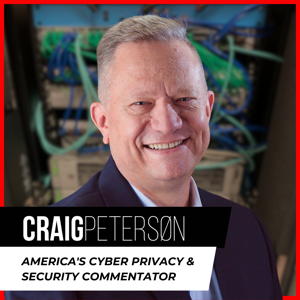


Good morning everybody!
I was on WGAN this morning with Matt Gagnon and started off this morning talking about Iran and the letters sent to some of US Voters. They were purported to be from the Proud Boys but were from Iran. We also discussed a bit about Election Hacking and then got into, How safe are our USBs? Here we go with Matt.
These and more tech tips, news, and updates just visit - CraigPeterson.com
---
Automated Machine Generated Transcript:
Craig Peterson: [00:00:00] Typically what's been happening is that the polling places go to the Secretary of State's website, enter in the information. Then the Secretary of State's office now goes through all of that posted on their website. The Feds have been going to the Secretary of State's website and pulling it from there. So there is a risk of hacking.
Good Morning, everybody. Craig Peterson here. Thanks for joining me. I really appreciate it. And if you could, if you haven't already, make sure you do hit that subscribe button, it really helps get the show numbers up and helps other people find this. This morning I was on with Mr. Matthew and we spoke this morning a little bit about the whole technology and election thing that's going on. Man, it's impossible to not know there's an election going on, isn't it? So here we go with Matt.
Matt Gagnon: [00:00:59] Seven 36 WGAN morning news on a Wednesday morning. What do we usually do at this time? Oh, I know we talk to Craig Peterson. He's with us right now. Craig. How are you, sir?
Craig Peterson: [00:01:09] Hey, good morning. I'm doing just fine. Hey, did you hear there's an election going on?
Matt Gagnon: [00:01:15] There's an election going on? That is brand new information.
Craig Peterson: [00:01:19] Bad guys are trying to do stuff.
Matt Gagnon: [00:01:21] I know.
Craig Peterson: [00:01:22] Somehow the two met its like chocolate and peanut butter.
Matt Gagnon: [00:01:26] Oh man. Now I'm hungry. Craig, speaking of. Iran and, threatening emails being sent to Democrats, I would say that would fit into the category you were just talking about here.
Tell me more about this story.
Craig Peterson: [00:01:37] This is a big deal, frankly, and things have gotten so bad, in fact. Louisiana has called out their national guard, but here's what's going on. there are emails that people have been receiving and they say something that's frankly, a little bit disturbing.
It says you will vote for Trump on election day or we will come afterward. Yeah, exactly. And supposedly they're from this group that has the, I don't know, people have been hearing a little bit about lately, but it's supposedly the proud boys that are sending this out. People have been pretty upset by this because there have been some legitimate threats to people.
Is this legitimate? Is it not legitimate? it came out just this last week from the Director of National Intelligence, John Ratcliffe. That in fact of this is election interference and it is coming from Iran. Which is a real big deal. He also said, as well as, some other us officials, that Russia is still the major threat to the election. We know that North Korea has been involved, China's been involved. What it shows is, frankly, you don't have to hack into a computer in order to mess with an election.
Matt Gagnon: [00:02:58] The other thing that bugs me about this, and I'm sorry I'm gonna have to get on my soapbox here a little bit, Craig. I think you know about this, as well, when you're talking about so many of the things that I've heard about election hacking this year. This is one of the things that I've heard an awful lot about which is that Iran has, or Russia has the voter list. They've got our registered voter list and they're going to use it to mess with us. They must've hacked into computers somewhere, some servers to get it. Maybe at the DNC or the RNC. They got the data and the information about voters from it. Dude, I have that information on my computer. Like seriously.
Like you can buy voter lists. The voter list is not something that's an ultra-secure thing that needs to be broken into. It's something that is basically public information. If you'd like to get it, you have to pay for it, but you can get it. So if Russia wanted it or if Iran wanted it and they wanted to have a list of people and where they live and what their voter registration status is, their party membership, all that stuff. What they've done in the last four elections, you can just get it.
It's not hard. The reason I'm bringing it up, Craig, is because I think that it manipulates the news coverage. From people covering politics that don't understand anything about politics, frankly. they're covering it as media outlets and it's disappointing to see that kind of thing.
Craig Peterson: [00:04:04] Well, ABC News had a report here, so we now know what's really going on. Miryousefi told them, quote, Iran has no interest in interfering in the US election and no preference for the outcome. So we now know what's going on. Obviously a different Iran. Obviously, these people were hallucinating.
But you're right. The information, if you combine the voter lists now with the information that's been stolen from companies, like Equifax out there, you can now tie all of that together. So you've got their email address. You've got their physical address, who they are. They could interfere in such big ways, right? This is just so minor.
Matt Gagnon: [00:04:46] You don't need to break into computers. Oh, let's just say, you see your Russia and you actually do want to mess with American elections and target people and stuff like that. There are zero requirements that you have to break into anything to get that information.
You can literally buy a magazine subscription information and you can basically do what the political parties do, which is layer voter registration data with a bunch of consumer information and data and come up with a model of who the voter is and what their life looks like.
They can do that themselves. I could do that if I had enough money. It's very simple and easy to do that. It doesn't require some sort of a security violation in order to occur. So if you're worried about them, trying to manipulate the elections by, cleverly marketing to us. The security of computers is not really going to be a part of the equation. In my opinion.
I think it, is at the endpoint because you've got all the local polling places, reporting it to the Secretaries of State in all of our 50 States and territories, and then the secretaries of state have now brought it to the Feds. But how does that mechanism actually work in the various States?
And what's your whole works here in Maine, but typically what's been happening is that the polling places go to the secretary of state's website, enter in the information and then the secretary of state's office that's now going through all of that. Posts on their website. So the Fed has been going to the Secretary of State's website and pulling it from there.
So there is a risk of hacking, but I really hope that people are actually also picking up the phone and checking the polling place and saying, Hey, is it legit?
But your involvement also. With politics over the years, you know that there are people at every polling place that are double-checking the numbers, double-checking them.
Craig Peterson: [00:06:37] The secretary of state is publishing. So I agree with you. I think overall we're pretty safe and this just goes right back to phishing. Be careful about the email you get. Cause it's not necessarily legit.
Matt Gagnon: [00:06:51] Said, Craig. Before we let you go, I do want to ask you how safe your USB drive is? That's the other story that we had here that we wanted to chat about here this morning?
Craig Peterson: [00:06:58] Yeah, there are quite a few things to be concerned about, particularly in this day where we're working from home. We're taking that USB drive and we're moving it between computers, home, computers, work computers. That is how we put the Iranian nuclear program about five years behind was one little USB thumb drive.
So be very careful if we're using that as a backup for sensitive documents. We might leave it somewhere, which could be bad. They are also used very commonly for passing viruses around. So if you find a drive at your favorite coffee shop in the morning, be very careful because it may have something nasty on it. Not necessarily because they're trying to, the US and Israel trying to bring down your nuclear program.
It might've been contaminated before you even got it and now it's there on your computer. So don't use them randomly. Be very careful. There's a lot of reasons why you should not be using regular drives. There are USB thumb drives that are encrypted. So if you accidentally leave it somewhere, it doesn't really matter.
If you're using a Mac or you're using a Windows PC in both cases, there are options for encrypting them. So they're very careful, only use fresh ones, right out of a package that is probably safe.
I'm not going to tell you probably, yeah, there have been USB drives that were shipped with malware. Pre-installed accidentally because of the machine they used to format them. Hadn't been infected. Dangerous.
Matt Gagnon: [00:08:42] These are the very things you're going to hear. Craig Peters on talking about on Saturday. Of course, he has to show there, you can hear it at one o'clock at this very station.
Appreciate it, Craig, as always. Thanks so much for joining us and we'll talk to you again very soon.
Craig Peterson: [00:08:52] Hey, take care of Matt. Bye-bye.
All right. So that's it from my radio hits most likely this week and I will be back this weekend. Thanks, everybody. And thanks to those people who sent me an email yesterday, letting me know what's going on. How they listen? How you consume? If you haven't had a chance or if you wanted a copy of that Hunter Biden email that I put together, talking about what to do with your computer when you take it in for repairs. Just drop me a note. Drop me a line. Me at Craig Peterson. dot com take care. Bye-bye.
---
More stories and tech updates at:
www.craigpeterson.com
Don't miss an episode from Craig. Subscribe and give us a rating:
www.craigpeterson.com/itunes
Follow me on Twitter for the latest in tech at:
www.twitter.com/craigpeterson
For questions, call or text:
855-385-5553
Welcome!
Good morning, everybody. I was on WTAG this morning with Jim Polito. We got into a lengthy discussion about some letters purported to be to democrats from the proud boys. Then we talked about Hunter Biden and recycling phones. Here we go with Jim.
For more tech tips, news, and updates visit - CraigPeterson.com
---
Automated Machine Generated Transcript:
Craig Peterson: [00:00:00] In the US, it says you will vote for Trump on election day, or we will come after you. No, this is really scary. It's reached voters and multiple States. Now, obviously, as I said, the Feds are involved.
Hello everybody, Craig Peterson here. I usually say good morning, because a lot of the listeners here listen in the morning and that's when I do. Almost all of this recording for the podcast and radio appearances. So, I don't know. When do you listen to it? Let me know, drop me a line. Really? I'm serious [email protected] trying to make this a little bit more relevant. Well, talking about relevant today.
We got into with Mr. Jim Polito. A couple I think are important to pretty much everybody out there is this email. That came out to Democrat voters from a group called the proud boys. We talked about your phone, about upgrading phones. What do you do? How should you recycle it safely? Unlike Hunter Biden. If you want a copy by the way of this newsletter from last weekend, where I go through the five steps you need to take when you recycle your phone, just email [email protected] and ask for it and we'll get that out to you. So here we go with Jim
Jim Polito: [00:01:30] Joining us now, our tech talk guru and all-around great guy, Craig Peterson.
Good morning, Craig.
Craig Peterson: [00:01:38] I'm looking at it search terms right now in Massachusetts. And I looked back here for 90 days on the term change vote this, to see how many people are searching for that. And it is a number one is Springfield Holyoke, Mass.
Jim Polito: [00:01:55] Wow.
Craig Peterson: [00:01:56] Number one area. Then number two is Boston and number three is Providence for changing my vote.
I don't know. Maybe, WHYN listeners out in Springfield are having second thoughts.
Jim Polito: [00:02:08] Second thoughts about who they voted for? Well, there's a Rasmussen reports poll. That says now a large 54% of people feel that Joe Biden knew about his son's business dealings and profited from them. So I don't know, in other States there's, it's been somewhat reflected that people who voted for Biden early may be changing their minds.
Joel just brought something up very interesting to me, but it's not what I want to. Get an as a topic today. It's okay for the Ayatollah of Iran to tweet death to America, but don't tweet a story that may negatively impact Joe Biden's candidacy. Don't do that. You can say death to America, but that's it.
That's where we draw the line. Isn't that crazy? It's still going on. Isn't it? Craig.
Craig Peterson: [00:03:03] It is. I've got a little concern about these States that do allow you to change your vote because the only way they can tell if you voted or to protect it, so you don't vote twice as to track it.
Now we get into some of the problems here. If you can change your vote. How much do they know about your vote? The secret ballot is what you get when you go and vote in person. When you're sending it in the mail and I understand, you've got the multiple envelopes, et cetera. It really scares me to think that people are going to be voting, calling back their ballot.
Man, could we have a mess, and it's a security issue?
Jim Polito: [00:03:44] It is a security issue. I don't like it. And I, and actually I want to talk about security with you. I want to talk about people selling their phones because a lot of people do that. How you can protect yourself when you sell that phone. But first I want to get to this and you had discussed it with us already that Iran, speaking of the Ayatollah. Iran was behind the threatening emails that were sent to Democrats, correct?
Craig Peterson: [00:04:15] Yeah. It really looks that way, Jim. It's scary to think about. What we're talking about here is a disclosure that just came out from the Director of National Intelligence, John Ratcliffe.
He called a news conference, he went into some detail here about what is happening with a foreign adversary, because there's been restaurant Russia, Russia for four years. And again, it's Russia, Russia, Russia, when it comes to a Hunter Biden's laptop. I had a lot of responses last Saturday, cause of my newsletter, I went into detail.
What do you do when you take your computer in for repairs. How to keep that information safe? Well, it was from say somewhat fictitious listener named Hunter who apparently had a problem with his laptop.
So, we had a lot of great responses from that.
What's happening now, is we're looking at this and saying, there are these emails coming out, supposedly from a group that to laugh, found out about it is continually asking president Trump, which is called.
The proud boys, the FIT into this, and others too. But what does email says? And it's a spoofed email. It's not really from the proud boys or anybody else here in the US it says you will vote for Trump on election day, or we will come after you. No, this is really scary. It's reached voters and multiple States.
Now, obviously, as I said, the fed juror involved. And it really looks like it is coming from Iran, but look at how easy it is to mettle with our elections without going into a computer that you broke into and changing a single vote.
Jim Polito: [00:06:03] Exactly. Exactly and the whole idea was, Iran wants Joe Biden to be president.
And as far as I'm concerned, that's one endorsement that would make me vote for anybody else. If Iran wants you as president, that's not a good sign.
Craig Peterson: [00:06:19] Yeah. I think you're mistaken here. According to ABC news and that they had on mirrors, you know, Sephora. Iran has no interest in interfering in the US election and no preference for the outcome.
Jim Polito: [00:06:35] Okay. Thank you. Thank you very much. I appreciate the update there. You're very, very good Craig. You're right on top of things, as usual.
So we know they're doing that. The problem is, but I mean, the good part of it is Craig. We can detect that right. We know it. Oh yeah. But the problem is reading the word.
Yeah. But the problem is spreading the word so that other people understand that, Oh, that's what's going on and making sure that everybody gets the word that that is fake.
Craig Peterson: [00:07:13] Yeah. Yeah. Well, like, you know, real fake news was promoted for four years, as we just mentioned. And now we've got these social media companies.
I was really excited about Facebook because "the Zuck" came out and said, Hey, where we're not going to do any centering. We're not going to stop the messaging that goes out. And I think he was right to say that, but that's not what they ended up doing. They are deciding what you're going to see. Now this was a change Facebook actually made most people really haven't thought about this may not have been aware of it, but here's your surprise.
About five to eight years ago, Facebook decided that. It was going to decide what you saw. Now here's what was going on, right. You subscribed to Jim Pollitos page and you could scroll through your posts on your own home page and you'd see everything Jim Polito had to say. And many of these stars at the time when Facebook made this change were very upset because if you, Jim Polito want more people to see your posts, people who have said they wanted to see your posts. You have to pay Facebook. So they started this whole censorship thing quite a number of years ago.
Jim Polito: [00:08:36] Lovely. Thank you, Facebook. Thank you, Mark Zuckerberg. Thank you. You robber Baron you,
Craig Peterson: [00:08:47] And Twitter's doing the same thing here, and deciding what you're going to see, what you're not going to do. See, who you're following, whose tweets you're going to see. And this has made matters worse. I was so excited in the earliest, the eighties when I was on the internet and the free exchange of ideas, and the internet was about 99% conservative or libertarian.
It was a great place. And I thought this was going to be an opportunity for us to have a real dialogue. No, this book is showing you things that reinforce you. And even though the number one pages, the top 10 pages, Facebook every day, the top 10 posts about 80% of them tend to be conservative. Facebook is squashing it across the board, even for people who want to see conservative content.
Jim Polito: [00:09:33] I'm going to tell you, I've seen a little bit of a drop-off in the reach of my stuff and I'm not, you know, it's not an ego thing. But I've seen a little bit of a drop-off and I'm just wondering, wow. Is it really getting worse as we get closer to the election? And this is material that I'm basically with my eyes closed, can tell you what kind of a reach it's going to have.
But I think some of the, um, algorithms have changed. It's not getting the reach that it did. Let's get onto something series here and we don't have too much time for it, but it is something. Important people do want to sell their phones. You know, in the old days, when you had a flip phone, you didn't care, it was free.
Whatever. Now your iPhone or whatever you've got is worth money. And so you don't want to have that drawer. With the old phone in it, you want to be able to make, and I'm thinking about getting a new phone. I'd like to get money for this old one, but I'm afraid that somewhere in that phone, there may be personal information about me and I don't want the next person down the line to get it.
So what do I do? Yeah, it's, uh, our lives are on there, right?
Craig Peterson: [00:10:47] It's just as a real problem. Here's what you do, bottom line. If you're using an iPhone, always make sure that you have a passcode or some sort to get into it. You either have like me a 12 digit passcode, maybe you're. Yeah, it takes a while to unlock my phone.
Or you're using one of these fingerprint scanners or facial recognition what's your iPhone will do at that point is encrypt everything on your iPhone. The other thing you need to do is turn on, find my iPhone. So if you do that with your iPhone, That I found is now considered to be quite secure.
Although in most cases now the police departments can get into your iPhone. So remember that. So we're talking about Braden, so yeah. So when you're trading in your iPhone, remember everything on an iPhone is encrypted. So it's very, very simple. All you have to do is turn off, find my iPhone, and then you erase your iPhone.
It's called erase old content. And that's under your settings in general. It doesn't actually erase it. Okay. And that, but that's not a security problem. What it does, Jim is it removes it deletes the encryption key. So all of your data is now unreadable. It, it looks like random trash.
And so at that point, it's fine. It's all done. Okay. If you raised it, you can deactivate your counselor. If you want to, you can do other things, but really that's all you have to do. Erase all content.
Now on Android phones, turn off the factory reset protection. This is extra security protection that began with Android lollipop here a couple of releases ago.
So go to settings. Privacy factory data reset and then choose reset phones. And there's one more step.
For almost every phone out there. It has. What's called a SIM card. This is a very small card. And that SIM card has the information about your phone, all the phone numbers, you've called your messages, billing information, all kinds of stuff.
So pop out that little card. You can usually do it with a paperclip. Yeah, but there's a little hole in this that how it works. Yep. And keep that card. So if you restore your phone to factory default or erase all content and remove the SIM card, you can now trade it in.
There are a number of websites out there that you can go to that we'll buy your iPhone, but it's, you can recycle it, you can sell it, you can donate it.
I'll have more information about this on my show on Saturday. That's great. Okay. Uh, it's Sunday at 11 o'clock on WTA G, W H Y N. Okay.
Now, what's the other way folks can get in touch with you, Craig.
Well, the best way is to go to CraigPeterson.com. There's a lot of great info there. Everything we've talked about, I've put up there and, if you have a question, you can always email. Me@craigpetersondotcom and I always get around to answering them just me ME at Craigpeterson.com.
Jim Polito: [00:14:08] All right, there, you have it, folks. I told you it would be worthwhile to stick around.
Craig. Thank you. We will see you. On election day next week, I'm sure there's going to be plenty to talk about Craig. The election day a week from today. Alright, take care. Thanks, buddy. Bye
Craig Peterson, what a great resource.
Craig Peterson: [00:14:33] And if you do want a copy of the newsletter from last weekend, if you missed it. If you're not subscribed yet talking about what to do to avoid your very own personal Hunter situation. Of course, you probably don't have, hopefully, the same types of stuff that Hunter had on his computer. Just email me, [email protected].
And let me know. You want to know what you should do about your computer before you take it in for repairs.
Take care of everybody. Be back tomorrow. Bye-bye.
---
More stories and tech updates at:
www.craigpeterson.com
Don't miss an episode from Craig. Subscribe and give us a rating:
www.craigpeterson.com/itunes
Follow me on Twitter for the latest in tech at:
www.twitter.com/craigpeterson
For questions, call or text:
855-385-5553
Welcome!
Good morning, everybody. I was on WTAG this morning with Jim Polito. We got into a lengthy discussion about some letters purported to be to democrats from the proud boys. Then we talked about Hunter Biden and recycling phones. Here we go with Jim.
For more tech tips, news, and updates visit - CraigPeterson.com
---
Automated Machine Generated Transcript:
Craig Peterson: [00:00:00] In the US, it says you will vote for Trump on election day, or we will come after you. No, this is really scary. It's reached voters and multiple States. Now, obviously, as I said, the Feds are involved.
Hello everybody, Craig Peterson here. I usually say good morning, because a lot of the listeners here listen in the morning and that's when I do. Almost all of this recording for the podcast and radio appearances. So, I don't know. When do you listen to it? Let me know, drop me a line. Really? I'm serious [email protected] trying to make this a little bit more relevant. Well, talking about relevant today.
We got into with Mr. Jim Polito. A couple I think are important to pretty much everybody out there is this email. That came out to Democrat voters from a group called the proud boys. We talked about your phone, about upgrading phones. What do you do? How should you recycle it safely? Unlike Hunter Biden. If you want a copy by the way of this newsletter from last weekend, where I go through the five steps you need to take when you recycle your phone, just email [email protected] and ask for it and we'll get that out to you. So here we go with Jim
Jim Polito: [00:01:30] Joining us now, our tech talk guru and all-around great guy, Craig Peterson.
Good morning, Craig.
Craig Peterson: [00:01:38] I'm looking at it search terms right now in Massachusetts. And I looked back here for 90 days on the term change vote this, to see how many people are searching for that. And it is a number one is Springfield Holyoke, Mass.
Jim Polito: [00:01:55] Wow.
Craig Peterson: [00:01:56] Number one area. Then number two is Boston and number three is Providence for changing my vote.
I don't know. Maybe, WHYN listeners out in Springfield are having second thoughts.
Jim Polito: [00:02:08] Second thoughts about who they voted for? Well, there's a Rasmussen reports poll. That says now a large 54% of people feel that Joe Biden knew about his son's business dealings and profited from them. So I don't know, in other States there's, it's been somewhat reflected that people who voted for Biden early may be changing their minds.
Joel just brought something up very interesting to me, but it's not what I want to. Get an as a topic today. It's okay for the Ayatollah of Iran to tweet death to America, but don't tweet a story that may negatively impact Joe Biden's candidacy. Don't do that. You can say death to America, but that's it.
That's where we draw the line. Isn't that crazy? It's still going on. Isn't it? Craig.
Craig Peterson: [00:03:03] It is. I've got a little concern about these States that do allow you to change your vote because the only way they can tell if you voted or to protect it, so you don't vote twice as to track it.
Now we get into some of the problems here. If you can change your vote. How much do they know about your vote? The secret ballot is what you get when you go and vote in person. When you're sending it in the mail and I understand, you've got the multiple envelopes, et cetera. It really scares me to think that people are going to be voting, calling back their ballot.
Man, could we have a mess, and it's a security issue?
Jim Polito: [00:03:44] It is a security issue. I don't like it. And I, and actually I want to talk about security with you. I want to talk about people selling their phones because a lot of people do that. How you can protect yourself when you sell that phone. But first I want to get to this and you had discussed it with us already that Iran, speaking of the Ayatollah. Iran was behind the threatening emails that were sent to Democrats, correct?
Craig Peterson: [00:04:15] Yeah. It really looks that way, Jim. It's scary to think about. What we're talking about here is a disclosure that just came out from the Director of National Intelligence, John Ratcliffe.
He called a news conference, he went into some detail here about what is happening with a foreign adversary, because there's been restaurant Russia, Russia for four years. And again, it's Russia, Russia, Russia, when it comes to a Hunter Biden's laptop. I had a lot of responses last Saturday, cause of my newsletter, I went into detail.
What do you do when you take your computer in for repairs. How to keep that information safe? Well, it was from say somewhat fictitious listener named Hunter who apparently had a problem with his laptop.
So, we had a lot of great responses from that.
What's happening now, is we're looking at this and saying, there are these emails coming out, supposedly from a group that to laugh, found out about it is continually asking president Trump, which is called.
The proud boys, the FIT into this, and others too. But what does email says? And it's a spoofed email. It's not really from the proud boys or anybody else here in the US it says you will vote for Trump on election day, or we will come after you. No, this is really scary. It's reached voters and multiple States.
Now, obviously, as I said, the fed juror involved. And it really looks like it is coming from Iran, but look at how easy it is to mettle with our elections without going into a computer that you broke into and changing a single vote.
Jim Polito: [00:06:03] Exactly. Exactly and the whole idea was, Iran wants Joe Biden to be president.
And as far as I'm concerned, that's one endorsement that would make me vote for anybody else. If Iran wants you as president, that's not a good sign.
Craig Peterson: [00:06:19] Yeah. I think you're mistaken here. According to ABC news and that they had on mirrors, you know, Sephora. Iran has no interest in interfering in the US election and no preference for the outcome.
Jim Polito: [00:06:35] Okay. Thank you. Thank you very much. I appreciate the update there. You're very, very good Craig. You're right on top of things, as usual.
So we know they're doing that. The problem is, but I mean, the good part of it is Craig. We can detect that right. We know it. Oh yeah. But the problem is reading the word.
Yeah. But the problem is spreading the word so that other people understand that, Oh, that's what's going on and making sure that everybody gets the word that that is fake.
Craig Peterson: [00:07:13] Yeah. Yeah. Well, like, you know, real fake news was promoted for four years, as we just mentioned. And now we've got these social media companies.
I was really excited about Facebook because "the Zuck" came out and said, Hey, where we're not going to do any centering. We're not going to stop the messaging that goes out. And I think he was right to say that, but that's not what they ended up doing. They are deciding what you're going to see. Now this was a change Facebook actually made most people really haven't thought about this may not have been aware of it, but here's your surprise.
About five to eight years ago, Facebook decided that. It was going to decide what you saw. Now here's what was going on, right. You subscribed to Jim Pollitos page and you could scroll through your posts on your own home page and you'd see everything Jim Polito had to say. And many of these stars at the time when Facebook made this change were very upset because if you, Jim Polito want more people to see your posts, people who have said they wanted to see your posts. You have to pay Facebook. So they started this whole censorship thing quite a number of years ago.
Jim Polito: [00:08:36] Lovely. Thank you, Facebook. Thank you, Mark Zuckerberg. Thank you. You robber Baron you,
Craig Peterson: [00:08:47] And Twitter's doing the same thing here, and deciding what you're going to see, what you're not going to do. See, who you're following, whose tweets you're going to see. And this has made matters worse. I was so excited in the earliest, the eighties when I was on the internet and the free exchange of ideas, and the internet was about 99% conservative or libertarian.
It was a great place. And I thought this was going to be an opportunity for us to have a real dialogue. No, this book is showing you things that reinforce you. And even though the number one pages, the top 10 pages, Facebook every day, the top 10 posts about 80% of them tend to be conservative. Facebook is squashing it across the board, even for people who want to see conservative content.
Jim Polito: [00:09:33] I'm going to tell you, I've seen a little bit of a drop-off in the reach of my stuff and I'm not, you know, it's not an ego thing. But I've seen a little bit of a drop-off and I'm just wondering, wow. Is it really getting worse as we get closer to the election? And this is material that I'm basically with my eyes closed, can tell you what kind of a reach it's going to have.
But I think some of the, um, algorithms have changed. It's not getting the reach that it did. Let's get onto something series here and we don't have too much time for it, but it is something. Important people do want to sell their phones. You know, in the old days, when you had a flip phone, you didn't care, it was free.
Whatever. Now your iPhone or whatever you've got is worth money. And so you don't want to have that drawer. With the old phone in it, you want to be able to make, and I'm thinking about getting a new phone. I'd like to get money for this old one, but I'm afraid that somewhere in that phone, there may be personal information about me and I don't want the next person down the line to get it.
So what do I do? Yeah, it's, uh, our lives are on there, right?
Craig Peterson: [00:10:47] It's just as a real problem. Here's what you do, bottom line. If you're using an iPhone, always make sure that you have a passcode or some sort to get into it. You either have like me a 12 digit passcode, maybe you're. Yeah, it takes a while to unlock my phone.
Or you're using one of these fingerprint scanners or facial recognition what's your iPhone will do at that point is encrypt everything on your iPhone. The other thing you need to do is turn on, find my iPhone. So if you do that with your iPhone, That I found is now considered to be quite secure.
Although in most cases now the police departments can get into your iPhone. So remember that. So we're talking about Braden, so yeah. So when you're trading in your iPhone, remember everything on an iPhone is encrypted. So it's very, very simple. All you have to do is turn off, find my iPhone, and then you erase your iPhone.
It's called erase old content. And that's under your settings in general. It doesn't actually erase it. Okay. And that, but that's not a security problem. What it does, Jim is it removes it deletes the encryption key. So all of your data is now unreadable. It, it looks like random trash.
And so at that point, it's fine. It's all done. Okay. If you raised it, you can deactivate your counselor. If you want to, you can do other things, but really that's all you have to do. Erase all content.
Now on Android phones, turn off the factory reset protection. This is extra security protection that began with Android lollipop here a couple of releases ago.
So go to settings. Privacy factory data reset and then choose reset phones. And there's one more step.
For almost every phone out there. It has. What's called a SIM card. This is a very small card. And that SIM card has the information about your phone, all the phone numbers, you've called your messages, billing information, all kinds of stuff.
So pop out that little card. You can usually do it with a paperclip. Yeah, but there's a little hole in this that how it works. Yep. And keep that card. So if you restore your phone to factory default or erase all content and remove the SIM card, you can now trade it in.
There are a number of websites out there that you can go to that we'll buy your iPhone, but it's, you can recycle it, you can sell it, you can donate it.
I'll have more information about this on my show on Saturday. That's great. Okay. Uh, it's Sunday at 11 o'clock on WTA G, W H Y N. Okay.
Now, what's the other way folks can get in touch with you, Craig.
Well, the best way is to go to CraigPeterson.com. There's a lot of great info there. Everything we've talked about, I've put up there and, if you have a question, you can always email. Me@craigpetersondotcom and I always get around to answering them just me ME at Craigpeterson.com.
Jim Polito: [00:14:08] All right, there, you have it, folks. I told you it would be worthwhile to stick around.
Craig. Thank you. We will see you. On election day next week, I'm sure there's going to be plenty to talk about Craig. The election day a week from today. Alright, take care. Thanks, buddy. Bye
Craig Peterson, what a great resource.
Craig Peterson: [00:14:33] And if you do want a copy of the newsletter from last weekend, if you missed it. If you're not subscribed yet talking about what to do to avoid your very own personal Hunter situation. Of course, you probably don't have, hopefully, the same types of stuff that Hunter had on his computer. Just email me, [email protected].
And let me know. You want to know what you should do about your computer before you take it in for repairs.
Take care of everybody. Be back tomorrow. Bye-bye.
---
More stories and tech updates at:
www.craigpeterson.com
Don't miss an episode from Craig. Subscribe and give us a rating:
www.craigpeterson.com/itunes
Follow me on Twitter for the latest in tech at:
www.twitter.com/craigpeterson
For questions, call or text:
855-385-5553
Welcome,
Good Monday morning, everybody. Craig Peterson here. I was on with Scott Spradling on NH Today. We discussed the threatening Email and letters being received by voters and where they came from. We talked about Google search terms. Then we discussed why The National Guard has been called up in Lousiana to deal with Ransomware. We wrapped up today's discussion with election security in the light of revelations by the FBI and DHS about Nation-State Actors accessing our election systems through known vulnerabilities in the Secretary of State Websites. Here we go with Scott.
These and more tech tips, news, and updates visit.
- CraigPeterson.com
---
Automated Machine Generated Transcript:
Craig Peterson: [00:00:00] Same basic thing. It peaked in March. Like you'd expect it, a huge peak being the end of July. Now people just aren't searching about masks anymore. But this election, this COVID thing, it's looking online. It's driving people crazy.
Good morning, everybody. We had a fun time talking about what is going on with the election meddling. There's some serious stuff happening. I'm not sure how big this scale is, but we've got warnings out. Another one here. The national guard actually called out apparently in Louisiana over real election problems.
So here we go. Craig Peterson, of course, with Mr. Scott Spradling.
Scott Spradling: [00:00:43] Interesting developments over the course of the last few days.
I don't know if folks saw this in the news, but there were letters and emails that were sent to voters threatening that if they didn't vote a certain way, that there would be some form of retribution. It looked like most of those emails went to democrats, although I'm not a thousand percent clear on the details. A follow-up investigation by the authorities has determined that these threats were coming from Iran.
Joining us to talk more about this is Craig Peterson is welcoming back to New Hampshire today, Craig, thank you very much for joining us and tell us a little bit about this headline and how they figured out that this was coming from Iran.
Craig Peterson: [00:01:20] It's interesting stuff isn't it here, when you get right into it. Sometimes it's hard to figure out exactly what's going on. Apparently, there were emails that were being sent to Democrats and they were set up in such a way that it looks like it was this pro-Trump group called the proud boys. It's been all over the news lately. A lot of questions asked about it. A couple of them in the debate in fact where President Trump's said: "I don't really know these guys, but if their bad guys don't have anything to do with them."
According to the Director of National Intelligence, John Ratcliffe, apparently what happened is that the Iranians decided they would jump on this whole proud boys stuff that had been in the news and they started sending threatening emails. Talking about how, if you didn't vote for Trump, basically, we know who you are and we're going to come after you. In fact, they literally, what it said is you will vote for Trump on election day, or we will come after you. By Tuesday night, they are said to have reached voters in four different States. The FBI has been involved.
We've been having problems in Milford. You've probably followed some of that. I know Scott that you've talked a little bit about it. It's crazy. This morning I just heard from one of my daughters that her boyfriend's family had a thing stuck on their door. A little letter stuck on their door saying that if he votes for Trump they're coming after him. Wow. This is crazy.
I went online and Google has this trend feature that allows you to look at the terms that are being used, who is searching for them, and what's going on. I checked out a couple of terms. You have been talking about Covid fatigue, and it is showing some very high interest, but it's interesting where it peaked, it really peaked in July and it peaked again last week, which is interesting.
Scott Spradling: [00:03:24] Uh, Huh.
Craig Peterson: [00:03:24] COVID mask. The same basic thing it peaked in March like you'd expect it a huge peak beginning of July, and now people just start searching about masks anymore.
This election, this COVID thing. Looking online it's driving people crazy. I tried to verify another story that's been floating around. Basically, a rumor based on my exploration here, saying that, the number one search term is, "how do I change my vote?" So I checked a few States, including New Hampshire. Nowhere near true. In fact, so few people are asking on Google, how to change their vote, that doesn't even show up in most of the graphs.
Scott Spradling: [00:04:02] I have a lot of faith in the New Hampshire election system, which is nice to hear. Craig Peterson. Let me ask you a different question because we were talking about the Iranians being behind this kind of a threat via email. One thing that's really, really interesting, in the headlines is that some States are devoting some serious resources to pushing back to local threats like ransomware. And I directed to the state of Louisiana where the national guard is this actually being mobilized, if you will, to go against a tech threat. Talk to me about that.
Craig Peterson: [00:04:33] This is very interesting there's a study out, Reuters is carrying an article about it right now, from, Friday and Thursday last week. Apparently what's happened is they found inside some of the Louisiana governmental offices that are specifically involved in elections. In other words, Secretary of State's offices. They found some Trojan rats, remote access Trojans, it's called the Kim Jong rat back door.
This particular back door apparently has allowed them to get into the government networks down there right now. Many people may not be aware of it, but our military, including our national guard, has been very well trained. I did some of the training myself, for them on the techniques to help repel these types of ransomware and other types of attacks, direct attacks as well. Also, come in after the fact. Frankly, between us, we have a very strong offensive cyber capability where we can go after other countries, of course, that happened to Iran already.
So there are some warnings out there. The United States cybersecurity infrastructure security agency issued a warning. I have for years now been talking about. The weakness even here in New Hampshire has to do with the websites, particularly against Secretaries of State. Those websites are used for gathering information from the local polling places, as well as for the federal government to go out to the states and find out what the final tallies are. Those websites are very risky, frankly.
That's the part of the election that I really don't like, Scott, because it's so exposed.
Scott Spradling: [00:06:20] That's gotta be tightened up. No doubt.
Craig Peterson, let me ask you another question. So that's for the macro, the big picture perspective, and what governments need to do. What actions are being taken at home, whether it's, the privacy of your information on your phone, especially when you're selling and maybe trading yours in. Or the safety of your USB drive. How well protected are we right now at the sort of micro-level? What steps should we be taking?
Craig Peterson: [00:06:45] Our protection level for the average person right now is barely there at all, at best. You've got a little bit of a firewall. There's something called network address translation is protecting you. Almost every computer out there in your home is unlikely, unless it's a Mac, to be up to date on patches. That's the bottom line.
The best thing you can do, keep everything patched up. We've got thermostats now connected to the internet. We've got lights. We've got security cameras. When was the last time, Scott you patched your security camera, at your house?
Scott Spradling: [00:07:23] Never.
Craig Peterson: [00:07:23] Yeah, exactly. That's huge. The second thing you can do is get a prosumer firewall. Don't use these pieces of junk that are given to you by your Internet Service provider. You really got to upgrade, get into something a little bit more professional and that'll help a lot.
Scott Spradling: [00:07:40] Craig Peterson. Thank you so much for your advice and observations. We appreciate you helping keep us safe, especially when it comes to our electronic footprint. Hope you have a great day, a great Monday.
Craig Peterson: [00:07:49] Thanks, Scott. I'll be back Saturday at 1130.
Scott Spradling: [00:07:52] Great. We'll talk to you then.
Oh, my gosh, I so much better. That's all I'm going to say. All right, everybody. We are going to be back tomorrow and Wednesday and of course, I'll be back this weekend.
I will be posting this now. I had a guy, he had suggested one of our listeners here, who is becoming a friend of mine. it's been fun chatting back and forth, but, he had suggested that I put up one-hour shows. Now we tried that a couple of times and, we just fell out of the habit, for no particular reason.
There were only a couple of people that reached out when I asked about it before, I'm going to assume you're indifferent unless I hear otherwise from you and there are thousands of you out there. So we really, you should try and do this a little bit differently.
Let me know if you think I should post this as well. At least my weekend, podcasts, instead of breaking them up into topics. Do you think you guys should do them as one big podcast? It's going to be about an hour and a half worth of podcasts or continue to do it based on topics. Please do let me know?
This isn't some ruse, I want to know from you guys. Just email me, M E at Craig peterson.com. I'd love to hear from you. I'd love to hear how you consume the podcast. I know a few of you have already told me, you're listening while you're out driving the trucks. Some are listening in the gym, others are just really just going about their weekends. So let me know. I would really appreciate that.
We've been really releasing the podcast on Friday afternoon. and that's probably the earliest we could possibly release them. But does that work for you guys to do that? It might be better for the show may be to release on Monday. Or more people listening over the weekend than during the week? When do you guys listen to it? I can certainly look at the stats and I have, but I've never really tried to release it later. So let me know, just email me. M E at Craig peterson.com.
I want to make the most of my time and of yours have a great day.
We'll be back tomorrow. Bye-bye.
---
More stories and tech updates at:
www.craigpeterson.com
Don't miss an episode from Craig. Subscribe and give us a rating:
www.craigpeterson.com/itunes
Follow me on Twitter for the latest in tech at:
www.twitter.com/craigpeterson
For questions, call or text:
855-385-5553
Welcome,
Good Monday morning, everybody. Craig Peterson here. I was on with Scott Spradling on NH Today. We discussed the threatening Email and letters being received by voters and where they came from. We talked about Google search terms. Then we discussed why The National Guard has been called up in Lousiana to deal with Ransomware. We wrapped up today's discussion with election security in the light of revelations by the FBI and DHS about Nation-State Actors accessing our election systems through known vulnerabilities in the Secretary of State Websites. Here we go with Scott.
These and more tech tips, news, and updates visit.
- CraigPeterson.com
---
Automated Machine Generated Transcript:
Craig Peterson: [00:00:00] Same basic thing. It peaked in March. Like you'd expect it, a huge peak being the end of July. Now people just aren't searching about masks anymore. But this election, this COVID thing, it's looking online. It's driving people crazy.
Good morning, everybody. We had a fun time talking about what is going on with the election meddling. There's some serious stuff happening. I'm not sure how big this scale is, but we've got warnings out. Another one here. The national guard actually called out apparently in Louisiana over real election problems.
So here we go. Craig Peterson, of course, with Mr. Scott Spradling.
Scott Spradling: [00:00:43] Interesting developments over the course of the last few days.
I don't know if folks saw this in the news, but there were letters and emails that were sent to voters threatening that if they didn't vote a certain way, that there would be some form of retribution. It looked like most of those emails went to democrats, although I'm not a thousand percent clear on the details. A follow-up investigation by the authorities has determined that these threats were coming from Iran.
Joining us to talk more about this is Craig Peterson is welcoming back to New Hampshire today, Craig, thank you very much for joining us and tell us a little bit about this headline and how they figured out that this was coming from Iran.
Craig Peterson: [00:01:20] It's interesting stuff isn't it here, when you get right into it. Sometimes it's hard to figure out exactly what's going on. Apparently, there were emails that were being sent to Democrats and they were set up in such a way that it looks like it was this pro-Trump group called the proud boys. It's been all over the news lately. A lot of questions asked about it. A couple of them in the debate in fact where President Trump's said: "I don't really know these guys, but if their bad guys don't have anything to do with them."
According to the Director of National Intelligence, John Ratcliffe, apparently what happened is that the Iranians decided they would jump on this whole proud boys stuff that had been in the news and they started sending threatening emails. Talking about how, if you didn't vote for Trump, basically, we know who you are and we're going to come after you. In fact, they literally, what it said is you will vote for Trump on election day, or we will come after you. By Tuesday night, they are said to have reached voters in four different States. The FBI has been involved.
We've been having problems in Milford. You've probably followed some of that. I know Scott that you've talked a little bit about it. It's crazy. This morning I just heard from one of my daughters that her boyfriend's family had a thing stuck on their door. A little letter stuck on their door saying that if he votes for Trump they're coming after him. Wow. This is crazy.
I went online and Google has this trend feature that allows you to look at the terms that are being used, who is searching for them, and what's going on. I checked out a couple of terms. You have been talking about Covid fatigue, and it is showing some very high interest, but it's interesting where it peaked, it really peaked in July and it peaked again last week, which is interesting.
Scott Spradling: [00:03:24] Uh, Huh.
Craig Peterson: [00:03:24] COVID mask. The same basic thing it peaked in March like you'd expect it a huge peak beginning of July, and now people just start searching about masks anymore.
This election, this COVID thing. Looking online it's driving people crazy. I tried to verify another story that's been floating around. Basically, a rumor based on my exploration here, saying that, the number one search term is, "how do I change my vote?" So I checked a few States, including New Hampshire. Nowhere near true. In fact, so few people are asking on Google, how to change their vote, that doesn't even show up in most of the graphs.
Scott Spradling: [00:04:02] I have a lot of faith in the New Hampshire election system, which is nice to hear. Craig Peterson. Let me ask you a different question because we were talking about the Iranians being behind this kind of a threat via email. One thing that's really, really interesting, in the headlines is that some States are devoting some serious resources to pushing back to local threats like ransomware. And I directed to the state of Louisiana where the national guard is this actually being mobilized, if you will, to go against a tech threat. Talk to me about that.
Craig Peterson: [00:04:33] This is very interesting there's a study out, Reuters is carrying an article about it right now, from, Friday and Thursday last week. Apparently what's happened is they found inside some of the Louisiana governmental offices that are specifically involved in elections. In other words, Secretary of State's offices. They found some Trojan rats, remote access Trojans, it's called the Kim Jong rat back door.
This particular back door apparently has allowed them to get into the government networks down there right now. Many people may not be aware of it, but our military, including our national guard, has been very well trained. I did some of the training myself, for them on the techniques to help repel these types of ransomware and other types of attacks, direct attacks as well. Also, come in after the fact. Frankly, between us, we have a very strong offensive cyber capability where we can go after other countries, of course, that happened to Iran already.
So there are some warnings out there. The United States cybersecurity infrastructure security agency issued a warning. I have for years now been talking about. The weakness even here in New Hampshire has to do with the websites, particularly against Secretaries of State. Those websites are used for gathering information from the local polling places, as well as for the federal government to go out to the states and find out what the final tallies are. Those websites are very risky, frankly.
That's the part of the election that I really don't like, Scott, because it's so exposed.
Scott Spradling: [00:06:20] That's gotta be tightened up. No doubt.
Craig Peterson, let me ask you another question. So that's for the macro, the big picture perspective, and what governments need to do. What actions are being taken at home, whether it's, the privacy of your information on your phone, especially when you're selling and maybe trading yours in. Or the safety of your USB drive. How well protected are we right now at the sort of micro-level? What steps should we be taking?
Craig Peterson: [00:06:45] Our protection level for the average person right now is barely there at all, at best. You've got a little bit of a firewall. There's something called network address translation is protecting you. Almost every computer out there in your home is unlikely, unless it's a Mac, to be up to date on patches. That's the bottom line.
The best thing you can do, keep everything patched up. We've got thermostats now connected to the internet. We've got lights. We've got security cameras. When was the last time, Scott you patched your security camera, at your house?
Scott Spradling: [00:07:23] Never.
Craig Peterson: [00:07:23] Yeah, exactly. That's huge. The second thing you can do is get a prosumer firewall. Don't use these pieces of junk that are given to you by your Internet Service provider. You really got to upgrade, get into something a little bit more professional and that'll help a lot.
Scott Spradling: [00:07:40] Craig Peterson. Thank you so much for your advice and observations. We appreciate you helping keep us safe, especially when it comes to our electronic footprint. Hope you have a great day, a great Monday.
Craig Peterson: [00:07:49] Thanks, Scott. I'll be back Saturday at 1130.
Scott Spradling: [00:07:52] Great. We'll talk to you then.
Oh, my gosh, I so much better. That's all I'm going to say. All right, everybody. We are going to be back tomorrow and Wednesday and of course, I'll be back this weekend.
I will be posting this now. I had a guy, he had suggested one of our listeners here, who is becoming a friend of mine. it's been fun chatting back and forth, but, he had suggested that I put up one-hour shows. Now we tried that a couple of times and, we just fell out of the habit, for no particular reason.
There were only a couple of people that reached out when I asked about it before, I'm going to assume you're indifferent unless I hear otherwise from you and there are thousands of you out there. So we really, you should try and do this a little bit differently.
Let me know if you think I should post this as well. At least my weekend, podcasts, instead of breaking them up into topics. Do you think you guys should do them as one big podcast? It's going to be about an hour and a half worth of podcasts or continue to do it based on topics. Please do let me know?
This isn't some ruse, I want to know from you guys. Just email me, M E at Craig peterson.com. I'd love to hear from you. I'd love to hear how you consume the podcast. I know a few of you have already told me, you're listening while you're out driving the trucks. Some are listening in the gym, others are just really just going about their weekends. So let me know. I would really appreciate that.
We've been really releasing the podcast on Friday afternoon. and that's probably the earliest we could possibly release them. But does that work for you guys to do that? It might be better for the show may be to release on Monday. Or more people listening over the weekend than during the week? When do you guys listen to it? I can certainly look at the stats and I have, but I've never really tried to release it later. So let me know, just email me. M E at Craig peterson.com.
I want to make the most of my time and of yours have a great day.
We'll be back tomorrow. Bye-bye.
---
More stories and tech updates at:
www.craigpeterson.com
Don't miss an episode from Craig. Subscribe and give us a rating:
www.craigpeterson.com/itunes
Follow me on Twitter for the latest in tech at:
www.twitter.com/craigpeterson
For questions, call or text:
855-385-5553
Craig gets into some detail about why Hunter Biden's laptop that he took to a shop and never picked up is now in the hands of the FBI/DOJ and the things he did wrong when he took it in for service -- and no -- it has nothing to do with Russia.
For more tech tips, news, and updates, visit - CraigPeterson.com
---
FBI, DHS says hackers have gained access to election systems
The IRS Is Being Investigated for Using Location Data Without a Warrant
Clear Conquered U.S. Airports. Now It Wants to Own Your Entire Digital Identity.
5G in the US averages 51Mbps while other countries hit hundreds of megabits
IRS may put cryptocurrency question at the top of 1040 to catch cheaters
Publishers worry as ebooks fly off libraries' virtual shelves
25% of BEC Cybercriminals Based in the US
What's Really Happening in Infosec Hiring Now?
---
Automated Machine-Generated Transcript:
Craig Peterson: [00:00:00] Yeah, I'm sure you heard about Hunter Biden, and what happened with his computer when he took it in for repairs? How about your computer? We'll be getting into that right away, right off the top. And then the FBI says hackers are already in our election systems. Man really.
Hey everybody. Welcome. Welcome. You're listening to Craig Peterson.
Well, we had a lot of news this week. Some stations covered it. Certainly. But bottom line things just weren't covered here in the US. It was interesting listening to some foreign stations. They were covering the whole Hunter Biden thing, yet here in the US, it's like a ghost town on most of the major networks. This is really, really crazy. I'm sure you are interested in knowing a little bit about what's going on? What are your rights? What should you do?
Karen and I are putting together a special report that you can get for free. I don't squeeze you for these things. All you have to do is send me an email and I'll send it off. We're putting together a special report specifically on steps you have to take before taking your computer to one of these computer repair shops.
Now, you know, I already suggest you do not use break-fix shops. Don't use any of these big squads that are out there running around saying they can fix your computers. I really do recommend that you use a managed services provider.
I'm a managed security services provider, right. I want to put that on the table and we do tend to do take care of systems for our customers, of course, security customers a little thing there we'll usually do it for them.
A managed services provider should be someone that you're using that you trust and have a certain responsibility to your data and all of the information behind it. Particularly if you are a subcontractor for any DOD contract. There are certain responsibilities that flow down to you.
Obviously, if it's off the shelf stuff, the responsibility is a lot less than if it's the stuff that is not necessarily secret but is part of information about a base or information about how many items are being ordered. The military and the prime contractors don't like that information getting out for good reason. They don't want the bad guys, the Chinese, the Russians and North Koreans, et cetera, et cetera, in on that information. Look at what's happening right now. If you go right now to Duck Duck go, and look up the Chinese carriers or better yet, look at their newest jets, They are a clone from just looking at it. They are a clone of our US jets. The reason the Chinese have this data is that they stole it. Rolling back to the time of President Clinton, he just gave them the technology for launching Intercontinental ballistic missiles to hit the United States.
He gave it to them. Because he said, we want the Chinese to be able to launch our satellites? Because it's going to be way more cost-effective. The only way they can launch satellites is if they have this particular type of technology for their rocketry. And so basically, he just gave it to them.
I think that it's crazy reasoning if that was the actual reasoning behind it. Now they've turned to. Theft. This always happens in every socialist country. Any country that goes socialist, you just don't have the innovation that you had otherwise because you end up with all kinds of taxes, all kinds of restrictions.
You take away the motivation for people to make money. Look at what's happened with 50 Cent, he's a rapper. He went most of his life with no money at all. Worked really, really, really hard, and finally made some money. So the average person is going to make a few million dollars if you are a white-collar worker over the course of your lifetime. What if you worked for 10 years, 20 years, 30 years trying to get some software to work, trying to come up with something, and man it didn't work in the marketplace. So let me try something else.
Let me try something else.
Let me try something else.
So for 20 years, you're living off of almost nothing. Just scraping, just trying to get by. Then yes, I got it. Finally everything clicks. The market's there, your product is there. It's all working. You've got the right team working with you. Your partners are the right ones, not these two Hunter Biden partners that have ended up in prison or one's waiting for sentencing right now. You got good partners that are really working for you working together, pulling together.
And now all of a sudden you make a million, 2 million, 3 million, $4 million. Maybe you made $5 million over the course of 40 years. That isn't much different than your average white-collar worker. Yet you are going to be taxed to kingdom come if you live in a socialist country. So all of that work that you did for 40 years to finally make some money, maybe even leave a little bit of money behind for your kids. Generational wealth. It's gone. It's been taken. It's been confiscated at the point of a gun by the socialist government.
When you're someone like China, you have to steal intellectual property from other countries because the incentive is just not there. If you stick your head up, if you try something and you do it wrong, that head gets bashed in. You get sent out to re-education camps.
Look at the millions of people that we know of that have gone to these Chinese, every education camps. Look at the tens of millions of people that have starved to death because of socialism. Well over millions, in fact, documented in the 20th century, just because of socialism. It happens every freaking time.
But, let's get back to the laptop here. If you are China and you're trying to steal concepts, ideas so that you can then build your military, build your commercial infrastructure, compete with Tesla, compete with Apple, you need to steal it. You want to get your hands on computers.
You need to use other people's computers in order to hide where you're coming from. You've seen it in movies before. You might remember way back when you were watching war games. In War games it showed this modem and he was trying to go here and then it was hopping over to there and there was hopping over to here. How they kind of hop around. That is reality. It's still to this day.
That the bad guys need your computer in order to hack other computers. Now, sometimes what they're doing is they're attacking other computers using your computer. So that might be attacking it, looking for a way to break in. They might be attacking these other computers through a denial of service attack, where they have thousands or even millions of computers sending requests to websites or other places. Then they hold that site hostage at that point. That happens. It really, really happens. We've also found that the bad guys are using our computers in order to store and forward illegal information. So in some cases, it's illegal information like designs for jet aircraft engines that we use in our fighters. Or the latest one. This is just from this last week is they stole the vibration dampeners in our jets that are designed to be very stealthy. So the less vibration, the harder it is to pick up.
What did they do? Well, they steal it from us. At least ask what it looks like right now, allegations just everywhere on that.
I have firsthand personally seen this sort of thing happen where China is stealing. Intellectual property from US corporations. We've gone into these companies that thought they were secure. We have a managed services provider. Most of the time, it's all we have an IT person and we call these other guys up when something breaks.
We go in there and we find these back doors. A case that I've talked about before that I was involved in, expert witness out a New Jersey, where illegal information is put onto third parties, computers in order to share it with other people. It is happening all the time. It's everything from the ISIS beheadings and burnings all the way through kiddie porn.
This is real. We have to lock down our computers because of this. Now you might ask why I'm talking about this one. We're talking about Hunter Biden's computer that was taken to a repair shop, or maybe what we want to talk about is your computer that you're going to take to a repair shop. Well, I ask that because the big question here is what's on your computer.
You know what you have put on it. No, maybe you even forgot some of the stuff that you put on it. But what have the bad guys put on your computer? Is your network system secure enough that you can say, yeah, yeah, nobody is using my computer, my network maliciously? Do you even have a firewall that tracks your outbound connection?
We get into, and a lot of detail about how to do that, what you need to do in our cybersecurity mastery course. It's an important thing.
So stick around when we get back, I'm going to give you the tips that you need to know. If you're going to take your computer to a repair shop and we are going to turn this into a little book for you, a special report, something like that.
Stick around. We'll be right back. You're listening to Craig Peterson. Online Craig peterson.com.
---
More stories and tech updates at:
www.craigpeterson.com
Don't miss an episode from Craig. Subscribe and give us a rating:
www.craigpeterson.com/itunes
Follow me on Twitter for the latest in tech at:
www.twitter.com/craigpeterson
For questions, call or text:
855-385-5553
Craig gets into some detail about why Hunter Biden's laptop that he took to a shop and never picked up is now in the hands of the FBI/DOJ and the things he did wrong when he took it in for service -- and no -- it has nothing to do with Russia.
For more tech tips, news, and updates, visit - CraigPeterson.com
---
FBI, DHS says hackers have gained access to election systems
The IRS Is Being Investigated for Using Location Data Without a Warrant
Clear Conquered U.S. Airports. Now It Wants to Own Your Entire Digital Identity.
5G in the US averages 51Mbps while other countries hit hundreds of megabits
IRS may put cryptocurrency question at the top of 1040 to catch cheaters
Publishers worry as ebooks fly off libraries’ virtual shelves
25% of BEC Cybercriminals Based in the US
What's Really Happening in Infosec Hiring Now?
---
Automated Machine-Generated Transcript:
Craig Peterson: [00:00:00] Yeah, I'm sure you heard about Hunter Biden, and what happened with his computer when he took it in for repairs? How about your computer? We'll be getting into that right away, right off the top. And then the FBI says hackers are already in our election systems. Man really.
Hey everybody. Welcome. Welcome. You're listening to Craig Peterson.
Well, we had a lot of news this week. Some stations covered it. Certainly. But bottom line things just weren't covered here in the US. It was interesting listening to some foreign stations. They were covering the whole Hunter Biden thing, yet here in the US, it's like a ghost town on most of the major networks. This is really, really crazy. I'm sure you are interested in knowing a little bit about what's going on? What are your rights? What should you do?
Karen and I are putting together a special report that you can get for free. I don't squeeze you for these things. All you have to do is send me an email and I'll send it off. We're putting together a special report specifically on steps you have to take before taking your computer to one of these computer repair shops.
Now, you know, I already suggest you do not use break-fix shops. Don't use any of these big squads that are out there running around saying they can fix your computers. I really do recommend that you use a managed services provider.
I'm a managed security services provider, right. I want to put that on the table and we do tend to do take care of systems for our customers, of course, security customers a little thing there we'll usually do it for them.
A managed services provider should be someone that you're using that you trust and have a certain responsibility to your data and all of the information behind it. Particularly if you are a subcontractor for any DOD contract. There are certain responsibilities that flow down to you.
Obviously, if it's off the shelf stuff, the responsibility is a lot less than if it's the stuff that is not necessarily secret but is part of information about a base or information about how many items are being ordered. The military and the prime contractors don't like that information getting out for good reason. They don't want the bad guys, the Chinese, the Russians and North Koreans, et cetera, et cetera, in on that information. Look at what's happening right now. If you go right now to Duck Duck go, and look up the Chinese carriers or better yet, look at their newest jets, They are a clone from just looking at it. They are a clone of our US jets. The reason the Chinese have this data is that they stole it. Rolling back to the time of President Clinton, he just gave them the technology for launching Intercontinental ballistic missiles to hit the United States.
He gave it to them. Because he said, we want the Chinese to be able to launch our satellites? Because it's going to be way more cost-effective. The only way they can launch satellites is if they have this particular type of technology for their rocketry. And so basically, he just gave it to them.
I think that it's crazy reasoning if that was the actual reasoning behind it. Now they've turned to. Theft. This always happens in every socialist country. Any country that goes socialist, you just don't have the innovation that you had otherwise because you end up with all kinds of taxes, all kinds of restrictions.
You take away the motivation for people to make money. Look at what's happened with 50 Cent, he's a rapper. He went most of his life with no money at all. Worked really, really, really hard, and finally made some money. So the average person is going to make a few million dollars if you are a white-collar worker over the course of your lifetime. What if you worked for 10 years, 20 years, 30 years trying to get some software to work, trying to come up with something, and man it didn't work in the marketplace. So let me try something else.
Let me try something else.
Let me try something else.
So for 20 years, you're living off of almost nothing. Just scraping, just trying to get by. Then yes, I got it. Finally everything clicks. The market's there, your product is there. It's all working. You've got the right team working with you. Your partners are the right ones, not these two Hunter Biden partners that have ended up in prison or one's waiting for sentencing right now. You got good partners that are really working for you working together, pulling together.
And now all of a sudden you make a million, 2 million, 3 million, $4 million. Maybe you made $5 million over the course of 40 years. That isn't much different than your average white-collar worker. Yet you are going to be taxed to kingdom come if you live in a socialist country. So all of that work that you did for 40 years to finally make some money, maybe even leave a little bit of money behind for your kids. Generational wealth. It's gone. It's been taken. It's been confiscated at the point of a gun by the socialist government.
When you're someone like China, you have to steal intellectual property from other countries because the incentive is just not there. If you stick your head up, if you try something and you do it wrong, that head gets bashed in. You get sent out to re-education camps.
Look at the millions of people that we know of that have gone to these Chinese, every education camps. Look at the tens of millions of people that have starved to death because of socialism. Well over millions, in fact, documented in the 20th century, just because of socialism. It happens every freaking time.
But, let's get back to the laptop here. If you are China and you're trying to steal concepts, ideas so that you can then build your military, build your commercial infrastructure, compete with Tesla, compete with Apple, you need to steal it. You want to get your hands on computers.
You need to use other people's computers in order to hide where you're coming from. You've seen it in movies before. You might remember way back when you were watching war games. In War games it showed this modem and he was trying to go here and then it was hopping over to there and there was hopping over to here. How they kind of hop around. That is reality. It's still to this day.
That the bad guys need your computer in order to hack other computers. Now, sometimes what they're doing is they're attacking other computers using your computer. So that might be attacking it, looking for a way to break in. They might be attacking these other computers through a denial of service attack, where they have thousands or even millions of computers sending requests to websites or other places. Then they hold that site hostage at that point. That happens. It really, really happens. We've also found that the bad guys are using our computers in order to store and forward illegal information. So in some cases, it's illegal information like designs for jet aircraft engines that we use in our fighters. Or the latest one. This is just from this last week is they stole the vibration dampeners in our jets that are designed to be very stealthy. So the less vibration, the harder it is to pick up.
What did they do? Well, they steal it from us. At least ask what it looks like right now, allegations just everywhere on that.
I have firsthand personally seen this sort of thing happen where China is stealing. Intellectual property from US corporations. We've gone into these companies that thought they were secure. We have a managed services provider. Most of the time, it's all we have an IT person and we call these other guys up when something breaks.
We go in there and we find these back doors. A case that I've talked about before that I was involved in, expert witness out a New Jersey, where illegal information is put onto third parties, computers in order to share it with other people. It is happening all the time. It's everything from the ISIS beheadings and burnings all the way through kiddie porn.
This is real. We have to lock down our computers because of this. Now you might ask why I'm talking about this one. We're talking about Hunter Biden's computer that was taken to a repair shop, or maybe what we want to talk about is your computer that you're going to take to a repair shop. Well, I ask that because the big question here is what's on your computer.
You know what you have put on it. No, maybe you even forgot some of the stuff that you put on it. But what have the bad guys put on your computer? Is your network system secure enough that you can say, yeah, yeah, nobody is using my computer, my network maliciously? Do you even have a firewall that tracks your outbound connection?
We get into, and a lot of detail about how to do that, what you need to do in our cybersecurity mastery course. It's an important thing.
So stick around when we get back, I'm going to give you the tips that you need to know. If you're going to take your computer to a repair shop and we are going to turn this into a little book for you, a special report, something like that.
Stick around. We'll be right back. You're listening to Craig Peterson. Online Craig peterson.com.
---
More stories and tech updates at:
www.craigpeterson.com
Don't miss an episode from Craig. Subscribe and give us a rating:
www.craigpeterson.com/itunes
Follow me on Twitter for the latest in tech at:
www.twitter.com/craigpeterson
For questions, call or text:
855-385-5553
Craig continues his explanation about computer repairs and what you can and must do to protect your data and privacy. Back up your data! Also, the proper way to destroy old disks.
For more tech tips, news, and updates, visit - CraigPeterson.com
---
FBI, DHS says hackers have gained access to election systems
The IRS Is Being Investigated for Using Location Data Without a Warrant
Clear Conquered U.S. Airports. Now It Wants to Own Your Entire Digital Identity.
5G in the US averages 51Mbps while other countries hit hundreds of megabits
IRS may put cryptocurrency question at the top of 1040 to catch cheaters
Publishers worry as ebooks fly off libraries' virtual shelves
25% of BEC Cybercriminals Based in the US
What's Really Happening in Infosec Hiring Now?
---
Automated Machine-Generated Transcript:
Craig Peterson: [00:00:00] Do you know, what's on your computer? Do you know what they do with it? At some of these repair shops that you take your computer when it gets slow and something breaks? When you're just trying to figure it out? What the heck is happening here, man? We've got an eye-opener for you right now.
Hi everybody. Craig Peterson here. Thanks for joining me.
We talked a little bit about what it's on your computer. You may not remember everything that's on it. It may just be some malicious stuff a third party has put on there. You might have bank account information. You might have password information. You might have intellectual property on it.
If you are trying to take in a computer, that's badly broken. You're in a little bit of a hard spot here because that computer can't be cleaned up. Can't be cleaned very well at all. You can be just totally stuck with it and you can remove stuff, right?
Let's, roll back a little bit before your computer broke. The first thing is what I teach in my cybersecurity mastery course, which is something we call a three, two, one backup.
Make sure you have a data backup. Three, two, one talks about the number of copies, the different types of media, the different locations to store it. Having a data backup is crucial. I've been using Backblaze for a while. I have a Backblaze little partner thing, so I get literally a dollar for referring people. Just so that you know. Note: If you go to backblaze.com they'll know I referred you because they won't. I use it. It's six bucks a month and it'll back up a computer and all of the directly attached hard disks for six bucks a month.
Now my main computer has many, many, many terabytes of data on it. I think it's. 40 something terabytes and it cost me $6 a month. It is amazing. So check them out online, make sure you got a backup. It needs to be a solid backup, needed to have multiple copies. And this is something that people always forget, test it. Make sure you can restore that backup. This is a really good practice to follow it's something that is a part of disaster recovery. There are other parts as well.
If you are a public company or you are owned by a public company, the bottom line you have four hours under the law to get back online. It's only for four hours. What we have done for companies and we could do it for yours too, we go ahead and make sure we have additional hardware on-site in case something goes extremely wrong. That way we can get them up and running in a matter of minutes. In most cases, if they have a major crash, if the building burns to the ground, we can get them up and running in four hours. If that's what's needed.
Of course, that costs a lot more than just doing it mean a Backblaze back up, but that's okay at the beginning. That's the start. Make sure you can restore and as always. I go over this a lot in my cybersecurity master course and on the module on backups, make sure you realize how long it will take to restore your backup. It may take weeks to back everything up. In my case, it took months, right? It may take a long time to back everything up.
How long is it going to take to restore? Does that data backup company have an offer where they will go ahead and either restore your data to a hard drive that you can then hook up to your new computer and copy everything over that's fast? Some may even overnight that drive to you or will they take them back up and put it onto a brand new machine. That's what we do for our customers so they have it. It's not a disaster.
They have a computer that isn't working anymore. It's just totaled time for a new one. We'll go ahead and restore it, new machine, and then install that machine for them or send it to them, depending on who they are.
That is ultimately highly important. So make sure that happens before it's time to take your computer to a repair shop. Because you never know that repair shop while they're trying to fix your computer may just toast it, or maybe already toast in this case. Meaning. It is no good anymore.
So that's number one before anything. Okay.
So if your hard disk just toasts out on you and you need to take that computer now to a repair shop to get a new hard disk in it, make sure that you remove the hard disk first. Then take it in say, yeah, my hard disk is toast. You're going to need to start from scratch.
Now you're going to need to have your windows license for them. If it's a Windows computer, if it's a Mac, it just is going to work, right? The Macintosh, I'll go ahead and do a network install, or if they know what they're doing, they can do a local install of all that Mac software, as well, to a new disk.
In this day and age, of course, the recommendation is don't use spinning media disk. Use an SSD. There are a number of different types of SSDs and the cheap ones fall apart quickly because you can only write to them so many times. The pricing has gotten a lot better for consumers.
You might have heard this week, Intel got out of the flash memory business because there just isn't the margin in it anymore. So shop around a little bit, make sure you got the best price on that.
So there you go. Number one. Good backup.
Number two, make sure that if your disk fails, you remove it. Because you cannot do the next step, which is okay.
Make sure you remove any personal data from the computer or make sure it's encrypted.
Now, what we do because customers are regulated. If a disk is bad, we remove the disk, we break it down and we have a special furnace that we can melt those disks. Most of the platters are aluminum nowadays. There are also glass platters, but we will melt them down at extremely high temperatures and then certify that yes, indeed it is now a slag of aluminum and has been completely destroyed. That's the only way that you can meet the federal regulations if you are one of those types of companies.
If you are someone that's just a small, basic company, you're worried, but you're not worried about China getting at it or somebody else. Right. A real bad actor. Then what you need to do is get a half-inch drill bit and make three holes. Holes in that hard disk right around the little circle. You'll see a circle in that hard disk. That's usually where the spinning media is. That's usually the central bearing. So go out an inch or two. Probably a couple of inches from that bearing and drill all the way through that will destroy the data on there. So that will help to protect your intellectual property. If you want to do it the best way, it is to melt that disk down and that's what we do for our clients as well.
Okay. So back to if the disk is still working no matter how trustworthy you think that this business is you took the computer too, is there's always a chance. There's a bad egg amongst all of the staff members there. So delete it, remove it. Again, hopefully, you have a backup. Hopefully, that backup is tested.
You can restore it afterward if your disk is encrypted and that can be true on Windows or on a Mac. There are a few different ways to do this, then.
Remember that they're going to have to boot that computer. And that may mean almost certainly mean that they're going to have to, if they, to do an end to end check boot from the disk that media that's in it.
What we tend to do is we booted off of a USB drive so that we don't have to have the decryption password for the hard disks. That way there's no temptation, right? None of my techs have that temptation because they can't get at the data anyways.
Make sure again, boot encryptions turned on.
Stick around. We'll be back. We've got a couple more things to cover here. This is all spawned by Hunter Biden and his computer that he dropped off at the repair shop.
If you sign that little contract, in 90 days, the computer and everything on it is theirs.
Stick around.
---
More stories and tech updates at:
www.craigpeterson.com
Don't miss an episode from Craig. Subscribe and give us a rating:
www.craigpeterson.com/itunes
Follow me on Twitter for the latest in tech at:
www.twitter.com/craigpeterson
For questions, call or text:
855-385-5553
Craig continues his explanation about computer repairs and what you can and must do to protect your data and privacy. Back up your data! Also, the proper way to destroy old disks.
For more tech tips, news, and updates, visit - CraigPeterson.com
---
FBI, DHS says hackers have gained access to election systems
The IRS Is Being Investigated for Using Location Data Without a Warrant
Clear Conquered U.S. Airports. Now It Wants to Own Your Entire Digital Identity.
5G in the US averages 51Mbps while other countries hit hundreds of megabits
IRS may put cryptocurrency question at the top of 1040 to catch cheaters
Publishers worry as ebooks fly off libraries’ virtual shelves
25% of BEC Cybercriminals Based in the US
What's Really Happening in Infosec Hiring Now?
---
Automated Machine-Generated Transcript:
Craig Peterson: [00:00:00] Do you know, what's on your computer? Do you know what they do with it? At some of these repair shops that you take your computer when it gets slow and something breaks? When you're just trying to figure it out? What the heck is happening here, man? We've got an eye-opener for you right now.
Hi everybody. Craig Peterson here. Thanks for joining me.
We talked a little bit about what it's on your computer. You may not remember everything that's on it. It may just be some malicious stuff a third party has put on there. You might have bank account information. You might have password information. You might have intellectual property on it.
If you are trying to take in a computer, that's badly broken. You're in a little bit of a hard spot here because that computer can't be cleaned up. Can't be cleaned very well at all. You can be just totally stuck with it and you can remove stuff, right?
Let's, roll back a little bit before your computer broke. The first thing is what I teach in my cybersecurity mastery course, which is something we call a three, two, one backup.
Make sure you have a data backup. Three, two, one talks about the number of copies, the different types of media, the different locations to store it. Having a data backup is crucial. I've been using Backblaze for a while. I have a Backblaze little partner thing, so I get literally a dollar for referring people. Just so that you know. Note: If you go to backblaze.com they'll know I referred you because they won't. I use it. It's six bucks a month and it'll back up a computer and all of the directly attached hard disks for six bucks a month.
Now my main computer has many, many, many terabytes of data on it. I think it's. 40 something terabytes and it cost me $6 a month. It is amazing. So check them out online, make sure you got a backup. It needs to be a solid backup, needed to have multiple copies. And this is something that people always forget, test it. Make sure you can restore that backup. This is a really good practice to follow it's something that is a part of disaster recovery. There are other parts as well.
If you are a public company or you are owned by a public company, the bottom line you have four hours under the law to get back online. It's only for four hours. What we have done for companies and we could do it for yours too, we go ahead and make sure we have additional hardware on-site in case something goes extremely wrong. That way we can get them up and running in a matter of minutes. In most cases, if they have a major crash, if the building burns to the ground, we can get them up and running in four hours. If that's what's needed.
Of course, that costs a lot more than just doing it mean a Backblaze back up, but that's okay at the beginning. That's the start. Make sure you can restore and as always. I go over this a lot in my cybersecurity master course and on the module on backups, make sure you realize how long it will take to restore your backup. It may take weeks to back everything up. In my case, it took months, right? It may take a long time to back everything up.
How long is it going to take to restore? Does that data backup company have an offer where they will go ahead and either restore your data to a hard drive that you can then hook up to your new computer and copy everything over that's fast? Some may even overnight that drive to you or will they take them back up and put it onto a brand new machine. That's what we do for our customers so they have it. It's not a disaster.
They have a computer that isn't working anymore. It's just totaled time for a new one. We'll go ahead and restore it, new machine, and then install that machine for them or send it to them, depending on who they are.
That is ultimately highly important. So make sure that happens before it's time to take your computer to a repair shop. Because you never know that repair shop while they're trying to fix your computer may just toast it, or maybe already toast in this case. Meaning. It is no good anymore.
So that's number one before anything. Okay.
So if your hard disk just toasts out on you and you need to take that computer now to a repair shop to get a new hard disk in it, make sure that you remove the hard disk first. Then take it in say, yeah, my hard disk is toast. You're going to need to start from scratch.
Now you're going to need to have your windows license for them. If it's a Windows computer, if it's a Mac, it just is going to work, right? The Macintosh, I'll go ahead and do a network install, or if they know what they're doing, they can do a local install of all that Mac software, as well, to a new disk.
In this day and age, of course, the recommendation is don't use spinning media disk. Use an SSD. There are a number of different types of SSDs and the cheap ones fall apart quickly because you can only write to them so many times. The pricing has gotten a lot better for consumers.
You might have heard this week, Intel got out of the flash memory business because there just isn't the margin in it anymore. So shop around a little bit, make sure you got the best price on that.
So there you go. Number one. Good backup.
Number two, make sure that if your disk fails, you remove it. Because you cannot do the next step, which is okay.
Make sure you remove any personal data from the computer or make sure it's encrypted.
Now, what we do because customers are regulated. If a disk is bad, we remove the disk, we break it down and we have a special furnace that we can melt those disks. Most of the platters are aluminum nowadays. There are also glass platters, but we will melt them down at extremely high temperatures and then certify that yes, indeed it is now a slag of aluminum and has been completely destroyed. That's the only way that you can meet the federal regulations if you are one of those types of companies.
If you are someone that's just a small, basic company, you're worried, but you're not worried about China getting at it or somebody else. Right. A real bad actor. Then what you need to do is get a half-inch drill bit and make three holes. Holes in that hard disk right around the little circle. You'll see a circle in that hard disk. That's usually where the spinning media is. That's usually the central bearing. So go out an inch or two. Probably a couple of inches from that bearing and drill all the way through that will destroy the data on there. So that will help to protect your intellectual property. If you want to do it the best way, it is to melt that disk down and that's what we do for our clients as well.
Okay. So back to if the disk is still working no matter how trustworthy you think that this business is you took the computer too, is there's always a chance. There's a bad egg amongst all of the staff members there. So delete it, remove it. Again, hopefully, you have a backup. Hopefully, that backup is tested.
You can restore it afterward if your disk is encrypted and that can be true on Windows or on a Mac. There are a few different ways to do this, then.
Remember that they're going to have to boot that computer. And that may mean almost certainly mean that they're going to have to, if they, to do an end to end check boot from the disk that media that's in it.
What we tend to do is we booted off of a USB drive so that we don't have to have the decryption password for the hard disks. That way there's no temptation, right? None of my techs have that temptation because they can't get at the data anyways.
Make sure again, boot encryptions turned on.
Stick around. We'll be back. We've got a couple more things to cover here. This is all spawned by Hunter Biden and his computer that he dropped off at the repair shop.
If you sign that little contract, in 90 days, the computer and everything on it is theirs.
Stick around.
---
More stories and tech updates at:
www.craigpeterson.com
Don't miss an episode from Craig. Subscribe and give us a rating:
www.craigpeterson.com/itunes
Follow me on Twitter for the latest in tech at:
www.twitter.com/craigpeterson
For questions, call or text:
855-385-5553
Craig continues his explanation of what you need to do if you have to take your computer to a shop to be repaired. This segment covers encryption.
For more tech tips, news, and updates, visit - CraigPeterson.com
---
FBI, DHS says hackers have gained access to election systems
The IRS Is Being Investigated for Using Location Data Without a Warrant
Clear Conquered U.S. Airports. Now It Wants to Own Your Entire Digital Identity.
5G in the US averages 51Mbps while other countries hit hundreds of megabits
IRS may put cryptocurrency question at the top of 1040 to catch cheaters
Publishers worry as ebooks fly off libraries' virtual shelves
25% of BEC Cybercriminals Based in the US
What's Really Happening in Infosec Hiring Now?
---
Automated Machine-Generated Transcript:
Craig Peterson: [00:00:00] We're going to talk right now a little bit more about removing that personal data before you send it in for repair and a couple of other things that you need to know about your rights when it comes to repairs.
Hey, you're listening to Craig Peterson. Thanks for joining us today.
Next up is probably pretty obvious to everybody make sure you're very selective about who you trust. What's the reputation of your work with them before? If you're dealing with a managed services provider, They have a fair deal, in fact, of responsibility for your data. If they are a federal compliant managed security services provider, then there are federal laws to help protect some of your data.
But if you leave that data on that computer, it's like not paying for the guy that did all of the yard work outside who brought in the bulldozers and the trucks full of soil, et cetera. They have a mechanics lien on your home. They can take that right out of you and even force the sale of the home in order to get paid.
Kind of similar in the computer world. They did put in the time to fix a computer, they might've added parts, et cetera. So when you sign that contract, when you're dropping that thing off, remember that you kinda are signing your computer away. That is not a good thing for you if you don't come back in the 90 days, because that computer and all of the data on it becomes not yours. It becomes the repair shop's data and computer. They can do with it, whatever it is they want to do with it. That's, what's gotten Hunter Biden into some serious trouble here and Joe Biden as well. Remember this, isn't a Hunter Biden problem.
It's now showing some major corruption on the part of Joe Biden. So if it's true, Where did this all start? Well, he's kept his head down pretty well for 47 years in the US Senate, et cetera. But, this one thing just dropping the computer off for repairs could be a problem.
Encryption is important. Remember most of us are just using what's called encryption at rest. In other words, the data is encrypted while it's on the disk. That does not meet some of the higher standards of various regulations, but it's okay. It's a start. So you use encryption on the disk, you use the builtin windows encryption or the built-in Apple encryption as well. Now there are some very good tips here as well. That has to do with your keys. I keep all of my keys, my software keys, my log-in keys, license keys in a vault. An encrypted vault.
There is another level of that. It's something that we are trying to convince our clients that they need to do because some regulations are requiring it now. Although most companies are not doing it. That is, it has to not just be kept in an encrypted vault, but half has to be kept in an encrypted vault that will self-destruct if someone tries to get into it.
So keep your software keys, separate, keep them off of your main computer. Nowadays put them in your smartphone in an encrypted vault. I use one password there. You can use LastPass, which is another good one. There are many others, but keep them on a separate device. This again is the next step ultimate insecurity. We get into this in our cybersecurity mastery program. When we're talking about some of these different levels that you have to comply with, but you can have a unique key for each disk, that's stored on a separate machine so that when your computer boots up, it has to go to the separate machine in order to get the keys in order to decrypt and use your hard disks. Okay.
That's way above and beyond what home users are going to do. It's way above and beyond what a SOHO, a small office home office business is going to do. It is absolutely required for government contracts here in the next three years, it's already required today for some vendors.
There's one more step here we've got to remember. That the repair guys have to be able to repair your computer. You're going to want to make it easy for them to access your device.
A word of caution. We've had stories, and I have personal knowledge of people working at some of these big companies. Many of us look at it and say, I'm not going to take it to Joe's repair shop, because who knows if they're going to repair properly or what's going to happen to my data, et cetera, et cetera.
There was a great article we talked about when it came out a couple of years back from one of the bigger companies out there that have a squad of people that go around and install equipment, fix equipment, et cetera. Where some of their stores were being paid a bounty. What would happen is you'd bring your computer in and they would look at the data on the computer. They would check to see if they could find kiddie porn or anything else illegal, such as well pictures of you smoking crack cocaine, which is what's alleged here on Hunter Biden's computer. They would get paid a few hundred dollars, that technician, for finding it. How's that for scary? They would work with the police. The police had a bounty program. It was just absolutely nuts.
So how easy do you need to make it for these people? Don't go crazy with making it easy for them. In fact, in many cases, before I would possibly take a computer in for repair, of course, I don't, right? We repair them ourselves. Or we have a repair company come out and we watch them repair every step of the way.
What I would do is remove that drive, no matter what kind of computer it is, and then take it in for repairs. The company that's doing the repairs, they've got bootable USB drives that they can just plug right in, boot it up, it's up, it's running. Life is good and they give it back to you.
Hopefully, the problem isn't that, that hard drive was bad. But again, hard drives are easy enough to replace. But what you going to do to make it easy for them to repair, if you're going to ship it to them or give it to them with the hard disk intact, is to remove the password.
Now I've done that before with my Apple computers, taking them into Apple for repairs. I also make sure that there's nothing on the machines. We'll make sure the backups good, which you should be doing anyway. Then we wipe the computer by destroying the key, the encryption key for that computer. Then we reinstall the operating system and we test the machine again because sometimes it's just the operating system got messed up. Particularly if you're dealing with a windows computer. So that's always a good thing to do anyway. Then when we give the computer to the repair guy. She's going to be able to just run it and it's not going to require a password and life is good, right? She's often running.
That's what I would recommend as opposed to just removing the password on the computer. Remove the password, destroy the address by simply deleting the key and you can do that with these disk and full disk encryption programs, and then reinstall windows or Mac iOS, whatever it is. Check your machine again, make sure it's still not working the way you want it to, and then take it in for repairs.
Things do break. It doesn't matter what kind of computer it is. It doesn't matter if it's a smartphone or a laptop or a server, they are going to break. There's your basic tip. Make sure you got the backups. Make sure everything is as it should be. So that you're not going to get nailed and your data's not gonna get stolen if the bad guys did hack into your computer and use it as a store and forward for illegal materials, they will no longer be on that computer.
Stick around. We'll be right back and make sure you get my newsletter. Craig peterson.com/subscribe.
---
More stories and tech updates at:
www.craigpeterson.com
Don't miss an episode from Craig. Subscribe and give us a rating:
www.craigpeterson.com/itunes
Follow me on Twitter for the latest in tech at:
www.twitter.com/craigpeterson
For questions, call or text:
855-385-5553
From the publisher's feed