
Sign up to save your podcasts
Or

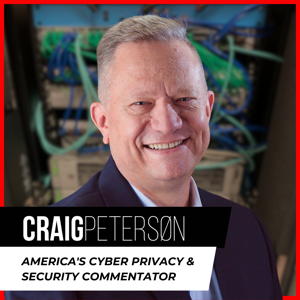


Good morning everybody!
I was on with Matt this morning and we had a good discussion about my recommendations for the type of security software, ransomware, 5G, and the cost of TV now. Let's get into my conversation with Matt on WGAN.
These and more tech tips, news, and updates visit - CraigPeterson.com
---
Automated Machine Generated Transcript:
Here's what I kind of recommend for people. If you are going to get some of the software, here's what I say you should get. First of all. Well, that was me this morning on WGAN radio, talking with Matt about, again, this week's hot topics, and if you're wondering who I am, I'm Craig Peterson, but here we go with Matt.
Seven 36 WGAN morning news. Craig Peterson, our tech guru. He joins us now and he needs to turn down his radio. Cause I can hear my voice.
That was odd, I don't have my radio on.
A little echo there. Maybe we'll say so let me start off Craig, with a question about YouTube TV. I, I use YouTube TV. I'm a big fan of YouTube TV. And, it's been a decent price for me, not anymore though. Right? Yeah. A lot of us have been looking to, how can we cut back on our costs here? Cable TV was creeping up 50, 70, over a hundred dollars a month.
And all people looked at this whole cost-cutting thing as a, you know, let's go on the internet. We can just get it cheap and you certainly could, but what we're starting to see now is a split-up of stuff. For instance, our friends over at Disney have decided to pull the Marvel universe from its competitors, because it now has Disney plus that it wants to charge you 10 to 15 to $20 a month for all these different services.
Right. There's a plus there's Netflix. Peacock is coming up as NBC. CBS has theirs and YouTube has now. Taking the price of their we've kind of equivalent to the basic cable and has hiked that price by 30%. So if you're a brand new customer, you can expect to pay $65 a month for YouTube television service from here on out.
Now they've added some more channels in there. They've picked up CBS Viacom family of cable TV networks. But this is getting to the point now where, who knows cable might be cheaper, but. There is something on the horizon that might help us all out. And that is five G. This is where we could be kind of a savior because right now you're paying the cable company for the internet.
Anyways, most of us, right? Some of us might have DSL from the telephone company, which is not particularly fast. Some of us have the satellite service, which again is not particularly fast, but with five G that's going to reach even the smaller towns and cities eventually here. It's certainly not going to reach out in the middle of nowhere, but with five G we're going to have a platform that allows people to deliver very, very specific programming.
So. My fingers are crossed, Matt, that hopefully with 5g coming out. We are going to see a huge change in that we can just get whatever we like. You know, we can't watch the NFL anymore after their announcement this week, but, you know, maybe just watch the Red Sox or, or watch the games you want to watch rather than have to buy these bundles like YouTube $65 a month bundle.
Hmm, we are talking with Craig Peterson, our tech guru. He joins us at this time every week to go over. What's going on in the world of technology. Craig, I know that a lot of people are still worried about viruses on their computers. And so they oftentimes will try to get a. The free version of antivirus software or whatnot, but, there's a lot of reasons, perhaps not to do that and do instead pay for an antivirus software program.
Why is that?
Yeah, there are a lot of free programs out there and I've used many of them over the years. I don't want to confuse people. I mentioning some of the ones that I've used, but the free versions are exactly that they're free there to try and get you going. The features that you get when you pay for the software, really add up pretty quickly.
Some of them have these anti-phishing features, some of them will even filter your email, looking for phishing attacks, which are really huge right now. And usually carry ransomware. It's on the increase. I'm afraid to say, but they include various other things that are going to help you out bank security, password managers, et cetera.
Here's what I kind of recommend for people. If you are going to get some of the software. Here's what I say you should get. First of all. Use what's already on your machine. So if you're a Windows user, use the software that came with Windows - Windows Defender, make sure it stays up to date.
Make sure it stays on. Another thing. This is kind of hard to do. I'll have to do a course on this, but lock down your computer. You can do this manually through the Windows firewall, unfortunately by default. Microsoft has too many services turned on. So turn off services you don't need and use Bit Defender. Get the paid version of Bit Defender. None of this is a hundred percent, but working together, you're going to get about an at this point about a 90% effectiveness and one more thing to get, and that's open DNS.
Get the paid version. There are family versions. That'll help keep your kids safe online as well, away from the things maybe say shouldn't be seeing online, but the open DNS can cost you a few bucks as well.
But those three things together, Matt, is going to save you from about 98% of all of the nastiness online.
Ooh, that's all quite a bit. we're talking with Craig Peterson, our tech guru. He joins us at this time every Wednesday to go over the world of technology. A final question for you here, Craig. the biggest threat that we experience out there online right now seems to be ransomware.
Is that getting worse?
Yeah, it's absolutely getting worse and we've gotta be careful here. The FBI has been warning us about the increases in it. We've got all these security companies talking about it as well. Just last week, there's a new wave of ransomware attacks against large organizations. It was identified in 31 large businesses.
Now, part of the reason it's identified there is they have security teams that are keeping an eye out for you as a small business. There's a home user. You're not going to report because you're not going to stop it. It's just going to be after the fact, hopefully, you have a good backup, frankly. But these attackers and breach the networks of these 31 different large businesses, and we're laying out the groundwork for their attacks.
It's kind of interesting in the way they do it, so I won't get into it. Now we might talk about it again on, on Saturday during my show. The bottom line of ransomware is easier for the bad guys to do than ever before. We are clicking on more stuff than ever before because of the whole COVID thing. We want to know what's going on and we get an email, we click on it.
So be very, very careful. Don't click on links to sites that you are not a hundred percent sure of. If you want to find out about COVID-19. There are a couple of sites you might want to go to. Some people go to the world health organization, but of course, you can go to cdc.gov and get all of the facts as we're being told, anyways. Just don't click on these emails, because ransomware is really nasty stuff.
Good advice. It says always Craig Peterson, our tech guru joins us on Wednesdays at this time to go over the world of technology. You can hear him on this very station, Saturdays a one, because he goes into all these stories and more in greater depth.
Craig, thanks as always for joining us. And we'll talk to you again soon.
Thanks, Matt. Take care of, appreciate it.
---
More stories and tech updates at:
www.craigpeterson.com
Don't miss an episode from Craig. Subscribe and give us a rating:
www.craigpeterson.com/itunes
Follow me on Twitter for the latest in tech at:
www.twitter.com/craigpeterson
For questions, call or text:
855-385-5553
Good morning everybody!
I was on with Matt this morning and we had a good discussion about my recommendations for the type of security software, ransomware, 5G, and the cost of TV now. Let's get into my conversation with Matt on WGAN.
These and more tech tips, news, and updates visit - CraigPeterson.com
---
Automated Machine Generated Transcript:
Here's what I kind of recommend for people. If you are going to get some of the software, here's what I say you should get. First of all. Well, that was me this morning on WGAN radio, talking with Matt about, again, this week's hot topics, and if you're wondering who I am, I'm Craig Peterson, but here we go with Matt.
Seven 36 WGAN morning news. Craig Peterson, our tech guru. He joins us now and he needs to turn down his radio. Cause I can hear my voice.
That was odd, I don't have my radio on.
A little echo there. Maybe we'll say so let me start off Craig, with a question about YouTube TV. I, I use YouTube TV. I'm a big fan of YouTube TV. And, it's been a decent price for me, not anymore though. Right? Yeah. A lot of us have been looking to, how can we cut back on our costs here? Cable TV was creeping up 50, 70, over a hundred dollars a month.
And all people looked at this whole cost-cutting thing as a, you know, let's go on the internet. We can just get it cheap and you certainly could, but what we're starting to see now is a split-up of stuff. For instance, our friends over at Disney have decided to pull the Marvel universe from its competitors, because it now has Disney plus that it wants to charge you 10 to 15 to $20 a month for all these different services.
Right. There's a plus there's Netflix. Peacock is coming up as NBC. CBS has theirs and YouTube has now. Taking the price of their we've kind of equivalent to the basic cable and has hiked that price by 30%. So if you're a brand new customer, you can expect to pay $65 a month for YouTube television service from here on out.
Now they've added some more channels in there. They've picked up CBS Viacom family of cable TV networks. But this is getting to the point now where, who knows cable might be cheaper, but. There is something on the horizon that might help us all out. And that is five G. This is where we could be kind of a savior because right now you're paying the cable company for the internet.
Anyways, most of us, right? Some of us might have DSL from the telephone company, which is not particularly fast. Some of us have the satellite service, which again is not particularly fast, but with five G that's going to reach even the smaller towns and cities eventually here. It's certainly not going to reach out in the middle of nowhere, but with five G we're going to have a platform that allows people to deliver very, very specific programming.
So. My fingers are crossed, Matt, that hopefully with 5g coming out. We are going to see a huge change in that we can just get whatever we like. You know, we can't watch the NFL anymore after their announcement this week, but, you know, maybe just watch the Red Sox or, or watch the games you want to watch rather than have to buy these bundles like YouTube $65 a month bundle.
Hmm, we are talking with Craig Peterson, our tech guru. He joins us at this time every week to go over. What's going on in the world of technology. Craig, I know that a lot of people are still worried about viruses on their computers. And so they oftentimes will try to get a. The free version of antivirus software or whatnot, but, there's a lot of reasons, perhaps not to do that and do instead pay for an antivirus software program.
Why is that?
Yeah, there are a lot of free programs out there and I've used many of them over the years. I don't want to confuse people. I mentioning some of the ones that I've used, but the free versions are exactly that they're free there to try and get you going. The features that you get when you pay for the software, really add up pretty quickly.
Some of them have these anti-phishing features, some of them will even filter your email, looking for phishing attacks, which are really huge right now. And usually carry ransomware. It's on the increase. I'm afraid to say, but they include various other things that are going to help you out bank security, password managers, et cetera.
Here's what I kind of recommend for people. If you are going to get some of the software. Here's what I say you should get. First of all. Use what's already on your machine. So if you're a Windows user, use the software that came with Windows - Windows Defender, make sure it stays up to date.
Make sure it stays on. Another thing. This is kind of hard to do. I'll have to do a course on this, but lock down your computer. You can do this manually through the Windows firewall, unfortunately by default. Microsoft has too many services turned on. So turn off services you don't need and use Bit Defender. Get the paid version of Bit Defender. None of this is a hundred percent, but working together, you're going to get about an at this point about a 90% effectiveness and one more thing to get, and that's open DNS.
Get the paid version. There are family versions. That'll help keep your kids safe online as well, away from the things maybe say shouldn't be seeing online, but the open DNS can cost you a few bucks as well.
But those three things together, Matt, is going to save you from about 98% of all of the nastiness online.
Ooh, that's all quite a bit. we're talking with Craig Peterson, our tech guru. He joins us at this time every Wednesday to go over the world of technology. A final question for you here, Craig. the biggest threat that we experience out there online right now seems to be ransomware.
Is that getting worse?
Yeah, it's absolutely getting worse and we've gotta be careful here. The FBI has been warning us about the increases in it. We've got all these security companies talking about it as well. Just last week, there's a new wave of ransomware attacks against large organizations. It was identified in 31 large businesses.
Now, part of the reason it's identified there is they have security teams that are keeping an eye out for you as a small business. There's a home user. You're not going to report because you're not going to stop it. It's just going to be after the fact, hopefully, you have a good backup, frankly. But these attackers and breach the networks of these 31 different large businesses, and we're laying out the groundwork for their attacks.
It's kind of interesting in the way they do it, so I won't get into it. Now we might talk about it again on, on Saturday during my show. The bottom line of ransomware is easier for the bad guys to do than ever before. We are clicking on more stuff than ever before because of the whole COVID thing. We want to know what's going on and we get an email, we click on it.
So be very, very careful. Don't click on links to sites that you are not a hundred percent sure of. If you want to find out about COVID-19. There are a couple of sites you might want to go to. Some people go to the world health organization, but of course, you can go to cdc.gov and get all of the facts as we're being told, anyways. Just don't click on these emails, because ransomware is really nasty stuff.
Good advice. It says always Craig Peterson, our tech guru joins us on Wednesdays at this time to go over the world of technology. You can hear him on this very station, Saturdays a one, because he goes into all these stories and more in greater depth.
Craig, thanks as always for joining us. And we'll talk to you again soon.
Thanks, Matt. Take care of, appreciate it.
---
More stories and tech updates at:
www.craigpeterson.com
Don't miss an episode from Craig. Subscribe and give us a rating:
www.craigpeterson.com/itunes
Follow me on Twitter for the latest in tech at:
www.twitter.com/craigpeterson
For questions, call or text:
855-385-5553
Good morning everybody!
I was on with Matt this morning and we had a good discussion about Doom Scrolling and how it is affecting the mental health of people and society in general. We also discussed Mark Zuckerberg's view on censorship on Facebook. Let's get into my conversation with Matt on WGAN.
These and more tech tips, news, and updates visit - CraigPeterson.com
---
Automated Machine Generated Transcript:
[00:00:00] Craig Peterson: So we put on some more software because they had been using Malware Bytes, which is something I really like, but it's not a panacea. They switched over to the stuff that we had that we've been providing and we found a Chinese backdoor.
Hey, good morning, everybody. I am planning on doing a show this weekend, even though it is on the 4th of July.
So we'll see how it goes today. But that was me with Matt. This morning, doing voice impersonations as well, which I usually don't do. It was kind of fun. Anyhow, we covered, I think, three of the best topics of the week,
Matt Gagnon: Seven 30, six WGAN morning news on Wednesday morning. It is 64 degrees in Portland, and we're joined now by Craig Peterson, our tech guru, who joins us at this time every Wednesday to go over the world of technology and the fascinating world it is.
Is it not Craig?
Craig Peterson: It is each end every Wednesday, as well as Saturdays at one.
[00:01:00]Matt Gagnon: Now that also is radio professionalism. He's teasing and previewing. The fact that he has a show on Saturday at one. To make sure you hear it here on this fine station WGAN which you can listen to by telling your Alexa to listen to news radio WGAN at any time, any place anywhere for any reason.
Now, Craig, I want to start at the bottom of the list that you sent me every Wednesday. There's usually a good nugget or two, and I'm going to start right at the bottom here today because there's a very interesting story that you had sent me about doom scrolling and how it's slowly eroding your mental health. It's screwing everyone up.
[00:02:00] And I know that this is sort of tied to Coronavirus. But I gotta tell ya, several people that I know I'm not gonna name names or anything here, but, they, they do that like, and they have done that for years. It doesn't, it isn't just. It isn't just coronavirus, although that's certainly amplified it.
Craig Peterson: Yeah, not to name names, but I have someone that I've been married to for.
Matt Gagnon: Well, okay. You dimed out your wife. I'm going to do the same then because my, my wife and I constantly fight over things that she reads and, you know, she's trying to be an informed person and, you know, check out the world around her and stuff and it just emotionally manipulates her all the time.
And then we get into the. You know, uncomfortable conversations about stuff like that. And it just, it, it becomes a problem, particularly with, you know, she's not terribly bad at it, but even if you're sitting there all day in the morning, and then in the evening before you go to bed and you're just scrolling, scrolling, scrolling, and checking out all these things.
[00:03:00] Craig Peterson: Well, then it didn't, didn't use to be so bad, man. You know what? It was bad enough. Right. But now what's all of the news about the news is about this old COVID-19 the worlds about to come to but it's been about all, you know, news consumption, generally speaking, you know, you see all the, just horrible things in the world and all the things that, you know, cause you emotional distress or whatever, and then you just can't stop and you get into a rabbit hole and your aunt. So tell me a little bit about doom scrolling and why an end. And if it's not COVID-19 it's the riots in the streets and really a lot of bad news out. There's still a lot.
There's a lot of talk about this so much so that, as you mentioned here, there's a name for it, which is called doom scrolling and the signs of it includes, you know you're not only doing it to every spare minute, but you're not going to sleep at night. You're sitting there going through this reading again and again, and you end up in these what the New York times, Kevin Rose is calling a doom surfing or falling into deep morbid rabbit holes.
Filled with coronavirus content. One of the things I thought we would get out of the internet, this was a long time ago was that you know, we, we would have this wonderful new town square where we could all talk and engage.
Matt Gagnon: We had that for a time and now it's gone.
[00:04:00] Craig Peterson: We did. Absolutely. And now what's happened is that the internet is figured out, Hey, wait a minute. Now we can make bucks off of you if we can keep your eyeballs on us. And what're some of the better ways to keep your eyeballs on it? And of course the doom and gloom or some of the things that can be very, very addictive.
To all of us. And then you add in all of the psychology that the gaming community has helped over the years to keep you involved. It's so bad that there are people mostly in South Korea. Yeah. But so bad that people have died rather than eat or use the bathroom. Okay. Just to be able to play a game online. So we, we've gotta be very, very careful with this because it's a psychological cycle we're getting into right now.
Matt Gagnon: That's going to be very hard to get out. Yeah. I mean, it's just, it's amazing how much of your life is lost with doing nothing? Just scrolling around looking and reading and things that only manipulate you emotionally and make you miserable all the time. And yet people can't stop doing it. It's, it's a fascinating, fascinating thing, that I've, I've noticed over the years.
[00:05:00]And isn't it amazing Craig, anytime the power goes out or something, have you ever noticed this about, about yourself? I certainly have like, whatever you no longer have access to these things, your, your phone died. Cause he didn't charge it and all that kind of stuff. You know, you go to bed at like nine o'clock and it just doesn't sit there and preoccupy yourself with this stuff over and over again forever.
And I think you're a happier person for it.
Craig Peterson: I agree. And why would you need to just tune in to WGAN and you'll get all of the news you need.
Matt Gagnon: Indeed. All right. Well, we're talking with Craig Peterson, our tech guru, who is joining us to talk about the world of technology as he always does. Craig, what is the average cost of a data breach?
Craig Peterson: Oh, my gosh, this is something. Yeah. It's been going up and up except you about 20 bucks. I think now $20.
Matt Gagnon: 20 bucks. Yeah. Yeah. Yeah.
[00:06:00] Craig Peterson: The latest statistics it's out there right now is showing that the average cost is 116 million. Dollars, which was just absolutely amazing. This is for companies publicly traded, even on the pink sheets, private companies, of course, don't have to really information.
So we're not sure that those sites are criminals out there going after their usual targets, customer names, addresses, email addresses. And it's very, very costly because of all of the new regulations that are in place, but also because of what it does to your business. We're still seeing most businesses that get breached being out of business within six months.
Matt Gagnon: Wow.
Craig Peterson: What are we doing about it? You know, I, I have another client that we picked up here just about two weeks ago, and we put in some. More advanced malware software and you know me, right. I keep telling people that the stuff you buy from staples, the stuff Microsoft gives you just is not enough, right?
[00:07:00] Norton. Ain't gonna cut it and et cetera, et cetera. So we put on some more software cause they had been using Malwarebytes, which is something I really like, but it's not a panacea. And they switched over to the stuff that we had that we've been providing. And we found a Chinese backdoor. And what that means is that the Chinese now had full access to everything on their network whenever. They wanted it.
Now, this was, or is, I should say a contractor for the department of defense, a subcontractor for the department of defense. It's just, it's insane. What's going on out there? What does that cost them? What does it cost to the company when the Chinese now have access to all of your plans, all of your intellectual property or your production schedules, all of your clients, everything. That means they now can go into competition with you and producing your designs for the 10th of the price.
[00:08:00] And it's all just because most of these companies aren't spending a little bit of time and a little bit of money just to save them this average of $160 million from a single data breach. They're not spending time and money to make sure their networks and systems are secured. And I'm very, very concerned because of what is been happening with working at home.
And this is a trend. We talked about it, right? that these computers that are in our homes, home computers are not secure. And so a lot of businesses are yes. Well, we gave our employees all a laptop to take home and we use the VPN we're safe. That was me quoting.
Matt Gagnon: That's an excellent voice
[00:09:00] Craig Peterson: Yes thank you. In reality, what they just did was make their networks in the business, even less safe because so many VPNs allow the kids gaming computers and who knows what that teenage boy is looking at online. All of those websites now have access through that VPN to your office. So it's, it's very expensive.
Cybercriminals have tripled their game here in the last three months and we've got to be a lot more cautious going forward.
Matt Gagnon: Really quickly. Craig, before you go, I did want to ask you one last question here and it's about what's going on with Facebook. And this, this boycott the advertiser boycott.
That's going on, they're adapting, you know, a little bit and changing what they're doing with censorship on the platform as a result in response to that. Tell me what's happening.
Craig Peterson: Yeah. We mentioned porous advertising earlier. Great ways to make money online. Well, Facebook, of course, makes money through advertising. And Matt did you notice I was praising Zuckerberg for this, but they're just about two weeks ago. He was saying, Hey, listen, we cannot be online being the arbitrator of who says what on the platform?
[00:10:00] Matt Gagnon: Yeah.
Craig Peterson: Did you?
Matt Gagnon: I did.
Craig Peterson: Okay. So one of those largest advertisers in the world, yeah. Unilever spends eight-point $2 billion, at least that's what they spent last year. So 8.2 billion annually joined Verizon the North face and Ben and Jerry's. Boycotting advertising on Facebook until these are going to be my words here. Okay. Boycotting advertising on Facebook until they started to censor the president. They're very upset that Facebook was not censoring conservative speech and they pulled their advertising.
[00:11:00]Now. Thank goodness. Zuckerberg can be really Neely worded to be because he came out and said that Facebook would remove content. No matter if a politician or a government official says it. If we determine it may lead to violence or deprive people of the right to vote. So it doesn't look like he's going to be doing the types of things that Twitter has been doing, wherein George Orwellian fashion, they came up with a new term where it is so-called fact-checking that is not fact-checking looks like they're going to be blocking things that maybe deprive people of the right to vote or violence.
But again, who's the decider here.
Matt Gagnon: Yeah. Great question. And one that I'm sure you're going to answer on Saturday at one. When you are on this very station to go through these with more depth and detail, Craig Peterson our tech guru. We appreciate it as always. And we'll talk again next week, Sir.
Craig Peterson: Hey, take care. Thanks, Matt. Bye-bye.
Matt Gagnon: You bet. All right, coming up next.
[00:12:00]Craig Peterson: All right, everybody. So I am planning on doing a show, as I mentioned, make sure you are on my email list. So you find out about all of the free pieces of training, everything else I'm doing. Go to Craig peterson.com/subscribe. Take care. Everybody. I hope you have a great independence day celebration, and maybe you had a decent Canada day celebration as well, if you're from the Great White North, eh? Take care, everybody. Bye-bye.
---
More stories and tech updates at:
www.craigpeterson.com
Don't miss an episode from Craig. Subscribe and give us a rating:
www.craigpeterson.com/itunes
Follow me on Twitter for the latest in tech at:
www.twitter.com/craigpeterson
For questions, call or text:
855-385-5553
Good morning everybody!
I was on with Matt this morning and we had a good discussion about Doom Scrolling and how it is affecting the mental health of people and society in general. We also discussed Mark Zuckerberg's view on censorship on Facebook. Let's get into my conversation with Matt on WGAN.
These and more tech tips, news, and updates visit - CraigPeterson.com
---
Automated Machine Generated Transcript:
[00:00:00] Craig Peterson: So we put on some more software because they had been using Malware Bytes, which is something I really like, but it's not a panacea. They switched over to the stuff that we had that we've been providing and we found a Chinese backdoor.
Hey, good morning, everybody. I am planning on doing a show this weekend, even though it is on the 4th of July.
So we'll see how it goes today. But that was me with Matt. This morning, doing voice impersonations as well, which I usually don't do. It was kind of fun. Anyhow, we covered, I think, three of the best topics of the week,
Matt Gagnon: Seven 30, six WGAN morning news on Wednesday morning. It is 64 degrees in Portland, and we're joined now by Craig Peterson, our tech guru, who joins us at this time every Wednesday to go over the world of technology and the fascinating world it is.
Is it not Craig?
Craig Peterson: It is each end every Wednesday, as well as Saturdays at one.
[00:01:00]Matt Gagnon: Now that also is radio professionalism. He's teasing and previewing. The fact that he has a show on Saturday at one. To make sure you hear it here on this fine station WGAN which you can listen to by telling your Alexa to listen to news radio WGAN at any time, any place anywhere for any reason.
Now, Craig, I want to start at the bottom of the list that you sent me every Wednesday. There's usually a good nugget or two, and I'm going to start right at the bottom here today because there's a very interesting story that you had sent me about doom scrolling and how it's slowly eroding your mental health. It's screwing everyone up.
[00:02:00] And I know that this is sort of tied to Coronavirus. But I gotta tell ya, several people that I know I'm not gonna name names or anything here, but, they, they do that like, and they have done that for years. It doesn't, it isn't just. It isn't just coronavirus, although that's certainly amplified it.
Craig Peterson: Yeah, not to name names, but I have someone that I've been married to for.
Matt Gagnon: Well, okay. You dimed out your wife. I'm going to do the same then because my, my wife and I constantly fight over things that she reads and, you know, she's trying to be an informed person and, you know, check out the world around her and stuff and it just emotionally manipulates her all the time.
And then we get into the. You know, uncomfortable conversations about stuff like that. And it just, it, it becomes a problem, particularly with, you know, she's not terribly bad at it, but even if you're sitting there all day in the morning, and then in the evening before you go to bed and you're just scrolling, scrolling, scrolling, and checking out all these things.
[00:03:00] Craig Peterson: Well, then it didn't, didn't use to be so bad, man. You know what? It was bad enough. Right. But now what's all of the news about the news is about this old COVID-19 the worlds about to come to but it's been about all, you know, news consumption, generally speaking, you know, you see all the, just horrible things in the world and all the things that, you know, cause you emotional distress or whatever, and then you just can't stop and you get into a rabbit hole and your aunt. So tell me a little bit about doom scrolling and why an end. And if it's not COVID-19 it's the riots in the streets and really a lot of bad news out. There's still a lot.
There's a lot of talk about this so much so that, as you mentioned here, there's a name for it, which is called doom scrolling and the signs of it includes, you know you're not only doing it to every spare minute, but you're not going to sleep at night. You're sitting there going through this reading again and again, and you end up in these what the New York times, Kevin Rose is calling a doom surfing or falling into deep morbid rabbit holes.
Filled with coronavirus content. One of the things I thought we would get out of the internet, this was a long time ago was that you know, we, we would have this wonderful new town square where we could all talk and engage.
Matt Gagnon: We had that for a time and now it's gone.
[00:04:00] Craig Peterson: We did. Absolutely. And now what's happened is that the internet is figured out, Hey, wait a minute. Now we can make bucks off of you if we can keep your eyeballs on us. And what're some of the better ways to keep your eyeballs on it? And of course the doom and gloom or some of the things that can be very, very addictive.
To all of us. And then you add in all of the psychology that the gaming community has helped over the years to keep you involved. It's so bad that there are people mostly in South Korea. Yeah. But so bad that people have died rather than eat or use the bathroom. Okay. Just to be able to play a game online. So we, we've gotta be very, very careful with this because it's a psychological cycle we're getting into right now.
Matt Gagnon: That's going to be very hard to get out. Yeah. I mean, it's just, it's amazing how much of your life is lost with doing nothing? Just scrolling around looking and reading and things that only manipulate you emotionally and make you miserable all the time. And yet people can't stop doing it. It's, it's a fascinating, fascinating thing, that I've, I've noticed over the years.
[00:05:00]And isn't it amazing Craig, anytime the power goes out or something, have you ever noticed this about, about yourself? I certainly have like, whatever you no longer have access to these things, your, your phone died. Cause he didn't charge it and all that kind of stuff. You know, you go to bed at like nine o'clock and it just doesn't sit there and preoccupy yourself with this stuff over and over again forever.
And I think you're a happier person for it.
Craig Peterson: I agree. And why would you need to just tune in to WGAN and you'll get all of the news you need.
Matt Gagnon: Indeed. All right. Well, we're talking with Craig Peterson, our tech guru, who is joining us to talk about the world of technology as he always does. Craig, what is the average cost of a data breach?
Craig Peterson: Oh, my gosh, this is something. Yeah. It's been going up and up except you about 20 bucks. I think now $20.
Matt Gagnon: 20 bucks. Yeah. Yeah. Yeah.
[00:06:00] Craig Peterson: The latest statistics it's out there right now is showing that the average cost is 116 million. Dollars, which was just absolutely amazing. This is for companies publicly traded, even on the pink sheets, private companies, of course, don't have to really information.
So we're not sure that those sites are criminals out there going after their usual targets, customer names, addresses, email addresses. And it's very, very costly because of all of the new regulations that are in place, but also because of what it does to your business. We're still seeing most businesses that get breached being out of business within six months.
Matt Gagnon: Wow.
Craig Peterson: What are we doing about it? You know, I, I have another client that we picked up here just about two weeks ago, and we put in some. More advanced malware software and you know me, right. I keep telling people that the stuff you buy from staples, the stuff Microsoft gives you just is not enough, right?
[00:07:00] Norton. Ain't gonna cut it and et cetera, et cetera. So we put on some more software cause they had been using Malwarebytes, which is something I really like, but it's not a panacea. And they switched over to the stuff that we had that we've been providing. And we found a Chinese backdoor. And what that means is that the Chinese now had full access to everything on their network whenever. They wanted it.
Now, this was, or is, I should say a contractor for the department of defense, a subcontractor for the department of defense. It's just, it's insane. What's going on out there? What does that cost them? What does it cost to the company when the Chinese now have access to all of your plans, all of your intellectual property or your production schedules, all of your clients, everything. That means they now can go into competition with you and producing your designs for the 10th of the price.
[00:08:00] And it's all just because most of these companies aren't spending a little bit of time and a little bit of money just to save them this average of $160 million from a single data breach. They're not spending time and money to make sure their networks and systems are secured. And I'm very, very concerned because of what is been happening with working at home.
And this is a trend. We talked about it, right? that these computers that are in our homes, home computers are not secure. And so a lot of businesses are yes. Well, we gave our employees all a laptop to take home and we use the VPN we're safe. That was me quoting.
Matt Gagnon: That's an excellent voice
[00:09:00] Craig Peterson: Yes thank you. In reality, what they just did was make their networks in the business, even less safe because so many VPNs allow the kids gaming computers and who knows what that teenage boy is looking at online. All of those websites now have access through that VPN to your office. So it's, it's very expensive.
Cybercriminals have tripled their game here in the last three months and we've got to be a lot more cautious going forward.
Matt Gagnon: Really quickly. Craig, before you go, I did want to ask you one last question here and it's about what's going on with Facebook. And this, this boycott the advertiser boycott.
That's going on, they're adapting, you know, a little bit and changing what they're doing with censorship on the platform as a result in response to that. Tell me what's happening.
Craig Peterson: Yeah. We mentioned porous advertising earlier. Great ways to make money online. Well, Facebook, of course, makes money through advertising. And Matt did you notice I was praising Zuckerberg for this, but they're just about two weeks ago. He was saying, Hey, listen, we cannot be online being the arbitrator of who says what on the platform?
[00:10:00] Matt Gagnon: Yeah.
Craig Peterson: Did you?
Matt Gagnon: I did.
Craig Peterson: Okay. So one of those largest advertisers in the world, yeah. Unilever spends eight-point $2 billion, at least that's what they spent last year. So 8.2 billion annually joined Verizon the North face and Ben and Jerry's. Boycotting advertising on Facebook until these are going to be my words here. Okay. Boycotting advertising on Facebook until they started to censor the president. They're very upset that Facebook was not censoring conservative speech and they pulled their advertising.
[00:11:00]Now. Thank goodness. Zuckerberg can be really Neely worded to be because he came out and said that Facebook would remove content. No matter if a politician or a government official says it. If we determine it may lead to violence or deprive people of the right to vote. So it doesn't look like he's going to be doing the types of things that Twitter has been doing, wherein George Orwellian fashion, they came up with a new term where it is so-called fact-checking that is not fact-checking looks like they're going to be blocking things that maybe deprive people of the right to vote or violence.
But again, who's the decider here.
Matt Gagnon: Yeah. Great question. And one that I'm sure you're going to answer on Saturday at one. When you are on this very station to go through these with more depth and detail, Craig Peterson our tech guru. We appreciate it as always. And we'll talk again next week, Sir.
Craig Peterson: Hey, take care. Thanks, Matt. Bye-bye.
Matt Gagnon: You bet. All right, coming up next.
[00:12:00]Craig Peterson: All right, everybody. So I am planning on doing a show, as I mentioned, make sure you are on my email list. So you find out about all of the free pieces of training, everything else I'm doing. Go to Craig peterson.com/subscribe. Take care. Everybody. I hope you have a great independence day celebration, and maybe you had a decent Canada day celebration as well, if you're from the Great White North, eh? Take care, everybody. Bye-bye.
---
More stories and tech updates at:
www.craigpeterson.com
Don't miss an episode from Craig. Subscribe and give us a rating:
www.craigpeterson.com/itunes
Follow me on Twitter for the latest in tech at:
www.twitter.com/craigpeterson
For questions, call or text:
855-385-5553
Good morning everybody!
I was on with Matt this morning and we had a good discussion about Doom Scrolling and how it is affecting the mental health of people and society in general. We also discussed Mark Zuckerberg's view on censorship on Facebook. Let's get into my conversation with Matt on WGAN.
These and more tech tips, news, and updates visit - CraigPeterson.com
---
Automated Machine Generated Transcript:
[00:00:00] Craig Peterson: So we put on some more software because they had been using Malware Bytes, which is something I really like, but it's not a panacea. They switched over to the stuff that we had that we've been providing and we found a Chinese backdoor.
Hey, good morning, everybody. I am planning on doing a show this weekend, even though it is on the 4th of July.
So we'll see how it goes today. But that was me with Matt. This morning, doing voice impersonations as well, which I usually don't do. It was kind of fun. Anyhow, we covered, I think, three of the best topics of the week,
Matt Gagnon: Seven 30, six WGAN morning news on Wednesday morning. It is 64 degrees in Portland, and we're joined now by Craig Peterson, our tech guru, who joins us at this time every Wednesday to go over the world of technology and the fascinating world it is.
Is it not Craig?
Craig Peterson: It is each end every Wednesday, as well as Saturdays at one.
[00:01:00]Matt Gagnon: Now that also is radio professionalism. He's teasing and previewing. The fact that he has a show on Saturday at one. To make sure you hear it here on this fine station WGAN which you can listen to by telling your Alexa to listen to news radio WGAN at any time, any place anywhere for any reason.
Now, Craig, I want to start at the bottom of the list that you sent me every Wednesday. There's usually a good nugget or two, and I'm going to start right at the bottom here today because there's a very interesting story that you had sent me about doom scrolling and how it's slowly eroding your mental health. It's screwing everyone up.
[00:02:00] And I know that this is sort of tied to Coronavirus. But I gotta tell ya, several people that I know I'm not gonna name names or anything here, but, they, they do that like, and they have done that for years. It doesn't, it isn't just. It isn't just coronavirus, although that's certainly amplified it.
Craig Peterson: Yeah, not to name names, but I have someone that I've been married to for.
Matt Gagnon: Well, okay. You dimed out your wife. I'm going to do the same then because my, my wife and I constantly fight over things that she reads and, you know, she's trying to be an informed person and, you know, check out the world around her and stuff and it just emotionally manipulates her all the time.
And then we get into the. You know, uncomfortable conversations about stuff like that. And it just, it, it becomes a problem, particularly with, you know, she's not terribly bad at it, but even if you're sitting there all day in the morning, and then in the evening before you go to bed and you're just scrolling, scrolling, scrolling, and checking out all these things.
[00:03:00] Craig Peterson: Well, then it didn't, didn't use to be so bad, man. You know what? It was bad enough. Right. But now what's all of the news about the news is about this old COVID-19 the worlds about to come to but it's been about all, you know, news consumption, generally speaking, you know, you see all the, just horrible things in the world and all the things that, you know, cause you emotional distress or whatever, and then you just can't stop and you get into a rabbit hole and your aunt. So tell me a little bit about doom scrolling and why an end. And if it's not COVID-19 it's the riots in the streets and really a lot of bad news out. There's still a lot.
There's a lot of talk about this so much so that, as you mentioned here, there's a name for it, which is called doom scrolling and the signs of it includes, you know you're not only doing it to every spare minute, but you're not going to sleep at night. You're sitting there going through this reading again and again, and you end up in these what the New York times, Kevin Rose is calling a doom surfing or falling into deep morbid rabbit holes.
Filled with coronavirus content. One of the things I thought we would get out of the internet, this was a long time ago was that you know, we, we would have this wonderful new town square where we could all talk and engage.
Matt Gagnon: We had that for a time and now it's gone.
[00:04:00] Craig Peterson: We did. Absolutely. And now what's happened is that the internet is figured out, Hey, wait a minute. Now we can make bucks off of you if we can keep your eyeballs on us. And what're some of the better ways to keep your eyeballs on it? And of course the doom and gloom or some of the things that can be very, very addictive.
To all of us. And then you add in all of the psychology that the gaming community has helped over the years to keep you involved. It's so bad that there are people mostly in South Korea. Yeah. But so bad that people have died rather than eat or use the bathroom. Okay. Just to be able to play a game online. So we, we've gotta be very, very careful with this because it's a psychological cycle we're getting into right now.
Matt Gagnon: That's going to be very hard to get out. Yeah. I mean, it's just, it's amazing how much of your life is lost with doing nothing? Just scrolling around looking and reading and things that only manipulate you emotionally and make you miserable all the time. And yet people can't stop doing it. It's, it's a fascinating, fascinating thing, that I've, I've noticed over the years.
[00:05:00]And isn't it amazing Craig, anytime the power goes out or something, have you ever noticed this about, about yourself? I certainly have like, whatever you no longer have access to these things, your, your phone died. Cause he didn't charge it and all that kind of stuff. You know, you go to bed at like nine o'clock and it just doesn't sit there and preoccupy yourself with this stuff over and over again forever.
And I think you're a happier person for it.
Craig Peterson: I agree. And why would you need to just tune in to WGAN and you'll get all of the news you need.
Matt Gagnon: Indeed. All right. Well, we're talking with Craig Peterson, our tech guru, who is joining us to talk about the world of technology as he always does. Craig, what is the average cost of a data breach?
Craig Peterson: Oh, my gosh, this is something. Yeah. It's been going up and up except you about 20 bucks. I think now $20.
Matt Gagnon: 20 bucks. Yeah. Yeah. Yeah.
[00:06:00] Craig Peterson: The latest statistics it's out there right now is showing that the average cost is 116 million. Dollars, which was just absolutely amazing. This is for companies publicly traded, even on the pink sheets, private companies, of course, don't have to really information.
So we're not sure that those sites are criminals out there going after their usual targets, customer names, addresses, email addresses. And it's very, very costly because of all of the new regulations that are in place, but also because of what it does to your business. We're still seeing most businesses that get breached being out of business within six months.
Matt Gagnon: Wow.
Craig Peterson: What are we doing about it? You know, I, I have another client that we picked up here just about two weeks ago, and we put in some. More advanced malware software and you know me, right. I keep telling people that the stuff you buy from staples, the stuff Microsoft gives you just is not enough, right?
[00:07:00] Norton. Ain't gonna cut it and et cetera, et cetera. So we put on some more software cause they had been using Malwarebytes, which is something I really like, but it's not a panacea. And they switched over to the stuff that we had that we've been providing. And we found a Chinese backdoor. And what that means is that the Chinese now had full access to everything on their network whenever. They wanted it.
Now, this was, or is, I should say a contractor for the department of defense, a subcontractor for the department of defense. It's just, it's insane. What's going on out there? What does that cost them? What does it cost to the company when the Chinese now have access to all of your plans, all of your intellectual property or your production schedules, all of your clients, everything. That means they now can go into competition with you and producing your designs for the 10th of the price.
[00:08:00] And it's all just because most of these companies aren't spending a little bit of time and a little bit of money just to save them this average of $160 million from a single data breach. They're not spending time and money to make sure their networks and systems are secured. And I'm very, very concerned because of what is been happening with working at home.
And this is a trend. We talked about it, right? that these computers that are in our homes, home computers are not secure. And so a lot of businesses are yes. Well, we gave our employees all a laptop to take home and we use the VPN we're safe. That was me quoting.
Matt Gagnon: That's an excellent voice
[00:09:00] Craig Peterson: Yes thank you. In reality, what they just did was make their networks in the business, even less safe because so many VPNs allow the kids gaming computers and who knows what that teenage boy is looking at online. All of those websites now have access through that VPN to your office. So it's, it's very expensive.
Cybercriminals have tripled their game here in the last three months and we've got to be a lot more cautious going forward.
Matt Gagnon: Really quickly. Craig, before you go, I did want to ask you one last question here and it's about what's going on with Facebook. And this, this boycott the advertiser boycott.
That's going on, they're adapting, you know, a little bit and changing what they're doing with censorship on the platform as a result in response to that. Tell me what's happening.
Craig Peterson: Yeah. We mentioned porous advertising earlier. Great ways to make money online. Well, Facebook, of course, makes money through advertising. And Matt did you notice I was praising Zuckerberg for this, but they're just about two weeks ago. He was saying, Hey, listen, we cannot be online being the arbitrator of who says what on the platform?
[00:10:00] Matt Gagnon: Yeah.
Craig Peterson: Did you?
Matt Gagnon: I did.
Craig Peterson: Okay. So one of those largest advertisers in the world, yeah. Unilever spends eight-point $2 billion, at least that's what they spent last year. So 8.2 billion annually joined Verizon the North face and Ben and Jerry's. Boycotting advertising on Facebook until these are going to be my words here. Okay. Boycotting advertising on Facebook until they started to censor the president. They're very upset that Facebook was not censoring conservative speech and they pulled their advertising.
[00:11:00]Now. Thank goodness. Zuckerberg can be really Neely worded to be because he came out and said that Facebook would remove content. No matter if a politician or a government official says it. If we determine it may lead to violence or deprive people of the right to vote. So it doesn't look like he's going to be doing the types of things that Twitter has been doing, wherein George Orwellian fashion, they came up with a new term where it is so-called fact-checking that is not fact-checking looks like they're going to be blocking things that maybe deprive people of the right to vote or violence.
But again, who's the decider here.
Matt Gagnon: Yeah. Great question. And one that I'm sure you're going to answer on Saturday at one. When you are on this very station to go through these with more depth and detail, Craig Peterson our tech guru. We appreciate it as always. And we'll talk again next week, Sir.
Craig Peterson: Hey, take care. Thanks, Matt. Bye-bye.
Matt Gagnon: You bet. All right, coming up next.
[00:12:00]Craig Peterson: All right, everybody. So I am planning on doing a show, as I mentioned, make sure you are on my email list. So you find out about all of the free pieces of training, everything else I'm doing. Go to Craig peterson.com/subscribe. Take care. Everybody. I hope you have a great independence day celebration, and maybe you had a decent Canada day celebration as well, if you're from the Great White North, eh? Take care, everybody. Bye-bye.
---
More stories and tech updates at:
www.craigpeterson.com
Don't miss an episode from Craig. Subscribe and give us a rating:
www.craigpeterson.com/itunes
Follow me on Twitter for the latest in tech at:
www.twitter.com/craigpeterson
For questions, call or text:
855-385-5553
Welcome!
Good morning, everybody. I was on with Jim Polito and we discussed Facebook's 180 on Censorship and Can police legally ask you to unlock your phone? Here we go with Jim.
For more tech tips, news, and updates visit - CraigPeterson.com
---
Automated Machine Generated Transcript:
[00:00:00] Craig Peterson: Yeah, I argued that it violated his fifth amendment rights, which is kind of did here. And the Supreme court sided with Hubble. Now let's move forward 20 years to today where we have smartphones and all of these laws about privacy. And of course, things like the fifth amendment are a lot older than our smartphone.
This almost felt like an Abbott and Costello routine this morning. There there's is no good answer. When it comes to the laws right now on whether I think to enforce you to open your cell phones. Anyhow, that was me, Craig Peterson on with Mr. Jim Pollito this morning, covering central and Western mass. Here we go.
Jim Polito: It is the Eve of Canada day. Canada day that that's like 4th of July in Canada, you know, Canada has copy everything we do joining us now, the [00:01:00] man formerly of Canada now of the United States, our good friend and tech talk guru. Craig Peterson. Good morning, Craig.
Craig Peterson: Hey, good morning, Jim.
Jim Polito: Craig, this is great to have you on a Canada day Eve, a very important day, very meaningful day for, Canadians like you.
Yeah, but it's also meaningful to have you have, you want a day when we've got so much stuff in the news that relates to your area of expertise. And that's why I want to dive right into this whole Facebook thing. Which is, as the president would say is YUGE.
Craig Peterson: Yeah,
Jim Polito: I want to get into that. And then I want to talk about the police and the law, the privacy laws regarding my smartphone and having to unlock it under orders of police.
But let's start with Facebook. Woof, Mark Zuckerberg, taking a hit financially. Huh.
Craig Peterson: This is interesting. I had mentioned this to people here, by the way, for those that aren't aware of it, Canada didn't even have any sort of a Constitution until 1967.
[00:02:00] So they got a really nice socialist one up there. It's now illegal to offend someone in Canada.
Jim Polito: Laughing
Craig Peterson: Just in case you're wondering.
Jim Polito: I know, it's crazy. Ah, it is. And who as, as, as a justice Scalia would say, who decides, you know, his question always is who decides, so who decides what's offensive and what's not, that's what I want to know.
Exactly. And if someone tells you that you must call them the Royal Highness, the toilet throne, you must do that.
Craig Peterson: Or you will go to jail. But anyways, next, Peterson, by the way, Professor in Toronto is just, he's amazing. But anyway, back to this Facebook, I was talking with my wife, [00:03:00] not more than two weeks ago, about how I was shocked and impressed by what Mark Zuckerberg was doing. You see your head, everybody out.
It's out there. Right? Twitter was running around. Google was running around and they were all, Oh my gosh, the president's tweets here. We need somebody that hates something to quote fact check him. Again, a redefinition of a word, right. It's just so 1984, where fact-checking doesn't mean that they're checking the fact. Fact-checking means that they're checking to see whether or not it meets left-wing dogma and here we had Mark Zuckerberg there saying, "Hey, listen, I'm not going to do this." We need to have free speech. We need to have open forums. We need everyone to understand what's going on.
And then this happened. We had a bunch of left-wing companies. Now, now remember this. Okay. All of these major tech companies are [00:04:00] extremely left-wing and I'm talking about left-wing by the American standard.
In other words, they're very, very socialist in what they want to do and how they want to do it. Many of them are Marxists. You know, they're, they're hard over there. But, what we're seeing is all of a sudden, all of these companies decided that. You know, free speech is not a good thing. Very a very Marxist tendency.
You've talked about it before and the very fascist, which is the same thing. People don't understand. There are two sides of the same coin, but they had over a hundred different advertisers, including the North face, Ben and Jerry's and Verizon. Boycotting advertising on Facebook because Facebook would not censor people who had a speech that was maybe libertarian or conservative, or frankly, anything the President might say.
Jim Polito: Yeah. Right. You got to [00:05:00] censor him. Anything that comes out of his mouth. You've got a censor.
Craig Peterson: Yeah, exactly. So you look at the biggest advertisers in the world. You know, Unilever is one of the biggest ones and they spent eight-point $2 billion on marketing last year. And Unilever said, Hey, we're stopping advertising on Facebook until you start.
I'm not paraphrasing here. I'm just interpreting. We're going to stop advertising on Facebook. That eight-point $2 billion. None of us. Can I go to Facebook until you stop the president from speaking freely and Facebook shares closed down 8.3%?
Jim Polito: And that's big. I mean, even, well, you know, Mark Zuckerberg, it's not like he's a, he's going to have to buy from the dollar menu for the rest of the year.
You know, he lost billions in value and his value. But, the point is he's kind of doing the right thing by saying, I'm not going to censor it, [00:06:00] unfortunately in this free market, you know, that comes with a cost.
Craig Peterson: Yeah it really does.
Jim Polito: With all the "Woke" corporations.
Craig Peterson: Oh, my gosh. It's so true. Now his statement was that Facebook would remove content, no matter if a politician or government official says it. If we determine it may lead to violence or deprive people of the right to vote. So his statement was rather narrow. And that gives me a little bit of hope here that maybe he has kind of turned a bit of a corner.
Now, there is another social media platform out there that I'm on called parlay or Parler, and it is a direct competitor of Twitter and has been. Have you seen the numbers over the last week? 1.1, or excuse me, my Parler had about 1 million people on its platform a little more than a week ago. It now has one and a half [00:07:00] million people on it.
Half a million people that have left Twitter and gone to Parler because of this sort of thing that's happening. And Parler is saying, Hey, listen here we're like all conservative voices now on Parler. And the CEO, founder of Parler has offered $20,000 reward for a left-wing shul to move over to Parler and followers from Twitter.
Jim Polito: Yeah. you know, I joined it because I knew about it and I finally decided to join it, and get my name on it. So I could have the name, Jim Pollito, like I do on all the other platforms. And, I I've just started looking at it. I haven't done, put it, put out any posts on it yet, but I have watched it.
But if you go to the mainstream media now, they'll tell you that parler is, Is, is racist, antisemitic, whatever. They'll tell you that it's a home for racism and antisemitism. And that's just the mainstream media is saying, [00:08:00] Hey, we don't like somebody coming up. And being a conservative, we don't like that.
They won't admit that they've got Marxists, Leninists, fascists, you know, operating on their platforms, but they'll point right at this little upstart and say, Oh, it's antisemitic.
Craig Peterson: Yeah, absolutely. You know, and we'll see what happens. And when the filtering really starts happening over there at Facebook, but it's, this is going to be a problem.
So, Hey, look, let's talk about the cops and forcing the unlocked phones here, Jim. Do you remember Webster Hubbell? He's getting pulled into this too. Web Hubbell, isn't Web Hubbell dead now, too. I thought he passed. He was part of the whole whitewater deal? And he had a mouth like a, he actually looked to me like a large mouth bass with all, you know, apologies to large mouth basses.
Jim Polito: He had a really big mouth. Web Hubbell. He was a strange-looking guy.
Craig Peterson: He really was. Well, there was a 2000 Supreme court opinion in the prosecution of Webb Hubbell, who was a Bill Clinton associate gotten snared whitewater investigation.
[00:09:00] You're absolutely right. And prosecutors asked Hubbell to produce documents in 11 broad categories.
And what did they do? They come through the documents, Hubbell provided and they found evidence to charge him with mail, fraud, and tax evasion. It sounds kind of familiar doesn't it that they are doing it again.
Jim Polito: Yes, it does.
Craig Peterson: That violated his fifth amendment rights, which it kinda did here and the Supreme court. Sided with Hubbell. Now let's move forward 20 years to today where we have smartphones and all of these laws about privacy. And of course, things like the fifth amendment are a lot older than our smartphones. And we've got courts now, Indiana Supreme court
[00:10:00] rule that the fifth amendment allows a woman accused of stalking to refuse to unlock her phone.
We've got other cases out there like in Philadelphia, a man was released from jail after four years. I've been held in contempt in connection with a child pornography case. Cause he wouldn't unlock it. The federal appeals court rejected his argument that the fifth amendment gave him the right to refuse to unlock it.
A Vermont federal court reached the same conclusion as did our Colorado courts, Virginia state court. And. The Massachusetts Supreme judicial court in 2014. In other words, kind of, depending on what the police know, they can order you to unlock your phone. And there's a great analogy. Yeah. ARS Technica used. Let's say you have documents that are stored in a wall safe.
[00:11:00] You may know those documents may belong to you. They may not belong to you. You may know, or not know what's in the safe and you may know, or not know the combination to the safe. So the bottom line is if the government cannot show that the suspect knows the combination, then the courts unanimously agree that forcing the suspect to try to open it would be unconstitutional because of the act of opening the safe functions as an admission.
That the suspect owns the safe and the documents inside of it. Okay. So that's step number one. But if the government can show the suspect knows both passwords and which documents are in this safe, that's not protected because what the courts have been saying is the fifth amendment is a right against self-incriminating testimony, not the production of an incriminating document.
Jim Polito: Right?
Craig Peterson: States are split on this whole [00:12:00] thing right now. you know, there's one theory that holds the opening of the safe is a testimonial. Once it's open, it has whatever it contains, right? This is a confusing world right now.
Jim Polito: Right?
Craig Peterson: And of course the Massachusetts Supreme Judicial Court basically says.
Yeah, we can force you to open that if we know it's yours and we know that, you know, what's in that device. And we'll see what happens here going forward because it's easy enough now with these phones that unlocked themselves with just seeing your face. They don't have to force your thumb to a thumbprint reader.
They just have to point the phone at your face. That's really going to throw that wrench into this because yeah, it's just taking a picture.
Jim Polito: So let's just say it's uncharted territory, frankly, because. In [00:13:00] Massachusetts, you're saying the Supreme judicial court is saying, yeah, if you know, what's in there, like if it's a safe and you know, what's in there, you have to allow us, you have to open it for us.
Craig Peterson: Yeah, you're absolutely right. It gets very, very complicated.
Jim Polito: And that's not that's right. That's not standing on the street corner and the cop walks up, suspects you of a crime, and says open up that phone. It's once you're in the judicial system and it's a court that says you have to open up that phone.
Yeah, because the court believes that you do have this information in your safe, in your phone, the police officers have a reasonable cause action you know, what's on that phone and we want access to it. So this is getting more complicated by the day.
And I only play a lawyer on TV, not the radio. So we'll kind [00:14:00] of have to leave it to that. It's getting more confusing all of the time. All right.
Let's folks the way that they can get more information from you as these issues unfold. you text my name, Jim, to this number.
Craig Peterson: Eight five-five, three eight, five 55 53. Just text Jim to eight-five five three eight five 55 53. And if you have trouble with that, you can always just email me M [email protected].
Jim Polito: Craig peterson.com and of course, standard data and text rates apply. My name Craig, an excellent segment, happy Canada Day and we'll catch up with you next week.
Craig Peterson: All right, take care. Bye-bye.
Bye. Bye. Alright, don't go anywhere. Final word. When we return, you're listening to the Jim Polito show your safe space.
---
More stories and tech updates at:
www.craigpeterson.com
Don't miss an episode from Craig. Subscribe and give us a rating:
www.craigpeterson.com/itunes
Follow me on Twitter for the latest in tech at:
www.twitter.com/craigpeterson
For questions, call or text:
855-385-5553
Welcome!
Good morning, everybody. I was on with Jim Polito and we discussed Facebook's 180 on Censorship and Can police legally ask you to unlock your phone? Here we go with Jim.
For more tech tips, news, and updates visit - CraigPeterson.com
---
Automated Machine Generated Transcript:
[00:00:00] Craig Peterson: Yeah, I argued that it violated his fifth amendment rights, which is kind of did here. And the Supreme court sided with Hubble. Now let's move forward 20 years to today where we have smartphones and all of these laws about privacy. And of course, things like the fifth amendment are a lot older than our smartphone.
This almost felt like an Abbott and Costello routine this morning. There there's is no good answer. When it comes to the laws right now on whether I think to enforce you to open your cell phones. Anyhow, that was me, Craig Peterson on with Mr. Jim Pollito this morning, covering central and Western mass. Here we go.
Jim Polito: It is the Eve of Canada day. Canada day that that's like 4th of July in Canada, you know, Canada has copy everything we do joining us now, the [00:01:00] man formerly of Canada now of the United States, our good friend and tech talk guru. Craig Peterson. Good morning, Craig.
Craig Peterson: Hey, good morning, Jim.
Jim Polito: Craig, this is great to have you on a Canada day Eve, a very important day, very meaningful day for, Canadians like you.
Yeah, but it's also meaningful to have you have, you want a day when we've got so much stuff in the news that relates to your area of expertise. And that's why I want to dive right into this whole Facebook thing. Which is, as the president would say is YUGE.
Craig Peterson: Yeah,
Jim Polito: I want to get into that. And then I want to talk about the police and the law, the privacy laws regarding my smartphone and having to unlock it under orders of police.
But let's start with Facebook. Woof, Mark Zuckerberg, taking a hit financially. Huh.
Craig Peterson: This is interesting. I had mentioned this to people here, by the way, for those that aren't aware of it, Canada didn't even have any sort of a Constitution until 1967.
[00:02:00] So they got a really nice socialist one up there. It's now illegal to offend someone in Canada.
Jim Polito: Laughing
Craig Peterson: Just in case you're wondering.
Jim Polito: I know, it's crazy. Ah, it is. And who as, as, as a justice Scalia would say, who decides, you know, his question always is who decides, so who decides what's offensive and what's not, that's what I want to know.
Exactly. And if someone tells you that you must call them the Royal Highness, the toilet throne, you must do that.
Craig Peterson: Or you will go to jail. But anyways, next, Peterson, by the way, Professor in Toronto is just, he's amazing. But anyway, back to this Facebook, I was talking with my wife, [00:03:00] not more than two weeks ago, about how I was shocked and impressed by what Mark Zuckerberg was doing. You see your head, everybody out.
It's out there. Right? Twitter was running around. Google was running around and they were all, Oh my gosh, the president's tweets here. We need somebody that hates something to quote fact check him. Again, a redefinition of a word, right. It's just so 1984, where fact-checking doesn't mean that they're checking the fact. Fact-checking means that they're checking to see whether or not it meets left-wing dogma and here we had Mark Zuckerberg there saying, "Hey, listen, I'm not going to do this." We need to have free speech. We need to have open forums. We need everyone to understand what's going on.
And then this happened. We had a bunch of left-wing companies. Now, now remember this. Okay. All of these major tech companies are [00:04:00] extremely left-wing and I'm talking about left-wing by the American standard.
In other words, they're very, very socialist in what they want to do and how they want to do it. Many of them are Marxists. You know, they're, they're hard over there. But, what we're seeing is all of a sudden, all of these companies decided that. You know, free speech is not a good thing. Very a very Marxist tendency.
You've talked about it before and the very fascist, which is the same thing. People don't understand. There are two sides of the same coin, but they had over a hundred different advertisers, including the North face, Ben and Jerry's and Verizon. Boycotting advertising on Facebook because Facebook would not censor people who had a speech that was maybe libertarian or conservative, or frankly, anything the President might say.
Jim Polito: Yeah. Right. You got to [00:05:00] censor him. Anything that comes out of his mouth. You've got a censor.
Craig Peterson: Yeah, exactly. So you look at the biggest advertisers in the world. You know, Unilever is one of the biggest ones and they spent eight-point $2 billion on marketing last year. And Unilever said, Hey, we're stopping advertising on Facebook until you start.
I'm not paraphrasing here. I'm just interpreting. We're going to stop advertising on Facebook. That eight-point $2 billion. None of us. Can I go to Facebook until you stop the president from speaking freely and Facebook shares closed down 8.3%?
Jim Polito: And that's big. I mean, even, well, you know, Mark Zuckerberg, it's not like he's a, he's going to have to buy from the dollar menu for the rest of the year.
You know, he lost billions in value and his value. But, the point is he's kind of doing the right thing by saying, I'm not going to censor it, [00:06:00] unfortunately in this free market, you know, that comes with a cost.
Craig Peterson: Yeah it really does.
Jim Polito: With all the "Woke" corporations.
Craig Peterson: Oh, my gosh. It's so true. Now his statement was that Facebook would remove content, no matter if a politician or government official says it. If we determine it may lead to violence or deprive people of the right to vote. So his statement was rather narrow. And that gives me a little bit of hope here that maybe he has kind of turned a bit of a corner.
Now, there is another social media platform out there that I'm on called parlay or Parler, and it is a direct competitor of Twitter and has been. Have you seen the numbers over the last week? 1.1, or excuse me, my Parler had about 1 million people on its platform a little more than a week ago. It now has one and a half [00:07:00] million people on it.
Half a million people that have left Twitter and gone to Parler because of this sort of thing that's happening. And Parler is saying, Hey, listen here we're like all conservative voices now on Parler. And the CEO, founder of Parler has offered $20,000 reward for a left-wing shul to move over to Parler and followers from Twitter.
Jim Polito: Yeah. you know, I joined it because I knew about it and I finally decided to join it, and get my name on it. So I could have the name, Jim Pollito, like I do on all the other platforms. And, I I've just started looking at it. I haven't done, put it, put out any posts on it yet, but I have watched it.
But if you go to the mainstream media now, they'll tell you that parler is, Is, is racist, antisemitic, whatever. They'll tell you that it's a home for racism and antisemitism. And that's just the mainstream media is saying, [00:08:00] Hey, we don't like somebody coming up. And being a conservative, we don't like that.
They won't admit that they've got Marxists, Leninists, fascists, you know, operating on their platforms, but they'll point right at this little upstart and say, Oh, it's antisemitic.
Craig Peterson: Yeah, absolutely. You know, and we'll see what happens. And when the filtering really starts happening over there at Facebook, but it's, this is going to be a problem.
So, Hey, look, let's talk about the cops and forcing the unlocked phones here, Jim. Do you remember Webster Hubbell? He's getting pulled into this too. Web Hubbell, isn't Web Hubbell dead now, too. I thought he passed. He was part of the whole whitewater deal? And he had a mouth like a, he actually looked to me like a large mouth bass with all, you know, apologies to large mouth basses.
Jim Polito: He had a really big mouth. Web Hubbell. He was a strange-looking guy.
Craig Peterson: He really was. Well, there was a 2000 Supreme court opinion in the prosecution of Webb Hubbell, who was a Bill Clinton associate gotten snared whitewater investigation.
[00:09:00] You're absolutely right. And prosecutors asked Hubbell to produce documents in 11 broad categories.
And what did they do? They come through the documents, Hubbell provided and they found evidence to charge him with mail, fraud, and tax evasion. It sounds kind of familiar doesn't it that they are doing it again.
Jim Polito: Yes, it does.
Craig Peterson: That violated his fifth amendment rights, which it kinda did here and the Supreme court. Sided with Hubbell. Now let's move forward 20 years to today where we have smartphones and all of these laws about privacy. And of course, things like the fifth amendment are a lot older than our smartphones. And we've got courts now, Indiana Supreme court
[00:10:00] rule that the fifth amendment allows a woman accused of stalking to refuse to unlock her phone.
We've got other cases out there like in Philadelphia, a man was released from jail after four years. I've been held in contempt in connection with a child pornography case. Cause he wouldn't unlock it. The federal appeals court rejected his argument that the fifth amendment gave him the right to refuse to unlock it.
A Vermont federal court reached the same conclusion as did our Colorado courts, Virginia state court. And. The Massachusetts Supreme judicial court in 2014. In other words, kind of, depending on what the police know, they can order you to unlock your phone. And there's a great analogy. Yeah. ARS Technica used. Let's say you have documents that are stored in a wall safe.
[00:11:00] You may know those documents may belong to you. They may not belong to you. You may know, or not know what's in the safe and you may know, or not know the combination to the safe. So the bottom line is if the government cannot show that the suspect knows the combination, then the courts unanimously agree that forcing the suspect to try to open it would be unconstitutional because of the act of opening the safe functions as an admission.
That the suspect owns the safe and the documents inside of it. Okay. So that's step number one. But if the government can show the suspect knows both passwords and which documents are in this safe, that's not protected because what the courts have been saying is the fifth amendment is a right against self-incriminating testimony, not the production of an incriminating document.
Jim Polito: Right?
Craig Peterson: States are split on this whole [00:12:00] thing right now. you know, there's one theory that holds the opening of the safe is a testimonial. Once it's open, it has whatever it contains, right? This is a confusing world right now.
Jim Polito: Right?
Craig Peterson: And of course the Massachusetts Supreme Judicial Court basically says.
Yeah, we can force you to open that if we know it's yours and we know that, you know, what's in that device. And we'll see what happens here going forward because it's easy enough now with these phones that unlocked themselves with just seeing your face. They don't have to force your thumb to a thumbprint reader.
They just have to point the phone at your face. That's really going to throw that wrench into this because yeah, it's just taking a picture.
Jim Polito: So let's just say it's uncharted territory, frankly, because. In [00:13:00] Massachusetts, you're saying the Supreme judicial court is saying, yeah, if you know, what's in there, like if it's a safe and you know, what's in there, you have to allow us, you have to open it for us.
Craig Peterson: Yeah, you're absolutely right. It gets very, very complicated.
Jim Polito: And that's not that's right. That's not standing on the street corner and the cop walks up, suspects you of a crime, and says open up that phone. It's once you're in the judicial system and it's a court that says you have to open up that phone.
Yeah, because the court believes that you do have this information in your safe, in your phone, the police officers have a reasonable cause action you know, what's on that phone and we want access to it. So this is getting more complicated by the day.
And I only play a lawyer on TV, not the radio. So we'll kind [00:14:00] of have to leave it to that. It's getting more confusing all of the time. All right.
Let's folks the way that they can get more information from you as these issues unfold. you text my name, Jim, to this number.
Craig Peterson: Eight five-five, three eight, five 55 53. Just text Jim to eight-five five three eight five 55 53. And if you have trouble with that, you can always just email me M [email protected].
Jim Polito: Craig peterson.com and of course, standard data and text rates apply. My name Craig, an excellent segment, happy Canada Day and we'll catch up with you next week.
Craig Peterson: All right, take care. Bye-bye.
Bye. Bye. Alright, don't go anywhere. Final word. When we return, you're listening to the Jim Polito show your safe space.
---
More stories and tech updates at:
www.craigpeterson.com
Don't miss an episode from Craig. Subscribe and give us a rating:
www.craigpeterson.com/itunes
Follow me on Twitter for the latest in tech at:
www.twitter.com/craigpeterson
For questions, call or text:
855-385-5553
Welcome!
Good morning, everybody. I was on with Jim Polito and we discussed Facebook's 180 on Censorship and Can police legally ask you to unlock your phone? Here we go with Jim.
For more tech tips, news, and updates visit - CraigPeterson.com
---
Automated Machine Generated Transcript:
[00:00:00] Craig Peterson: Yeah, I argued that it violated his fifth amendment rights, which is kind of did here. And the Supreme court sided with Hubble. Now let's move forward 20 years to today where we have smartphones and all of these laws about privacy. And of course, things like the fifth amendment are a lot older than our smartphone.
This almost felt like an Abbott and Costello routine this morning. There there's is no good answer. When it comes to the laws right now on whether I think to enforce you to open your cell phones. Anyhow, that was me, Craig Peterson on with Mr. Jim Pollito this morning, covering central and Western mass. Here we go.
Jim Polito: It is the Eve of Canada day. Canada day that that's like 4th of July in Canada, you know, Canada has copy everything we do joining us now, the [00:01:00] man formerly of Canada now of the United States, our good friend and tech talk guru. Craig Peterson. Good morning, Craig.
Craig Peterson: Hey, good morning, Jim.
Jim Polito: Craig, this is great to have you on a Canada day Eve, a very important day, very meaningful day for, Canadians like you.
Yeah, but it's also meaningful to have you have, you want a day when we've got so much stuff in the news that relates to your area of expertise. And that's why I want to dive right into this whole Facebook thing. Which is, as the president would say is YUGE.
Craig Peterson: Yeah,
Jim Polito: I want to get into that. And then I want to talk about the police and the law, the privacy laws regarding my smartphone and having to unlock it under orders of police.
But let's start with Facebook. Woof, Mark Zuckerberg, taking a hit financially. Huh.
Craig Peterson: This is interesting. I had mentioned this to people here, by the way, for those that aren't aware of it, Canada didn't even have any sort of a Constitution until 1967.
[00:02:00] So they got a really nice socialist one up there. It's now illegal to offend someone in Canada.
Jim Polito: Laughing
Craig Peterson: Just in case you're wondering.
Jim Polito: I know, it's crazy. Ah, it is. And who as, as, as a justice Scalia would say, who decides, you know, his question always is who decides, so who decides what's offensive and what's not, that's what I want to know.
Exactly. And if someone tells you that you must call them the Royal Highness, the toilet throne, you must do that.
Craig Peterson: Or you will go to jail. But anyways, next, Peterson, by the way, Professor in Toronto is just, he's amazing. But anyway, back to this Facebook, I was talking with my wife, [00:03:00] not more than two weeks ago, about how I was shocked and impressed by what Mark Zuckerberg was doing. You see your head, everybody out.
It's out there. Right? Twitter was running around. Google was running around and they were all, Oh my gosh, the president's tweets here. We need somebody that hates something to quote fact check him. Again, a redefinition of a word, right. It's just so 1984, where fact-checking doesn't mean that they're checking the fact. Fact-checking means that they're checking to see whether or not it meets left-wing dogma and here we had Mark Zuckerberg there saying, "Hey, listen, I'm not going to do this." We need to have free speech. We need to have open forums. We need everyone to understand what's going on.
And then this happened. We had a bunch of left-wing companies. Now, now remember this. Okay. All of these major tech companies are [00:04:00] extremely left-wing and I'm talking about left-wing by the American standard.
In other words, they're very, very socialist in what they want to do and how they want to do it. Many of them are Marxists. You know, they're, they're hard over there. But, what we're seeing is all of a sudden, all of these companies decided that. You know, free speech is not a good thing. Very a very Marxist tendency.
You've talked about it before and the very fascist, which is the same thing. People don't understand. There are two sides of the same coin, but they had over a hundred different advertisers, including the North face, Ben and Jerry's and Verizon. Boycotting advertising on Facebook because Facebook would not censor people who had a speech that was maybe libertarian or conservative, or frankly, anything the President might say.
Jim Polito: Yeah. Right. You got to [00:05:00] censor him. Anything that comes out of his mouth. You've got a censor.
Craig Peterson: Yeah, exactly. So you look at the biggest advertisers in the world. You know, Unilever is one of the biggest ones and they spent eight-point $2 billion on marketing last year. And Unilever said, Hey, we're stopping advertising on Facebook until you start.
I'm not paraphrasing here. I'm just interpreting. We're going to stop advertising on Facebook. That eight-point $2 billion. None of us. Can I go to Facebook until you stop the president from speaking freely and Facebook shares closed down 8.3%?
Jim Polito: And that's big. I mean, even, well, you know, Mark Zuckerberg, it's not like he's a, he's going to have to buy from the dollar menu for the rest of the year.
You know, he lost billions in value and his value. But, the point is he's kind of doing the right thing by saying, I'm not going to censor it, [00:06:00] unfortunately in this free market, you know, that comes with a cost.
Craig Peterson: Yeah it really does.
Jim Polito: With all the "Woke" corporations.
Craig Peterson: Oh, my gosh. It's so true. Now his statement was that Facebook would remove content, no matter if a politician or government official says it. If we determine it may lead to violence or deprive people of the right to vote. So his statement was rather narrow. And that gives me a little bit of hope here that maybe he has kind of turned a bit of a corner.
Now, there is another social media platform out there that I'm on called parlay or Parler, and it is a direct competitor of Twitter and has been. Have you seen the numbers over the last week? 1.1, or excuse me, my Parler had about 1 million people on its platform a little more than a week ago. It now has one and a half [00:07:00] million people on it.
Half a million people that have left Twitter and gone to Parler because of this sort of thing that's happening. And Parler is saying, Hey, listen here we're like all conservative voices now on Parler. And the CEO, founder of Parler has offered $20,000 reward for a left-wing shul to move over to Parler and followers from Twitter.
Jim Polito: Yeah. you know, I joined it because I knew about it and I finally decided to join it, and get my name on it. So I could have the name, Jim Pollito, like I do on all the other platforms. And, I I've just started looking at it. I haven't done, put it, put out any posts on it yet, but I have watched it.
But if you go to the mainstream media now, they'll tell you that parler is, Is, is racist, antisemitic, whatever. They'll tell you that it's a home for racism and antisemitism. And that's just the mainstream media is saying, [00:08:00] Hey, we don't like somebody coming up. And being a conservative, we don't like that.
They won't admit that they've got Marxists, Leninists, fascists, you know, operating on their platforms, but they'll point right at this little upstart and say, Oh, it's antisemitic.
Craig Peterson: Yeah, absolutely. You know, and we'll see what happens. And when the filtering really starts happening over there at Facebook, but it's, this is going to be a problem.
So, Hey, look, let's talk about the cops and forcing the unlocked phones here, Jim. Do you remember Webster Hubbell? He's getting pulled into this too. Web Hubbell, isn't Web Hubbell dead now, too. I thought he passed. He was part of the whole whitewater deal? And he had a mouth like a, he actually looked to me like a large mouth bass with all, you know, apologies to large mouth basses.
Jim Polito: He had a really big mouth. Web Hubbell. He was a strange-looking guy.
Craig Peterson: He really was. Well, there was a 2000 Supreme court opinion in the prosecution of Webb Hubbell, who was a Bill Clinton associate gotten snared whitewater investigation.
[00:09:00] You're absolutely right. And prosecutors asked Hubbell to produce documents in 11 broad categories.
And what did they do? They come through the documents, Hubbell provided and they found evidence to charge him with mail, fraud, and tax evasion. It sounds kind of familiar doesn't it that they are doing it again.
Jim Polito: Yes, it does.
Craig Peterson: That violated his fifth amendment rights, which it kinda did here and the Supreme court. Sided with Hubbell. Now let's move forward 20 years to today where we have smartphones and all of these laws about privacy. And of course, things like the fifth amendment are a lot older than our smartphones. And we've got courts now, Indiana Supreme court
[00:10:00] rule that the fifth amendment allows a woman accused of stalking to refuse to unlock her phone.
We've got other cases out there like in Philadelphia, a man was released from jail after four years. I've been held in contempt in connection with a child pornography case. Cause he wouldn't unlock it. The federal appeals court rejected his argument that the fifth amendment gave him the right to refuse to unlock it.
A Vermont federal court reached the same conclusion as did our Colorado courts, Virginia state court. And. The Massachusetts Supreme judicial court in 2014. In other words, kind of, depending on what the police know, they can order you to unlock your phone. And there's a great analogy. Yeah. ARS Technica used. Let's say you have documents that are stored in a wall safe.
[00:11:00] You may know those documents may belong to you. They may not belong to you. You may know, or not know what's in the safe and you may know, or not know the combination to the safe. So the bottom line is if the government cannot show that the suspect knows the combination, then the courts unanimously agree that forcing the suspect to try to open it would be unconstitutional because of the act of opening the safe functions as an admission.
That the suspect owns the safe and the documents inside of it. Okay. So that's step number one. But if the government can show the suspect knows both passwords and which documents are in this safe, that's not protected because what the courts have been saying is the fifth amendment is a right against self-incriminating testimony, not the production of an incriminating document.
Jim Polito: Right?
Craig Peterson: States are split on this whole [00:12:00] thing right now. you know, there's one theory that holds the opening of the safe is a testimonial. Once it's open, it has whatever it contains, right? This is a confusing world right now.
Jim Polito: Right?
Craig Peterson: And of course the Massachusetts Supreme Judicial Court basically says.
Yeah, we can force you to open that if we know it's yours and we know that, you know, what's in that device. And we'll see what happens here going forward because it's easy enough now with these phones that unlocked themselves with just seeing your face. They don't have to force your thumb to a thumbprint reader.
They just have to point the phone at your face. That's really going to throw that wrench into this because yeah, it's just taking a picture.
Jim Polito: So let's just say it's uncharted territory, frankly, because. In [00:13:00] Massachusetts, you're saying the Supreme judicial court is saying, yeah, if you know, what's in there, like if it's a safe and you know, what's in there, you have to allow us, you have to open it for us.
Craig Peterson: Yeah, you're absolutely right. It gets very, very complicated.
Jim Polito: And that's not that's right. That's not standing on the street corner and the cop walks up, suspects you of a crime, and says open up that phone. It's once you're in the judicial system and it's a court that says you have to open up that phone.
Yeah, because the court believes that you do have this information in your safe, in your phone, the police officers have a reasonable cause action you know, what's on that phone and we want access to it. So this is getting more complicated by the day.
And I only play a lawyer on TV, not the radio. So we'll kind [00:14:00] of have to leave it to that. It's getting more confusing all of the time. All right.
Let's folks the way that they can get more information from you as these issues unfold. you text my name, Jim, to this number.
Craig Peterson: Eight five-five, three eight, five 55 53. Just text Jim to eight-five five three eight five 55 53. And if you have trouble with that, you can always just email me M [email protected].
Jim Polito: Craig peterson.com and of course, standard data and text rates apply. My name Craig, an excellent segment, happy Canada Day and we'll catch up with you next week.
Craig Peterson: All right, take care. Bye-bye.
Bye. Bye. Alright, don't go anywhere. Final word. When we return, you're listening to the Jim Polito show your safe space.
---
More stories and tech updates at:
www.craigpeterson.com
Don't miss an episode from Craig. Subscribe and give us a rating:
www.craigpeterson.com/itunes
Follow me on Twitter for the latest in tech at:
www.twitter.com/craigpeterson
For questions, call or text:
855-385-5553
Welcome!
Good morning, everybody. I was on with Steve Forni who was sitting in for the vacationing Jim Polito. We discussed voting methods (electronic, mail-in, and via an app), Anti-virus and cutting the cord. Here we go with Steve.
For more tech tips, news, and updates visit - CraigPeterson.com
---
Automated Machine Generated Transcript:
[00:00:00] Craig Peterson: Think of what happened in 2004 with hanging chads, you had a Republican, you had a Democrat, you had various attorneys at each table who were examining the ballots. At least they had ballots to examine. Well, Mr. Polito was out for the week. So Steve Fourni and I got into a number of different topics.
I also found out his name is actually not French. It's Italian. So I guess I just mispronounced it again.
Steve Fourni: All right. Yeah. We'll get back to the show. Steve Fourni here in for Jim Polito this morning. Every week at this hour we're joined by Craig Peterson, our tech talk guru.
Good morning, Craig. How are you, sir?
Craig Peterson: Hey, good morning, Steve. Yeah, I sent you a couple emails over the last couple of weeks and never heard back from you. Busy times over there. Were you like vacationing last week or something?
Steve Fourni: No. Although I did see that you, that you tried to send to, Stefan Ford, the EA, Oh, that must be my French, my French Canadian, cousin,
[00:01:00] I'll have to dig. I'll tell you when I lived up in Northern Vermont, every place I'd go out on the lawn, like Forney they're like, Oh, F O U R N I E R. I'm like, no, no, I Italian Forni, Forni.
Hey, Craig can we talk about, I know you do have a list of things we want to talk about, but I've been talking about the voting, the mail, and voting, and I don't understand why we can. pick our winner of American idol via our cell phones, but we can't pick the next President via our cell phones. What are some of the maybe concerns that you would have if we were to go to electronic voting?
Craig Peterson: Well, I heard Bayback trying to straighten you out on this morning. So I, hopefully, this isn't a lost cause, but here's the problem. When we're talking about American idol voting and putting in more votes for their winner, then the President gets. It's just such a difference. From saying it, who cares if somebody wins American Idol or not. In fact, they even
[00:02:00] admit that they allow you to vote 10 times when we're talking about the President of the United States or Congress critters, et cetera, we really do want to have a reasonable accounting of what's happened and what's happening. So we let's start with a mail-in ballot. How do we know the mail-in ballots are legitimate?
We, we already had an arrest a week and a half ago from somebody that printed up ballots themselves and sent them in. Now it's obviously what we're talking about here. This person was indeed caught, but the problem you have with the mail-in ballots is they. Personally, I think it was a guy is an idiot, but if China or Russia really wanted to influence our campaigns or our elections, I should say, well, how better to do it than to inject thousands of fake ballots. But even then we don't need
[00:03:00] thousands, look at the election for Senate that happened up in New Hampshire a few years ago. Kelly Ayotte lost by literally a hand full of votes. That's where you can really topple an election and to having some extra votes in your hip pocket there that you can throw in at the last minute that aren't necessarily trackable.
Is a problem. So how about trackable? Oh, if you're going to be able to track these votes, you now have to identify the person that sent in the ballot. And in some States, they even have different colored envelopes for these mail-in ballots. So the clerk, when they receive the ballot can automatically, let's see, we've got one Republican, one Democrat, one, two Republican two Democrat to one, right.
And start throwing away ballots based on their colors. Or there are others that say, well, let's put a bar code on it so that we know it's a legitimate
[00:04:00] ballot. All right. So the barcode let's say has a checksum on it, or it's actually registered in the database as something that was sent to a person and an individual home.
So we now know that this is John Bayback's vote. And even though he may not care how you vote, Steve people might care how John votes, and we can now take John's and throw it away or know exactly how John voted and use it for extortion. Or all we need to do is hack the computer that has the database throw in a few thousand extra ballots that weren't legitimate or reverse engineer the software.
When we get into what let's vote via an app, let's do the American idol thing. Well now, the flood gates for fraud are completely wide open. The flood Gates for fraud have already been shown to be, to be wide open in the testing that's been done.
[00:05:00] We've talked before on my show about some of them, some of these applications that were looked at by third parties, these applications are that they were trying to sell to various States and, and even look what happened with the DNC, with their electronic voting.
Out in Iowa for the primaries, the whole thing could fall apart very, very quickly. And there's no way to have a real audit of what happened. It's not like you've got a card. And you filled in the blank. So the little circles and you handed it to the machine that counted it. And now we're questioning, wait a minute.
Why this machine gets so many votes, this doesn't seem right. Or we spot check a machine. We can go grab those original ballots and. If worst came to worse, we can have an army of people counting them. Think of what happened in 2000 in Florida with a hanging CHADS, you had a Republican, you had a Democrat, you had various attorneys
[00:06:00] at each table who were examining the ballots.
At least they had ballots to examine. None of that can be true here. And that's what gets me concerned. Steve.
Steve Fourni: Well it's fair enough. I mean, you were the guy to ask, so I, if anybody's going to, you know, poopoo the idea, it'd be you. That's fine with me I suppose. But, no, but it's insightful. And I mean, I, you know, again, I know, I know it's so much easier obviously to just do the American Idol thing, but even like, it's funny when I log on, if I want to log into, see my VPN at home, I have to go through all these steps and I have to send a notification to my phone to verify and.
You know, I have all these channels that I have to go through in order to have some sort of security. And I didn't know if there's anything we could do, but I wish we were ahead of places like Russia and China, but I guess we're not, we're not technologically,
Craig Peterson: We are ahead. In Russia and China, your vote doesn't count. At least in the US, we're trying to make your vote count, right? You get 99.8% voting for the guy or gal that's at the head.
[00:07:00] Yes. It probably wasn't a legitimate vote. Right. And it's much easier if you want to be a socialist country to just have an electronic ballot where. There's no way to tell that all of these virtual ballot boxes were stuffed boxes. So this is not an easy problem to solve the technology can't solve it.
And I, I am for 100%, those heavy papers with very little felt pen where you fill in the oval a hundred percent for those.
Steve Fourni: Interesting. All right. Fair enough. We're talking with Craig Peterson our tech talk guru. And I'm moving off from that. one of the things you want to talk about was antivirus software, which I think we all get the ads for the free ones from companies we've probably never heard of.
And the best thing to do really is to just pay for them. But, but what are some of the processes that we should take, and how do we sort of know which ones to choose?
[00:08:00] Craig Peterson: Yeah, that's a difficult position, right? To be in nowadays. It's like a submarine. You have to have multiple compartments and having some of this antivirus software on your computer will.
The fight with each other. So you've gotta be a little bit careful. So let me just tell you what I think people should probably be looking at. you mentioned paying for them versus the free version. Absolutely. You get more flexibility. You get more good stuff and ease of use and support and a little bit of a better cover for business.
As long as you're not a regulated business, you can just use the basic stuff, but here's what I recommend people do. If you're using windows and you cannot change to something more secure, then here's, there's the basics use, Microsoft windows defender. It comes with Microsoft windows, make sure that you have that properly enabled and brought up [00:09:00] a date.
The second thing to do turn on automatic updates. If you have professional versions of windows, you can tell it to wait a week before it installs them. I absolutely advise you to wait a week because Microsoft is well known to mess up these things and cause problems on your computer. Okay. Then. As third party software, it goes right now.
I am recommending people use Bitdefender for their antivirus. Plus it works on windows. It also works on Mac. It's 30 bucks. It's very, very cheap that's per year. if you are a regulated industry, then you've got to get into the professional software and you should be expecting to pay about $50 a month per computer in order to help keep them safe. That's my.advice.
Bit defender, the windows software, avoid Kaspersky, like the plague. It is right up there with these other Chinese companies.
[00:10:00] In this case, it's Russian and we just don't know how good it is. The Norton three 60. I'm not a fan of and trend micro. I have avast, I'm not a fan of any of those. They are not great.
And none of the antivirus software, except for. To varying degrees, except for a bit defender, none of the antivirus software actually protects you from modern threats. So be very careful out there. Everybody, the bad guys are up to their activities up over 300%. They really are coming for us, but pay at least to pay the bit defender guys.
And if there's something else you've been using for the last 20, 30 years, while maybe you should pay for that too.
Steve Fourni: We're talking with the good stuff we're talking with. and, just one other thing that you had in here that I thought it was important to get to is somebody who would love to cut the cable.
But I also don't want to have to describe the 15 different things. it looks like YouTube TV just got a little bit more expensive, but it also looks like it suddenly got more options now, too. Right?
[00:11:00] Craig Peterson: Yeah, it did. They've added CBS, Viacom, the family of cable TV networks, but here's what we're talking about, YouTube, which initially was free.
Right? Hey, I get 30 days free. It's wonderful. You get all your local TV, et cetera. It is now $65 a month for the service. So compare that to what your basic cable used to cost you. Okay. It's we're at the point. Now, if you want to get your Disney plus you want to get YouTube for instance for television.
Maybe you want HBO or Showtime or some of these others, Netflix, because they've all got their own original series. Now about the Peacock, NBCs is coming out soon. It is way more expensive than cable. So yeah, there you go. Higher prices, basically all the way around.
Steve Fourni: That's disappointing. I mean, I'd like to do something and again, I am, you know, I'm paying for Disney plus I think my Hulu comes through my Spotify.
[00:12:00] Like that's part of the issue I'm having is it's also, it's, it's all just, so confusing. I, you know, if all I want to watch is jeopardy and sports and let my wife get her trash TV, I should find a cheaper way to do it, but it's, and then it always changes Netflix every month I add this, take this away.
And it's like, you never know what you're paying for. I guess.
Craig Peterson: Yeah. Yeah, that's absolutely true. It's very, very frustrating. I don't know if it's going to get much better. You know, I remember when cable TV was first introduced really back in the early eighties and how frustrating it was, then you had to buy packages and you couldn't Ala cart. Now, what is this today? 40 years later. And we've still got these same problems.
Steve Fourni: And then, of course, I think to myself, well, what if all these companies just got together and made one platform? Well, then they would be Comcast.
Craig Peterson: Yeah. Well, there's the opposite is happening. You know, we Disney just pulled all of their Marvel stuff from other networks.
[00:13:00] So it's, it's getting even more divided than it was before I think unless you can get it through your cable company at a reasonable. Price is going to just keep adding up. Cause you're talking 10, $15 a month for each one of these premium services. And then on top of it, there's 65 that YouTube wants to charge you or there's Sling.
There are dish networks. Those satellite service providers are getting nailed A T and T the losing subscribers like crazy, but it's, unfortunately, Steve, it's just not clear yet.
Steve Fourni: Yeah, that's a, it's interesting. Well, something to follow, Craig, we appreciate the time again, if you want information like this from Craig, all kinds of good stuff.
you can, text, well, I guess you could text my name right Steve to this number
Craig Peterson: (855) 385-5553. So just text Steve to (855) [00:14:00] 385-5553, or send an email to me. [email protected].
Steve Fourni: That is the best email address in the world. [email protected]. You can't, can't screw that one. I probably can't hack it either a certain even try Craig Peterson.
Thanks for the time today. We appreciate it and we'll catch up next week.
Craig Peterson: Take care, Steve. Bye-bye.
---
More stories and tech updates at:
www.craigpeterson.com
Don't miss an episode from Craig. Subscribe and give us a rating:
www.craigpeterson.com/itunes
Follow me on Twitter for the latest in tech at:
www.twitter.com/craigpeterson
For questions, call or text:
855-385-5553
Welcome!
Good morning, everybody. I was on with Steve Forni who was sitting in for the vacationing Jim Polito. We discussed voting methods (electronic, mail-in, and via an app), Anti-virus and cutting the cord. Here we go with Steve.
For more tech tips, news, and updates visit - CraigPeterson.com
---
Automated Machine Generated Transcript:
[00:00:00] Craig Peterson: Think of what happened in 2004 with hanging chads, you had a Republican, you had a Democrat, you had various attorneys at each table who were examining the ballots. At least they had ballots to examine. Well, Mr. Polito was out for the week. So Steve Fourni and I got into a number of different topics.
I also found out his name is actually not French. It's Italian. So I guess I just mispronounced it again.
Steve Fourni: All right. Yeah. We'll get back to the show. Steve Fourni here in for Jim Polito this morning. Every week at this hour we're joined by Craig Peterson, our tech talk guru.
Good morning, Craig. How are you, sir?
Craig Peterson: Hey, good morning, Steve. Yeah, I sent you a couple emails over the last couple of weeks and never heard back from you. Busy times over there. Were you like vacationing last week or something?
Steve Fourni: No. Although I did see that you, that you tried to send to, Stefan Ford, the EA, Oh, that must be my French, my French Canadian, cousin,
[00:01:00] I'll have to dig. I'll tell you when I lived up in Northern Vermont, every place I'd go out on the lawn, like Forney they're like, Oh, F O U R N I E R. I'm like, no, no, I Italian Forni, Forni.
Hey, Craig can we talk about, I know you do have a list of things we want to talk about, but I've been talking about the voting, the mail, and voting, and I don't understand why we can. pick our winner of American idol via our cell phones, but we can't pick the next President via our cell phones. What are some of the maybe concerns that you would have if we were to go to electronic voting?
Craig Peterson: Well, I heard Bayback trying to straighten you out on this morning. So I, hopefully, this isn't a lost cause, but here's the problem. When we're talking about American idol voting and putting in more votes for their winner, then the President gets. It's just such a difference. From saying it, who cares if somebody wins American Idol or not. In fact, they even
[00:02:00] admit that they allow you to vote 10 times when we're talking about the President of the United States or Congress critters, et cetera, we really do want to have a reasonable accounting of what's happened and what's happening. So we let's start with a mail-in ballot. How do we know the mail-in ballots are legitimate?
We, we already had an arrest a week and a half ago from somebody that printed up ballots themselves and sent them in. Now it's obviously what we're talking about here. This person was indeed caught, but the problem you have with the mail-in ballots is they. Personally, I think it was a guy is an idiot, but if China or Russia really wanted to influence our campaigns or our elections, I should say, well, how better to do it than to inject thousands of fake ballots. But even then we don't need
[00:03:00] thousands, look at the election for Senate that happened up in New Hampshire a few years ago. Kelly Ayotte lost by literally a hand full of votes. That's where you can really topple an election and to having some extra votes in your hip pocket there that you can throw in at the last minute that aren't necessarily trackable.
Is a problem. So how about trackable? Oh, if you're going to be able to track these votes, you now have to identify the person that sent in the ballot. And in some States, they even have different colored envelopes for these mail-in ballots. So the clerk, when they receive the ballot can automatically, let's see, we've got one Republican, one Democrat, one, two Republican two Democrat to one, right.
And start throwing away ballots based on their colors. Or there are others that say, well, let's put a bar code on it so that we know it's a legitimate
[00:04:00] ballot. All right. So the barcode let's say has a checksum on it, or it's actually registered in the database as something that was sent to a person and an individual home.
So we now know that this is John Bayback's vote. And even though he may not care how you vote, Steve people might care how John votes, and we can now take John's and throw it away or know exactly how John voted and use it for extortion. Or all we need to do is hack the computer that has the database throw in a few thousand extra ballots that weren't legitimate or reverse engineer the software.
When we get into what let's vote via an app, let's do the American idol thing. Well now, the flood gates for fraud are completely wide open. The flood Gates for fraud have already been shown to be, to be wide open in the testing that's been done.
[00:05:00] We've talked before on my show about some of them, some of these applications that were looked at by third parties, these applications are that they were trying to sell to various States and, and even look what happened with the DNC, with their electronic voting.
Out in Iowa for the primaries, the whole thing could fall apart very, very quickly. And there's no way to have a real audit of what happened. It's not like you've got a card. And you filled in the blank. So the little circles and you handed it to the machine that counted it. And now we're questioning, wait a minute.
Why this machine gets so many votes, this doesn't seem right. Or we spot check a machine. We can go grab those original ballots and. If worst came to worse, we can have an army of people counting them. Think of what happened in 2000 in Florida with a hanging CHADS, you had a Republican, you had a Democrat, you had various attorneys
[00:06:00] at each table who were examining the ballots.
At least they had ballots to examine. None of that can be true here. And that's what gets me concerned. Steve.
Steve Fourni: Well it's fair enough. I mean, you were the guy to ask, so I, if anybody's going to, you know, poopoo the idea, it'd be you. That's fine with me I suppose. But, no, but it's insightful. And I mean, I, you know, again, I know, I know it's so much easier obviously to just do the American Idol thing, but even like, it's funny when I log on, if I want to log into, see my VPN at home, I have to go through all these steps and I have to send a notification to my phone to verify and.
You know, I have all these channels that I have to go through in order to have some sort of security. And I didn't know if there's anything we could do, but I wish we were ahead of places like Russia and China, but I guess we're not, we're not technologically,
Craig Peterson: We are ahead. In Russia and China, your vote doesn't count. At least in the US, we're trying to make your vote count, right? You get 99.8% voting for the guy or gal that's at the head.
[00:07:00] Yes. It probably wasn't a legitimate vote. Right. And it's much easier if you want to be a socialist country to just have an electronic ballot where. There's no way to tell that all of these virtual ballot boxes were stuffed boxes. So this is not an easy problem to solve the technology can't solve it.
And I, I am for 100%, those heavy papers with very little felt pen where you fill in the oval a hundred percent for those.
Steve Fourni: Interesting. All right. Fair enough. We're talking with Craig Peterson our tech talk guru. And I'm moving off from that. one of the things you want to talk about was antivirus software, which I think we all get the ads for the free ones from companies we've probably never heard of.
And the best thing to do really is to just pay for them. But, but what are some of the processes that we should take, and how do we sort of know which ones to choose?
[00:08:00] Craig Peterson: Yeah, that's a difficult position, right? To be in nowadays. It's like a submarine. You have to have multiple compartments and having some of this antivirus software on your computer will.
The fight with each other. So you've gotta be a little bit careful. So let me just tell you what I think people should probably be looking at. you mentioned paying for them versus the free version. Absolutely. You get more flexibility. You get more good stuff and ease of use and support and a little bit of a better cover for business.
As long as you're not a regulated business, you can just use the basic stuff, but here's what I recommend people do. If you're using windows and you cannot change to something more secure, then here's, there's the basics use, Microsoft windows defender. It comes with Microsoft windows, make sure that you have that properly enabled and brought up [00:09:00] a date.
The second thing to do turn on automatic updates. If you have professional versions of windows, you can tell it to wait a week before it installs them. I absolutely advise you to wait a week because Microsoft is well known to mess up these things and cause problems on your computer. Okay. Then. As third party software, it goes right now.
I am recommending people use Bitdefender for their antivirus. Plus it works on windows. It also works on Mac. It's 30 bucks. It's very, very cheap that's per year. if you are a regulated industry, then you've got to get into the professional software and you should be expecting to pay about $50 a month per computer in order to help keep them safe. That's my.advice.
Bit defender, the windows software, avoid Kaspersky, like the plague. It is right up there with these other Chinese companies.
[00:10:00] In this case, it's Russian and we just don't know how good it is. The Norton three 60. I'm not a fan of and trend micro. I have avast, I'm not a fan of any of those. They are not great.
And none of the antivirus software, except for. To varying degrees, except for a bit defender, none of the antivirus software actually protects you from modern threats. So be very careful out there. Everybody, the bad guys are up to their activities up over 300%. They really are coming for us, but pay at least to pay the bit defender guys.
And if there's something else you've been using for the last 20, 30 years, while maybe you should pay for that too.
Steve Fourni: We're talking with the good stuff we're talking with. and, just one other thing that you had in here that I thought it was important to get to is somebody who would love to cut the cable.
But I also don't want to have to describe the 15 different things. it looks like YouTube TV just got a little bit more expensive, but it also looks like it suddenly got more options now, too. Right?
[00:11:00] Craig Peterson: Yeah, it did. They've added CBS, Viacom, the family of cable TV networks, but here's what we're talking about, YouTube, which initially was free.
Right? Hey, I get 30 days free. It's wonderful. You get all your local TV, et cetera. It is now $65 a month for the service. So compare that to what your basic cable used to cost you. Okay. It's we're at the point. Now, if you want to get your Disney plus you want to get YouTube for instance for television.
Maybe you want HBO or Showtime or some of these others, Netflix, because they've all got their own original series. Now about the Peacock, NBCs is coming out soon. It is way more expensive than cable. So yeah, there you go. Higher prices, basically all the way around.
Steve Fourni: That's disappointing. I mean, I'd like to do something and again, I am, you know, I'm paying for Disney plus I think my Hulu comes through my Spotify.
[00:12:00] Like that's part of the issue I'm having is it's also, it's, it's all just, so confusing. I, you know, if all I want to watch is jeopardy and sports and let my wife get her trash TV, I should find a cheaper way to do it, but it's, and then it always changes Netflix every month I add this, take this away.
And it's like, you never know what you're paying for. I guess.
Craig Peterson: Yeah. Yeah, that's absolutely true. It's very, very frustrating. I don't know if it's going to get much better. You know, I remember when cable TV was first introduced really back in the early eighties and how frustrating it was, then you had to buy packages and you couldn't Ala cart. Now, what is this today? 40 years later. And we've still got these same problems.
Steve Fourni: And then, of course, I think to myself, well, what if all these companies just got together and made one platform? Well, then they would be Comcast.
Craig Peterson: Yeah. Well, there's the opposite is happening. You know, we Disney just pulled all of their Marvel stuff from other networks.
[00:13:00] So it's, it's getting even more divided than it was before I think unless you can get it through your cable company at a reasonable. Price is going to just keep adding up. Cause you're talking 10, $15 a month for each one of these premium services. And then on top of it, there's 65 that YouTube wants to charge you or there's Sling.
There are dish networks. Those satellite service providers are getting nailed A T and T the losing subscribers like crazy, but it's, unfortunately, Steve, it's just not clear yet.
Steve Fourni: Yeah, that's a, it's interesting. Well, something to follow, Craig, we appreciate the time again, if you want information like this from Craig, all kinds of good stuff.
you can, text, well, I guess you could text my name right Steve to this number
Craig Peterson: (855) 385-5553. So just text Steve to (855) [00:14:00] 385-5553, or send an email to me. [email protected].
Steve Fourni: That is the best email address in the world. [email protected]. You can't, can't screw that one. I probably can't hack it either a certain even try Craig Peterson.
Thanks for the time today. We appreciate it and we'll catch up next week.
Craig Peterson: Take care, Steve. Bye-bye.
---
More stories and tech updates at:
www.craigpeterson.com
Don't miss an episode from Craig. Subscribe and give us a rating:
www.craigpeterson.com/itunes
Follow me on Twitter for the latest in tech at:
www.twitter.com/craigpeterson
For questions, call or text:
855-385-5553
From the publisher's feed