Crossing The Lane Lines

Crossing The Lane Lines

By Naji AliSportsSwimming
Download on the App Store

Crossing The Lane Lines episodes

  • Allies or Girl Bosses?: How White Female Swimmers Need to Speak Out
    Since last summer's uprising after the lynching of George Floyd, many White people said that they would stand with Black and Brown folk to demand systemic change that imbrues this racist society. White female athletes like Sue Bird, Megan Rapinoe, and Paige Bueckers, have come to the defense of their fellow Black and Brown teammates often times facing harsh criticism from management and the press for being vocal allies, but where are  White female swimmers in all of this? Why haven't they spoken out in support of the BIPOC community in swimming? Why didn't they stand publicly with Simone Manuel after she was grilled for 24-minutes at her Olympic trials press conference? Allyship has consequences, and on today's show we'll be joined by Dr. Johanna Mellis, an historian, former D1 swimmer, and elite level swim coach about addressing the need for White female swimmers to challenge the way things are in swimming, and how they need to be. 
    #doubleedegeswordofwomensempowerment
    #100sofUSAswimmersweresexuallyabusedfordecades

    1 hr 5 min
  • Tankproof : Helping Black Children Navigate Life's Currents
    When one thinks of reasons why Black children don’t swim, people say that they can’t afford lessons, and this is true somewhat, but a more practical reason involves another critical lifeskill; food. After all, if one is dealing with food scarcity swimming probably won’t be a top priority. Further, most swim programs that target underserved communities never look at this important need. Today we’ll be joined by the founders of Tankproof, Thurman and Torrance Thomas, to discuss their mission of teaching Black kids not only how to swim, but also about food insecurity and the need to make this a vital component in decreasing the drowning rates in the Black community.
    26 min
  • DC Waves: African American Aquatic History in the District of Columbia
    DC is home to The White House, The Washington Monument, and The MLK Memorial, everyone knows this, but what many don't know about is that its also home to some of the most vibrant Black aquatic programs in the country, and many were either founded or influenced by one man. Today, we'll speak to Lorn Hill, a 35-year employee of DC's Recreation and Parks, about the history of municipal pools, founding of an elite level swim club, Aqua Day Camp, and the Black History Invitational Swim Meet, which launched the careers of Olympians and college and aged-group swimmers around the country and around the world.
    1 hr 3 min
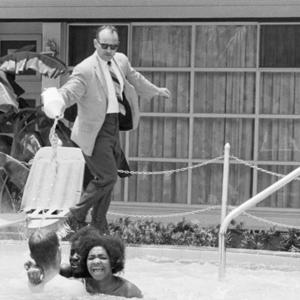
  • Rising Tide: How Black People Desegregated Beaches and Pools in South Florida
    NOTE: Apologies for the brief audio distortion.
    From seaweed to lost beach balls, sun-seekers bump into all sorts of surprises swimming along Florida’s iconic beaches. For Black swimmers however, there’s a complex history floating off Florida’s coastline – one of segregation and violence, but also one of protest and resistance. Diving deep into Black Florida’s fight for the right to swim, we'll speak to award winning filmmaker Cathleen Dean about the segregated beaches and pools of South Florida, and their relationship with the Civil Rights movement and the quest of water access for all.
    31 min
  • POOL: A Celebration of Blacks in Aquatics, a Mourning of our Struggles, and Our Hope for the future.
    Access to water for fun isn’t a privilege, and learning how to swim is a basic life skill. Both were denied to Black Americans through centuries of slavery and discrimination. That legacy is the focus of a daring new exhibit: POOL: A Social History of Segregation which opens Sept. 3, at the Fairmount Water Works Interpretive Center and runs through August 2022. Today we’ll speak to the curator of the exhibit, artist and avid swimmer Victoria Prizzia, about this amazing presentation on Black achievements, struggles, and hopes for the future in aquatics.
    29 min
  • "I'm not here to make friends." in Conversation with Drs. Johanna Mellis and Derek Silva
    On a special episode of Crossing The Lane Lines, I'll be interviewed by the co-hosts of the podcast The End of Sport about my swim journey, the impetus for creating Crossing The Lane Lines, my ongoing frustration with USA Swimming, and a brief history of Blacks in America and the broader Black diaspora about our relationship to aquatics, and the challenges that we still face in the 21st Century.
    1 hr 42 min
  • “Next Question “: Media, race bias, and the attack on Black bodies.
    On July 17th, at a press conference after she failed to make the 100m finals at the Olympic Trials, Simone Manuel, was grilled by journalists concerning her medical diagnosis of Overtraining syndrome. Many framed their questions as if to question whether The diagnosis really exists. All elite athletes have to answer questions about their performance, it's part of their job, but when do theses questions go too far, and are less about performance, and more about race and gender. We'll speak to scholar, author, and sports enthusiast, Dr. Letisha Brown, about the media, race, Black female athletes bodies, and the need to hold sports journalists accountable.
    35 min
  • The Word that is never spoken in swimming: Talkin’ ‘bout "Whiteness" Part Two of Two
    The crawl stroke or freestyle, is one of the most technically challenging strokes to master. Both the United States, and Australia claim to have improved it over the last 100 years, but who founded it, and why is it so important to discuss its origins concerning the subject of "Whiteness"? In part two of our two part series on the subject, we'll speak to Dr. Matt Hodler, a former D1 swimmer, history professor, and swim scholar, about the origins of the stroke, and the need to honor it's indigenous and African forebears.
    52 min
  • The word that is never spoken of in swimming: Talkin' 'bout “Whiteness.” Part One of Two
    Simone Manuel, is regarded as one of the best freestylers in the World. However, far too often she is referred to as the best Black swimmer in the World. Her Blackness is constantly put front and center, while at the same time you never hear someone define Katie Ledecky by her Whiteness. Why is that? In part one of a two-part series, we'll speak to former collegiate volleyballer, volleyball coach, and social justice educator, Jen Fry, about the reason why swimmers like Simone are defined by their race, why White athletes aren't, and what can be done about it.
    40 min
  • A Meet of Their Own: Highlighting The National Black Heritage Championship Swim Meet.
    Many Black swimmers have had to deal with being the only one at their meets that look like them. They've experienced isolation, ridicule, and racism. A foreigner in a foreign land, but on the Memorial Day weekend they get the opportunity to experience swimming from a Black perspective at the National Black Heritage Championship Swim Meet. Today we'll speak to one of the lead organizers, Lisa Webb, about the triumphs, challenges, and the afro-centric beauty of this extraordinary swimming event.
    52 min

About Crossing The Lane Lines

From the publisher's feed

Crossing The Lane Lines is dedicated to giving voice to the Black Swim community. We connect with coaches, swimmers, authors and activists. Seeking to inform the public about the rich aquatic history…