Stanford has helped shape Silicon Valley through generations of founders, faculty, research, and networks built around risk, experimentation, and long-term ambition. Antonio Baclig, Founder and CEO of Inlyte Energy, shares how his path from climate-focused research to grid-scale battery innovation was shaped by Stanford, Activate, and the broader startup ecosystem.
The conversation connects university spinouts, technology licensing, founder networks, failure, AI, manufacturing, energy storage, China’s battery supply chains, nuclear power, data centers, and the future of energy independence. It also looks at why abundant materials such as iron and sodium may matter for the grid, and why community remains central even as AI changes work and entrepreneurship.
Episode Show Notes:
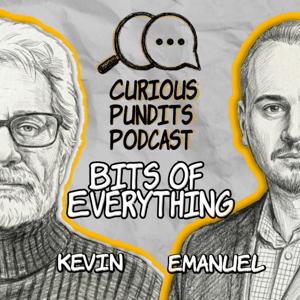
Hosted by Emanuel Petrescu and Kevin Carney
Guest: Antonio Baclig, Founder and CEO of Inlyte Energy
Topics covered:
Stanford University’s relationship with Silicon Valley
How Stanford alumni, students, faculty, and researchers contribute to startup formation
Examples of companies connected to Stanford, including Hewlett-Packard, Sun Microsystems, Yahoo, Google, DoorDash, Fervo Energy, and Inlyte Energy
Stanford’s technology licensing culture and startup-friendly structures
Antonio Baclig’s path from Hawaii to Harvard, Stanford, and Inlyte Energy
Climate change, clean technology, and grid-scale battery storage
Why Inlyte Energy focuses on iron sodium batteries
The difference between risky lab-stage innovation and commercially viable technology
Battery storage for solar, wind, data centers, and grid reliability
Supply chains, China’s role in battery manufacturing, and energy sovereignty
AI, automation, future jobs, and the role of higher education
Community, networks, and why startup ecosystems still matter
Failure, resilience, and the culture of trying again
Nuclear energy, small modular reactors, and the need for storage
Space exploration, solar power, and future battery possibilities
Episode Timestamps:
00:00:18 Stanford, Silicon Valley, and startup ecosystems
00:01:14 Antonio Baclig introduces his background and Inlyte Energy
00:02:50 Hawaii, local culture, and environmental protection
00:04:20 Stanford-connected companies and startup history
00:06:08 Fervo Energy, Stanford Climate Ventures, and founder networks
00:07:18 Comparing Silicon Valley with Austin’s startup ecosystem
00:09:28 Returning to Stanford after years in industry
00:11:06 Faculty, equity, startups, and Stanford’s ecosystem
00:12:31 Engineering, material science, and startup formation
00:14:03 Google, PageRank, and Stanford technology licensing
00:15:07 Licensing patents and helping founders reduce friction
00:16:45 Risk, battery chemistry, and startup timelines
00:19:09 Risk, capital, Columbus, DARPA, and proof of concept
00:20:29 Networks, Silicon Valley, and the future of startup communities
00:21:35 AI, work, community, and what comes next
00:23:10 Activate, trusted founder relationships, and startup mentorship
00:24:21 AI, employment, Luddites, and white-collar disruption
00:26:26 Robots, automation, and advice for the next generation
00:28:20 Manufacturing, automation, and learning fundamentals
00:31:28 English majors, AI, and hiring
00:32:15 College, community, critical thinking, and questioning information
00:36:55 Veritasium, learning, and effort
00:37:59 Failure, startup challenges, and learning from risk
00:39:14 Starting companies and making the world better
00:39:34 California’s culture of experimentation
00:40:20 Creative destruction and failed ventures
00:41:06 Amy Edmondson, C12 Energy, KoBold Metals, and learning from failure
00:43:02 Inlyte Energy, China, batteries, and energy competition
00:44:17 Solar, wind, battery materials, and domestic supply chains
00:48:33 Energy sovereignty, supply chains, and storage
00:50:11 Grid-scale batteries and replacing diesel generators
00:52:21 Stanford connections inside Inlyte Energy
00:55:12 Inlyte Energy’s stage, pilots, and deployments
00:56:04 Nuclear energy, Oklo, and the economics of power
01:00:08 Space exploration, solar power, and batteries beyond Earth
01:03:36 Where to find Antonio Baclig and Inlyte Energy
01:05:07 Curious Pundits closing notes
Episode Links:
Hawaii State Senator Brenton Awa commends man who beat up a tourist who was throwing rocks at a monk seal
https://www.youtube.com/shorts/LJ02szMVzMg
Tim Latimer’s LinkedIn post “Ringing the Bell”.
https://www.linkedin.com/pulse/ringing-bell-reflecting-fervos-journey-tim-latimer-rhife/
Patrick Boyle’s video “Forbes Has a Fraud Problem!”.
https://youtu.be/V36kSqwjaaw?si=ZyQ9bW78sOyGTBw4
The Odd Lots episode where the COO of BlackRock talks about how their recruiting has changed in the AI era.
https://www.podbean.com/media/share/dir-hdzt8-2d4a525e
The Veritasium video showing how “cognitive effort” matters in learning.
https://youtu.be/eVtCO84MDj8?si=ov67vX0E-CoMbalv
Book: The Right Kind of Wrong, by Amy Edmondson.
https://www.simonandschuster.com/books/Right-Kind-of-Wrong/Amy-C-Edmondson/9781982195069
LinkedIn profile of Antonio Bacliq
https://www.linkedin.com/in/antonio-baclig/
Curious Pundits: https://curiouspundits.com
Episode Website URL: https://curiouspundits.com/podcast/ep21-stanford-and-silicon-valley
About the Podcast:
Hosted by Kevin Carney and Emanuel Petrescu, two curious minds exploring ideas, culture, and everything in between. Curious Pundits is a conversational podcast where each episode starts with a topic that caught our attention and unfolds into thoughtful, unscripted discussion. We follow curiosity wherever it leads, across disciplines, opinions, and perspectives, without pretending to have all the answers. Their main ventures are https://1307.digital/ (Emanuel) and https://organicgrowth.biz/ (Kevin).
Listen to the Curious Pundits Podcast on Your Favorite App:
Website: https://curiouspundits.com/
YouTube: https://www.youtube.com/@curiouspundits
Podbean: https://curiouspundits.podbean.com
Apple: https://podcasts.apple.com/us/podcast/curious-pundits/id1874614249
Spotify: https://open.spotify.com/show/4nvSoNRrgPPBkdZiLGanYh
Amazon: https://music.amazon.com/podcasts/26ab96d9-ab37-4369-bccc-fe2cf937f950
iHeartRadio: https://iheart.com/podcast/321051634
Soundcloud: https://soundcloud.com/curiouspundits
Follow the Curious Pundits on Social Media:
Facebook: https://www.facebook.com/curiouspundits/
Instagram: https://www.instagram.com/curiouspundits/
Threads: https://www.threads.com/@curiouspundits
YouTube: https://www.youtube.com/@curiouspundits
LinkedIn: https://linkedin.com/company/curiouspundits
TikTok: https://www.tiktok.com/@curiouspundits
X: https://x.com/CuriousPundits
Pinterest: https://www.pinterest.com/curiouspundits/
Reddit: https://www.reddit.com/user/curiouspundits/
Medium: https://medium.com/@curiouspundits
Tumblr: https://www.tumblr.com/blog/curiouspundits
Entities mentioned in this episode:
People:
Tim Latimer
Dave Danielson
Richard Wang
Amy Edmondson
Joseph Schumpeter
Derek Muller
Nassim Taleb
Mark Carney
Sam Altman
Steve Wozniak
Larry Page
Companies and startups:
Fervo Energy
Federal Telegraph Company
Hewlett-Packard
Varian Associates
Sun Microsystems
Silicon Graphics
MIPS
Yahoo
Google
StubHub
Loopt
DoorDash
Voya Energy
Molekule
KoBold Metals
C12 Energy
Xiaomi
BYD
Oklo
Universities and academic institutions:
Harvard
University of Texas at Austin
Stanford Material Science and Engineering
Stanford Engineering School
Stanford Business School
Programs, incubators, and organizations:
Hacker Dojo
Stanford Climate Ventures
Activate
Lawrence Berkeley Labs
Stanford Office of Technology Licensing
Technologies and concepts:
Iron sodium batteries
Sodium metal chloride batteries
Zebra battery
Grid storage
Battery storage
Solar energy
Wind energy
AI
Automation
Humanoid robots
Nuclear energy
Small modular reactors
Geothermal energy
CO2 sequestration
Technology licensing
Creative destruction
Startup ecosystems
Network effects
Energy sovereignty
Books, podcasts, and media:
The Theory of Economic Development
Odd Lots podcast
Veritasium
Places:
Stanford
Austin, Texas
Hawaii
California
San Francisco
Ocean Beach
Marin County
Mountain View
Palo Alto
Berkeley
Alabama
Switzerland
Canada
Toronto
Ontario
Alberta
Romania
China
Strait of Hormuz
Davos, Switzerland
Moon
Events and missions: