
Sign up to save your podcasts
Or



Week Two
December 10, 2022
A New Kind of Music
1 Samuel 2:1-8
He raises up the poor from the dust; he lifts the needy from the ash heap, to make them sit with princes and inherit a seat of honor. 1 Samuel 2:8a
Faithful Hannah sings thanksgiving and praise. With God’s help, she who was thought barren, has brought new life to the world! Her nation is in crisis. Her son, Samuel, will be Israel’s dynamic prophet-leader. Kings Saul and then David whom he anoints, will lead the Israelites to defeat the Philistine invaders. The nation will know peace.
But first, a grave internal threat must be resolved—the moral crisis of corrupt religious leaders. Hannah’s firstborn son will succeed them as Israel’s faithful religious leader.
In a time of crisis, God’s freely loving power to transform despair into hope can begin that holy work as quietly as the song of a new mother. As Hannah’s ode to joy continues, it overflows with hope that the gracious God will strengthen the feeble, fatten the hungry, raise up the poor, and lift up the needy.
Christians await Emmanuel while so many of our neighbors await the blessings of the transformations Hannah sings—God’s gracious reversals—want, poverty, hunger, and weakness swept away!
JRR Tolkien wrote that all creation was sung into existence. Illuvatar, the uncreated creator, introduced a melody and the angelic Ainur harmonized.
In a very real way, Christ’s followers harmonize with the Gospel’s melody. Realities of poverty—social, political, and spiritual—challenge believers to “sing” a new world into existence. Together we are called to weave our prayerful actions into The Melody to help create a new and liberated world blessed by the peace of God’s passionate possibilities for all trapped in a barren wilderness of want. Will we sing along with Hannah?
Rev. Charles Ragland
Alumni Board Member and Secretary (1982)
Hosted on Acast. See acast.com/privacy for more information.
Week Two
December 9, 2022
A Second Coming
2 Peter 3:11-18
Therefore, beloved, while you are waiting for these things, strive to be found by him at peace, without spot or blemish, and regard the patience of our Lord as salvation. 2 Peter 3:14
At a committee meeting in the 4th century, a date was set for Easter; an annual celebration of the passion, death, and resurrection of Jesus would occur on the first Sunday, after the first full moon, after the spring equinox. A date for Christmas came next and then the development of pre and post seasons. Easter came first. Everything else, we celebrate in relationship to Easter.
Because we most easily connect Advent to Christmas, we spend the season in anticipation of the birth of a child. But the theology of advent is inseparable from the theology of Christmas which is inseparable from the theology of Easter. This child we await will be crucified, die, and rise again.
Our passage from 2 Peter reminds us that the story is not over, Christ will come again—this time, like a thief in the night (2 Peter, vs. 10). The thought of Jesus coming to us in the form of a baby engenders feelings of peace more readily than the thought of the heavens disappearing and the earth laid bare!
A faithful celebration of the season of Advent requires us to think apocalyptically. This world of ours has seen salvation AND is in desperate need of a savior. Where do we see glimpses of salvation, here and now? What needs to be destroyed in the heat of God’s fire? What does it look like to prepare for the end? What does it look like to be at peace as we wait for a new heaven and new earth?
Dr. Allie Utley
Assistant Professor of Liturgy and Practical Theology
Hosted on Acast. See acast.com/privacy for more information.
Week Two
December 8, 2022
Peace
Psalm 146:5-10
Happy are those whose help is the God of Jacob, whose hope is in the Lord their God...Psalm 146:5
Peace has of recent become more of a wish than a reality! Something so elusive, almost unattainable. When was the last time we thought we could be in a state of “completeness, wholeness, or safety?” We talk about the realities of our times: covid (and its strains), monkey pox, inflation, Russia and Ukraine. It almost feels like the world is accepting and learning to live with the way things are rather than hoping for the unattainable.
I recently read an article about seven habits that slowly take away one’s peace. These included things like checking social media first thing in the morning, having ears plugged with earphones all the time, taking pictures of everything, leaving messes uncleaned, overworking or obsessive thinking, and being pessimistic. These seven things were PEACE STEALERS!
This got me thinking about what my own list of things that steal my peace would look like. What does peace mean to me, as an individual, in my life, in my career, in my plans? How does God’s definition for peace differ from mine? There is no peace for the wicked, is one scripture that came to mind (Isa.48:22). Can I have peace without God being the source of my peace?
In Psalm 146:5-10, we are called upon to put our trust in God. Our hope (or our Peace) is to be found only in God. Isaiah in chapter 9:6 calls Jesus the Prince of Peace, and as we go through this Advent season, let us seek Jesus as the source of true peace that we can depend on!
Judith R. Nakibuuka
Financial Accountant
Hosted on Acast. See acast.com/privacy for more information.
Week Two
December 7, 2022
Spirit into Action
Matthew 12:33-37
Either make the tree good and its fruit good, or make the tree bad and its fruit bad, for the tree is known by its fruit. You brood of vipers! How can you speak good things when you are evil? For out of the abundance of the heart the mouth speaks. The good person brings good things out of a good treasure, and the evil person brings evil things out of an evil treasure. Matthew 12:33-35
Most if not all of us have had the experience of expecting good fruit to emerge from bad trees. We grow frustrated with ourselves when sermons don’t write themselves after we’ve neglected our personal studies. We’re discouraged when our compassion isn’t as sharp as we’d like following a season of disconnection from our communities. We become disappointed with others when we’ve failed to mentor them as they deserve.
Institutions are partly to blame for this recurrent experience. Many of us are expected to be machines who generate fruit at rates that exceed photosynthesis, yet others are surprised when we arrive at a critical moment without sustenance for those around us. It seems none of us can keep up with the demands of the fruit market.
Yet, Jesus’s admonition to his “brood of vipers” is not a mere matter of victim blaming. This is no pep talk on the merits of self-care for maintaining corporate productivity growth. He is speaking to the cultivation of our moral and theological imagination. Our words are shaped by our spiritual formation, which means they are the fruits we bear to those around us—and which organize our spirit into action.
The challenge of a pericope like Matthew 12:33–37 is that it speaks to the spiritual capacities that unlock our understanding of it. A diet of spoiled pears will leave us fixated on the wrong fruits. We encounter a hermeneutic circle that demands of us spiritual practices and fortitude to navigate without spiraling.
Dr. Peter Capretto
Assistant Professor of Pastoral Care in Religion and Culture
Hosted on Acast. See acast.com/privacy for more information.
Week Two
December 6, 2022
Peace and Power = Bold Peace!
Romans 15:14-21
Nevertheless, on some points I have written to you rather boldly by way of reminder, because of the grace given me by God to be a minister of Christ Jesus to the gentiles in the priestly service of the gospel of God, so that the offering of the gentiles may be acceptable, sanctified by the Holy Spirit. Romans 15:15-16 (NRSVUE)
As we come to the close of 2022, I embrace the thought of desiring and praying for peace. With life’s experiences, I need the peace that surpasses all understanding daily. Many things in life I struggle with the motives, meanings, and purposes. I want to see the love and peace of God in humanity; however, it is hard many times.
My walk in life needs peace to influence people who are hurting and suffering from the trials of life. One can only imagine the pain of losing loved ones and possessions in war. Why? Why did we witness the neighboring country of Russia attack Ukraine on February 24, 2022? Why did peace not prevail over the actions of Russia towards Ukraine? I will continue to pray for peace.
Paul, in Romans 15:14-21 writes a letter to the Gentiles in Rome concerning a divine assignment to proclaim the word of God. Paul is seeking to bring unity to the Roman churches. I consider Romans to be a book with bold peace. Romans 15:14-21 is a declaration of Paul’s idea of using peace and power in the churches in Rome. I believe Paul understands the struggle of not being present; however, Paul knows the church must choose peace and power, not just power. Bold Peace!
Well, 2022 is coming to a close. I believe God is calling God’s people to spread bold peace over our positions. Bold peace is the act of combining peace and power. Many times, those in power impose their will over others through the lens of power only.
Bold peace is the act of using peace and power to operate within a structure that’s productive for all. Bold peace is needed today. Bold peace will remove senseless wars. Bold peace will remove racism, bigotry, abuse, and hatred. We should want each other to freely operate with peace and power.
BOLD PEACE! Peace and Power = Bold Peace!
Rev. Ulysses D. Allen
Director of Recruitment and Retention
Hosted on Acast. See acast.com/privacy for more information.
Week Two
December 5, 2022
Steadfast Love
Psalm 21
In your strength the king rejoices, O Lord, and in your help how greatly he exults! […]
His glory is great through your help; splendor and majesty you bestow on him.
“You bestow on him blessings forever; you make him glad with the joy of your presence.
For the king trusts in the Lord, and through the steadfast love of the Most High he shall not be moved.” Psalm 21:1, 5-7
Psalm 21 constitutes an expression of gratitude for victory, likely used in liturgy for the coronations of kings. The psalm acknowledges that royal success has come through the goodness of God, whose steadfast love has prompted the king to trust in God and receive God’s strength. Some of us might see how such a festive psalm could feel natural in times of great accomplishment or unexpected flourishing, but how might these words be relevant in times of failure, discouragement, or disempowerment?
Many of us have felt called to walk with those who are in pain, and to bring about positive change for all whom the powerful have sought to marginalize. When finding ourselves up against centuries-old systems of oppression and violence, however, it is easy to feel overwhelmed, helpless, and even hopeless.
What can I do that will truly make a difference in the face of so much evil? we may ask ourselves. How can I possibly make the world a better place when so much in my own life is falling apart?
Thankfully, we are not in this alone. God sees us, remembers us, and has not abandoned us. In a few weeks, at Christmas, we will celebrate the arrival—in person—of the steadfast love of the Most High. Even as we name our grief and sit with our disappointment, both individual and collective, may we find comfort and empowerment in the presence of the One who is with us, strengthening us, and partnering with us to establish peace and justice in this world.
Dr. Briana Wong
Assistant Professor of the History of World Christianities
Hosted on Acast. See acast.com/privacy for more information.
Week Two
December 4, 2022
Envision the Impossible
Isaiah 11:1–10
They will not hurt or destroy on all my holy mountain; for the earth will be full of the knowledge of the Lord as the waters cover the sea. Isaiah 11:9
In Isaiah 11:1-10, we find words attributed to Isaiah of Jerusalem, the 8th century BCE prophet, directed at the nation of Judah. In 722/21 BCE, the Assyrian empire had conquered the northern kingdom of Israel and forced Judah to pay tribute. This new financial strain was not born by the wealthy of Judah; it was passed along to those who had little to spare.
The prophetic vision, found in Isaiah 11:1-10, seems to echo the dreams of a people who were desperate for a better life. Since the fate of the nation of Judah was controlled by their human ruler and their relationship with the Holy, the best hope that Isaiah could offer was the promise of a future when a just and righteous ruler would end all the suffering of the poor and punish their oppressors. This new ruler would usher in a time of unprecedented peace, reflected both in nature and in the political realm.
While Isaiah envisioned a future king for Judah, the vision expanded to the possibility of any leader (or community) who would help to create a world in which natural enemies work in mutuality for the common good and everyone knows a life of wholeness (shalom) that only comes from the Divine.
To our 21st century minds, such a vision seems unimaginable. Perhaps Advent is a time to envision the impossible and then work to make it a reality.
Dr. Lisa Davison
Johnnie Eargle Cadieux Professor of Hebrew Bible and
Disciples Director of Denominational Formation
Hosted on Acast. See acast.com/privacy for more information.
Week One
December 3, 2022
Hope
Isaiah 40:1–11
“Comfort, O comfort my people, says your God. Speak tenderly to Jerusalem…” Isaiah 40:1-2 (NRSVUE)
When it comes to Isaiah’s chapter 40, there’s a tendency to jump into the drama of preparing a way in the wilderness, straightening out twisting highways, leveling mountains, lifting the tilted slabs of the desert. Big drama. God stuff, on a cosmic or at least geological scale.
Which means we rush past the quiet introduction, as we so often can end up doing. Hear it almost whispered, not in the trumpet refrain announcing the usual Way of the Lord:
“Comfort… oh, comfort…”
Can you hear it? Can you hear God calming and reassuring us, the people of God?
In fact, the prophet, who has already had red hot coals pushed toward his face and seen the dust of earthquakes in the Temple chambers, is told very specifically: speak tenderly.
Rev. Jeff Gill
Adjunct Faculty, Center for Ministry and Lay Training
Hosted on Acast. See acast.com/privacy for more information.
Week One
December 2, 2022
Legacy of Love
Acts 13:16–25
…God has brought to Israel a Savior, Jesus, as he promised… Acts 13:23
In Antioch of Pisidia, Paul (Saul’s newly-mentioned Gentile moniker) and Barnabas sit down in the synagogue on the sabbath day. After the Torah and the Prophets are read, Paul is asked to share a word of exhortation. He outlines the history of God’s covenantal actions: from the exodus to the wilderness to the Promise Land to the judges and the prophets to the kings. Paul recounts how God has provided for God’s people up to and including John and Jesus.
This is not supersessionism, but it foreshadows his image as a leader in the Gentile integration movement. Paul extends the faith tradition in light of “The Way” which John proclaimed through baptisms and Jesus modeled through his life and death. God extends continuity of care from Israel to Jesus through the Pauline church and eventually to the ends of the earth. Even to us on this day and in this place.
By remembering our history as God’s people, we recognize God’s investment in us and acknowledge those who remain enslaved and displaced. The traditions of Torah and Gospel draw our attention to God’s ever-expanding love for humankind and our responsibility to help bring about the good that God intends.
We are, after all, part of the same covenantal system in which God proclaimed “all the families of the earth will be blessed” (Gen 12:3). During the Advent season of watching and waiting, let us not only have hope that this legacy will carry us forward, let us act in ways that make it so.
Traci Gardner
Student Senate Member, MA(SJ) Student
Hosted on Acast. See acast.com/privacy for more information.
Week One
December 1, 2022
Hope
Psalm 72:1–7, 18–19
May he live while the sun endures, and as long as the moon throughout all generations. Psalm 72:5
What if we had a powerful leader who established justice, prosperity, and conditions for righteousness to flourish for all generations? The psalmist imagines an advocate who endures as long as the sun, as long as the moon. I share the profound longing for someone who would defend the afflicted and save the children of the needy. But I cannot muster much real hope for those possibilities. What does hope mean after we realize that the sun and the moon will endure beyond all human dreams?
The James Webb telescope is gifting our world with images that unite us in wonder beyond national borders. Photographs from the telescope include galaxies whose light took billions of years to reach us. Scientists say we are looking back in time as we see these images. My mind staggers as I try to comprehend the implications. If images travel through time, or our gaze defies time this way, how could our concept of hope change?
In an expanding, everchanging pluriverse, I find assurance that the love, compassion, and justice of the Holy endures beyond space and time. I can understand people who want a powerful figure to deliver us all from tribulations. My hope in this season of Advent and this season of human history is that we follow the stars to allow ourselves to be led by beauty and wonder. Blinded by the light of day in so many ways, we are often oblivious to infinite possibility surrounding us all. Continuing to search motivated by our longing is an act that manifests hope.
Dr. Kathy McCallie
Associate Professor of Ministerial Leadership and Ethics
Hosted on Acast. See acast.com/privacy for more information.
From the publisher's feed
Phillips Theological Seminary is once again providing this Advent Devotional for you and congregations. We continue to be blessed by the response to the booklet and the way that it is used. Many…
The writers are:
Week One, HOPE: the Rev. Dr. F. Douglas Powe Jr., President and Mouzon Biggs, Jr. Professor of Methodist Studies
Week Two, PEACE: the Rev. Mike Miller, Alum, Senior Minister at Marion Christian Church (Marion, Illinois)
Week Three, JOY: the Rev. Jenny Wynn, Director of Advancement
Week Four, LOVE: the Rev. Dr. Allie Utley, Assistant Professor of Liturgy and Practical Theology.
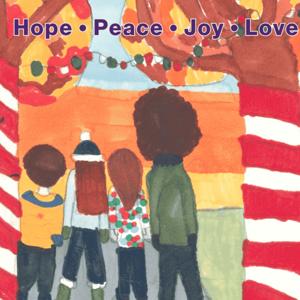
Our readers for this podcast are Ashely Gibson, Executive Assistant to the President and Board, and Matt Dean, Online Social Media Specialist. This year's cover graphic, The Path to Christmas, ws created by fourth grader Eden Berman.
We are grateful that you choose to join us in reflection and thoughtfulness by reading the Advent Devotional.
In Gratitude,
Malisa PierceAssistant Vice President of Advancement
Hosted on Acast. See acast.com/privacy for more information.