
Sign up to save your podcasts
Or



ADVENT WEEK TWO
December 6, 2020
Embrace the Wilderness
Mark 1:1-8
… the voice of one crying out in the wilderness: “Prepare the way of the Lord, make his paths straight,” Mark 1:3
What a year. The verse above speaks to me right now, even more than in times past, because I have found myself crying out a lot lately. We are surrounded by racial brutality, a world heath crisis, political divisiveness, economic injustice, and social isolation. This year has certainly felt like a wilderness to me.
The author of Mark’s gospel opens by echoing Isaiah 40:3 and tapping an experience residing deep in the psyche of the hearers—the wilderness. Mark’s proclamation would have instantly called to memory the narrative when the Israelites were led out of slavery in Egypt, by way of the wilderness, toward a promised land. As well, there was Moses who headed to the wilderness to run away from his past: there was also Hagar who negotiated with God in the wilderness to ensure the survival of her son.
So how does the wilderness experience seem to operate within most of these biblical tales? The wilderness elicits soul-searching. The wilderness requires acute focus. The wilderness clarifies mission and identity. As well, in each instance, the wilderness operates as a space of transition when a people or a character transform from an “old” self into a “new” self.
Rather than cursing this wilderness we all find ourselves in, what if we embrace it as an opportunity to engage in deep and comprehensive soul-searching and become clearer and more intentional about our focus, mission, and sense of identity? I am certain such a discipline can help us draw to the surface destructive beliefs and self-defeating behaviors that hinder our transformation. Let us embrace this time in the wilderness and do the internal work to prepare the way of the Lord.
In the words of Rumi, “Yesterday I was clever, so I wanted to change the world. Today I am wise, so I am changing myself.”
MaryAnn Morris
Dean of Students
Hosted on Acast. See acast.com/privacy for more information.
ADVENT WEEK ONE
December 5, 2020
More Questions Than Answers
Mark 11:27-33
Again they came to Jerusalem. As he was walking in the temple, the chief priests, the scribes, and the elders came to him and said, “By what authority are you doing these things? Who gave you this authority to do them?” Jesus said to them, “I will ask you one question; answer me, and I will tell you by what authority I do these things.” Mark 11:27-29
If you’ve ever spent much time with a 4-year-old child, you know they have a lot of questions. The simplest, “But, why?” holds a yearning to understand how their wants, needs, and desires fit within the world around them. As weary as we may grow of answering these questions, they are an integral part of shaping their young, impressionable minds.
Questioning the world around us is normal. It’s healthy, and it helps us shape our opinions, our attitudes, and our actions. Asking questions can bring healthy dialogue, encouraging us and others to think outside of the box. Questioning people, systems of power, and the universe itself can aid in our desire to act on issues that conflict us at the deepest levels.
It’s surprising to note that Jesus asks more than 300 questions in the Gospels, but answers very few. What does that say about Jesus, and what can we learn from this example? Jesus asked questions with a goal of engaging others and bringing about transformation. What are our motives in questioning people, society, and the world around us? Jesus’s questions confront us with our own thoughts, beliefs, and biases. Are we open to change, growth and action as we seek answers to difficult questions?
Holy One, may you bless both our questions and our answers. May our questions bring about healthy dialogue and guide us into actions that bring love, compassion, and justice to a world with far more questions than answers.
Sharon Russ
Executive Assistant to Advancement and
Donor Relations Specialist
Hosted on Acast. See acast.com/privacy for more information.
ADVENT WEEK ONE
December 4, 2020
Hope is Doing
Jeremiah 1:4-10
See, today, I appoint you this day over the nations and kingdoms, to pluck and to pull down, to destroy and to overthrow, to build and to plant. Jeremiah 1:10
Too often, I find myself cheapening the annual advent journey with messages and anecdotes of silent, passive reflection. Pensively yearning for what should be amid the frustration for what is, hope can be distant and nebulous. To be sure, reflection and introspection are vital. But Advent, a season of preparation for Christian communities, requires more. Advent beckons and requires Christians to a hope that does more than wait.
What might an active hope look like in an era characterized by racial, political, and ideological division? How do we foster hope in the devastating wake of COVID-19?
The Mystery meets the self-doubting, hopeless Jeremiah with a “how-to” guide, detailing the process of hope. The Holy uses six verbs back-to-back in this litany of instruction, teaching us that hope is not something a person has, but rather something a person does. To do hope is to root out injustice. To pull down oppressive systems, destroy that which creates inequity, and throw down the idols that blind us to the suffering of creation. Hope is building up the dominion of God even when it is not politically advantageous to take a risk or get involved. Hope is planting the seeds of justice with determination and reckless abandon.
Hope is doing. It is doom and renewal. It is destruction and rebirth.
Advent, a season of hope, is far more than a time for reflection. It is pregnant with the impetus to act. May we choose to live into this season with faithfulness, advocating for the abandoned, the disinherited, and the rejected.
May we do hope.
Kyle Miller-Shawnee
Admissions Officer, Student Senate Member and Master of Divinity Student
Hosted on Acast. See acast.com/privacy for more information.
ADVENT WEEK ONE
December 3, 2020
Restoring Right Relations with All My Relatives
Psalm 85: 1-2; 8-13
The Lord will give what is good, and our land will yield its increase. Psalm 85:12
The ancient faith community hearing the words from this psalm still remembered that the land was not only a gift from God, but in a very real way, still belonged to God. It is a word of hope that God’s actions to bring the community into right relationship would bring a restoration of peace amid turbulent times.
This theology also reflects a Native American worldview, often reflected in the ceremonial realm in which interpersonal, intercollective, and interspecies relations are emphasized, established, renewed, and mended. Among the Sioux people, the ritual phrase mitákuye oyás’in, often translated as “all my relatives or all are related” exemplifies this principle of relatedness between human and non-human creation. Together we are all responsible for our conduct and the maintenance of the earth.
In Spirit and Reason, Lakota scholar, Vine Deloria, Jr. wrote, “The idea of covenant… is an early and important concept for tribal peoples. … A covenant places responsibilities on both parties and provides a means of healing any breach in the relationship.” A covenant involves not only mutual respect and responsibility but also the acknowledgement of our common kinship: that we are all related. Covenants also have an inherent mechanism for healing or mending temporary ruptures in times of stress, crisis, and trauma.
In this seasonal time of waiting, we need to be reminded of our covenant with God and all of God’s creation and return to our roots as stewards rather than “owners” of this world. Salvific healing and peace come when we can recognize that within creation, God is present and incarnate for us when we strive to live in covenantal relationship with all our relatives.
Dr. Lisa D. Barnett
Assistant Professor of the History of Christianity
Hosted on Acast. See acast.com/privacy for more information.
ADVENT WEEK ONE
December 2, 2020
Be Present
Luke 21:34-38
“Be alert at all times, praying that you may have the strength to escape all these things that will take place, and to stand before the Son of Man.” Luke 21:36
As I write this devotion in mid-August, pandemic alcohol consumption and pot sales are way up. So is violence in cities, with Chicago and Portland often in the news. Racist and bigoted behaviors in public seem to be everywhere, as do protests against racism, bigotry, and state-sponsored violence. Mental health professionals warn of the mental health crisis that is sliding toward us like a broken ice sheet heading for the sea. Economists ring the alarms about jobs.
Then there is the small matter of the presidential election and its possibly unprecedented aftermath.
I’m feeling anxious. Really anxious. And, like everyone else, I’m trying to chill.
But our call is to be present. According to Luke’s version of Jesus’s last week, he was in the temple, teaching every morning. At night, he retreated to the Mount of Olives—praying, we imagine (hold on to that image of him praying at night to fuel his day). Among Jesus’s final words, Luke claims he said: “Take care your hearts aren’t dulled by drinking parties, drunkenness, and the anxieties of day-to-day life. Don’t let that day (the coming of the day of the Lord) fall upon you unexpectedly, like a trap.”
Jesus’s counsel (v. 36) in a time when it feels like the world is coming apart, because it may really be coming apart: Stay alert. Pay attention. Be present. Pray.
I confess—these words feel inadequate, weak, untimely. I want everything resolved in favor of personal and social shalom NOW. But hope is not the same as optimism. Hope is rooted in trusting in God. Trust may best grow by paying attention, just as Jesus practiced and counseled.
Dr. Gary Peluso-Verdend
President Emeritus and
Executive Director of the Center for Religion in Public Life
Hosted on Acast. See acast.com/privacy for more information.
ADVENT WEEK ONE
December 1, 2020
Now to Then
Micah 4:6-13
In that day, says the Lord, I will assemble the lame and gather those who have been driven away, and those whom I have afflicted. Micah 4:6
There is no new normal. There is now and there is then. Now is really hard, especially for people in our world who already had it hard. And while we distress over the challenges of our now, this is not new.
Today’s scripture is about one of those times. The prophet speaks hope to the ancient peoples whose lives were turned upside down because the part of the world where they lived was undergoing radical change and their political leaders were making things worse. This is not new.
The actions of the political leaders made it especially hard for those who were barely getting by before the heaping on of the additional troubles. The prophet’s words were meant to help those just hanging on to have hope, even while they suffer. This is not new.
Moving from the now of suffering to the then of hope isn’t new either. It’s a frequently repeated story in our faith’s scriptures.
The prophet’s words do not take away, deny, or otherwise disparage suffering but rather point to the promise of God’s liberation for those most in need. These words of hope are meaningful because the speaker acknowledges the pain happening now, especially for the lame, driven away, and dispossessed.
May we embrace the pain and suffering in our world this Advent as we prepare for the arrival of the one who comes to liberate all.
Kurt Gwartney
Senior Director of Communications
Hosted on Acast. See acast.com/privacy for more information.
ADVENT WEEK ONE
November 30, 2020
Hope in Joy and Peace
Micah 4:1-5
… but they shall all sit under their own vines and under their own fig trees, and no one shall make them afraid; for the mouth of the Lord of hosts has spoken. Micah 4:4
The portion of today’s scripture that gives me the most hope is the result of the peace that verse four describes. All will have their place of shade and safety (vines) and food (fig tree). It doesn’t say that people won’t have fear—but won’t be made to fear by others.
In early August, I had a day when everything weighed heavy on me. My ability to keep moving forward and deal with life ceased to exist… my coping capabilities took a vacation.
I was worried about: people with the virus, people treating the virus, black people, trans people, people unable to pay their rent, people losing jobs, people being hungry, compassionless people, family safety, and a family mental health crisis. Concern, too much information that breeds fear… and then… the postal service? I think the effort to destroy the postal service may have been the straw that broke the camel’s back for me. It was too much.
I hit my limit of overwhelming concern for others and had to off-load. I sat with a friend and melted into a puddle of tears. I felt better, however I realized I needed to disconnect and take care of myself. So, I went camping which gives me strength and restoration. I restricted my social media and tried to be in the moment. To just be. I needed hope that the world would make it through this difficult period and that I could make it through with care and compassion… without breaking. I sat under the vine and ate the figs and let go of the fear.
Hope seems impossible these days, and not everyone is allowed time to take off work, go camping, or take a mental break, but I must believe there is hope for peace and joy for all.
May we rest under the vine and have plenty of figs to eat and not made to be afraid.
Malisa Pierce
Senior Director of Advancement and Alumnae/i Relations
Hosted on Acast. See acast.com/privacy for more information.
A Bounty
Mark 13:24-37
“But about that day or hour no one knows, neither the angels in heaven, nor the Son, but only the Father. Beware, keep alert and pray.” Mark 13:32-33b
Dr. Terry Ewing
Vice President of Advancement
Hosted on Acast. See acast.com/privacy for more information.
Hosted on Acast. See acast.com/privacy for more information.
Hosted on Acast. See acast.com/privacy for more information.
From the publisher's feed
Phillips Theological Seminary is once again providing this Advent Devotional for you and congregations. We continue to be blessed by the response to the booklet and the way that it is used. Many…
The writers are:
Week One, HOPE: the Rev. Dr. F. Douglas Powe Jr., President and Mouzon Biggs, Jr. Professor of Methodist Studies
Week Two, PEACE: the Rev. Mike Miller, Alum, Senior Minister at Marion Christian Church (Marion, Illinois)
Week Three, JOY: the Rev. Jenny Wynn, Director of Advancement
Week Four, LOVE: the Rev. Dr. Allie Utley, Assistant Professor of Liturgy and Practical Theology.
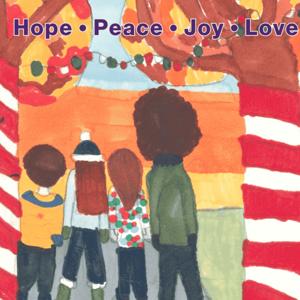
Our readers for this podcast are Ashely Gibson, Executive Assistant to the President and Board, and Matt Dean, Online Social Media Specialist. This year's cover graphic, The Path to Christmas, ws created by fourth grader Eden Berman.
We are grateful that you choose to join us in reflection and thoughtfulness by reading the Advent Devotional.
In Gratitude,
Malisa PierceAssistant Vice President of Advancement
Hosted on Acast. See acast.com/privacy for more information.