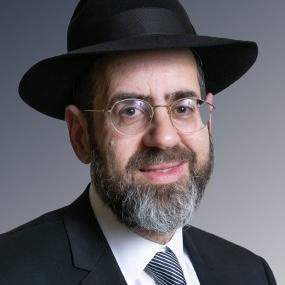
Daily Bitachon

Daily Bitachon

By Rabbi David SuttonReligion & SpiritualityJudaism
Download on the App Store

Daily Bitachon episodes

  • 91 Daily Dose of Gratitude
    Welcome to our daily dose of Bitachon in our Shaar Bitachon series. Chovot haLevavot describes different things to contemplate. One of the greatest things he says, which is the crowning gift of man to living creatures and to growing things, is the rain coming at the right time. And he quotes a Pasuk in Yirmiyahu that the prophet is chastising the Jewish people and he says, "Can idols bring about rain?" Now this is something to really think about. One of those things we just take for granted: it's raining. And as we've said in the past, we've been raised with "rain, rain, go away." Let's look into appreciating the rain. So we start off with most of the world's evaporation happens over the oceans, because that's where most of the rain comes from, not from freshwater lakes. Oceans, as we know, are salty and toxic to most land plants. If the salt rose with the water, the rain would destroy the earth rather than nourish it. The wonder is that the process of evaporation acts as a massive natural desalination plant. It separates the pure H2O molecules from the salt and impurities, ensuring that every drop that falls from the sky is fresh, life-giving water. But that's still not enough. Water vapor in the air doesn't just turn into liquid on its own. It needs a platform to grab onto. And these are the microscopic bits of dust, sea salt, or even bacteria floating in the atmosphere. These tiny seeds that Hashem provides causes that it grabs onto something and creates this cloud. And with that, the vapor gives birth to the raindrop. Another challenge: rain clouds are usually thousands of feet in the air. If a raindrop just fell through a vacuum, gravity would cause it to accelerate to such a high speed it would hit the ground like a bullet, destroying the crops and harming animals. It'd be like hail coming down. But because of the density of our atmosphere and the aerodynamic shape of a raindrop, the drop comes through in a nice 15 to 20 mile an hour speed, and it falls gently enough to water a delicate flower without crushing it. Another important factor: plants need nitrogen to grow. But they don't breathe nitrogen that makes up 75% of our air. They can only take it in through their roots in a liquid form. When lightning strikes, the intense heat breaks apart the nitrogen molecules in the air and they then bond with oxygen and dissolve into the falling raindrops. So rain isn't just water, it's pre-mixed liquid fertilizer that feeds the plant at the exact moment they're being hydrated, similar to vitamin water or any other type of energy drink. Now further, the Chovot haLevavot stresses the words that the rain comes in the right time, the term Yoreh u'Malkosh, early rain and late rain. Rain patterns are dictated by massive global currents and the tilt of the earth. If the rain came at the wrong temperature or the wrong month, it would rot the seeds in the ground or ruin a harvest before it's picked. And this is another wonder of rain coming at the right time. The Radak on Tehillim chapter 147 points out that this chapter starts off that it's nice to praise God. Boneh Yerushalayim Hashem, God is building Jerusalem, Nidchei Yisrael yekanes, bringing in the exiles. And then we switch to Enu l'Hashem b'todah, let us sing to God songs of praise. Hamachaseh shamayim b'avim, Hamachin la'aretz matar. God covers the heavens with clouds and gets the rain ready for the ground. What's going on over here? We're talking about ingathering of exiles and suddenly we turn to the rain? It's actually the Gemara in Masechet Taanit that tells us, sorry, it's a Pasuk in Michah chapter 5 Pasuk 6 that the Radak quotes: והיה שארית יעקב בקרב עמים רבים , the leftovers of Yaakov amongst the nations will be k'tal me'et Hashem, similar to dew, k'revivim alei esev, and like rain. So the comparison between rain and the ingathering... and the exiles. On both of them it says אשר לא יקוה לאיש , you can't hope to people. People don't bring rain and people don't bring in the exiles. The rain symbolizes that direct connection that God has in a supernatural way to creation. With all the predictors of the weather, they're never right. Rain is something that is specifically God-controlled. The Sforno says that specifically on rain we have to be thankful because these are the constants in the world, but they're really wondrous. There's a beautiful Tzror Hamor, Vayikra 26:19, written by Rav Avraham Saba, 1440 to 1510, one of the exiles from Spain and fled Portugal in the 1490s. He tells us on אם בחקתי תלכו ונתתי גשמיכם בעתם , I will give rain at the right time. That's the keyword: the right time. And he says our mitzvot bring rain because rain is something that is directly connected to what we do. And he says גאוננו ותפארתנו ועוזנו ביד שובינו , what was our glory and our greatness and our power when we were taken captive? He's talking about the Inquisition. That we had the power to bring rain at its time when we prayed and it was well known that they accepted us into their lands because they knew that we had the power to bring rain. He tells a story of Rav Chasdai Crescas, 1340 to 1410, with the King of Aragon, who was which is part of modern day Spain, where this Rav Chasdai Crescas lived. He was the leader of Spanish Jewry. And the Jewish community was physically expelled from the safety of the city walls and barred from returning. The ultimatum was clear. Unless the Jews through their prayer could end the drought and bring water, they would be left exposed to the elements, starvation and so on. And Rav Chasdai gathered everyone in prayer and he opened his drasha with the following words, lanu hamayim, the water is ours, referring to a discussion in Bereishit 26:20 with the argument between the shepherds of Gerar and Yitzchak's shepherds. And the point is lanu hamayim, the water belongs to us. We have the power to bring rain. And sure enough it rained. The power of rain is something directly connected to our tefillot and it is because ultimately Hashem is the one behind the rain. And that's another important thing to concentrate on.

    0 min
  • 90 Daily Dose of Gratitude
    Daily Bitachon: Shaar Habechina Welcome to Daily Bitachon. We are currently studying Shaar Habechina (The Gate of Reflection). Today, we explore a powerful principle of bitachon : the importance of contemplating the "end" of an event. Often, we experience difficulties in the moment and look at them with wonderment or frustration. Things happen against our will that leave us distraught, yet in the end, we are overjoyed. Conversely, things we initially celebrate sometimes turn out to be detrimental. Lessons from the Unexpected The Chovot Halevavot shares stories of divine intervention disguised as misfortune: The Fallen Wall: A traveler lay down to sleep next to a wall. A dog came by and soiled him, waking him up in a mess. Frustrated, he went to a nearby river to clean himself, distancing himself from his group. Moments later, the wall collapsed, killing everyone else. His "misfortune" was his salvation. The Overslept Traveler: A man stepped away from his camp at night to use the bathroom and fell asleep nearby. He woke up horrified to find he had overslept, only to realize that bandits had wiped out the entire camp while he slept safely in the brush. The Vision of Rav Chatzkel Levenstein In Ohr Yechezkel Michtavim (Letter 309), Rav Chatzkel Levenstein offers a beautiful insight based on this principle. He asks us to imagine standing by as Yosef HaTzaddik was sold to the Ishmaelites. You would be overcome with worry, unable to sleep at the sight of such a horrific act. In reality, you would be watching a coronation—it just needed time to develop. The opposite is also true. Imagine watching Yaakov Avinu entering Pharaoh's royal chariots to see Yosef. It looks like the "top of the world," but in truth, it was the beginning of 210 years of Galut (exile). Rav Chatzkel applies this to his own life. He was once forced out of the Kletsk Yeshiva. Naturally, he was upset. However, that transition led him to the Mirrer Yeshiva , which eventually escaped to Shanghai and Kobe, Japan, saving his life during the war. He cites Tehillim 37 : " שמר תם וראה ישר כי אחרית לאיש שלום " "Guard your simplicity and look at things straight, for there is a happy ending for the man of peace." The lesson is simple: It isn't over until it's over—and because Hashem is in control, all's well that ends well. If you are in a struggle right now, hope for that happy ending. The Shadow and the Hidden Miracle The Chasam Sofer (in his Shabbat Shuva Drasha of year 1838) notes that the Purim story follows this pattern. Vashti is killed, Haman rises, and Esther is taken forcibly. None of it "looks" good. Yet, the killing of Vashti was a miracle on the scale of the Splitting of the Sea; we just didn't recognize it yet. He explains that it is the responsibility of every person, as they age, to look back and connect the dots of their life to see how Hashem orchestrated one cause after another. This is the meaning of the verses in Tehillim 71 : "I will come with the mighty acts of Hashem... I will mention Your righteousness... You have taught me from my youth, and until today I tell of Your wonders. Even unto old age... do not forsake me, until I tell of Your strength to the next generation." A Modern Reflection My father recently celebrated his 80th birthday. He shared a story from his youth that changed his life's trajectory. He had been accepted to Columbia University but deferred for a year to study in Israel. Due to a war skirmish at the time, his father insisted he stay home. When he called Columbia to reclaim his spot, they told him it was gone. Devastated and lost, he consulted his rabbi, who told him to go to Yeshiva University. There, he was exposed to the depth of Gemara learning by the elder Mirrer rabbis. He became enamored with Torah, moved to Monsey, and raised a family dedicated to serious learning. What felt like a "terrible" missed opportunity at Columbia was actually the catalyst for his entire spiritual legacy. If we look back at our own lives with open eyes, we will find endless miracles hidden within our greatest frustrations.
    0 min
  • 89 Daily Dose of Gratitude
    Daily Dose of Bitachon: The Secret of Movement Welcome to Daily Dose of Bitachon . We are currently in our Shaar Bechina series. The next concept we are called to contemplate is movement . Interestingly, movement ( in the internal sense as will be explained) is not something truly perceived by our physical senses alone. Rabbeinu Bachya shares a powerful insight: Without movement, nothing in the world could exist. The Spirituality of Motion One philosopher noted that most natural events result from motion. Modern science echoes what the sages understood long ago: everything is composed of atoms, neutrons, and protons, and they are in constant flux. Rabbeinu Bachya explains that if you break everything down, it is all spirituality. The Chovos HaLevavos teaches that when you grasp the spiritual nature of movement, you realize it is one of the wonders of God, born of His great compassion. Every move you make is connected to God's will. He controls the smallest and the largest, the hidden and the revealed. The only thing God left to you is your freedom of choice ; every other movement in your body is decided by Him. When you internalize this, you will: Think deeply about every move you make. Remember your constant connection to Him, as He is, so to speak, "inside" of you. Feel a sense of awe and fear of Heaven, knowing He is driving your very existence. Surrender to His judgment and desire His decrees. By living with this awareness, you find favor in His eyes and achieve a "happy ending," as the verse says: " הבוטח בה' חסד יסובבנו " — The one who relies on Hashem is surrounded by kindness. The Mover and the Moved This fundamental idea is supported across our sacred literature: The Ramban ( Drashos Toras Hashem Temimah ) and the Ba'al HaAkeidah (Gate 16) both state that nothing can move without a "Mover." The Rambam ( Yesodei HaTorah 1:5) explains that when we see the world spinning at all times, we must realize nothing spins without a "Spinner." That Mani'a (Mover) is HaKadosh Baruch Hu Himself. Rav Wolbe ( Da'as Shlomo- Yemei Ratzon ) notes that this is why we call God Chai Ha'Olamim —the Life of all Worlds ( Yishtabach prayer). He is pumping energy into everything. From the vast galaxies to the microscopic atom, there isn't a moment of stillness. Even a stone is a "miniature world" of atomic movement. He quotes Rav Yerucham Levovitz who says that without God's energy, man is like a "picture on a wall" without life. While superficial observers see the world as a self-sustaining machine, we must look deeper to see the Chai Ha'Olamim . The "Automobile" Delusion Modern technology can now take a 50-year-old wedding photo and turn it into a movie where your grandparents smile and wave. It's unbelievable, yet that is exactly what God does constantly: We are the pictures, and God is the energy creating the movie. The Kuzari (Rabbi Yehuda Halevi) wrote a beautiful piyut for Rosh Hashanah that asks: "Who prepared you? Who gave you understanding? And by whose power do you move?" The Yalkut Shimoni (Mishlei 15) contrasts this with the "fools" or heretics who claim the world is abtumtos . The Arukh explains this is Greek for a system that moves on its own without an external driver. Rabbi Eliyahu Tzion Sofer (Hanukah) notes that abtumtos is a transliteration of automatos —automatic. This "automatic" worldview—the idea that the world is an "automobile" moving on its own—stems from Aristotle. The Ramban (Vayikra 16:8) explains that Aristotle denied anything he couldn't sense, arrogantly believing that if he couldn't prove it in a laboratory, it didn't exist. This closed-system worldview misses the higher intelligence entirely. Conclusion: Making Hashem King And that's what the Chovot Halevavot starts off with. This secret of movement is something that's not tangible. And because they wrote this rule that if I don't see it it's not there, if I can't prove it in a laboratory it doesn't exist, this closed-system worldview misses the possibility of a higher intelligence, so they have a built-in system that God can't be there because I can't sense God, spirit can't be there because I can't sense spirit. They wrote their own rulebook. According to their view ,knowledge is built entirely from the bottom up; data enters through my senses and then the mind organizes them and creates ideas. This is a powerful concept and it's interesting that Rav Wolbe writes about this on Rosh Hashanah because he says that's one of the jobs on Rosh Hashanah . And the song of Rabbi Yehuda Halevi , the Kuzari is also a Rosh Hashanah song. Because when you want to make Hashem into king which we actually do, says the Midrash in Yalkut Shimoni every single day we make God into king, and it all comes from Rosh Hashanah but that's our job every day when we say Hashem ekhad to realize there's a force that's inside of me that's driving me, there's nothing else but Him and therefore I give myself over to His will and I rely on him . So it's unbelievable as we say many a time, without sha'ar habechinah you don't have sha'ar habitachon . Sorry for going overtime but this is a very deep concept that could not be squeezed.
    0 min
  • 88 Daily Dose of Gratitude
    Welcome back to our daily dose of Bitachon: Sha'ar HaBechina . Today, we explore a fundamental kindness of the Creator that we often take for granted: the psychological barrier God placed between the animal kingdom and humanity. The Divine Shield: Fear and Dread The Chovos HaLevovos explains that one of the greatest gifts to mankind is the instinctual fear animals have of us. This is rooted in the blessing given to Noach: "And your fear and your dread shall be upon every beast of the earth, and upon every bird of the heavens, and upon all that creeps on the ground, and upon all the fish of the sea." ( Bereishis 9:2 ) This isn't just a physical advantage; it is a spiritual reality. The Midrash ( Bereishis Rabba 94 ) makes a staggering observation: A one-day-old living infant does not need to be guarded against mice, because even a tiny baby carries the "image of God" ( Tzelem Elokim ). However, Og, King of Bashan —a literal giant—must be guarded once he is dead. Without the soul and the Tzelem Elokim , the fear vanishes, and the animal sees only "meat." The Source of Our Control The Midrash Shmuel (on Pirkei Avos 3:14 ) explains that the "endearment" of man is known not just to us, but to the animals. The Tzelem Elokim: Animals recognize the Divine spark. Lashon Chiyus: Rashi notes that v'chitcham (your dread) is related to chiyus (vitality). Your very life-force radiates a dominance that keeps the wild at bay. Secular Explanations vs. Emuna Science attempts to explain this through evolutionary biology, suggesting that animals that weren't afraid were simply killed off. But as we see, even creatures that have had little to no contact with humans—like a squirrel on a college campus or a bird in the park—will flee the moment you look at them. Rav Chatzkel Levenstein teaches that this is a "sensual proof." You don't need a lab to see God's Hashgacha Pratis (Divine Providence). You only need to walk down the street. When a squirrel—which is faster, more agile, and possesses sharp claws—runs away from you, ask yourself: "Why is he running?" Physically, he could win the fight. Spiritually, he is commanded to retreat. The Exception: The Persistent Fly If God instilled fear in all creatures, why is the fly so bold? You swat it, and two seconds later, it's back on your forehead. The Gemara ( Berachos 61a ) compares the Yetzer Hara (the Evil Inclination) to a fly. Just as the fly is never discouraged, the Yetzer Hara never gives up. God engineered the fly with three specific traits to teach us this lesson: Short-term Amnesia: Its tiny brain forgets the danger of your hand within seconds. Attraction: Human warmth and scent are irresistible to it. Slow-Motion Vision: With compound eyes, the fly sees your "lightning-fast" swat as if you are moving through molasses. The Takeaway The animal kingdom serves as a mirror. The fear they show us should strengthen our Emuna —reminding us that God is actively guarding us. Simultaneously, the persistent fly serves as a warning: our internal battles require the same relentless energy to overcome the Yetzer Hara, which, like the fly, is always looking for a way back in. Next time you see a bird take flight or a fly buzz your ear, don't just see nature—see the Hashgacha .
    0 min
  • Shabbat the will of G-d
    Daily Bitachon: Erev Shabbat Edition Welcome to Daily Bitachon, our Erev Shabbat edition. There is an interesting nuance in how the Torah describes Shabbat in Parashat Mishpatim (23:12) versus Parashat Vayakhel (35:2) . In Mishpatim , it says: "Six days you shall do your work ( ta'aseh ma'asecha), and on the seventh day you shall rest ( tishbot )... so that your ox and your donkey may rest." In Vayakhel , it says: "Six days work shall be done ( te'aseh melacha), and on the seventh day it shall be holy for you ( lachem kodesh ), a Sabbath of complete rest to Hashem ( Shabbat Shabbaton l'Hashem )." The Nuance of "Doing" vs. "Being Done" The first distinction is the verb. In the first verse, it says ta'aseh — you shall work. In the second, it says te'aseh —the work shall be done . The Pesikta Zutrata (a Midrash on Shemot 35:2) explains that when the Jewish people do the will of God ( osim retzono shel Makom ), their work is done by others. However, when we are not fully aligned with His will, we must perform the labor ourselves. The Two Types of Shabbat The Meshech Chochma (Shemot 31:16) offers a beautiful diyuk (insight) here. He notes that for the person working manually during the week, the Torah says tishbot —simply "take a break." Why? To give the cow and donkey a rest. There is no mention of "holiness" ( kodesh ) here; this is a physical break from a grueling week. In contrast, in Vayakhel , where the work "is done for you," the Torah describes the day as Kodesh and l'Hashem . This is a different level of Shabbat entirely. A person who experiences this Shabbat is oseh retzono shel Makom , and consequently, their worldly needs are facilitated by others. Bitachon: The "Magic Trick" What is the secret behind "doing the will of God"? Gemara Berachot 35b discusses the individual whose work is performed by others, citing the verse: "Strangers shall stand and feed your flocks." Rav Wolbe , based on Tosafot and the Maharsha , explains that osim retzono shel Makom refers to a person on a high level of Bitachon (trust in God). Shabbat is the "Bitachon charger." By refraining from work, we testify that Hashem created the world and sustains it. The more we treat Shabbat as Kodesh l'Hashem , the more Bitachon we absorb. When you truly internalize that Hashem takes care of your needs, you reach the level where "your work is done for you." Group A: Takes a day off because they are exhausted from working hard all week. Group B: Enters a holy day because they haven't been consumed by labor; their Bitachon allowed them to focus more on Avodat Hashem . Connection to the Parsha: Sefirat Haomer To connect this to our weekly Parsha, the Torah says: "And you shall count for yourselves... seven complete weeks ( sheva Shabbatot temimot )." "Complete" ( temimot ) implies being spiritually whole. The Midrash connects this completeness to being osim retzono shel Makom . Why is this linked to the Omer? Sefirat Haomer consists of seven sets of seven, mirroring the cycles of Shmita and Yovel —the ultimate expressions of Bitachon during the harvest season. This time of year is specifically designated to strengthen our trust in Hashem. By realizing that He is the one managing our success, we become osim retzono shel Makom , and we merit the blessing of te'aseh —that our work shall be done for us. Shabbat Shalom!
    6 min
  • 87 Daily Dose of Gratitude
    Daily Bitachon: Shaar Bechina – The Architecture of Awe Welcome to our daily dose of Bitachon. In our study of Shaar Bechina , we encounter a fascinating observation regarding human nature and how we process wonder. The Pyramids vs. The Heavens When we look at the wonders of the ancient world—the pyramids or the great monuments of antiquity—we are filled with "oohs and ahhs." We marvel at the strength, wisdom, and toil of the men who built them. Yet, as the Chovot HaLevavot points out, these structures ultimately make very little difference in our daily lives. In contrast, we often fail to be overwhelmed by the wonders of Hashem: the heavens and the earth. Unlike human construction, which requires exhaustion and toil, the Almighty created the universe yesh me'ayin (something from nothing). He did not "build" in the physical sense; He simply willed it. As the Pasuk in Tehillim says, "By the word of Hashem the heavens were made" (33:6). Consider an architectural wonder we overlook every day: No matter where you stand on earth, you see exactly half of the sphere surrounding the globe. You are always under that same magnificent dome. King David lived in a constant state of this awareness, exclaiming, "The heavens declare the glory of God" (Tehillim 19:2) and, "When I behold Your heavens, the work of Your fingers... I am amazed" (Tehillim 8:4). The Danger of Habituation In Shaar Cheshbon HaNefesh (Chapter 3), the Chovot HaLevavot warns us: Do not be seduced by familiarity. He calls the loss of wonder azivat hateima . We tend to be like people who only get excited by the "new" or the "extreme"—a solar eclipse, a tsunami, or a lightning strike. But we don't say "wow" at the sun rising, the regular flow of a river, or the intricate wings of a common insect. He argues that we should treat everything with a "new eye," as if we have never seen it before. Foolishness, he explains, is a form of cognitive blindness. When the Torah says of Adam and Chava, "The eyes of both of them were opened" (Bereishit 3:7), it doesn't mean they were physically blind before; it means they finally began to perceive the reality in front of them. The Beginner's Mind: Science and Spirit Modern science refers to this as the "Child's Mind" or a "Curious Mind." Unlike an "expert mind," which filters information to fit existing models, the child's mind operates from a place of not knowing. This creates a vacuum for new information. This is a vital trait for success in any field: The Diagnostic Edge: A truly great psychologist or doctor enters the room with an open mind. By being "the dummy in the room," they remain open to possibilities that an so- called expert might filter out. Finding the Extraordinary: To a child, nothing is mundane. A shadow crossing a room or a familiar object can be a source of deep fascination. Neuroplasticity and the Growth Mindset This ability to remain open is linked to neuroplasticity —the brain's ability to be molded and create new connections. While children have this in abundance, adults can cultivate it as well. Carol Dweck's research on the "Growth Mindset" mirrors this Torah concept: we are not stuck in one way of seeing things. We have the capacity to grow and evolve our perception. The Chovot HaLevavot identifies two main barriers to this wonder: Familiarity: Seeing something so often that we become habituated. Childhood Exposure: We first saw these wonders as children before our intellect was fully developed. Because we saw them then, we mistakenly think we "know" them now. The challenge is to revisit these "familiar" sights and approach them with the sophisticated tools of an adult, but through the fresh, unfiltered eyes of a child. When we remove the veil of "I already know this," the world transforms from a mundane backdrop into a continuous, breathtaking testimony of the Creator.
    0 min
  • 86 Daily Dose of Gratitude
    Daily Bitachon: Shaar Habechina – The Wisdom of Anatomy and the Gift of Darkness Welcome to our daily dose of Bitachon. The Chovot HaLevavot teaches us that there isn't a single limb in the human body that doesn't manifest unbelievable wisdom. Its makeup, its abilities, and its placement serve as the most apparent testimony to God's compassion for us. The Complexity of the Human Design Rav Chatzkel Levenstein, in his writings on Emunah , notes that the sheer depth of wisdom in the human body is why we have specialized doctors for every part. We have an ear doctor, an eye doctor, and a specialist for every organ because no single human can master the complexities of the entire person. As the Midrash says, "Chochma bagoyim taamin" —if someone tells you there is wisdom among the nations, believe them. Even the ancient physician Claudius Galenus, whose work was the gold standard for centuries, wrote extensively on how every organ is a masterpiece. In his writings on the eye, he sounds remarkably like Rav Avigdor Miller: The Watchtower: The Creator placed the eyes at the highest point of the body so they can perceive from afar without being blocked. The Rampart: He surrounded them with the hardness of the skull for protection. The Shutters and Palisades: He gave us eyelids like shutters for sleep and eyelashes like a fence to keep out tiny particles. Precision Fluid: Even the moisture in the eye is measured exactly to keep the lens clear and the pupil fluid. The Hidden Benefits of Darkness While we often focus on the benefits of light, darkness is equally vital. The Chovot HaLevavot outlines several classic benefits, noting that without darkness, living creatures would perish from constant toil and weariness. Darkness allows us to: Divide Time: It gives us days, weeks, and months, allowing us to schedule life and measure lifespans. Observe Sanctity: We would not have the concept of Shabbat or Yomim Tovim without the transition between day and night. Regulate Seasons: Much of our agricultural and ecological world depends on the timing of light and dark. Complete Digestion: The stomach properly completes the digestion of food during the rest of the night. The Modern Science of the Night Modern science further confirms these ancient insights. Darkness is the primary trigger for the pineal gland to secrete melatonin —the "hormone of darkness." Cellular Repair: Melatonin is a powerful antioxidant that repairs cellular damage and has been linked to lower risks of serious illness. Metabolic Balance: Sleep regulates the hormones that control hunger and satiation. This is why staying up too late often leads to "midnight snacking"; when we sleep, our metabolism stabilizes, and the body actually loses weight. System Flush: Because the body isn't using energy for movement, it diverts that power to flush out metabolic waste and toxins. Memory Consolidation: During sleep, the brain moves information from short-term memory to long-term memory and processes our emotional experiences. Cardiovascular Rest: Our heart rate drops, reducing the workload on the heart and blood vessels. The Nighttime Ecosystem The natural world also relies on this cycle. As mentioned in Tehillim , certain creatures only emerge at night. Many plants depend on nocturnal pollinators like moths and bats that are deterred by the light of day. Of course, God knew that humans would eventually need to function during the dark hours, which is why He provided the wisdom for artificial light . We commemorate this every Motzaei Shabbat with a blessing, acknowledging the moment God gave us the ability to create fire. The next time the sun sets, take a moment to contemplate the restorative power of the dark. It is not just an absence of light; it is a meticulously designed environment for healing and reflection.
    0 min
  • 85 Daily Dose of Gratitude
    Daily Bitachon: Shaar Bechina – The Virtue of Script Welcome to Daily Bitachon . As we continue our Shaar Bechina series, we explore a profound way to appreciate the Creator through a faculty we often take for granted: the virtue of letters and the act of writing ( מעלות אותיות המכתב והכתיבה ). The Power of Posterity What is the primary benefit of writing? First and foremost, it allows us to preserve things for posterity . Through the written word, we can connect with the wisdom of our grandparents and communicate with those who are far away. You can manage affairs in distant lands or send information that provides sustenance and protection from harm. Wisdom itself is preserved in books. As the ArtScroll saying goes, "The written word is forever." Writing acts as a magnet for the mind; it causes "the scattered thoughts within your heart to be gathered together." Furthermore, it is the foundation of society, allowing us to record business deals, trade, loans, land acquisitions, marriages, and divorces. Anatomy of the Author The Chazon Ish points out in Sefer Emuna U'bitachon that our physical bodies are specifically engineered for this task. Writing is not a "natural" biological function like breathing, yet our hands were clearly made for it. Consider the architecture: The way your fingers grip the tool. The intricate muscle coordination in your arm. The shoulder acting as a stable anchor. The elbow providing the necessary leverage. Our very form testifies to the greatness of the Creator, who designed the human body to manifest the wisdom of the written word. The "Top-Down" Process Writing is a sophisticated "top-down" neurological process. The brain coordinates multiple regions to transform a mental concept into a physical mark. In the frontal lobe, the graphomotor plan acts as a command center, storing "motor templates"—essentially mental stencils—for every letter. When you write, your brain simultaneously integrates three types of information: Phonological: The sound of the word (e.g., processing the syllables of "onomatopoeia"). Orthographic: The visual image and spelling of the letters. Kinetic: The physical muscle memory required to move the pen. Unlike typing, handwriting activates the brain's motor cortex and visual-spatial centers at the same time. This multi-sensory engagement is why writing by hand is linked to better memory retention and cognitive clarity. It forces the brain to solidify abstract ideas. The "Pen" as a Friend I know a great orator and author, Rabbi David Ashear (the best-selling author of Living Emuna ), who handwrites every class. He doesn't type them; he writes them by hand because, as the Chovot HaLevavot explains, it "brings together the scattered concepts in the heart." The Mishnah in Pirkei Avot says, "Kene lacha chaver" —traditionally translated as "acquire for yourself a friend." However, the word Kene also means a quill or reed. If you don't have a friend to talk things out with, use your pen! It is the best tool for self-clarification. Whether you are learning Gemara or any deep subject, try writing down the sugya (topic) afterward. A Crucial Distinction: We aren't talking about "transcription"—writing while you listen. When you write while listening, the information often goes in the ear and out the pen without stopping in the brain. The real benefit comes when you listen, process the information, filter what is important, and then put it on paper. The Precision of the Creator The Chovot HaLevavot notes that as part of God's goodness, He prepared the palm and fingers specifically to "fix the script." This involves incredible precision. You have sensors in your joints and muscles— proprioception —that send constant feedback to the brain, telling it exactly how much pressure to apply so you don't break the pencil point. Over time, this becomes automaticity , a reflex that allows us to communicate effortlessly. This concludes our unit on appreciating the miraculous ability to write. Through the pen, we don't just record history—we discover ourselves.
    0 min
  • 84 Daily Dose of Gratitude
    Welcome to Daily Bitachon We are continuing our study of Shaar HaBechina (The Gate of Reflection), focusing on the benefits of the intellect—the unique gift that sets us apart from the animal kingdom. While the advantages of the mind are obvious regarding our physical functions and mobility, there is a far more vital factor: it is through our intellect that we are able to recognize God. Recognizing the Divine Through our sechel (intellect), we perceive the wisdom of the Creator and His eternal nature. We recognize His absolute oneness, His role as the First Existence, and His presence beyond the confines of time and space. He is above all human traits and thoughts—the ultimate doer of good, kind and compassionate. This recognition is the very reason for our existence. Beyond this, our intellect allows us to: Perceive Wisdom: To understand the mercy inherent in the world's design. Accept Responsibility: To realize that because we receive so much, we must reciprocate by serving Hashem. Accountability and Perception Our intellect provides the foundation for our belief system and our trust in the Torah given through Moshe Rabbeinu. Because man possesses sechel , he is held accountable for his deeds. This makes divine judgment, reward, and punishment possible—which is the ultimate goal of our time in this world. Without intellect, we would have no responsibility and, therefore, no purpose. Intellect allows us to perceive both physical and abstract concepts, often seeing what is hidden from the senses: The Shadow: The eye cannot track a shadow's movement in real-time, yet the mind recognizes it has moved by comparing the present to the past. The Water on Stone: We understand how a single drop eventually erodes a rock by connecting past, present, and future. Through this faculty, we differentiate between truth and falsehood, good and evil, and the praiseworthy versus the loathsome. Mastery Over the Self In Shaarei Teshuvah (Gate 1, Letter 9), Rabbeinu Yonah discusses how regret stems from realizing what a person is meant to be. He notes that Hashem breathed into us a "breath of life" and a "heart of wisdom" so that we might recognize and fear Him, and ultimately rule over our own physical functions. Just as God gave the soul dominion over non-speaking creatures, He gave us intellect to control our own instincts. If you can use your sechel to train an animal, you can certainly use it to train yourself. The Gift of Speech: The Pen of the Heart The intellect also allows us to master the sciences, geometry, and the complex ordering of the solar system. But perhaps most beautifully, it gives us the gift of speech. As the famous line goes: "The tongue is the pen of the heart, the translator of the soul, and the messenger of the conscience." Speech allows us to express our innermost thoughts and understand others. Rebbe Wolbe once shared a parable about a violin: I can play the violin to convey emotion, but I still need my mouth because not everyone understands the language of music. #### Why These Metaphors Matter: The Pen of the Heart: Just as writing something down brings clarity to blurred thoughts, speaking forces us to organize the "soup" of our emotions into clear ideas. The Soul's Translator: Feelings and speech are different languages. We must "decode" what is happening inside us to truly understand ourselves. The Messenger of the Conscience: Speech is the shliach (messenger) that carries the messages of our internal moral compass out to the world. Conclusion Through speech, we connect to others and to God. It is through words that we turn back from mistakes and ask for forgiveness. Ultimately, the way you speak defines who you are. As the saying goes: "Man is nothing more than his heart and his tongue." It is this capacity for communication and intellectual reflection that completes us, distinguishing us as truly human. How does the idea of speech as a "translator" change the way you think about your inner feelings?
    0 min
  • 83 Daily Dose of Gratitude
    Welcome to Daily Bitachon and our Sha'ar HaBechinah series, where we are discussing the various emotional and intellectual gifts God gave us that deserve our appreciation. One of the great benefits the Chovot HaLevavot highlights is Bushah (Shame), which he says is yiched bo ha'adam —unique to man alone. Animals do not experience shame. As the seforim explain, only human beings possess da'as hada'as —the ability to be self-aware. Animals can feel fear, anger, or joy, but those are survival reactions to external stimuli. To feel embarrassment, you must be self-reflective; you must recognize an "ideal self" and realize you aren't living up to it. Why did God give us this feeling of "not living up to ourselves"? Because shame is a powerful motivator to do the right thing. He explains that without it, we would lose many of our social virtues. People might not invite guests, as hosting is difficult and expensive; it is often the social pressure—the shame of being seen as stingy—that keeps the door open. People might not fulfill their promises; the primary force keeping a person to their word when it's inconvenient is the shame of being known as a liar. We wouldn't satisfy favors or perform acts of kindness. In fact, he says many matters of the Torah are only fulfilled because of shame: devarim rabim midivrei Torah osim ba'avur haboshet . He goes even further, noting that many people might not even respect their parents if not for Bushah —the feeling that sending them away "doesn't look right." It keeps us from holding onto lost objects and holds us back from sinning. It is a wondrous gift. But here is the real "wonder of wonders": while man is given a natural shame before his peers, he does not have a natural, instinctive shame before his Creator who is watching at all times. Usually, a trait is either "on" or "off," but God created a split in this specific area. Why? Because if we were naturally ashamed to sin before God, we would have no freedom of choice. Without choice, there is no reward. Rav Yitzchak Blazer, in Ohr Yisrael , makes the same point regarding fear: we are naturally afraid of germs, cars, or heights, but we aren't naturally afraid of God. We have to work to reach that level of realization. This is why, on his deathbed, Rabban Yochanan ben Zakkai blessed his students that they should "fear Heaven as much as you fear a human being." When they asked if that was all, he replied, "If only you could reach that level!" We are always concerned if a person is looking, but not always if God is looking. The Chofetz Chaim once illustrated this with a wagon driver who wanted to let his horse graze in a private field. He asked the Chofetz Chaim to keep watch and holler if anyone was looking. The Chofetz Chaim immediately yelled, "Someone is watching!" The driver panicked and drove off, not realizing the Chofetz Chaim was pointing toward Heaven. The Steipler Gaon, in Chayei Olam , points out that our entire existence is a series of these "coexisting opposites." We remember and we forget. We are calm and we are confused. We can be arrogant or humble. He lists over 35 areas of this duality—70 different traits and talents working together simultaneously. All of them were programmed into us for our benefit: to serve Hashem, to navigate our daily needs, or to provide us with the tests necessary for our growth. It is, truly, a wonder of wonders.
    7 min

About Daily Bitachon

From the publisher's feed

Daily Bitachon - delivered directly to your computer and/or mobile device