Daily Bitachon

Daily Bitachon

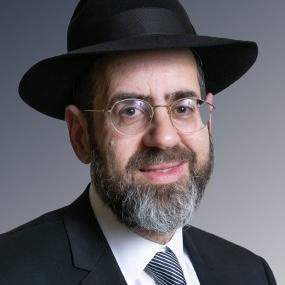
By Rabbi David SuttonReligion & SpiritualityJudaism
Download on the App Store

Daily Bitachon episodes

  • Yetziat Mitzrayim: The Catalyst for Shabbat
    Yetziat Mitzrayim: The Catalyst for Shabbat Welcome to our daily Bitachon series, and specifically to our special Friday edition dedicated to the essence of Shabbat. As we have often noted, Shabbat is deeply intertwined with both Ma'aseh Bereishit (the Creation) and Yetziat Mitzrayim (the Exodus). In a profound sense, the Exodus actually "created" Shabbat as we know it today. Originally, Shabbat served primarily as a connection to the act of Creation; through our redemption from Egypt, God transformed Shabbat into a sign ( Ot ) of our unique relationship with Him. The Three Signs of the Exodus The Exodus did not only establish Shabbat; it created other essential Otot (signs) as well: Tefillin: Two of the four passages contained within our Tefillin explicitly discuss the Exodus. Brit Milah: The Midrash teaches that while in Egypt, many were hesitant to perform circumcision as it marked them as distinct from the gentiles. however, when the time came to leave, they were commanded to eat the Korban Pesach (Paschal Lamb), of which the Torah states: "No uncircumcised man may eat of it." Thus, the Brit Milah became a prerequisite for and a part of the Exodus story. Shabbat: The day that testifies both to God's mastery over nature and His intervention in human history. The "Upside-Down" Theory of History In Parshat Bo, God tells Moses the reason for the plagues and the miracles: "Lema'an shiti ototai eleh bekirbo" —"So that I may place these signs of Mine in his midst." While the simple meaning refers to the plagues as signs of God's power, the Ma'or Vashemesh offers a fascinating deeper reading. He suggests that the goal of the Exodus was specifically to "implant" these Otot (Shabbat, Tefillin, and Brit Milah) within the Jewish people. This leads to what we might call the "upside-down theory" of Jewish history: We usually assume that because we left Egypt, we have a Shabbat to remember it. The Ma'or Vashemesh argues the opposite: Because God wanted us to have the holiness of Shabbat, He orchestrated the Exodus. The memorials are not an afterthought to history; history was created to facilitate the memorials. The classic proof is found in the Haggadah: "Ba'avur zeh" —"Because of this." We say God took us out of Egypt "because of this " (pointing to the Matzah and Maror). Logic would suggest we eat Matzah because He took us out, but the Torah suggests He took us out so that we would have the opportunity to perform the Mitzvah of Matzah. The Priority of the Mitzvah Rabbi Yerucham Levovitz famously applied this concept to the Fifth Commandment. We don't respect our parents simply because they happen to be the ones who brought us into the world. Rather, God created the biological reality of parenthood so that we would have the opportunity to fulfill the Mitzvah of "Honor your father and your mother." The Mitzvah exists in the spiritual realm first; the physical world is then constructed to allow that Mitzvah to manifest. The Exodus was the catalyst to create the Shabbat of Kiddush and Hallel . When the Torah says, "Lema'an tesaper be'oznei vincha" ("So that you may tell it in the ears of your children"), it is referring to the Friday night Kiddush . The entire purpose of the Egyptian exile and redemption was so that a Jewish father could sit with his children on Friday night and testify that God is the Master of the world. The Cause of All Causes The term "Hit'alalti" (usually translated as "I have mocked" or "wrought") used in reference to Egypt shares a root with Eilat Kol Ha'eilot —the Cause of all Causes. As Rabbeinu Bachya explains, this shows that God is the remote cause behind every event. Shabbat is the weekly reminder of this truth. God directed the course of history—slavery, plagues, and redemption—specifically so we would have this special Shabbat. As we approach Pesach, let us appreciate that every Shabbat we keep is a fulfillment of the very purpose for which we were liberated.
    0 min
  • 65 Daily Dose of Gratitude
    The Human Being: A Miniature World Insights from Shaar HaBechinah (The Gate of Trust), Chapter Five Welcome to our daily Bitachon series. We are beginning the fifth chapter of Shaar Bitachon , where the Chovot HaLevavot poses a fundamental question: Of the seven areas of creation we've discussed—the stars, animals, the earth, and so on—which one should we delve into most? While every area of creation is necessary and wondrous, he explains that our greatest responsibility lies in the area closest to us, where God's wisdom is most accessible: the human species. The "Olam Katan" (Miniature World) The Sages teach that a human being is an Olam Katan —a miniature universe. Every bit of wisdom found in the vast cosmos can be found mirrored within a single person. We see this connection through the repeated use of the word Chochma (Wisdom) in the Torah: The World: "Hashem founded the earth with wisdom ( Chochma )" (Proverbs 3:19). The Mishkan: "I have filled him with the spirit of God, in wisdom ( Chochma )" (Exodus 31:3). The Human: "...Who fashioned man with wisdom ( Chochma )" (Blessing of Asher Yatzar ). Just as the world developed from a central point (the Even Shetiyah in the Holy Temple), a human develops from a single point—the umbilical cord. The Otzar Midrashim (in Agadat Olam Katan ) takes this even further, drawing vivid parallels: Our hair is like a forest. The different fluids in our body mirror the streams of the earth: salty water in the eyes, cold in the nose, bitter in the ears, and sweet in the mouth. The stomach is like the vast ocean. Even the animal kingdom is mirrored in the diverse traits and "winds" that exist within human nature. Our Obligation to Observe Because there is so much wisdom packed into our own bodies, we are obligated to examine: Our origins: How we develop from a hidden spark. Our structure: The joining of parts and the specific function of every limb. Our psychology: Our character traits, the faculties of the soul, and the "light" of our intellect. Our essence: Our desires and our ultimate purpose. The wise men of old taught that the highest level of understanding is knowing yourself. As Iyov (Job) said: "From my own flesh, I see God" (Job 19:26). By looking inward, we see the Creator. The Goal: Humble Gratitude What is the point of all this "delving"? It isn't just for anatomy; it's to awaken us from our indifference. When we realize the kindness and complexity invested in our very existence, we are moved to humble ourselves before the Creator. King David expresses this perfectly in Psalm 139: "I acknowledge You, for I am awesomely, wondrously fashioned... My frame was not hidden from You when I was made in concealment... Your eyes saw my unshaped form (Golmi)..." When David mentions being "knit together," he refers to the incredibly complex organism of bones, sinews, and tissues. When he uses the word Golmi (my unshaped mass), he reminds us that while an embryo is just a "lump" of potential, God sees the fully realized person from the moment of conception. The development of a human takes years, but to God, it is all one. This journey of appreciation—seeing the infinite in the individual—is what the Chovot HaLevavot invites us to continue.
    0 min
  • 64 Daily Dose of Gratitude
    The Host and the Guest: Insights into Bitachon The Seven Pillars of Creation Welcome to our daily Bitachon session in our Sha'ar HaBechinah series. We have previously explored seven areas of contemplation, and the Chovot HaLevavot notes that some believe this is what Shlomo HaMelech alluded to in the opening verses of Proverbs (Mishlei), Chapter 9: "With all forms of wisdom did she build her house; she carved out its seven pillars." The core point here is that these seven pillars refer to the world God built through seven areas of divine benefit. The passage continues: "She prepared her meat, mixed her wine, and also set her table. She has sent out her maidens; she announces upon the heights of the city: 'Whoever is a simpleton, let him turn here.' To the one who lacks an understanding heart, she says: 'Come, partake of my food and drink of the wine that I have mixed.'" Recognizing the Host Rashi explains that this passage refers to Creation, with the seven pillars representing the seven days of the week. Continuing this metaphor, Rashi suggests that "mixing the wine" refers to the creation of solids and liquids, while the Gemara (Sanhedrin 38a) suggests it refers to the oceans, rivers, and all the world's necessities. But who are the "fools" and those who "lack heart"? Rav Yeruchem Levovitz explains that we live in a magnificent world created by God, yet the "fools" are those who attend the party without realizing who the Host is. Our world is God's house, and God is throwing a party for everyone. Midrash Rabbah (Vayikra 11:1) notes that God invited Adam and Chava to this party, yet they acted foolishly by following the snake—whose message was essentially that God didn't really create the world and isn't truly the Host. The Good Guest vs. The Bad Guest Even if we recognize God as the Host, how do we view our stay? The Gemara (Berachot 58a) describes two types of guests: The Good Guest says: "Look at all the effort the homeowner went through for me! Look at the wine, the meat, and the desserts. All of this effort was for my sake." The Bad Guest says: "What did he really do for me anyway? He had to prepare the wine, meat, and dessert for his own wife and children; I'm just a tag-along." The Chafetz Chaim (Letter 45) invokes this Gemara to emphasize that we must appreciate the modern inventions and benefits God provides. We are guests in this world, and we must maintain the right outlook. As the Gemara (Bava Kamma 92b) quips: "The wine belongs to the host, yet we give thanks to the bartender." When you're at a wedding drinking expensive Scotch, you thank the bartender—but he didn't pay for it; the host did. We receive benefits through many messengers, but the ultimate Homeowner paying the bill is God. The Divine "Housewarming" Midrash Tanchuma (Bereshit 2) takes this a step further regarding Shabbat, quoting, "And God finished (Vayechal) His work on the seventh day." The Midrash explains Vayechal can be understood as a "crowning party"—what we call a Chanukat HaBayit (housewarming). After creating the world in six days, God celebrated the completion of His home on Shabbat. At a Chanukat HaBayit, guests look around and admire the chandelier or the moldings. Similarly, the goal of Shabbat is to enter God's house and admire the wonders of Creation. This is why we recite Mizmor Shir L'Yom HaShabbat, focusing on His works. Rav Yeruchem Levovitz (Da'at Torah, Vayikra) warns that a guest can mistakenly think, "This is my party," forgetting who the "birthday boy" is. In this world, God is the Guest of Honor at His own party. He invites us and sets a place card for each of us, but we must remember our place. The Responsibility of the Wealthy Guest This leads to a famous mashal (parable). A man held a grand wedding and invited his two sons—one wealthy, one poor. He told the wealthy son, "I'll pay for your travel, but please, your brother has nothing. Go tailor fine clothes for him so he can attend the party with dignity. I will reimburse you for that, too." The wealthy brother, indifferent to his sibling, spent very little. When the poor brother arrived looking like a beggar, the father was upset. He told the wealthy son, "Why should I pay for your tickets? You only cared about yourself. If you cared about me, you would ensure your brother looked his best." An Invitation to God's Table We are all at God's party, especially during a Simchat Yom Tov. On the night of the Seder, we are sitting at God's table. Tosafot (Berachot 42a) mentions that when one eats at the house of the Resh Galuta (the Exilarch), the guests are not in charge of when the meal ends; they follow the host. We apply this to the Seder: even if one thought they were finished, they can still eat the Afikoman because they are guests at God's table. If we are truly guests at His table, it is our obligation to ensure our brothers and sisters are properly clothed for the event. This shows we recognize that God is the ultimate Boss. How You Can Help This is the time of year I hold a drive for Lev Chana and the Sefardi division, Lev Zicharya. We provide clothing cards to hundreds of families in need, including 100 widows in the Flatbush area alone. To support these families, you can: Zelle: [email protected] Credit Card: https://www.rayze.it/levchanazm/ Check: Payable to Lev Chana, 1059 East 10th Street, Brooklyn, NY 11230 Pledge: Email [email protected] and we will bill you. Thank you for helping us make sure everyone is ready for the party.
    9 min
  • 63 Daily Dose of Gratitude
    Daily Bitachon: Shaar Habechina Welcome to Daily Bitachon. We are in Shaar Habechina , and we have reached our final category—category number seven—of the areas we are meant to contemplate. While the first five categories dealt with the wonders of creation and the sixth covered man's inventions, the seventh is perhaps saved for last because it represents the highest level: the sign of wisdom found in the Torah and in the chukim (statutes) with which we serve Hashem. The Infinite Depth of Torah When you sit and learn Torah, you encounter a vast wisdom that is beyond human contemplation. Torah is eternal. Anyone who learns a sugya in Gemara sees the complexity and the microscopic detail. Despite the endless sefarim of the Oral Law, the greatest minds continue to toil over it, yet its depth remains bottomless. As we know, istakel b'oraitha u'bara alma —God looked into the Torah to create the world. The Torah is the blueprint of existence. The goal of Shaar Habechina is to see God through His handiwork. When you study Torah, you realize that only something Divine could be so complex, yet so perfectly integrated. Pleasure in This World Additionally, we must appreciate that dedication to Torah and mitzvos brings what the author calls le'hanot ha'olam hazeh miyad — immediate pleasure in this world —as well as the reward of the World to Come. It is a vital principle to understand that "religion" brings joy here and now. It provides a framework for living that allows you to actually enjoy this world. Take the famous story of Rav Shach: he was once asked who had more Olam Haba (the World to Come), himself or the great philanthropist Mr. Paul Reichmann. Rav Shach answered, "About Olam Haba , I cannot say. But as for Olam Hazeh (this world), I can definitely tell you I have more than he does. I enjoy this world more than he enjoys his." We often mistakenly think pleasure comes from material indulgence, but true oneg (delight) is found in a Shabbat table or a Pesach Seder with family. The Prophet Yeshayahu says, "Incline your ear and come to Me... and your soul shall live." He further says, "Listen diligently to Me, and eat what is good, and let your soul delight itself in abundance." The Chazon Ish once remarked that if the secular world knew the sheer pleasure of learning Torah an hour before Shacharit on Shabbat morning, they would convert just to experience it. Shabbat is the "hidden treasure" in God's storehouse. Nature Subservient to Torah Finally, the author makes a powerful statement: madreigat hateva min haTorah, k'madreigat haeved me'adonav — the level of nature relative to the Torah is like that of a servant to a master. The physical world follows the decrees of the Torah. The Ramban writes that the rewards and punishments of the Torah in this world are essentially hidden miracles; everything that happens in nature is dependent on the Torah. There is a classic story of a man with a lung ailment who consulted a great Sage. The Sage told him to move to Safed (Tzfat). The man asked, "Why not the Swiss Alps? The air is just as clear there." The Rabbi explained: "This isn't about the air. In Jewish law, your specific ailment is a dispute. According to the Rema (whose rulings are followed in Europe), such an animal is a treifa and cannot live. But according to the Beit Yosef (Rabbi Yosef Karo), whose rulings are followed in Israel, such a creature is viable. As long as you are in the Rema's territory, nature follows his decree. To live, you must move to the domain of the Beit Yosef." This illustrates that nature is bound to Torah. As the Or Ha-Chayim Ha-Kadosh explains, God set a condition at Creation that the natural world must be "humbled and bent to the Torah and those who toil in it." This concludes our analysis of the seven areas of contemplation. Tomorrow, we will continue with a recap.
    8 min
  • 62 Daily Dose of Gratitude
    Welcome to our Daily Bitachon and Sha'ar HaBechina Series We have been exploring the various realms of God's wisdom as revealed in the world. So far, we have covered: The foundations of the earth. Man as a "miniature world" ( Olam Katan ). The intricate makeup of the human body. The animal kingdom. The world of plants. Today, we move on to an area most people wouldn't even think to include on a list of Divine creation: the wisdom found in human activity and invention. Divine Inspiration in the Mind of Man Whether it is a lightbulb, a car, or any modern convenience, the wisdom behind it is a gift. As the Chovot HaLevavot teaches: Asher natanan HaBorei Yitbarach be-lev ha-adam —these are thoughts that the Creator put into the heart of man. God provides these insights to help man complete his perfection in this world, allowing him to secure food and other benefits that would be impossible to achieve without such inventions. This is the deeper meaning of the verse in Job (38:36): "Who gave the Sechvi understanding?" While Rashi notes that Sechvi can mean a "rooster," he also explains that it refers to the human heart. The root Soche means "to see from afar," similar to how Sarah Imeinu was called Yiska because she could "see" with Ruach HaKodesh (Divine Spirit). The human mind is called Sechvi because it possesses the foresight to solve future problems and innovate. As the Sages say: "Who is wise? He who sees the outcome" —one who sees beyond the present. The Chafetz Chaim on Technology In his letters (Letter 45), the Chafetz Chaim discusses this at length. Writing in the early 1900s, he noted how man once had to endure weeks of difficult travel by wagon. Then, God "came up" with the train to condense that journey into a single day. Soon after came the automobile, making it even easier to reach the station. He explains that the ultimate purpose of these advancements is to allow us to serve Hashem with greater ease. He applies this same logic to the telephone and the camera—inventions that remind us that we can be heard and seen from one end of the world to the other. These tools exist to strengthen our Emunah (faith). A Point of Gratitude When we enjoy central air conditioning or drive an electric car, we shouldn't just thank the inventor; we must thank God, who placed the idea in the inventor's mind. If you ask, "Who created the iPhone?" the ultimate answer is God. People argue that technology has dangers, but so do many things in nature, like cyanide. The existence of danger doesn't mean God didn't create it. From the fax machine to recessed heating under a sidewalk, every convenience is a Divine idea. The "Accidental" Inventions To prevent human arrogance, God often allows the greatest breakthroughs to happen "accidentally." Consider these wonders: Penicillin: Alexander Fleming went on vacation and left a Petri dish uncovered. He returned to find a mold that had killed the bacteria—leading to the first antibiotic. The Microwave: Engineer Percy Spencer noticed a chocolate bar melted in his pocket while he worked on radar sets. A few kernels of popcorn later, a new way of cooking was born. Post-it Notes: 3M makes a billion dollars a year off a "failed" experiment. Dr. Spencer Silver was trying to make a super-strong glue but accidentally made a weak, reusable one instead. The Pacemaker: Wilson Greatbatch grabbed the wrong size resistor for a circuit. When he installed it, it emitted a pulse that mimicked the human heart. Teflon: Roy Plunkett was trying to create a refrigerant gas. He left a sample overnight and found a white, waxy solid instead—the slipperiest substance known to man. Conclusion From chocolate chip cookies to the Slinky, "accidents" are often just God's way of handing us a gift. Even when someone works hard to innovate, we must remember the verse: "He is the One who gives you the strength to achieve success." As the Targum explains, this doesn't just mean physical strength; it means He gives you the ideas necessary to succeed. Every bit of human progress is a direct reflection of God's ongoing kindness.
    0 min
  • Fear of Shabbat
    Welcome to Daily Bitachon on our Friday afternoon special Shabbat edition. The Sefer Yereim , written by one of the Rishonim, Rabbi Eliezer of Metz (Volume 2, Siman 410), teaches us that just as there is a mitzvah to fear the Beit HaMikdash , there is also a mitzvah to fear Shabbat. Now, as we know, there is no single definitive list of the 613 mitzvot in the Torah; while the Gemara tells us the total number is 613, many Rishonim count them differently. The Yereim specifically chooses to include the "Fear of Shabbat" on his list. What is his source? The Gemara in Yevamot 6a points to a comparison between Shabbat and the Beit HaMikdash , as it says in Vayikra 19:30 : " את שבתותי תשמורו ומקדשי תיראו " —"You shall keep My Sabbaths and fear My Sanctuary." Just as there is a mitzvah to fear the Sanctuary, so too there is a mitzvah to fear Shabbat. The Gemara continues by clarifying: " לא משבת אתה מתיירא " —"It is not Shabbat itself that you fear," " אלא ממי שהזהיר על השבת " —"but rather the One who commanded the Shabbat." This means there is a specific responsibility for Yirat Shamayim (fear of Heaven) on Shabbat, just as there is when one enters the Beit HaMikdash . Holiness in Three Dimensions The question arises: What is so unique about Shabbat that it warrants this special mitzvah? We have many commandments—like Tefillin—that God also commanded. Why is "fear" attached to this one? The answer, as we have mentioned many times, is that holiness ( kedusha ) manifests in three dimensions: Person, Place, and Time. The Kohen Gadol was the holiest person. The Beit HaMikdash is the holiest place. The Shabbat is the holiest time. In a sense, the Beit HaMikdash is our "Shabbat in space," and Shabbat is our "Sanctuary in time." We see this connection even in people; the Gemara says a Talmid Chacham is like the Beit HaMikdash . The Zohar even suggests that for a Talmid Chacham —who is immersed in Torah constantly—all seven days of the week are like Shabbat. Regarding the verse " את ה' אלהיך תירא " ("Fear Hashem your God"), the Sages teach lerabbot talmidei chachamim —this includes fearing the Torah scholar, who acts as a sanctuary where God dwells. God dwells in people, He dwells in places, and He dwells in time. The Atmosphere of the Day Once we understand this, the mitzvah to fear Shabbat becomes obvious. Just as you feel a sense of respect, sanctity, and decorum when you stand by the Kotel HaMa'aravi or enter a Shul, Shabbat demands the same. We must approach the day with dignity because its essence is kedusha . Entering Shabbat should feel like walking into the Holy Temple or into the presence of a great Gadol . I remember the sense of trepidation and awe when walking in to see the Steipler Gaon or Rav Shach. That same Yirat Shamayim is intrinsically woven into Shabbat. The Zohar even notes that the word "Bereishit" (In the beginning), when re-scrambled, spells "Yarei Shabbat" (Fear of Shabbat). This awe is the foundation of our entire Torah. A Gift from the Treasure House One commentary explains the famous Midrash where God says: " מתנה טובה יש לי בבית גנזי "—"I have a good gift in My treasure house [and its name is Shabbat]." What exactly is kept in God's treasure house? The Gemara says that the only thing Hashem keeps in His "storehouse" is Yirat Shamayim . Why? Because a person's treasure house usually contains the things most precious to them, often things they don't "possess" naturally. God "owns" everything, but there is one thing He doesn't "have" unless we give it to Him: " הכל בידי שמים חוץ מיראת שמים "—"Everything is in the hands of Heaven except the fear of Heaven." That fear is God's treasure. Every Shabbat, He gives us a "dose" of it from His private collection. He builds that awe into the very fabric of the day. The Natural Fear of the Day The Yerushalmi (cited by the Rambam in Hilchot Ma'aser ) brings down a fascinating concept regarding Terumot and Ma'asrot (tithes). Generally, the Sages did not trust an Am HaAretz (an unlearned person) regarding whether their produce was tithed. However, on Shabbat, if an Am HaAretz claimed the food was tithed, we believed him. Why? " אימת שבת על עמי הארץ "—"The awe of Shabbat is upon even the unlearned." The holiness of the day was so palpable that it would stop a person from lying or committing a transgression. While we may not feel that "natural" fear as instinctively today, it is something we are meant to work on. According to the Yereim , it is a direct commandment to maintain an extra sense of awareness and reverence for the sanctity of Shabbat
    6 min
  • 61 Daily Dose of Gratitude
    Daily Bitachon: The Structural Geometry of Plants Welcome back to our Sha'ar HaBechina plant series. Today, we look at what I found to be the most fascinating aspect of this research: the structural geometry of plants . The way leaves are arranged on a stem isn't random; it is mathematical. Most plants follow the Fibonacci sequence : $1, 1, 2, 3, 5, 8, 13, 21, 34...$ and so on. In this sequence, each new number is the sum of the two before it ($5+8=13$, $8+13=21$). The Efficiency of the Spiral Why does HaKadosh Baruch Hu put this math into plants? Because it is the most efficient way to survive. Imagine a plant growing leaves. If every leaf grew directly above the one below it, the top leaf would steal all the sunlight and rain, and the bottom leaves would die. By following a spiral based on these Fibonacci numbers, the plant ensures that each leaf is tucked into a gap where it can still see the sun. ![Illustration of leaf phyllotaxis showing Fibonacci spiraling] Packing Perfection Look at a sunflower or a pinecone. The seeds are packed so tightly there is no wasted space. This happens because the seeds grow in two sets of spirals that criss-cross. If you count the spirals going left and those going right, they are almost always two neighbor numbers from the sequence, like 34 and 55 . Lilies usually have 3 petals. Buttercups have 5 . Daisies often have 34, 55, or 89 . Pineapples have scales that form spirals following these exact counts. Binyan vs. Tzmicha: The Growing Building The late Rav Wolbe used to contrast Binyan (building) with Tzmicha (growth). A building is made of dead blocks following a blueprint; a plant grows organically. But the novelty here is that there is a "building" happening inside the growth! There is an architectural design working within the plant itself. It is a "growing building"—a structure that isn't happening randomly but according to a specific mathematical stamp of wisdom. The Golden Ratio: God's Favorite Recipe While the Fibonacci sequence is a string of numbers, the Golden Ratio ($\approx 1.6$) is the relationship between them. It is a way of dividing things so they are perfectly balanced. Imagine a bar of chocolate. If you break it so the big piece is $1.6$ times larger than the small piece, and the whole bar is $1.6$ times larger than the big piece, you've hit the "Golden" proportion. ![Diagram of the Golden Rectangle and the Fibonacci Spiral] Why it Matters to Us Aesthetics: Humans find this ratio naturally pleasing. Your credit card, a standard index card, and even the Mona Lisa are shaped close to this ratio because it feels "right" to our brains. Art & Music: Artists place subjects at the "Golden Line" (about 60% across) to make an image feel stable yet dynamic. Some composers even time the climax of a song to hit at the "Golden Moment"—62% of the way through. The Universal Stamp This isn't just in plants. The same ratio appears everywhere: The Human Body: The proportion between your hand and your arm, or the features of a balanced face. The Cosmos: The spiral of a massive hurricane and the structure of the Milky Way galaxy follow this exact geometry. Microscopic Life: Even DNA molecules measure in a way that reflects this sequence. In the language of Bitachon , this shows us there is One Designer . He put His stamp on everything. As the Sha'ar HaBechina teaches, even though everything in creation looks different, there is a singular, divine similarity that runs through it all. This mathematical sequence is the "identity card" of the Creator, found in every corner of the universe.
    0 min
  • 60 Daily Dose of Gratitude
    Daily Bitachon: The Chemical Warfare and Social Media of Plants Welcome back to our series on Shaar Habechina . We often think of plants as helpless because they are rooted to one spot—unable to run from a hungry caterpillar or hide when a neighbor is attacked. However, Hashem has equipped them to be world-class chemists. Using a complex language of smells and underground signals, they fight back and share resources. As we discussed, a plant is a living laboratory; it is alive. The Plant as a Living Laboratory While its primary biology handles growing and eating, the plant produces secondary metabolites —special-force chemicals designed for specific missions: Deterrents (The "Get-Away" Chemicals): Many plants produce toxins or bitter compounds to stop predators. The heat in a chili pepper or the sting of mustard is the plant's way of saying, "Stop chewing!" Caffeine is actually a natural pesticide produced by coffee plants to paralyze or kill encroaching bugs. Attractants (The "Come-Here" Chemicals): These are the perfumes of the floral world, carefully designed to attract specific couriers—bees, birds, or bats—to carry their pollen. The Wood Wide Web: Nature's Internet Perhaps the most mind-blowing discovery in modern botany is that trees are not isolated individuals. They are connected by a massive underground internet made of fungi—a perfect symbiotic relationship . Tiny fungal threads called mycelium wrap around tree roots. The tree provides the fungi with sugar, and in exchange, the fungi scavenge the soil for minerals the tree cannot reach. Through this network, they send alerts. I remember working in a summer camp where an inspector would visit the kitchens. The first camp to get hit would immediately call all the other camps in the mountains to "get ready." Trees do the exact same thing! When a tree is attacked by a beetle, it releases warning chemicals into the fungal network. Neighboring trees receive the signal and immediately start pumping bitter toxins into their leaves to prepare for the attack before the beetles even arrive. There is even Chesed (kindness) in botany: older "mother trees" send extra sugar through this network to struggling saplings in the shade to help them survive. Calling the Police: Airborne Communication Plants also talk through the air. That distinct smell of fresh-cut grass? That is actually a distress signal . Some plants, when being eaten by a caterpillar, release a specific scent that attracts parasitic wasps. The wasps follow the scent, find the caterpillars, and remove them. The plant is essentially calling the police to handle the intruder. The Brain in the Roots The root system is a hidden mirror of the plant above. Roots are the plant's brain and sensory system: Gravity Sensing: Even in total darkness, a root knows which way is "down." Tiny starch grains act like weights, falling to the bottom of the cells to guide growth. Acoustic Navigation: Recent studies suggest roots can "hear" the tiny vibrations of water moving through pipes and will grow toward the sound. Selective Mining: Roots act as a sophisticated purification system, deciding which minerals to take in and which to block out. Masterpieces of Engineering: Seed Travel If a seed just falls straight down, it dies in the shadow of its parent. To solve this, Hashem engineered transportation devices that are masterpieces of physics: Aerodynamics: Dandelion seeds use "parachutes" to catch the breeze, while maple seeds are shaped like "helicopter" wings to spin and stay airborne. The Original Velcro: Burrs use tiny hooks to hitchhike on animal fur. This was the actual inspiration for Velcro! Organic Cannons & Bio-Boats: Some plants build up pressure until they literally explode, launching seeds away. Others, like the coconut, are waterproof "bio-boats" designed to float across entire oceans to find a new home. Everything we see—from the "Wood Wide Web" to the exploding seed—is a wonder of wonders designed for us to appreciate the infinite wisdom of the Creator.
    6 min
  • 59 Daily Dose of Gratitude
    The Wonders of the Plant: Xylem, Phloem, and the Growing Soul In our previous journey through Shaar Habechina , we explored the miracle of photosynthesis—how a plant manufactures glucose from thin air. But that process requires a constant supply of water. Without a mechanical heart, how do plants move water hundreds of feet upward against gravity? The Xylem: The Solar-Powered Straw The secret lies in the xylem . Think of it as a bundle of microscopic, hollow drinking straws running from the deepest root tip to the highest leaf. These tubes are made of dead cells, allowing pure physics—or as we know it, Hateva (Nature), which shares the Gematria of Elokim —to take over. Cohesion: Water molecules are naturally "sticky." They cling to each other like a long silver rope. The Solar Engine: The sun warms the leaf, causing water to evaporate through tiny pores called stomata . As one molecule leaves, it tugs the one behind it. This suction is strong enough to lift water to the top of a giant Sequoia. Root Pressure: While the sun pulls from the top, the roots push from the bottom. Through osmosis , the roots draw in water, giving it that initial upward nudge. An oak tree can "sweat" 40,000 gallons of water a year without spending a single calorie of its own energy. It is a hidden miracle of efficiency. The Phloem: The Intelligent Delivery Service While the xylem is a one-way street for raw water, the phloem is a multi-directional delivery service for the finished product: glucose. Smart Distribution: The phloem sends energy down to the roots, up to the flowers for nectar, and sideways into the fruit to make it sweet. The Pressure System: It works like a tube of toothpaste. By loading sugar into the tubes, water rushes in to dilute it, creating intense pressure that squeezes the sap exactly where the plant needs it most. A Living System: Unlike the xylem, phloem cells are alive . They require "companion cells" to act as life-support systems, managing sugar levels with incredible precision. Nefesh Hatzomachat: The Soul of Growth In Jewish thought, we call this the Nefesh Hatzomachat —the growing soul. As the Ramban explains (Bereishit 1:20), a tree isn't just a biological machine; it possesses a level of "life" that responds to its environment. The Midrash Rabbah (41:1) tells of a palm tree in Chamat that refused to bear fruit because it was "longing" for a palm in Yericho. Only after it was grafted with a branch from its "neighbor" did it produce fruit. We might think trees lack understanding, but as we see through these intricate systems of life and communication, there is a profound intelligence embedded in every leaf and root.
    0 min
  • 58 Daily Dose of Gratitude
    Our Journey Through Shaar Bechina: The Wisdom of Plants Welcome to our daily Bitachon session as we continue our journey through Shaar Bechina . We are currently exploring the unit on plants, where the Chovot HaLevavot instructs us to observe the botanical world, understand its myriad benefits, and contemplate the diverse natures of vegetation. He cites a powerful Pasuk from Melachim Aleph (5:13) regarding the wisdom of Shlomo HaMelech: "Vayeidaber al haetzim" —he spoke of the trees— "min ha-erez asher ba-Levanon ve-ad ha-ezov asher yetzei ba-kir" (from the great cedar of Lebanon to the hyssop that grows out of the wall). Simply understood, Shlomo HaMelech used his Divinely granted wisdom to analyze the intricate nature of plants. What is the "wisdom" hidden within a plant? To understand this, let's look at some of the general wonders found across the plant kingdom. 1. The Miracle of Photosynthesis The most profound wonder of the plant world is photosynthesis. Plants essentially live on "thin air" and light. Through this process, plants capture photons from the sun and convert water and carbon dioxide into glucose. As we know, glucose is sugar—the fundamental energy source we all need to survive. It is worth noting that every human invention—though Divinely inspired—finds its precursor in nature. Every leaf is a sophisticated solar panel, perfectly oriented to maximize sun exposure. While the plant "feeds" itself, it produces a byproduct: oxygen. This creates the very atmosphere that allows all complex life to breathe. The "Kitchen" of the Leaf To put photosynthesis in layman's terms, think of it like baking a cake. You need specific ingredients and a heat source: The Energy (The Oven): Sunlight. The Liquid: Water, drawn up through the roots. The Air: Carbon dioxide, breathed in through tiny pores in the leaves. Inside the leaves are millions of microscopic "factories" called chloroplasts , which contain a pigment called chlorophyll . Chlorophyll's job is to catch solar energy; this is why most plants appear green. The pigment absorbs red and blue lightwaves to power the factory and reflects the green waves back to our eyes. When sunlight hits the water inside the leaf, something incredible happens: the energy is so powerful that it splits the water molecule ($H_2O$) apart. The plant keeps the hydrogen to build its food and releases the oxygen as a "waste product." The plant doesn't need that oxygen for its own process, so it exhales it into the air—providing exactly what we need to breathe. Just as we learned previously that the sun "unlocks" the Vitamin D already inside us, the sun here "unlocks" the oxygen held within the water of the plant. 2. The Warehouse: From Glucose to Starch Once the plant has hydrogen from the water and carbon dioxide from the air, it uses its captured solar energy to assemble them into glucose . This is the plant's fuel. It uses some immediately for growth and stores the rest for later. However, there is a "packaging" challenge. Glucose is a simple sugar that dissolves easily in water—great for moving energy around, but too unstable for long-term storage. To solve this, the plant performs a sophisticated chemical "zipping" process: it links thousands of glucose molecules into complex chains called starch . Starch is like a compressed file; it is stable, doesn't dissolve easily, and packs a massive amount of energy into a small space. When we eat a potato or a grain of rice, our bodies simply perform the reverse: we break those starch chains back down into the glucose our brains and muscles crave. 3. Raiding the Vault vs. Accepting a Gift Plants store this extra energy in different ways, leading to two distinct types of "food" for us: The Tubers (The Vault): A potato is actually a swollen underground stem. The plant pumps it full of starch so that when spring arrives, the "eyes" of the potato have enough fuel to grow a new plant before they even reach the sunlight. When we eat a potato, we are essentially "raiding the vault," taking the fuel intended for the next generation. The Fruit (The Transaction): While tubers are for the plant's survival, fruits are designed to be eaten. This is Hashem's brilliant strategy for seed dispersal. While a seed is immature, the plant keeps the fruit sour, hard, and green. Once the seeds are ready, the plant converts starches into sweet sugars and changes the fruit's color to make it "pop" against the green leaves. This is a beautiful transaction: the plant pays an animal with a high-energy meal in exchange for the animal carrying the seeds to a new location and depositing them in natural fertilizer (manure). 4. The Ultimate High-Density Storage: Seeds Finally, we have seeds like beans, corn, and almonds. These are the ultimate "survival kits." Because a baby plant (the embryo) must grow its first root and leaf without any help, the parent plant packs the seed with a concentrated mix of starch, fats, and proteins. This is why nuts and grains are so calorically dense; they are the "first meal" for new life. Just as an egg contains a yolk to feed the developing chick, a seed contains the food for the plant embryo. When we eat these seeds, we are consuming the very sustenance God prepared for the next generation of growth.

    8 min

About Daily Bitachon

From the publisher's feed

Daily Bitachon - delivered directly to your computer and/or mobile device