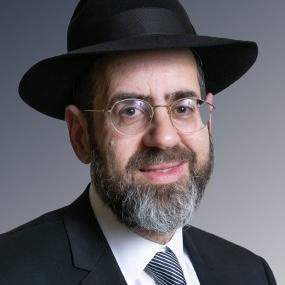
Daily Bitachon

Daily Bitachon

By Rabbi David SuttonReligion & SpiritualityJudaism
Download on the App Store

Daily Bitachon episodes

  • Beresheet: Cain and Jealousy
    The Lesson of Bitachon: Overcoming Jealousy and Finding Your Unique Mission This lesson on Bitachon (trust and reliance on God) is drawn from the teachings of Rabbi Shlomo Wolbe , specifically in a letter he wrote to a young Yeshivah bachur (student) suffering from depression and lack of focus in his learning. Rabbi Wolbe identifies the root cause of the student's distress—and the core theme of the story of Cain and Abel in the weekly Torah portion ( Parsha )—as jealousy. The Root Cause: Measuring Yourself by Others The student, being in a Yeshivah environment surrounded by talented peers, was constantly comparing himself to others. He could only see his friends' positive qualities and talents while focusing exclusively on his own deficiencies and lacking's. He felt that because he didn't possess their specific gifts, he was unable to achieve success. To combat this, Rabbi Wolbe stresses a fundamental principle of Bitachon : You must know that HaKadosh Baruch Hu (God) gives every single person the necessary talents and abilities to fulfill his or her mission in life. This concept is acknowledged every morning in the Birchot HaShachar (Morning Blessings) when we declare: She'asah li kol tzarchi ("Who has provided me with all my needs"). This blessing confirms that everything a person requires—both physically and spiritually—to fulfill their unique destiny has already been granted to them by the Creator. The problem, therefore, is not a lack of abilities, but a lack of perspective: constantly measuring oneself with other people's measuring sticks. The Principle of Non-Overlapping Kingdoms Rabbi Wolbe calls the recognition of one's unique giftedness an Avodah Gedolah (great and important work). The crucial realization is embodied in the principle: Ein Malchut Noga'at B'Chavarta (One kingdom does not touch the other.) This means that the reign of two kings will not overlap. In a spiritual context, it signifies that God gave you your abilities, and only you can do what you are meant to do. Your friends, with all their specific talents and knowledge, will fulfill their missions, and you will fulfill yours . You must stop comparing yourself to others and instead believe that your Creator has already provided all your spiritual needs. The Lesson from Cain and Abel The lesson of non-reliance on external approval is mirrored in the Torah's account of Cain. When God rejects Cain's offering, He asks him: "Why are you so upset, and why has your face fallen? If you do good, you will be lifted up..." (Genesis 4:6-7). Commenting on this verse, the Or HaChaim (a classic commentary) notes that when a person performs good deeds, those deeds naturally elevate themselves. The spiritual status of the deed is inherent, not dependent on external validation. Rabbi Wolbe emphasizes a related powerful statement: HaKedusha einah tzerichah la'acheirim (Holiness does not need the approval of others.) You are not dependent on others to validate your efforts or your talents. If you possess the qualities, you need only to execute your mission. The Danger: Rotting Bones This concept is rooted in the verse from Proverbs (14:30): Rakev atzamot kinah (Jealousy causes the bones to rot). When a person is consumed by jealousy, they forget all the positive things God has given them. They only focus on what others possess, and in the process, their own inherent potential atrophies. The "bones" that support the person's self-worth become rotten due to the focus on what is lacking. The Final Foundation It is crucial to believe that God does not want everyone to look, learn, or understand things the same way. Each person has their own approach based on their unique talents and abilities. When a person dedicates effort using their personal gifts, they will merit achieving what they need to achieve. Rabbi Wolbe concludes with a famous story of Rabbi Naftali Amsterdam, one of the foremost students of Rabbi Yisrael Salanter: Rabbi Amsterdam once lamented to his Rebbe : "If only I had the keen intellect of the Sha'agat Aryeh, the pious heart of the Yesod V'Shoresh HaAvodah, and the perfected character traits of my Rebbe (Rabbi Salanter)— then I could truly serve God!" Rabbi Salanter immediately responded: "Naftali, with your head, with your heart, and your character traits, you can be a true servant of God." This is the fundamental principle of Bitachon : Believing that God has given you exactly what you need to fulfill your mission in life, and relying on Him to help you get there. The first murder in history stemmed from this failure to understand one's own mission, a "Cain" trait that we must all recognize and strive to overcome.
    7 min
  • Sukkot and Humility
    Rambam's Understanding of Sukkot (Guide for the Perplexed, 3:43) The Rambam explains that the holiday of Sukkot is designed to achieve the goal of ששון ושמחה (happiness and joy), and for this reason, it must last for seven days, " כדי שיתפרסם הענין " (so the topic will become well-known and advertised) and make a lasting impact. The Timing and Mindsets (Cognition and Character Traits) The time of the holiday is explicitly set by the Torah during the gathering of the harvest, a period when people have peace of mind and are relieved from the most basic needs. This setting is ideal for imparting two crucial lessons: 1. Mindset (Cognition/Knowledge): Remembering Miracles: It is an opportunity to remember the miracles that happened to the Jewish people in the desert for the benefit of future generations. 2. Character Trait ( מדות - Humility and Gratitude): Remembering Humble Beginnings: A person, successful and at the "top of the world" while gathering their grain, must remember their earlier, humble beginnings and "bad days." Reason 1: Gratitude: To take the opportunity to thank the Creator who brought them to this success. Reason 2: Humility: To cultivate the trait of humility and prevent arrogance due to current success. The Act of Dwelling in the Sukkah To fully internalize this lesson, the Rambam emphasizes the physical act of leaving one's home and dwelling in the Sukkah: Living the Lesson: We sit in temporary booths, reminding ourselves that we were once desert wanderers and were in a "suffering state." The Sukkah as a Booth (Not necessarily 'Ananei Kavod'): The emphasis here is on the simple booths of desert wanderers, a more fundamental understanding of the commandment, rather than solely the "Clouds of Glory" ( 'Ananei Kavod ). The Transition: We remember that from those simple beginnings, God brought us to our beautiful homes. The Role of Zechut Avot (Merit of the Forefathers) The Rambam explains that the Jewish people merited to leave the simple booths and live in beautiful homes for two reasons: God's Kindness. The Promises Made to the Forefathers: Specifically, Avraham, Yitzchak, and Yaakov, who were perfect in their mindsets and character traits. This leads to a fundamental principle: Source of Blessing: All the good that God has given and will give is because of זכות אבות (the merit of our forefathers), who maintained the דרך השם (path of God) and performed acts of righteousness. This reinforces the lesson of humility, as our success is not solely due to our own current merit. Shemini Atzeret and the Arba Minim (Four Species) Shemini Atzeret: Since not all the requisite happiness can be fully achieved in the temporary Sukkah, the people come back into their homes to "finish off the happiness" on the concluding eighth day. Arba Minim : The four species indicate appreciation for the transition from the desert to the fertile land of Israel ( Eretz Yisrael ). The desert does not produce such fruits and beautiful plants, which require fertile, moist land. Choosing species for their nice smell and beautiful appearance allows us to appreciate the success of our crops, which further necessitates humility at this time. Modern Application The Rambam's outlook is highly practical and can be applied in modern times: Material Success: Just as farmers appreciate their crops, a modern person (e.g., selling shoes or handbags) can view their products and appreciate their year's success, which further inspires humility and gratitude. Personal Origins: The lesson extends beyond remembering the journey to Eretz Yisrael to remembering one's personal, family, or national origins. Anyone whose family immigrated can remember the humble beginnings and origins of their grandparents—the modest homes, apartment buildings, and origins—to appreciate their current success, become humbled and thankful, and remember the זכות אבות .
    6 min
  • Ha'azinu: The Suit Fits
    There are important principles in our faith, which basically come down to one important point, which is that God's wisdom is above our wisdom and therefore, we don't understand how He acts with us and we don't necessarily understand what He asks us to do (Mitzvot). And actually we can take it a step further- We don't understand nature either. Why am I putting these three things together? Because these are three areas where God reveals Himself in the world. God reveals Himself in nature; He created the world, that's one of the places He reveals himself, and yet there are so many things that are beyond our understanding- the human body, the animal kingdom, the botanical kingdom and so on. Then there are the commandments that He gave us: Tefilin, Sisit etc. And then there is the way God acts with us. All three of these are beyond our understanding, but we can apply one to the other. There's a story where someone once came to the Chazon Ish and said, " I don't understand the way God's acting with me. It doesn't make sense. It doesn't seem fair." So the Chazon Ish sat down with him to learn Gemara, and after learning the Gemara and Tosafot (which is a little difficult to understand), the man did not understand it. And the Chazon Ish said, " If you don't understand this Tosafot, you don't understand this piece of information that God gave over how, are you going understand the way God is acting with you?" Each one of these three areas can teach us that don't understand. We don't understand Mitzvot and Torah, We don't understand creation… exactly how certain things work in our body, And lastly, we don't understand how He acts with us. In this week's perasha, two out of the three show up. The first one is where Moshe Rabbenu says, הַצּוּר֙ תָּמִ֣ים פׇּֽעֳל֔וֹ כִּ֥י כׇל־דְּרָכָ֖יו מִשְׁפָּ֑ט אֵ֤ל אֱמוּנָה֙ וְאֵ֣ין עָ֔וֶל צַדִּ֥יק וְיָשָׁ֖ר הֽוּא God is a rock. Everything He does is perfect. All of his ways are just. He's a loyal God, a reliable God, there is no iniquity. He's righteous. He's straight. And that means everything that God does is perfect. The Midrash Tehilim says, on this pasuk, "They told Moshe," (I don't know who they is), " Who made it that you can't go into Eretz Yisrael?" And he said, "I caused it to happen." And they said, " You caused it? God caused it." But Moshe said, " Heaven forbid. even if you see something that doesn't seem right, for example, if a good man is suffering or the opposite, you always have to know this Pasuk: HaSur Tamim Paalo God is a rock. Everything He does is perfect." Moshe Rabbenu said this, as we quoted above from this week's perasha. And this is similar to another interaction where they tell Adam HaRishon, " Who caused you to die?" and he answers, "I caused myself to die. " And they say, " What do you mean, didn't God cause you to die?" He says, " Heaven forbid," and gives a mashal of a man that's lying on his sickbed. The doctor tells him what to eat and what not to eat, but he doesn't listen to the doctor. Now, when he's deathly ill, someone says, " Did the doctor cause you to become deathly ill ?" And he says, " No, the doctor didn't cause me deathly ill. I didn't listen to the doctor, and that's why I'm deathly ill." That is an important concept. Tamim Pa'alo Everything God does is perfect and we can't question- because of this very point. We have to accept that God is fair and God is just, and we just don't understand it.. It's beyond us to understand. That's when it comes to the way God acts. When it comes to Mitzvot, it's also a pasuk in the perasha, כִּ֠י לֹֽא־דָבָ֨ר רֵ֥ק הוּא֙ " It is not something empty from you ,״ referring to the Mitzvot, " it's your life." The Gemara Yerushalmi in Pe'ah says, " If it's empty, it's because you are empty." Sometimes people say, " That makes no sense," when really it does make sense, but they just don't understand it. The the lacking is not in it , the lacking is in you. The Chafetz Chaim gives a mashal of a man who had a suit that was tailored perfectly to him. A few months later, he goes back to the tailor and says, " This suit is too big. It doesn't fit me ." And the tailor says, " The suit was made perfectly. The problem is, you got sick and lost a lot of weight. That's why the suit is baggy." And the same thing is true for us. If someone says, " Hey, the mitzvah of Tefilin doesn't fit me well, it doesn't make sense to me," the Chafetz Chaim says, " The Tefilin is the right size. Your head just got smaller." You don't understand. The lacking is in you . This is the important principle that we are discussing: Our ability to understand is limited. We cannot understand how Mitzvot work, but if we don't understand, it's not that the mitzvah doesn't make sense, but rather, it's something that we're lacking. If God acts in a certain way and we don't like it, it's because we don't understand it. Again, God's actions are perfect, and His decisions are just..we just don't understand them. The last one, which is not in the Perasha , is how does nature work? How do the wonders of nature work? And just as we'll never understand the wisdom of creation, so too, we don't understand how God acts with us and we don't understand God's Mitzvot. Basically, we have to say, "I have faith. I rely on Hashem. He knows what He's doing." Have a wonderful day and a Shabbat Shalom.

    7 min
  • Erev Yom Kippur - Neilah- Yechida- Ratzon 02
    ספר ערבי נחל - פרשת בהר וחיות האדם נחלק לנפש רוח ונשמה חיה יחידה, וביארנו כמה פעמים כי זה הוא מעשה דיבור ומחשבה ושכל והוא נפש רוח נשמה חיות וכל אחד משתלשל מהקודם, ובחינת יחידה הוא רצון פשוט אשר הוא דק ורוחני עוד יותר מבחינת השכל והחכמה והוא מבחינת כתר : ספר ליקוטי תורה - פרשת בלק שבחי' פנימי' נקודת הלב היא בחי' יחידה שאין לה אלא רצון אחד לאביה שבשמים והיא המעלה והמדרגה שאין דוגמתה ולא בערכה נמצא בגשמיות כלל רק לה' לבדו נמצא בבנ"י עם קרובו: Welcome to the Erev Yom Kippur Edition We're quoting from Rabbeinu Yonah in the fourth gate of his Sefer Sha'arei Teshuvah (The Gates of Repentance). In the eighth letter, he explains that a person who has sinned, even after performing Teshuvah (repentance), still requires a final Kapparah (atonement), which arrives with Yom Kippur . Therefore, the entire year should be spent yearning and waiting for this great day. Why? So that we may once again find favor in God's eyes . This divine favor is the ultimate source of life for both the body and the soul—it is the source of everything. As the pasuk (verse) in Tehillim (Psalms) says: "Chaim bi'Rtzono" — Life comes from God's will. The Joy of Atonement: Why We Eat on Erev Yom Kippur Rabbeinu Yonah uses this concept to explain why we are instructed to eat and drink on Erev Yom Kippur (the day before Yom Kippur). The festive meal holds the value of Yom Kippur itself because it is a way to express our happiness over the great atonement that is about to come. He also presents a second, related reason: Every holiday involves a meal or Seudah because the holiday itself is a Mitzvah (commandment). We eat and drink to celebrate the Mitzvah, following the principle that the happier a person is about a Mitzvah, the greater the reward for fulfilling it. Conversely, serving God without joy limits the reward. Since Yom Kippur is the only holiday on which we are commanded not to eat, we shift the celebratory meal—the Simchat HaMitzvah (joy of the Mitzvah) of Yom Kippur—to Erev Yom Kippur . This celebratory meal becomes a testimony to our profound concern and worry over our sins, and our absolute certainty and joy in the coming atonement. Therefore, we should be in a happy mood and celebrate the great day of Yom Kippur and its atonement. The Five Levels of the Soul and the Power of Ne'ilah To add further depth, Rav Wolbe (as do many other holy books) teaches us about the unique nature of this day. We normally have a day with three or four prayers, but never five. This fifth prayer, Ne'ilah , corresponds to the five sections of our soul: Nefesh (Corresponds to the liver) Ruach (Corresponds to the heart) Neshamah (Corresponds to the brain) These first three are the standard parts of the soul within us: Moach, Lev, Kaved (Brain, Heart, Liver). Chayah (Life) - A part of the soul hovering above us. Yechidah (Singular/Unique) - The highest part, rooted in God. Every soul is a "chelek Eloka mi'ma'al" — a piece of God from above . This highest root, the Yechidah , is a point of pure connection where we are simply "plugged in" to God without question, beyond the realm of good and bad or choice. Rav Wolbe explains that each of the five prayers on Yom Kippur ignites one of these parts of the soul. Finally, at Ne'ilah , the highest part of our soul—the Yechidah , which is often dormant all year—is engaged and enlightened. This is the ultimate source of the Kapparah (atonement) that happens during Ne'ilah, granting us an understanding of God's Oneness ( Yichud ). The Meaning of Ne'ilah : Locked In with God The word Yechidah shares the same root as Yichud , which means to be alone. One understanding of why the final prayer is called Ne'ilah , which means to close, is that the gates of mercy are closing . However, a deeper understanding suggests that we are now being locked in a room alone with God . Just as a bride and groom enter a locked room for Yichud to begin their marriage, we are granted the opportunity to be alone with God in a special way. The moment of Yechidah is that moment when we are alone with God and achieve that ultimate clarity. This is also what we look forward to—this is Rtzono , His will and desire to be alone with us in such a special way. Let us therefore look forward to Yom Kippur not with dread, but as a wonderful day to be embraced, taking in every moment of this unique time that will give us life for the whole year: "Chaim bi'Rtzono," life that comes with His will.
    0 min
  • The Essential Obligation: Forgiving Others on Yom Kippur
    The Essential Obligation: Forgiving Others on Yom Kippur This is a beautifully insightful text about the spiritual preparation for Yom Kippur (Day of Atonement), focusing on the less emphasized but crucial aspect of forgiving others . Here is the edited and cleaned-up version, maintaining the original's tone and rich sourcing: Welcome to a special edition of our Bitachon (Trust in God) class, as it relates to forgiving people on Yom Kippur . We place a major emphasis on asking others for Mechilah (forgiveness). It is critically important to seek forgiveness from anyone you may have wronged before Yom Kippur. However, we often place less stress on the equally vital obligation: that we must remove from our hearts any ill feelings, or what is known as K'peidot—being upset, holding a grudge, or exacting in judgment toward others. Rav Chaim Palaggi , in his work Moed L'kol Chai (Chapter 19), quotes the Zohar which states that if a person does not remove upsetness from their heart, their Tefillos (prayers) are interfered with. He cites his teacher, Rav Eliyahu Cohen of Izmir , who explains that throughout the year the angel will bring up prayers, on Yom Kippur specifically, one must remove these negative feelings. Rav Palaggi reiterates this in Chapter 16, stating: "One who does not remove hatred from his heart on Yom Kippur—his prayer is neither heard nor accepted." Therefore, he concludes, one should be ma'avir al midosav, meaning they should be completely easygoing and overlook the faults of others. This is the intention behind the passage many recite nightly before Kri'at Shema al HaMittah: "Harenini mochel v'sole'ach..." : I hereby forgive and pardon anyone who angered or provoked me—whether it affected my body, my money, or whatever the matter may be, I forgive them. We must ask ourselves: when we say that, do we truly mean it? Chacham Ben Zion Abba Shaul , in Or L'Tzion, actually states: if you don't mean it, you shouldn't say it. But, as Rav Chaim Palaggi emphasizes, during these days we must work on genuinely meaning it. We have to overcome our true upsets and genuinely forgive those who wronged us. Why Forgiveness is Our Shield Why is this internal forgiveness so important? The Sefer Cheshek Shlomo from Rav Shlomo Sirok (brought in a collection of ancient manuscripts by Rav Yaakov Hillel) explains the profound reason: On Rosh Hashanah and Yom Kippur , when we ask God to forgive us, the Satan (accuser) stands up and says: "Hold on! Treat them the way they treat others. If they don't want to forgive others, You shouldn't forgive them either!" This causes a person's sins to be remembered and held against them. Therefore, one should be meticulous in forgiving and being easygoing so that God will treat them the way they treat others. Just as we want God to forgive us, we must forgive others. The Power of Bitachon (Trust in God) The question, however, remains: How? How can one truly forgive when a person has deeply wronged or upset them? This brings us back to the Torah's command not to bear a grudge. It's an enormous ask: "Let bygones be bygones and forget what the person did to you." The Sefer HaChinuch provides the only path to achieve this: having Bitachon (trust in God) and believing that no human being could do anything to you—no human being can impact you in any way—unless God specifically decreed it. The person who wronged you will be punished by God, but that is not your concern. That is between them and God. As for you, if it was going to happen to you, it would have happened regardless of who performed the action. The Sefer HaChinuch brings the famous story of Shimei ben Gera , who cursed King David when David was fleeing from Absalom. David's response was profound: "Hashem said to him, 'Curse!'" David understood that God put the cursing into Shimei's mind. It had nothing to do with Shimei's personal spite; it was part of God's decree. Because of this profound control and understanding, David was elevated to become the fourth "leg" of God's throne (alongside Abraham, Isaac, and Jacob). His self-mastery, rooted in the understanding that God ultimately orchestrates everything, earned him this immense spiritual status. The Saving Power of Forgiveness This is not an easy job; it takes hard work. But this is our assignment on Yom Kippur: to arouse that deep-seated Bitachon . We are all familiar with the story involving Rav Chaim Shmulevitz . The Mir Yeshiva was in a bomb shelter during a war, and as people prayed, a bomb struck the shelter. The building shook, but the bomb turned out to be a dud. Rav Shmulevitz later said that people assumed it was the fervent prayers of the young men that protected the Yeshiva. He then related that he was not far from a woman who had been grievously wronged by her husband many years earlier—he had abandoned her, leaving her an agunah (a woman whose husband's whereabouts are unknown). At that precise moment, she simply looked up and said: "Hashem, I forgive him. Please forgive us." Rav Shmulevitz stated he believed those were the words that made the impact and saved the Yeshiva. It is a powerful, saving strength. We must delve deep into the recesses of our soul to find the strength to forgive someone who wronged us and believe that ultimately, they were not the ones who truly made it happen. When we are able to forgive others, God is able to forgive us, and our prayers are heard. May we all merit to engage in this deep spiritual work.
    6 min
  • The Essential Theme of Humility in the High Holidays
    The Essential Theme of Humility in the High Holidays The Bent Shofar: A Symbol of Humility On Rosh Hashanah , we blow the Shofar . The Halacha emphasizes the importance of a bent Shofar. Even if we have a choice between a bent Shofar from a goat and a straight one from a ram ( Ayil ), we choose the bent one. Furthermore, if the choice is between a straight Shofar with a great sound and a bent one with a lesser sound, the bent Shofar is still preferred. Why? The Mishnah Berurah explains that the essential requirement is for the Shofar to be bent, as the Gemara states. The bent shape symbolizes humility ( Anavah ). Rosh Hashanah is a day for humbling ourselves before God, and this principle of "bending" carries through the entire High Holiday period. Ne'ilah and the Essence of Awe This concept of humility extends directly to Yom Kippur , specifically during the concluding Ne'ilah prayer. The Gemara teaches that the core of the Ne'ilah service lies in the words: "Mah anachnu, mah chayeinu, mah kocheinu, mah gevurateinu" — "What are we? What is our life? What is our strength? What is our power?" We are declaring that we are nothing on our own. Why is this fundamental declaration of powerlessness so central to both Rosh Hashanah and Yom Kippur? The Desire to Be the Boss: The Original Sin The answer goes back to the Original Sin . The Serpent ( Nachash ) told Adam and Eve, "The reason God commanded you not to eat from that tree is because He ate from it and it made Him a boss. He doesn't want you to be a boss, too." We bought into the lie and ate. This event reveals a fundamental human flaw: a person's deep-seated desire to be in charge , to be the boss, and to reject the authority of anyone else. The "Curse" as a Correction ( Tikun ) To fix this innate arrogance, God instituted what is commonly called a "curse," but which the Nefesh HaChaim interprets as a correction ( Tikun ). God told man, "B'zeat apecha tochal lechem"—"By the sweat of your brow you will eat bread." And to the woman, "B'etzev teldi banim"—"In pain you will give birth to children." Why these two specific things? Because when is a person closest to feeling like a creator? When a man plants a seed in the ground and out comes a tree. When a woman conceives a seed in her womb and out comes a baby. In these moments, one is most likely to exclaim, " I'm the boss! Look what I just did! " God's wisdom ensures that precisely in these areas—your business and your family—where you feel most in control, a curveball will appear: a setback in your work or a difficulty in raising your children. The purpose ( Tachlit ) is to force us to cry out to God and declare, "I realize I'm not in charge; You are in charge." This is the meaning of the Tikun —the correction. The entire season of the High Holidays, symbolized by the bent Shofar , is designed to help us internalize this essential truth of humility and dependence on God.
    0 min
  • Shabbat Shuvah
    Shabbat Shuvah A close connection exists between the observance of Shabbat and the experience of teshuvah . This connection can be discerned already in the word שבת , which relates to the verb שוב , the root of the word תשובה . This connection also emerges from the following story told in the Midrash ( Vayikra Rabbah 10:5) about a meeting that took place between Kayin, after he repented for his sin, and his father, Adam: כיון שיצא פגע בו אדם הראשון אמר לו מה נעשה בדינך אמר לו עשיתי תשובה ונתפשרתי כיון ששמע אדם הראשון כך התחיל טופח על פניו אמר לו כל כך היא כחה של תשובה ולא הייתי יודע באותה שעה אמר אדם הראשון מזמור שיר ליום השבת. Adam asked Kayin what happened to him as a result of his sin, and Kayin replied that he repented and was thus given a light sentence. At that moment, the Midrash tells, Adam began slapping himself in frustration. "If I had realized that teshuvah was so powerful," he cried, "I would have performed teshuvah after my sin!" The Midrash concludes that Adam then proceeded to compose the Psalm of מזמור שיר ליום השבת , the special song for Shabbat. This clearly indicates that Shabbat somehow closely relates to the concept of teshuvah . Another indication to this effect can be found in a Midrashic passage cited by the Orchot Tzadikim( Shaar haTeshuvah) . The Midrash tells that when Moshe ascended to the heavens to receive the Torah, he found angels with a Sefer Torah open in each of the seven levels of heaven. At each level, the angels were learning about the corresponding day of creation: the angels at the first level were learning about the first day of creation, at the second level they were learning about the second day, and so on, until the seventh level, where the angels learned about Shabbat. Additionally, the angels at each level were discussing and praising G-d for a certain concept. At the first level, they spoke about the Torah; on the second, the Torah and the Jewish People; on the third, the city of Jerusalem; the fourth, Moshiach ; the fifth, the suffering of Gehinom ; on the sixth level, they spoke of Gan Eden and prayed that G-d grant the Jewish People a portion in Gan Eden . On the seventh level, which corresponds to Shabbat, Moshe Rabbenu held onto the Throne of Glory, which is situated on that level, and he saw all kinds of angels assembled discussing teshuvah . They praised the power of teshuvah , which reaches all the way to the Throne of Glory, as alluded to in the pasuk , שובה ישראל עד ה' אלקיך . This, too, points to a close connection between Shabbat and teshuvah . The seventh level of the heavens, which is situated near the Throne of Glory, corresponds to Shabbat, because Shabbat is associated with teshuvah , which rises directly to the Throne. The basis of this connection is the concept of return. Rav Wolbe noted that teshuvah does not actually mean "repentance," but rather "return." Teshuvah is about returning to Hashem, and Shabbat is the time when all of creation returns to its source. The concept of the seven different layers of the heaven is discussed by the Gemara, in Masechet Chagigah(12b). The Gemara there gives the names of these seven layers – וילון, רקיע, שחקים, זבול, מעון, מכון, ערבות . At the seventh level, the Gemara describes, there is "righteous, justice and charity," as well as "treasuries of life, treasuries of peace, and treasuries of blessing." (This, too, is connected to Shabbat, as it is the מקור הברכה – the source of all blessing – and thus G-d's "treasuries of blessing" are found on the seventh level of the heaven, which corresponds to Shabbat.) This level also contains the souls of the righteous, the souls of those who have not yet been born, and the טל תחיה – the dew with which G-d will one day resurrect the dead. Our Rabbis explain that the Gemara refers here not only to the literal resurrection, when the deceased will actually come back to life, but also the figurative "resurrection" – namely, teshuvah . A sinner is considered spiritually "dead," and the process of teshuvah enables him to regain his "life." The "dew" which enables us to "resurrect" ourselves after sin is found there, in the seventh level of the heaven, the level of Shabbat, because on Shabbat we are given the unique ability to grow and negate the harmful effects of sin. This unique power is given to us every Shabbat, but especially on Shabbat Shuvah, when Hashem calls to us, שובה עד ה' אלקיך – to return to Him, promising that our repentance will go straight to His Throne in the highest levels of the heavens. Shabbat Shuvah is so significant that the Tur ( Orach Chaim 612) records an opinion among the poskim permitting the recitation of Selichot on this Shabbat, despite the fact that Selichot is normally forbidden on Shabbat as it is inconsonant with the festive spirit of the day. The Bais Yosef explains that according to this view, the period of the Aseret Ymei Teshuvah is a time of danger, as we are being judged, and this unique situation allows us to recite Selichot and beseech Hashem for forgiveness. Although we do not follow this opinion, it demonstrates the special status of this Shabbat and how this is a most propitious time for teshuvah . Let us, then, take advantage of the unique opportunity offered by this special Shabbat, and thereby ensure that our teshuvah and efforts to grow and draw closer to Hashem will rise directly to His Throne, so we will be worthy of His kindness and grace throughout the coming year, אמן .
    0 min
  • Som Gedalyah
    Welcome to a special edition in honor of Tzom Gedaliah ( צוםגדליה ), the Fast of Gedaliah. This day is a potent reminder of a tragedy that occurred following the destruction of the First Temple. Today, we commemorate the assassination of the righteous leader, Gedaliah ben Ahikam ( גדליהבןאחיקם ). His death was the final blow to the remaining Jewish community in the Land of Israel ( ארץישראל ), forcing them into exile and marking the end of the last vestiges of Jewish life there. The Dangers of Habit: Lessons from Gedaliah In his book on the Days of Awe ( ימיםנוראים ), Rabbi Nosson Wachtfogel brings forth a powerful concept: Rosh Hashanah ( ראשהשנה ) is not just about shedding bad habits; it's about renewing ourselves, even in our good deeds. The greatest pitfall, he argues, is continuing a positive behavior simply out of habit. This, Rabbi Wachtfogel explains, was Gedaliah's tragic mistake. He was warned of a plot to assassinate him but dismissed the warning, relying on his ingrained practice of never accepting slander ( לשוןהרע ). He failed to re-evaluate the situation and realize that this specific instance of gossip ( רכילות ) was permitted for a greater, life-saving reason. This rigid adherence to a pre-existing, even positive, behavior—without re-analysis—led to his death and the further exile of the Jewish people. This teaches us a crucial lesson: Don't remain stuck in old habits. Habit is the opposite of the essence of Rosh Hashanah, which demands we become a new creation ( בריהחדשה ). When Routine Becomes Rote This idea is beautifully illustrated by a story about the Satmar Rebbe, Rabbi Yoel Teitelbaum. At a Chasidic wedding, a gifted jester ( בדחן ) who was known for his imitations asked the Rebbe for permission to mimic him. The Rebbe, with a smile, granted the request. The jester then proceeded to impersonate the Rebbe's unique way of shaking the lulav and etrog ( לולבואתרוג ). Everyone laughed, but in the middle of the performance, the Rebbe burst into tears. The jester's face turned pale as he rushed over to beg forgiveness, terrified that he had caused offense. "No, no," the Rebbe assured him. "You did nothing wrong." "Then why are you crying?" the jester asked. "I said to myself," the Rebbe explained, "'If you can copy the Satmar Rebbe, well, maybe I'm just copying the Satmar Rebbe, too.'" The Rebbe feared that his own prayer movements, once filled with sincere intention, had become nothing more than a mechanical imitation of the way he had prayed in his youth—a rote performance rather than an act of genuine connection. This is the danger of מצוותאנשיםמלומדה , or doing mitzvot by rote. Breaking Free of the Elephant's Rope Another powerful story highlights this point. A man once observed a group of huge circus elephants restrained only by a small rope tied to their front legs. Puzzled, he asked the trainer how it was possible that such powerful creatures didn't break free. The trainer explained, "When the elephants are small, we tie them with these same ropes, which are strong enough to hold them at that age. As they grow, they are conditioned to believe the rope can still hold them back. They never even try to break free." We, too, must break free from our "elephant rope." We may be conditioned to act a certain way, but we must constantly reassess our actions and not get stuck in the mindset of "that's just the way I do things." A Call to Action Therefore, as Rabbi Wachtfogel teaches, after Rosh Hashanah, there must be a tangible change in our lives—in our prayers, our learning, and our interactions with others. This requires a profound re-analysis of our daily routines to ensure our actions are driven by genuine renewal, not simply by old habits. A practical takeaway for this day of Tzom Gedaliah is to set aside some time to evaluate your own habits. Which routines are serving you well, and which ones could use improvement? Have a wonderful rest of your day.
    5 min
  • 30th Heshbon
    An Immigrant in This World Welcome to our special Elul series of Cheshbon HaNefesh (Soul-Searching). We've now completed our 30th reflection, which prompts us to view ourselves as immigrants in this world. This is a celebration of our journey through these 30 spiritual units. Imagine a transient immigrant arriving in a foreign land. He knows no one, and no one knows him. But a compassionate, powerful person takes him in, provides his daily food, and gives him a set of instructions to follow, with clear consequences for disobedience. This guide tells him how to act and that he will eventually leave this land, though the time of departure is unknown. How should this immigrant act? Lessons from the Immigrant Humility: He should be humble, shedding all pride and arrogance. He is a sojourner, not a judge of others, as Lot was told: " One came to sojourn, and he would now judge? " Readiness: He must be ready to leave at a moment's notice and should not become too comfortable. As God says in Vayikra , " The land is Mine, for you are strangers and sojourners with Me. " Understanding the Laws: He must diligently learn the laws and statutes of the land and his obligations. King David expressed this perfectly in Tehillim : " I am a foreigner in the land; do not hide Your commandments from me. " Love for Others: As an immigrant, he should feel a special bond with other foreigners and help them. The Torah commands us, " Love the stranger, for you were strangers in the land of Egypt. " Another verse in Vayikra says, " The stranger who sojourns with you shall be to you as the native-born among you, and you shall love him as yourself. " The Ramban suggests that this command, " Love him as yourself, " is even stronger than the general command to love one's neighbor, as we ourselves are immigrants. Clinging to the Guide: He must dedicate himself to the service of the one who is guiding him, as this is the only person who will truly have compassion for him and come to his aid. Like King David, who said, " I looked to my right and I saw that no one was with me; refuge was lost to me; no one cared for my soul. " Unlike the Shunammite woman who felt secure among her own people, we are truly alone but for our Creator. Contentment: He should be content with the minimal necessities provided—food, shelter, and clothing. He should not put excessive effort into accumulating possessions, as he must be ready to travel at any time. The smallest gift should bring him great joy, and he should never stop giving thanks. Tolerance: He should tolerate difficulties and not complain about simple discomforts like a lack of air conditioning, because he is grateful just to be in the country. Our True State My friends, we must accept these conditions of being an alien, because we truly are strangers here. We might think we have friends and allies, but this is an illusion. The proof is how we came into this world. No one was there to help you develop in your mother's womb. No one but God could make your limbs grow and your heart beat. And just as you were alone in the womb, you are alone in this world. No person can truly help you without God. No one can add to your life or take days away from it. As the author asks, " What relationship do you truly have with other people? " You are an immigrant in this world, and you are neither helped by the many nor harmed by the few. You are an isolated individual whose only true ally is your Creator. No one has compassion for you but Him. There may be many distractions in the world, but ultimately there is only one force to focus on. Therefore, dedicate yourself to His service, just as He dedicates Himself to creating, guiding, and sustaining you in life and in death. Keep His Torah before your eyes, hope for His reward, and fear His punishment. By accepting your alien state in this world, you will truly enjoy the delights of the world to come. This powerful message is especially fitting for Erev Rosh Hashanah , as this is what the day is all about—our special one-on-one connection with God. As God says, " I am the Lord, your God " in the singular. We must deal with Him directly, for no one else can truly affect us. This is our final reflection.
    9 min
  • 29th Heshbon
    The Value of the Soul Over the Body Welcome to the Chovot HaLevavot series. We are on Cheshbon 29 , a deep introspection that prompts us to consider the value of our soul over our body. This idea helps us understand why some people hold more weight than others, not in a physical sense, but in their spiritual and moral worth. The Gemara says that a certain person is as valuable as a thousand people. For instance, Moshe Rabbeinu was considered to be worth 600,000 people. This wasn't because he was physically strong, but because of his immense spiritual stature. The Chovot HaLevavot author proves this point by quoting a verse from Shmuel II , chapter 18, verse 3. When King David was going to war, his people insisted he stay behind, saying, " You are worth ten thousand of us ." Targum Yonatan explains this was because David would pray for them. This shows that King David's true value was in his spiritual strength, not his physical might. The Importance of Inner Beauty The same principle applies to a beautiful woman. Her true quality isn't just her physical beauty. If a person is physically beautiful but lacks intellect or has poor character traits, they ultimately aren't attractive. The author quotes a verse from Mishlei (Proverbs): " A gold ring in a swine's snout is a beautiful woman who lacks discretion. " This verse, "Isha yafah v'sarat ta'am," means her beauty is worthless because she is "missing her flavor"—her proper character traits and actions. Another verse from Mishlei, "Sheker ha-chein v'hevel ha-yofi," teaches that charm is deceptive and beauty is fleeting. Physical beauty, which is tied to the body, only has true value when it is accompanied by a beautiful soul. Once we realize this, we understand that our true value is our spiritual worth. You Are Not Your Body To illustrate this point, consider the story of actor Christopher Reeve, who played Superman. After a horse-riding accident left him paralyzed, he fell into a deep depression. For a year, he withdrew from the public eye. When he finally re-emerged, he was asked what gave him the strength to do so. His answer was profound: " I realized I'm not my body. " This is a powerful statement we should all internalize. Our true qualities are spiritual. When we understand this, we realize the importance of prioritizing our soul over our body. When God looks at us, He sees the merits and blemishes of our souls. He looks at our midot tovot (good character traits), and our choices to follow either our good or evil inclinations. What makes us special is what's inside, not what's outside. A Spiritual Spa As we prepare for the High Holidays, our focus must be on our spiritual well-being. Rabbi Yerucham Levovitz once said, " Elul is a spa. " The month of Elul and especially the Aseret Yemei Teshuvah (Ten Days of Repentance) are like going to a spa. Just as a physical spa uses massages, salts, and minerals to make the body stronger and healthier, these 40 days are a spiritual spa. They give us the ability to enhance and improve everything about ourselves. We must tend to our soul more than our body, knowing that it is easier to cure our body from a grave disease than to heal our soul from the sickness of sin and the yetzer hara (evil inclination). Another verse from Mishlei, "Ru'ach ish y'chalkeil machaleihu, v'ru'ach n'ka'ah mi yisa'ena," translates to: " A person's spirit can endure a physical ailment, but who can bear a crushed spirit? " This teaches us that a spiritual ailment is far more difficult to bear than a physical one. This is why another verse in Mishlei says, "Mi-kol mishmar, netzor libecha," —" Guard your heart above all else. " We put fences, gates, and security around our homes, our money, and other valuables. But the most precious commodity we have is our heart and spirit. It needs the most guarding and protection of all.
    6 min

About Daily Bitachon

From the publisher's feed

Daily Bitachon - delivered directly to your computer and/or mobile device