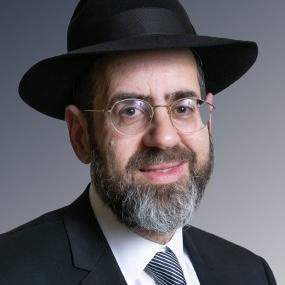
Daily Bitachon

Daily Bitachon

By Rabbi David SuttonReligion & SpiritualityJudaism
Download on the App Store

Daily Bitachon episodes

  • Hashem is Waiting
    Welcome to Daily Bitachon We are reviewing the Haggadah shel Pesach with timely lessons We're in the Baruch Shomer Havtachato L'Yisrael And the question is, What is the greatness of Hashem that He keeps His promise? The commentaries explain that the word Shomer has more than one meaning( they are actually related). The common meaning of Shomer is a watchman or, to guard something But Shomer also means to wait. We see this when the Torah, in Bereshit 37,11 describes that the brothers were jealous of Yosef. And it says, וְאָבִ֖יו שָׁמַ֥ר אֶת־הַדָּבָֽר What does that mean? Rashi says Shamar et ha-davar means hayah mamtin/he's waiting, umtzapeh/ looking forward, matay yavo/when is it going to happen? Rashi then brings other cases where the word Shomer in Tanach means to wait. The Sefer Ikarim , in the 4th essay chapter 47, explains that the root of the word שמר Shomer / watchman or guard , really comes from waiting , because a watchman is waiting for his watch to be over. It's probably the most boring job in the world So he's called a Shomer because he's waiting נַפְשִׁ֥י לַאדֹנָ֑י מִשֹּׁמְרִ֥ים לַ֝בֹּ֗קֶר שֹׁמְרִ֥ים לַבֹּֽקֶר׃ David HaMelech in Tehillim 130,6 Nafshi l'Hashem , My soul is to God, Mi shomrim la-boker , from those watchmen that are waiting for the morning, shomrim la-boker, they can't wait for the morning to come In Shemot , Perek 12 , Pasuk 42 , it says that the night of the Seder is called Lel Shimurim , which most people understand means the night that we are guarded, but that's not what Rashi says. He says it's called the night of waiting because Hashem was waiting, looking forward, L'kayim Havtachatoh , to fulfill His guarantee and promise. So now we have a new understanding, Baruch Shomer Havatachatoh Yisrael , means Blessed is the One, Hashem, that was looking forward to keep His promise - not that he kept His promise- He was looking forward to it This commentary is brought down by Rabbi Yitzchak Meltzen in his Haggadah shel Pesach , Siach Yitzchak , and many others bring it down as well. Additionally, the Seforno, on the pasuk of Lel Shimurim L'Hashem says Hashem was looking forward to save them. And he asks, Why didn't He just save them earlier? Why is He waiting? The answer is, They weren't yet ready or fit for the Ge'ulah . Hashem was waiting for the right time, Ki Chafetz Chesed Hu He wants to do it, and that's what it means, HaKadosh Baruch Hu Chishev Et Haketz He figured out a way to make it happen, at the right time. These explanations are all related, because Hashem wanted the Jewish people to survive, and He knew if He waited any longer, we'd disintegrate. He had to work out a way to get us out at that time This is all part of Hashem's waiting and looking forward, but He couldn't wait anymore, He had to let us out early. And this explanation is relevant to us as well, every day of the year. We're responsible every single day of the year to look forward to Mashiach That is one of the 13 principles of faith. We must not just know he's coming, we have to be Mechakeh , we have to look forward , we have to wait for him to come. We wait, and Hashem waits at the same time. The Shibbole HaLeket says an unbelievable line- that Hashem is always working this out, and saying matai yavo haketz, when is the time, when is the end going to come for this Galut? When is the Geulah going to come? This was not just a one-time thing at Yetziat Mitzrayim. Hashem is always waiting, and not just for Klal Yisrael at large, but He's also waiting for every individual to come back home already. Rav Chaim Palagi, in his sefer Moed L'Kol Chai , siman 15, quotes the Tanna D'Vei Eliyahu perek 31- where Eliyahu HaNavi says, God is waiting for them to come, more than a father waiting for a son, or a woman waiting for a husband, that we should do Teshuvah, so that He can redeem us and build the Bet HaMikdash. Rav Chaim Palagi writes, I honestly say that whenever I read this Tanna Devi Eliyahu, I cry. How could it be that the Melech HaKavod, the Honorable King, G-d and King of the world, is waiting for us to do Teshuvah? Why? To do unbelievable goodness for us, and we are not paying attention! He says, Imagine, someone has a dear child, and it's 11 o'clock at night, he's not back, (I'll add that he's calling his cell phone, and he's answering). He's an hour late. The father starts peeking through the windows, worrying, Where's my son? When's he coming home? Or it's like a lady that's waiting for her husband to come back from an overseas trip, and now his flight is delayed. How much pain does it cause? That's the pain of Hashem . Look how much pain He's taking. Come on, He says. He ends with a prayer Hashem Elohim , Hashem our G-d, Ten b'lev Amecha Yisrael, Put into the heart of the Jewish people, do Teshuvah. L'olano Hashem, not for us, ki l'shimcha ten kavod but to give You honor. That's Baruch Shomei Havtachato Yisrael , He's still waiting, to this day, He wants us to get out of this. This goes all the way back to Yetziat Mitzrayim , but as we see, we still didn't get out of it. We're still in the same Galut , and Hashem is waiting for it to come to an end. The pasuk says, לֵ֣יל שִׁמֻּרִ֥ים הוּא֙ לַֽיהֹוָ֔ה לְהוֹצִיאָ֖ם מֵאֶ֣רֶץ מִצְרָ֑יִם הֽוּא־הַלַּ֤יְלָה הַזֶּה֙ לַֽיהֹוָ֔ה שִׁמֻּרִ֛ים לְכׇל־בְּנֵ֥י יִשְׂרָאֵ֖ל לְדֹרֹתָֽם׃ {פ} It's a day that Hashem is waiting for, It's Shimurim L'chol B'nei Yisrael . Rashi says it's a term of protection here in the end of the Pasuk . But the Balai Tosafot s ays Shimurim L'chol B'nei Yisrael , Gam Yisrael Mitzra'im L'zeh Laylah , we're also looking forward to this night. And the night of Ge'ulah , not just then, but even now. We should be looking forward on this night. That's why on this night, we say This year we are here in Chutz L'aretz, next year we'll be in Eretz Yisrael. This year we're slaves, next year we in freedom. That's the term, Tzipita L'Yishua , we're looking forward. Every single day, we say in Et Tzmach David , that we're looking forward, we're waiting for that great day to come. And that's one of the questions they ask after 120 years, Tzipita L'Yishua , Did you look forward to 's Hashem's salvation? Hashem is waiting and we are waiting. Bezrat Hashem it will be fulfilled soon.
    8 min
  • Magen Abraham
    Welcome to Daily Bitachon. We are now in Chol Hamoed Pesach , if you're up to date, and we're still going through the Haggadah . Haggadah is not just a one-night event. We're at the point of בָּרוּךְ שׁוֹמֵר הַבְטָחָתוֹ לְיִשְׂרָאֵל, בָּרוּךְ הוּא. Baruch Shomer Havtachato L'Yisrael Baruch Hu . Blessed is He who keeps His promises to Israel, Blessed is He Hashem keeps His promises Again the question is, what are you telling me? Isn't that obvious? And the Bet HaLevi has a beautiful explanation in Parashat Bo , where he tells us, which many of us might know, that if HaKadosh Baruch Hu didn't take us out of Mitzrayim , we would have mixed with the Egyptians, entered the 50th level of Tumah , and we would have lost our yichus , we would have lost our lineage , our connection to our forefathers. Therefore, we would no longer be the seed of Abraham . The Abraham inside of us would have disintegrated. That's what it means that if Hashem didn't take us out of Mitzrayim , we would still be there, because the promise was to the seed of Abraham . And once we lose our Yichus and we're no longer recognizable as the seed of Abraham , it's all over. Just like Esav and Yishmael are no longer a seed. The same thing could have happened to us. And that's what it means, Baruch Shomer Havtachato L'Yisrael . God kept His promise to Yisrael . If Hashem hadn't worked it out, there would be no Yisrael left to keep the promise to. This concept shows up very much in the Sfat Emet , where he talks about the concept of Magen Abraham . The Sfat Emet in Likutim Parashat Vayigash says the following, in the name of the Chidushei Harim : Magen Abraham means, Hevtichoh Hashem Yitbarach , Hashem guaranteed him (Interesting, it's the same word as Shomer havtahato L'Yisrael ) Lhiyot nish'ar nikudah achat tamid . There will always be a little dot, which we call the Nikudah HaYehudi , that little dot. In Yiddish they say the pintelle yid , the point of the Jew that will never be destroyed. Rvery Jew has in him a little bit of that Abraham Avinu DNA, which is never lost. The Sfat Emet in Bereshit Parashat Lech Lecha tells us that that's what it means when we say a person is chayav to say matai yagil ma'asai le ma'asai avotai ? When will I reach the levels of my forefathers? How in the world could we ever discuss that? Could we ever reach the levels of Abraham , Yitzchak and Yaakov . And the answer is we have that little bit of them inside of us. And he says that special spot helps every Jew to reach the levels that he needs to reach. The Sfat Emet again in Parashat Lech Lecha says that this drop inside of us, this spirit inside of us, can never be extinguished. And every Jew has that connection and that love. And that's what it means. Mayim rabim lo yuchlu lechabot et aAhava . All the oceans and waters of the world will not extinguish that love. The Sfat Emet in Devarim Parashat Vayelech says that the terms in Shir Hashirim that refer to the Jewish people, such as Gan na'ul/A sealed garden and Mayan chatum/ A sealed wellspring indicate certain areas that are sealed, where no danger, or negativity can impact. It's always protected and saved, and that's Magen Abraham, because Hashem is always looking out to make sure that we don't get lost, that we don't get tainted. There's always something left behind. This concept goes back all the way to the beginning of creation. There's a certain part of our body called the Luz bone that will never be destroyed. At the time of Techiat HaMetim / Resurrection of the dead comes, it's going to start from that Luz bone that will never be destroyed. So even when a person is buried, there is still something left, that bit that was never impacted by negativity, and from which we will be reborn. How does that work? The commentaries explain that Hashem built a safety system into creation. When Adam HaRishon ate from the Etz Hadaat , the decree was, if you eat from it, you will die. What was the safety plan? There's a part of us that only benefits from what we eat on Motzei Shabbat on Saturday night, and that's the Luz bone. And therefore, when Adam HaRishon ate on Friday from the tree, that bone wasn't impacted, so that bone did not get the decree of death on it, because it only benefits from food eaten on Motzei Shabbat . That's why it's so important to eat Seuda Reviit , the Seuda of Motzei Shabbat , which is also called Seudat David HaMelech . The three meals correspond to Avraham , Yitzhak , and Yaakov . And David HaMelech is the fourth meal, which symbolizes Mashiach . We're going to survive because of that Luz bone that Hashem put into creation, that we will never be destroyed, because there's always a spot that remains clean inside of us. And that's the safety plan. The Ramchal , in one of his sefarim , says something fascinating. He says, everything shows up in time, place, and person. There's a Luz in the person, that's their Luz bone. There's a Luz in time, and there's a Luz in place. The Luz bone in place is the Kotel HaMaravi , that will never be destroyed. That's a spot that always has in it the Shechina , and from there, everything will be reborn. That's why every Jew who goes to the Kotel HaMaravi , feels that special connection, because that spot hasn't been tainted. The Luz bone in time is Yom Kippur . That's the day that wasn't tainted. That's the day we can come back and rebuild from, because we rebuild from health. You have to have healthy skin. You have to have a healthy spot. There's always that healthy spot. That's the Magen Avraham . Hashem protects that healthy spot inside of us that will never be destroyed. It's interesting that the final prayer of Yom Kippur is called Ne'ilah / sealed , like Gan Na'ul . It's the part of the Jew that was sealed and was never tainted or affected by sin. When that is revealed, we can rebuild. And that's what happens by Ne'ilah . And everything goes back to Yetziyat Mitzrayim . Everything is Zecher L'Yetziyat Mitzrayim . Is was at Yetziyat Mitzrayim that Hashem first revealed to us how He is Shomer Havtachatol Yisrael , how He protects the Jewish people. And at the last moment, when He realized that if we didn't get out now, we would never get out, He made sure to guard that Nekudah , that spot, that Magen Avraham , so that the Jewish people wouldn't get disintegrated and get lost. That's why, to this day, there are some Jews that only keep the Seder or Yom Kippur , because these are the times where that Nekudah , that Pintele Yid comes out and is revealed. The Seder night is one of those nights. And that's Baruch Shomer Havtachatol Yisrael . And even though the Seder is over, if you listen to this after the Seder , it's not too late. Because we say Magen Avraham every single day, three times a day. Magen Avraham / God protects Avraham, doesn't only mean He protects Avraham . Of course, it means that too, He protects the Avraham of old. But it also means He protects the Avraham inside of you. There's a little dot called Avraham inside of you. And that inner Avraham is always protected and will never be destroyed.
    8 min
  • Hashem fulfills His promises
    Welcome to our daily Bitachon Haggadah series. We're now in the piece of בָּרוּךְ שׁוֹמֵר הַבְטָחָתוֹ לְיִשְׂרָאֵל, בָּרוּךְ הוּא. Baruch Shomer Havtachato L'Yisrael Baruch Hu . Blessed is He who keeps His promises to Israel, Blessed is He This a difficult thing to understand, because of course Hashem is going to fulfill his promises! The Tashbetz tells us we have to thank Hashem who is Mavtiach Ve'oseh . We have to recognize He guarantees and He fulfills his guarantee. He guaranteed Avraham Avinu Ve'ezcha L'goy Gadol and He fulfilled it. And this is an important concept that we see throughout. In Shemot Perek ו Pasuk ג Hashem speaks to Moshe and says, " בְּאֵ֣ל שַׁדָּ֑י וּשְׁמִ֣י יְהֹוָ֔ה לֹ֥א נוֹדַ֖עְתִּי לָהֶֽם׃ I appeared to the Avot and I used the name El Shaddai says Rashi, I made a lot of promises but וּשְׁמִ֣י יְהֹוָ֔ה לֹ֥א נוֹדַ֖עְתִּי לָהֶֽם׃ I didn't make known to them My name of Hashem. What does that mean? Lo Nikati Lahem . I wasn't recognized by them B' Midat Amitit Sheli . In the trait of truth (which is expressed in the name of ה י-ה-ו- ) He says that name means " I am loyal and trustworthy to bring to truth," which means to bring to actuality , what I say. But the Avot didn't se e it. 'I guaranteed them and I didn't fulfill it yet.' Then n Perek ו Pasuk ו the Pasuk says אֱמֹ֥ר לִבְנֵֽי־יִשְׂרָאֵל֮ אֲנִ֣י יְהֹוָה ֒ Tell the Jewish people Ani Hashem . I am Hashem . What does that mean? Ha Ne'eman B'havtachati / I am loyal with My guarantee and I'll take them out as I guaranteed . The word בטחון Bitachon has same root as להבטח Lahavtiach . God guarantees and we rely on that guarantee because God is reliable . That's what Ne'eman means .. He's reliable . That's part of the lesson here. Of course, we know that God is going to keep His word, but we want to show you throughout history that God guarantees, and sometimes it takes hundreds or thousands of years until the guarantee comes true. But as we said, Bitachon is being Batuach - feeling guaranteed . I can take it to the bank. In modern Hebrew, insurance is called Bituach . You're guaranteed. If your car has Bituach , you don't worry about the wreckage because it will be paid for. If you have health insurance (and with a good health insurance, they even cover out-of-pocket expenses) you're not worried about the financial impact of your health care. You have everything covered. Life is about I have Bituach . I have a guarantee, I have insurance from God. And God told me I'm going to take care of you. This shows up throughout the Chumash, to tell us this historical lesson. In Bereshit Perek ד Pasuk יט , when it talks about the story of Lemech and his two wives and how Kayin gets killed after seven generations. Rasji says it's V' L'amdeinu to teach us Shekiyei Ma Kadosh Baruch Hu Haftachato that God fulfilled his guarantee that after seven generations Kayin would be killed, and he was. In Bereshit, Perek 9 Pasuk 26 it says בָּר֥וּךְ יְהֹוָ֖ה אֱלֹ֣הֵי שֵׁ֑ם / Blessed is Hashem the God of Shem. What is the blessing? Rashi says, Sh'atid L'shmo Havtachato . He's going to fulfill His guarantee. L'zarot to his children. L'hateit Lahem Et Eretz K'naan. To give them the land of Canaan. This is part of the lesson of the night. God promises and He will fulfill . It might take time. Bereshit Perek 12 Pasuk 2 . Where it says God tells Avraham וְאֶֽעֶשְׂךָ֙ לְג֣וֹי גָּד֔וֹל וַאֲבָ֣רֶכְךָ֔ וַאֲגַדְּלָ֖ה שְׁמֶ֑ךָ וֶהְיֵ֖ה בְּרָכָֽה׃ I will make you a great nation and I will bless you I will make your name great and you shall be a blessing This is exactly the promise that that the Tashbetz said He fulfilled. And why was this promised? Because traveling causes three things to be limited: Procreation, money, and fame. So God promised Avraham, that he was going to have children, money, and fame, even though he was going on the road. And Avraham was so taken with that guarantee that in Perek יד Pasuk כג when he defeated Sedom , he said I'm not taking anything from you. וְלֹ֣א תֹאמַ֔ר אֲנִ֖י הֶעֱשַׁ֥רְתִּי אֶת־אַבְרָֽם׃ / Don't say that you made Avraham Avinu wealthy. God guaranteed my wealth. As it says, וַאֲבָ֣רֶכְךָ֔ He's going to bless me with wealth. I don't want to take money from someone that's going to act like he did it. I'll pass on your money because I know I'm going to get it in a way that I don't have to have someone that's going to take credit. On the Brit Ben HaBetarim ( Bereshit 15,10) Rashi asks What is the purpose of this deal ? He made a deal with him to keep His promise His his guarantee, to give him the land. In Bereshit 21, 7 where it says מִ֤י מִלֵּל֙ לְאַבְרָהָ֔ם Who is it that spoke about this to Avraham ? Rashi says this is a term of praise . What's the praise? Who is great like Hashem, that He kept His guarantee to Avraham, that you're going to have children. It's going to take time. You'll be 100 years old, but you're going to have children. In Vayikra Perek 19, pasuk 25 After it talks about Matanot L'aniyim , giving the food to the poor, it says, Ani Hashem / I am Hashem. Give to the poor, Ani Hashem. Rashi says this Ani Hashem means I'm guaranteeing you. I'm loyal. I'll fulfill it. Rashi says, in the name of Rabbi Akiva , that this is talking to the Yetzer Hara. Someone might say, I'm working so hard. What's in it for me? Why am I giving all this money away? And Hashem says, I guarantee it. I'm loyal. I keep My promises. This is something we have to constantly reiterate and strengthen in ourselves. When Hashem gives a Havtachah, it comes true. In Devarim 31,21 Where it says, כִּ֛י לֹ֥א תִשָּׁכַ֖ח מִפִּ֣י זַרְע֑וֹ / Torah will not be forgotten from the seed of the Jewish people, Rashi says, This is a promise. The Torah will never totally be forgotten from the Jewish people. And we see it live today. And now, being that it's Erev Pesach , this is our final push for Lev Chana/Lev Zechariah. Hashem tells us before the holidays, If you take care of mine, I'll take care of yours. That's a guarantee from God. If You make my children happy. I'll make your children happy. You still have a chance. The easiest thing is just Zelle it to, [email protected] and give some money towards clothing for needy families for the holidays. Hashem guarantees and He comes through.
    8 min
  • Spiritual Refinement
    Welcome to our daily Bitachon series. We're now in Haggadah shel Pesach in the unit of Metichila Ovdeh Avodah Zarah , going through the history of how we came from weak spiritual beginnings and ended up at the great levels that we reached. It started with Avraham who went through his Nisyonot , and then Hashem gave him Yitzchak . We're now in a pasuk in Yehoshua : וָאֶתֵּ֣ן לְיִצְחָ֔ק אֶֽת־יַעֲקֹ֖ב וְאֶת־עֵשָׂ֑ו וָֽאֶתֵּ֨ן לְעֵשָׂ֜ו אֶת־הַ֤ר שֵׂעִיר֙ לָרֶ֣שֶׁת אוֹת֔וֹ וְיַעֲקֹ֥ב וּבָנָ֖יו יָרְד֥וּ מִצְרָֽיִם׃ I gave Yitzchak two children. And I gave Eisav Mount Seir. And Yaakov and his children went down to Mitzrayim. Based on the reading, it sounds like somehow this connects our story from the beginning, M'tichila , and in the end He brought us close and then we talk about going down to Mitzrayim . How exactly does that connect? In Bereshit 36 pasuk 7 , the pasuk tells us that Eisav took his wives and his sons and his daughters and everyone in his household and his cattle and his assets and he went M'pne Yaakov achiv away from Yaakov his brother. Seemingly, M'pne Yaakov Achiv he went away from Yaakov because he didn't want to hang out with him. But Rashi quotes a different explanation from the Midrash . M'pne Yaakov achiv . M'pne sh'tar chov . It was because there was a contract of debt. What contract of debt? The gezera ki ger yeh zaracha . The B'rit B'nei B'tarim debt. There was a debt that Your children are going to be sojourners , which was placed on Zaroh shel Yitzchak / the seed of Yitzchak . Abraham Avinu was told that Hashem was going to create a nation from him that's going to be connected to God. Abraham then went through his test, and had Yitzchak . Now Yitzchak has Yaakov and Eisav and Eisav decides to abdicate and get out of it. He says, Eylech mi kan. Ein Li chelek I don't want to get the gift.. And I don't want to have to pay off this debt. I'm not interested. So now we can make sense of what's going on in this pasuk . This pasuk of Yehoshua is telling us that in order to reach greatness, we're going to have to go through trials and tribulations. Abraham Avinu started with Va'Arbe . Hashem gave him many of tests and challenges. Then Yitzchak had a child, Yaakov , and in order for him to be successful, he had to go down to Mitzrayim. It was in order to purify him; in order to make him great- because that's the way to reach greatness. We reach greatness through tests. The Ramchal in his Sefer Derech Hashem , Unit 4, Chapter 4, says that the purpose of Galut Mitzrayim was to make the Jewish people special forever. After Adam HaRishon sinned, the world was in a state of ruination, and evil was overcoming good. There was no real, strong, good spot until Avraham Avinu came about, and now he was going to be separate along with his children. But it still wasn't enough to create a nation , a nation that should reach the level to be crowned in greatness, because of the evil that was in the world. To quote the Ramchal 's words, They had to be exiled to Egypt. Yishtavdu sham, to be enslaved there. Votoh hashibur hagadol, through that great enslavement, y'tzuful, you'll become purified, kezahav, like gold betoch hakor, like you smelt the gold in a smelting pot. That's what was happening to the Jewish people. This is an important fundamental- that Galut is here to purify us and make us great. The Chida says something unbelievable. In sefer Chomot Anah , on Yeshayah 54,11, he says that the reason for Galut Mitzrayim was that the Torah is spiritual and cannot land on, or be held by a person who has improper thoughts, specifically arrogance. So in order to humble the Jewish people, we had to go to Mitzrayim , and that way could receive the Torah . In his sefer Yosef Tehillot , on Tehillim 119,72, he says, that's why the Galut we're going through today is so long. Why? Listen to these words, only the Chida could say this: Ki Zot ha-Torah , The Torah we have today, he hevel , is like hot air, lefnei torato shel Mashiach , compared to the Torah of Mashiach . In Mashiach's times, shigalet talumot v'sodot ha-Torah , It will be revealed, the hidden secrets of the Torah, in order to receive that level of depth of the Torah. The Torah is not going to change, rather, we're going to have a deeper understanding. Sarich ha-Achna'ah gedolah , we need tremendous levels of humility . That's why the Galut today is so difficult. This is an important rule- any time we are going through difficulties and challenges, we have to know Hashem is preparing us for things that are even greater. That's what we're being told here, in this Metchila Uvdeh Avodah Zarah Avoteno piece. It's talking about the spiritual greatness that we're going to reach. We started off with weak spiritual beginnings, but we're going to have an unbelievably happy ending. In order to get there, we have to go through trials and tribulations and challenges. That is the lesson of this unit. It's not just Avraham , it's not the Jewish people of Mitzrayim , it's every single individual in their lives. Furthermore, in Yosef Tehilot , again in 119.72, he says, that's why we see that people who learn Torah have financial struggles and difficulties. And he asks, What's going on? Doesn't Hashem want that the people that are learning Torah should be financially stable and have everything good? He says, No. Since Torah is spiritual, and those that learn have to be humble, they have to have certain challenges and difficulties. This is an eternal approach that G-d has. Bnei Yisaschar, in his Mamarim of Chodesh Nisan , essay number nine, brings down this concept. And pasuk actually says (Shemot 1,11), לְמַ֥עַן עַנֹּת֖וֹ בְּסִבְלֹתָ֑ם In order to pain or humble them in their hard work. He says that this was G-d's way of making us better. He adds that when a sick person is being treated by a doctor, quite often the treatment is very difficult and very painful. But after he goes through the treatment, the patient is going to hug the doctor and thank him for healing him. That is what is going on for us now, and it's an important Emunah lesson, that we learned from the Haggadah , specifically, from this unit of Metchila Ovdeh Avodah Zarah Hayu Avotenu .
    8 min
  • Spiritual Genetics
    Welcome to our Daily Bitachon class. We are now on the Haggadah shel Pesach series, in the unit of Mitechila, Ovdei Avodah Zarah, Hayu Avoteinu. Originally our forefathers were idol worshipers, and Hashem brought us close to him. We quote a pasuk in Yehoshua ויאמר יהושע אל כל העם Yehoshua tells the people that going back in history,, , כה אמר יי אלהי ישראל: בעבר הנהר ישבו אבותיכם מעולם, תרח אבי אברהם ואבי נחור, ויעבדו אלהים אחרים. ואקח את אביכם את אברהם מעבר הנהר, ואולך אותו בכל ארץ כנען. J את זרעו ואתן לו את יצחק. Our forefathers lived on the other side of the river, Terach the father of Abraham and Nachor worshipped other gods, " And I took your father, Abraham, and I took him throughout the land of Canaan." V'arbe et Zaro , and I increased his seed, V'eten et Yitzchak, and gave him Yitzchak . V'Ekach/ Hashem took Abraham Avinu, throughout the land. It sounds like He was holding his hand, walking him through the land, but that's not really what happened. There were trials and tribulations. It was a lot more than just He took him, so to say, and brought him. Rav Yehezkiel Levenstein says that in life, there are many events that make things happen, whether it's a famine, or a wife being kidnapped, or a war with four kings and five kings, but what is really is going on is Ve'ekach / Hashem is taking us by the hand and bringing us step by step. V'arbe et Zaro . Now simply, V'arbe means to make many. Hashem made him have many children. But Rashi on this pasuk in Yehoshua ( 24,3) says that the word וארב V'arbe is spelled without a ה hey , and therefore could be read as V'arev , which means merivah , fights. Kama merivot v'nisyonot asiti imo . There were a lot of fights, a lot of tests, until I gave him children. So we see that Hashem is telling us a very important concept through Yehoshua. Look back at history. Look at the trials and tribulations and the tests that Abraham went through before he got Yitzhak . Why was that? Rav David Cohen quotes Rav Chaim Volozhin who tells us, in his commentary, Ruach Haim on Perkei Avot , Perel 5 Mishna 3 , that Asara Nisyonot nitnaseh Avraham Avinu / Avraham, our forefather, received ten tests. The Nefesh HaChayim asks, Why does it say Avinu here about Avraham, whereas in a previous Mishnah, when it talks about the ten generations from Noah to Avraham , he's not called Avraham Avinu ? Rav Chaim Volozhin tells us an important principle, which is that when a tzaddik toils and works on a certain middah , that Middah becomes natural for his children-with just a little bit of work, they'll get there. He says, Avraham Avinu's tests gave us a certain spiritual DNA. He says, for example, that it's natural for a Jewish person to die Al kiddush Hashem . We see that simple people have given up theirs lives, Al kiddush Hashem . Why? Because Avraham Avinu was ready to jump into the fiery furnace. Additionally, Avraham Avinu picked up and moved to Eretz Yisrael . That test, of Lech Lecha became inherited. The fact that we Jewish people say Kol Ma D'avid Rachmana L'Tav Avid/Everything that Hashem does is for the good, is because Avraham Avinu didn't question God when he had to leave the land after the famine. So we see an unbelievable concept- that Hashem purposely made Avraham Avinu go through these tests so that his spiritual genetics would be stronger, and he'd be able to pass that inheritance down to the Jewish people. This is not only true of Avraham Avinu. The Ruach Haim quotes a pasuk in Mishlei 20,7, מִתְהַלֵּ֣ךְ בְּתֻמּ֣וֹ צַדִּ֑יק אַשְׁרֵ֖י בָנָ֣יו אַחֲרָֽיו׃ / The Sadik goes in his simplicity . Fortunate are his children afterwards . According to this Nefesh HaChaim , this is a huge hiddush , that it's not just a zechut that the Sadik does something when he's 70 and it's going to help his children. That also might be true. But the Hodesh is the concept that you're bequeathing your accomplishments to your children. So, if a man gets married at 24 and went through a lot of tests before that and then has a child when he's 30 or 33 or 40, or if it's child number 8 that's born into old age, that child has in him all of the tests that the father and mother overcame. It's now built into him. So sometimes we have all kinds of tests and trials and tribulations. We don't realize what it's doing for us, and what is going into our spiritual makeup that we're going to pass down to our children. Everything Hashem does is measured. Avraham Avinu had to wait until he was 99 years old to have a child. Why did he have to wait so long? So one answer is that Hashem wants to hear the Tefilot of Sadikim . Another answer that is brought down in early sources, is that Avraham Avinu was Mekarev people, but he couldn't have a child until he had a brit milah , because he had to be perfect in that way first. And once he had a brit milah , he was somewhat separated from the rest of the world. So therefore, Hashem pushed it off as late as possible. There are all kinds of answers, but now we're hearing a new answer. Avraham Avinu had to be of that age because he went through so many tests, and then he was ready to give that spiritual DNA over to his future children, and future generations.
    7 min
  • Spiritual Greatness
    Welcome to our Daily Bitachon series. We are now in the Haggadah shel Pesach, in the unit of: מתחילה עובדי עבודה זרה היו אבותינו. Originally, our forefathers were idol worshippers. This part of the Haggadah is extremely important. One of the fundamentals of the night of the seder is מתחילין בגנות ומסיימין בשבח. You have to start with a negative and end with a positive. There's an argument in the Gemara in Masechet Pesachim 116a about What exactly is the negative and what's the positive? Rav says the negative is that originally we were idol worshippers. Shemuel says the negative is originally we were slaves to Paroah. According to most opinions, they both agree. That's why we mention both. The question is, what is the main point and what do we start with? Is the main point the physical subjugation or is it the spiritual subjugation? To explain in a very simple way that they both agree, the Rambam says that the most fundamental way to explain the story is to say, See the housekeeper or slave working in the kitchen We could have been like that. But that's for the simple child that doesn't understand any real depth. The deeper concept, that we were idol worshippers and Hashem took us out of because we became idol worshippers once again in Mitzrayim, is something that's a little more complex. That's not something that the average child might understand. So they're both true. And I'll add, with the poetic license, that the more advanced student is still awake and participating at the point of Mitechila .. The child who asked Ma Nishtana and got his Avadim Hayinu answer may not still be with us at this point in the Seder, at the time to start getting a little deeper. The Rambam describes the seder in the laws of Chametz and Matzah chapter 7, Halacha 4, and says so beautifully, Children, originally we were Kofrim, we were deniers. We were mistakenly after hot air and nonsense,, chasing after idol worship. That's the beginning. And we end with Discussing the true religion, that God brought us close to that, and separated us from those that strayed, and brought us close to the understanding of His Oneness. That's the piece we are discussing now. We have to understand that there is more to the story than just physical slavery and physical redemption. There is a spiritual component as well. So here we go: מתחילה עובדי עבודה זרה היו אבותינ We were strayers, we were lost. And now, says Rav Wolbe is a powerful word. ועכשיו קרבנו המקום ברוך הוא לעבודתו And now , here, right now at the Seder, God brings us closer, every single year, to Avodat Hashem. Now is the time to pause and talk about the word that's used to describe Hashem, especially at the seder: Makom מקום . Why this term of Makom ? The Nefesh HaChaim, in Shaar 3, perek 1, tells us that the concept of Makom is a place, something that holds and enables something to stand. A table is a place for a glass. If you take away the table, the glass comes crashing down. So too, Hashem is the true Place for everything. He's holding everything. If Hashem takes away His energy for even for a moment, then there's no longer a space for anything and everything will just disintegrate. As it says, You, God give life to everything. The Rambam says in the beginning of his sefer, that this is the foundation of our Emunah. If, for a moment, Hashem would stop energizing the world, the world would cease to exist. The same Nefesh HaChaim in Shaar 1, perek 16 says If the whole world, from one end to the other, would be empty for one second from people toiling in Torah, the entire world, all the world, would turn back into nothingness. He says it again in Shaar 4, perek 10, and he adds the word, Mamash / literally, I'm not exaggerating. And in Shaar 4 perek 25, he says It's enough if just one Jew is learning Torah, the world will continue. That's the power of Torah. In other words, Hashem connected us to this concept of Makom . God is the Makom of the world, but He entrusted us, and empowered us to keep that energy going. That happened with Yetziat Mitzrayim, and with Matan Torah. We became the chosen nation and we were empowered. That's ועכשיו קרבנו המקום ברוך הוא לעבודתו God connected us in this aspect of Makom . We are now empowered with keeping the world going. It's not a simple task. No wonder Hashem is constantly making sure that we're in proper shape, and doing what we're supposed to be doing-Because we are necessary! As it says (and this is a hard concept to say) תנו עז לאלהים/Give strength to God. Kal v'yachol , Hashem set up the world after He gave us to Torah, that we are giving energy and power, so to say, to God, through our Torah learning.
    7 min
  • Because of this
    Welcome to our Daily Bitachon. We're now in the Haggadah shel Pesach, in the unit of יכול מראש חודש. We are finally at the punchline that the time to say the Haggadah shel Pesach is on the night of the 15th, because it says, והגדת לבנך, Tell your son ביום On that day, but that day means the night of that day , בעבור זה , Ba'Avur Zeh / Because of this / Zeh - pointing to something- referring to the Matzah and Marror that's in front of you. So tell your son, God took us out of Mirzrayim because of the Matzah and the Marror. The obvious question, asked by Rabbi Yerucham Levovitz and others is, God didn't take us out because of Matzah and Marror…isn't it the opposite? That because we ate Matzah and Marror in Mitzrayim, we commemorate the holiday of Pesach with Matzah and Marror? Did He take us out just so we could eat Matzah and Marror? And the answer is, yes He did. The Torah came before the world, and the fact that we eat Matzah, or do the Mitzvah of Marror, has nothing to do with the fact that we got out of Mitzrayim. The proof is that Avraham Avinu ate Matzah before we got out of Mitzrayim! The Avot kept the Torah before Mitzrayim. So there's something about eating Matzah on the 15th of Nissan that does something . God could have told us, it's a Chok like Para Adumah , and we don't know why we do this. But some things God decided to make a Chok , that you don't understand, and some things He decided to make it a Edut / testimony that's testifying. But we don't eat Matzah and Marror because we got out of Mitzrayim. In fact, it's the opposite:in order for us to eat Matzah and Marror, and have a sense behind it, God took us out of Mitzrayim, and we had the story of Matzah and Marror. But the goal of Yetziat Mitzrayim was to get to Matzah and Marror. That was the goal. The Torah came before the world. Like Rav Yerucham Levovitz said in a beautiful way, human beings really could have grown from the ground, or be hatched from eggs, could have come off of trees. Why did Hashem make it that human beings have a father and a mother? Because of the Mitzvah of Kivud Av V'Em , and without a father and mother you couldn't perform the Mitzvah of Kivud Av V'Em. What came first, the chicken or the egg? What came first is the Torah. And what comes afterwards-history, is there to create the stage for the Torah to be relevant, so to say. And in order for Matzah and Marror to have a sense to it, we had to get out of Mitzrayim. So we got out of Mitzrayim to create Matzah and Marror. This is a huge paradigm shift in how we look at the world. The world and all its events are really happening for the Torah, not the opposite. A mashal that I like to use to bring this out, is to imagine a top cardiologist is dating a girl, and he notices from the way she walks and talks that she has a heart murmur or something like that. He doesn't want to scare her, but he knows that she needs to take an aspirin every single day. How is he going to get her to take an aspirin every single day? He comes up with a proposal plan. Some people arrange a plane flying by with a sign saying, " Will you marry me?" This cardiologist is a dry guy, and he comes up with the following idea. He tells her that he was always interested in visiting an aspirin factory. " Let's go to the Bayer Aspirin factory," he tells her. He prepares an aspirin that has Bayer stamped on one side,and, Will you marry me? on the other side. After the whole tour, they give out complimentary aspirins. (Of course, after such a boring trip, you need to take an aspirin). He gives his future fiancé the little packet. She opens it up and sees, Will you marry me? Beautiful. How romantic. And then he tells her, "I would like you to remember this very special, this very sentimental day. So every day, I'd like you to take an aspirin and think about how I proposed to you." She goes along with it and takes an aspirin every single day, thinking that the reason she's taking the aspirin is to remember that her husband proposed to her in the aspirin factory. They live a nice long life together. When they're 80 years old, he finally tells her , "I want to to tell you a secret. The secret is that you have a heart murmur. Baruch Hashem, everything's fine. You took an aspirin every single day. You're doing great. And you know what? I took you to the aspirin factory just to get you to take the aspirin. So you are not taking the aspirin to remember what happened at the aspirin factory." That's exactly what God did for us. He didn't tell us to eat Matzah and Marror because we got out of Mitzrayim. The opposite. He made Yetziat Mitzrayim happen, He made the history happen, in order to give us a reason to eat the Matzah and Marror. But ultimately, we eat the Matzah and Marror because that's what we're supposed to do. It's not just Matzah and Marror, it's life . Everything that happens is just happening to fulfill Hashem's will in the world. What comes first is His will, is His Gezera , like the Bet Halevi says, when it comes to ויהי מקץ שנתים ימים פרעה חולם. After two years Paroah has a dream and Yosef gets out. Yosef didn't get out because Paroah had a dream. The opposite. Because Yosef had to get out, Hashem made it that Paroah had a dream. I call it the upside down theory. What comes first and what comes second? What caused what? We think, "Oh, I have a problem, so I'll pray to get rid of the problem." No, God wants your prayers, so He gives you a problem. Quite often in life we don't see what's causing what. What's the cause and what's the effect? What comes first and what comes second? What's the chicken and what's the egg? That's the lesson of Ba'Avur Zeh.
    7 min
  • Korban Pesach
    Welcome to our Bitachon class. We now discussing the Haggadah of Pesach. We're in the stanza of Yechol Rosh Hodesh, that we might have thought that the right time for the Seder is Rosh Hodesh. And the pasuk says, ב יום ההוא, B'Yom HaHu/on that day. Well, that day , may mean during the day . And as we said last class, anytime we have a thought, there has to be a basis for it. We don't just say maybe. The fact that we even thought that the Seder should be on Rosh Hodesh Nissan means there's a strong reason to think so. And the fact that we thought that the time to do it is during the day and not the nighttime means there's a strong reason to think that as well. So what happened during the day of the 14 th of Nissan that would warrant saying the Hagaddah of Pesach during the day ? The answer is, that's the day when they slaughtered the Korban Pesach. What was the ultimate revelation that caused the need to do the Haggadah? You might have thought it was the Korban Pesach. So exactly what does the Korban Pesach symbolize and teach us? This is very important information-The Egyptians worshipped the sheep. That's why it was considered an abomination to be a shepherd in Egypt, as is clearly stated in the pesukim. Furthermore, Moshe told Paroah that they could not slaughter the sheep in the local town of Egypt; they'd have to go out to the desert, because they'd be stoned if they were seen slaughtering sheep, the Egyptian god. Why did the Egyptians worship the sheep? It wasn't random. There are 12 symbols in the horoscope. These 12 symbols are not just for palm readers or the newspaper horoscope column. These are real concepts rooted in our Torah literature. The Ramban, for example, tells us that the symbol of Tishre, Libra is a scale , which he says is a sign in the heavens that we're being judged that month. And the Mazal of Adar is a fish, or Pisces, as fish are above the Ayin Hara.. The Mazal of Elul אלול אני לדודי ודודי לי, I am to my beloved, and my beloved to me is Virgo, which is a young maiden. All of these symbols are real and have to do with specific times. The sheep is the head of all 12 Mazalot . That's why Rabbenu Bachye says this month is called Aviv/ אביב is a contraction of אב י"ב, the father (or chief) of the other 12. Therefore, the Egyptians worshipped the sheep as the so- called Bechor , or first born of the Mazalot . (After the sheep comes the ox, the Taurus. One of the commentaries say the reason why the Jewish people worshipped the golden calf was because they said Now that we brought down the sheep, we have to go on to the next symbol, which is the ox. ) So the Egyptians worshipped the sheep and felt it had a power in the heavens and when we slaughtered the sheep, our actions down here were impacting the mazal of the sheep in heaven. We were going to overcome the mazal , based on the principle of אין מזל לישראל/ We Jewish people are not impacted by the horoscope. We're not impacted by any of these signs. As Hashem told Avraham, Go outside. Says Rashi , this means leave your soothsayers, leave all of that stuff. We the Jewish people are above all that. God tells Avraham, Go in front of Me and you will be perfect. And that's the Brit Milah. And there's another Mitzvah later on, which is תמים תהיה,Tamim Tihyeh be perfect with Hashem and go away from all the soothsayers and stargazers. So the Brit , the deal that we made with Hashem was to be Tamim , to be complete with Him , to rely on Him and to be above all that nonsense. We're above nature, we don't follow nature. Today we'll call mazal nature . So that was the symbolism. We slaughtered the sheep down here and the mazal of the sheep in the heavens comes down and everything falls with it. Additionally, the Jewish people tied the Korban to the bedposts on the 10th of Nissan, which was Shabbat HaGadol. It was a miracle, it says, that the Egyptians did not kill them when they did that. The midrash says further, quoted by Tosafot, that the pasuk in Tehilim lומכה מצרים בבכוריהם / Hashem hit the Egyptians with their firstborn. Shouldn't it be, He hit the firstborn Egyptians ? Tosafot explains that when Moshe announced that we'd be slaughtering the sheep, a civil war broke out among the Egyptians. The Egyptian first- borns all said, Let them out already! What are you doing , and there was a civil war between the firstborn and the rest of Egypt, about whether they should let them out before the 14th, before they slaughter the sheep. Why were the firstborn so concerned? The Maharsha says, because there was a connection between them, almost like the concept of a voodoo doll , a little doll that is supposed to resemble a particular person and if you stuck pins in the doll's ankle, suddenly that guy would get a pain in his ankle. Likewise, the firstborn sheep was like a voodoo doll of the First born Egyptians. How so? When you slaughter the sheep down here, it impacts the mazal in the heavens of the firstborn, and the firstborn would die. That's why slaughtering the sheep was actually the impetus of Makat Bechorot . That's why the firstborn said, Don't let them slaughter the sheep! It's going to bring us down. And that was what the war was about. So Korban Pesach illustrated, in a very vivid way, the power of the Hashem over the mazal, but En Mazal L'Yisrael. We ignore Mazalot . The Ramban, in many places, discusses the important rule of תמים תהיה. In Bereshit 17,1, he quotes the pasuk in Devarim 18,13, and says that This is one and the same, which is, יאמין בלבו, believe in your heart. כי הקדוש ברוך הוא לבדו, הוא בעל היכולת בתחילה ובסוף,. הוא יכול לעשות, לבטל. Only God is in charge. He can do or annul. And therefore, when you hear any soothsayer or any predictor, לא יאמין שיבואו דברים על כל פנים, don't say it has to happen. When you hear predictions, financial, health or otherwise, you should say in your heart, הכל ביד עליון, עליונים. It's all in the power of God. And he says, וכפי שיתהלך אדם לפניו, and the more I connect to Him, מפרוטות, I will undo these signs , and he says that's what it means when Hashem told Avraham Avinu, in Shabbat 156a, Leave the soothsayers. He repeats this in Devarim 18,13, where he says, When you hear what they say (tariffs or anything else), you know what your response should be? הכל בידי שמים, it's up to God. הוא אלוהי אלוהים, He's the God above all, עליון על הכל. And believe, שכל הבלות תהיינה, everything that happens to me is כפי יתקרב אדם לבדו תול, the more I connect to God in His service. This is an important rule, and this is the message of the Korban Pesach. And lastly, he says this in his השגות on the Sefer Mitzvot , Mitzvat Aseh 8, where he discusses things that he believes should be on the list, that the Rambam left out, and he believes that תמים תהיה was one of the 613. We have to believe that He alone does everything, He knows what's going to happen in the future, and if we have a problem, we look to Him. He says, שכל הכל תהיינה, We have to believe that all forces happen, as we connect to Him. And this is why we might have thought, מבעוד יום, " The message of the Korban Pesach? wow, we should make the סדר right then and there!"

    10 min
  • Maybe from Rosh Hodesh- Power of the Moon
    Welcome to our Daily Bitachon class. Today's piece is about figuring out the right date and the right time for the seder. One might think it's from Rosh Hodesh because that was the first Mitzvah the Jewish people were told. החדש הזה לכם. This month is the month of the Jewish people, ראש חודש Rosh Hodesh Nissan. ראשון הוא לכל חודש השנה, the first interaction with God. And there is also the message of the moon, which is a powerful and important lesson of Bitachon. There is a famous story about Rav Chaim Shmulevitz. He once met a Holocaust survivor and asked, " How did you survive in the camps? What kept you connected to God? You had no siddur, you had no Tefilin….What did you have? " The survivor said, " There was one religious item that the Germans could not take away from us- the moon. We kept count of the days so knew when Rosh Hodesh was coming and we were able to say the blessing on the moon every single month. We looked up to the moon and we saw the moon get larger and smaller, but the moon remained. " That symbolizes the Jewish people, it waxes and wanes, but never disappears. We count to the moon, we don't count to the sun. The moon is all about Hodesh , which is Hadash/new and renewal . The Jewish people are resilient. They constantly renew themselves, just like some businesses that are successful for generations because they know how to renew themselves. Kodak didn't renew. Blackberry, Research in Motion, didn't renew. It seems that Apple is renewing itself. Samsung is having some struggles with AI. But the bottom line is, you need to have that ability called התחדשות and that's the Jewish ability. We are constantly renewing ourselves. We're still here. The goyim count to the sun. The sun's year is called שנה /Shana/year which is לשון שונה , which means to repeat something. ראשון, שני, the second time- it's just repetitious. The sun goes up, the sun goes down. You don't see any changes in the sun. It's the same basic cycle, whereas the moon renews itself. It gets bigger, and smaller, but it's always there. I once heard from Rav Moshe Shapiro that if you got up in the morning and the sun wasn't there, you'd know the world is over because the sun isn't there. If it's not there, it's over, because it doesn't have the ability to go up and go down. It's the same with the nations of the world that count by the sun. When they drop out, the Greeks, the Aztecs, the Romans, they don't come back again. But the Jewish people are like the moon. When the moon disappears, you don't say, " Oh no, the moon is gone!" No, it's coming back. It might have a little bit of a dip, or a little low, but it's going to come back strong. We saw that post Holocaust. People wondered what was going to be with the Jewish people. But we came back with a vengeance. The same thing happened with the Sephardic world in Israel. When they originally came, due to various challenges and struggles a lot of them lost their religion, but they came back with a vengeance. There are dozens or hundreds of Sephardic Yeshivot and Kollelim. They came back. Like the famous line of Hacham Ovadia, who wanted to Return the crown to its old ways. And they came back. The Jewish people don't disappear. And the power of Rosh Hodesh is such an important lesson that one might have thought the right time to say the whole Seder is not on the 15th of Nissan, but on Rosh Hodesh Nissan. Interestingly, it says, HaHodesh Ha zeh Lachem/ this month is yours. And in the Haggadah, it says Baavur Zeh / because of this, (which actually refers to Matzah and Maror something we can point to). Furthermore, the Mekubalim say that זה/this indicating something to point to, refers to the Shechina. Like it says, זה אלי ואנוהו, This is my God, and I will beautify Him. בעבור זה So when we point to the Matzah and Marror, at the Seder, the Shechina is there. And the same thing is true on Rosh Hodesh. We say in our blessing of the moon, that if the Jewish people only received the Shechina once a month, it would be enough. We say the blessing on the moon standing, because when you bless the moon, you see the Shechina. You see God's hand in nature. The moon gets bigger, and the moon gets smaller and that's the power of זה . החדש ה זה לכם, זה אלי ואנוהו . So one might have thought that this is the זה we're trying to get to- the revelation of the Shechina, the זה , that happens on Rosh Hodesh. But we're going to see from the pesukim that no. We are talking about the revelation of the זה / zeh / this that happens with the Matzah and the Marror, that the Shechina revealed itself on the night of Yetziat Mitzrayim , like the Hagaddah says, that God revealed Himself. It says, ובמורא גדול , we're going to say later on, with the great revelatio n, זו גילוי שכינה , We say in the piece of Matzah Zu לא הספיק בצקם של אבותינו להחמיץ, Their dough did not have the chance to rise, עד שנגלה עליהם, until it was revealed upon them, מלך מלכי המלכים, the great King Hashem . So there's a revelation on the night of the Seder. There's a revelation at Keriat Yam Suf, and there's a revelation that happens every single Rosh Hodesh. There is also a זה revelation in Shir HaShirim 2,8, where it says, הנה זה עומד אחר כתלנו, Behold this stands behind our walls, משגיח מן החלונות , supervising from the windows, מציץ , squinting , looking through, מנחרכים, the cracks . In the Midrash Raba Shir Hashirim 2,26, it says, What does it mean Hashem is standing behind the wall? Behind the Kotel HaMaravo of the Bet Hamikdash, that God swore would never be destroyed. The Midrash continues with an interesting line. The next pasuk says, ענה דודי ואמר לי, My beloved responded to me and said somethin g. And the same Midrash says, מה אמר לי, What did God say to me? החדש הזה לכם ראש/He said to me HaHodesh Ha zeh . It's quite clear from this midrash, there's a connection between הנה זה , the Shechina is still standing by the Kotel Hamaaravi , and HaHodesh Hazeh Lachem the month is still yours . Even in the Galut, even in the darkness, we still have the moon, that is telling us the Shechina is with us. And that's why we would have thought that יכול מראש חדש the Seder might have been on Rosh Hodesh
    9 min
  • Know Your Crowd
    Welcome to our Bitachon class. We're now discussing Hagaddah. The unit that we're up to now is , the Four Sons. We're not going to go into the intricacies of four sons because that's really not the message of the Night of the Seder. I want to give some background of where the concept of the sons come from. The source is actually a Mishna in Masechet Pesachim116a, where it says, וכאן הבן שואל אביו. And here (at the point where we pour the second glass), the son asks the question. And אין דעת בבן, if the son doesn't have the knowledge, אביו מלמדו, the father, teaches him what to say . The Gemara is hinting at the concept that some children have more knowledge than others. The Rambam on the laws of Hametz UMatzah perek 7, clearly describes the baseline of knowledge of the children. He says, לפי דעתו של בן אביו מלמדו, depending on the knowledge of the son, the father teaches him , and he gives an example. אם היה קטן, If it's a young lad, אומר לו, you say to the child, בני, my son, כולנו היינו עבדים, we were all slaves, כמו שבחזו, like this maidservant, וכמו עבד זה,or like this slave And you point to the kitchen to indicate the people working in the house, and not sitting around the table- they're workers. In the times of the Rambam, a slave or a servant was not what we'd call our common domestic help. They were indentured slaves, as existed hundreds of years ago. So he was actually showing the child and saying, " This could have been you , ובלילה הזה, And on this night, פדה אותנו הקדוש ברוך הוא, God redeemed us, הוציאנו לחירות, and took us out of freedom . That's the baseline for the most simple of sons. The point being, and this is why the Hagaddah spends the time of telling us about the four different sons, that the obligation of the night is to teach the fundamental beliefs to our children, and every child is different. And he continues on, that if the son is older and wiser, then it's not enough just to say, We got out. We need to provide some details, and say what happened? And if he's older, and he can start understanding miracles, tell him about the miracles, all according to the child's understanding. Further, he goes on, that it's important to understand, what the message of the night is. And the Rambam, in his Sefer Mitzvot, positive commandment number 157, explains the messages that we're supposed to impart to our children. He says, Number one, To increase and make great what Hashem did for us. Hashem did great things for us. Forget about the punishments to the Egyptians, God did great things for us. Next, we have to discuss the acts of destruction, iniquity, and improper behavior that the did Egyptians did to us, such as slaughtering the babies, etc…. But that's not the end. We have to discuss how God took vengeance on them, to show that God is treating us like the father protecting his son from the bully. He's not just going to sit back and watch. He's not just going to save his son. It's not enough that he takes his son out of the bully's hands and buys him ice cream. No, he also beats up the bully. Number 3, after we've done that, we have to train our children to thank Hashem for all the things that He did . The more you can do that, the better. That's what it means that The more you tell about it, the more praiseworthy you are. That's what והגדת לבנך is all about. We have to understand our children, and know what capacity of understanding they have regarding these important concepts. How much do they understand how much Hashem did for us? Spiritually, physically, He gave us booty…. And we have to impart exactly what the Egyptians did to us. Can they understand the עבודת פרך, the back-breaking work? Can they understand how the Mitzrim interfered with our family life? Can they understand the pressure? That also has to be explained to your child. But again, you have to know your child. There are things that they can understand and handle and process, and things that they can't. It's not one size fits all. That's really the message of this unit of the four sons- To understand that you have to tailor it to their understanding. Can they understand the concept that God protects us like a father protects the son from the bully? And again, for a young child, explain what that means. And so on and so forth. It's important to understand who your audience is. That's really the unit of the Four Sons- Who is your audience and how do you prepare to reach them on their level? People use all kinds of props, and whatever it may be. Even the custom we have of putting the Matzah on our shoulders, or any of the other many customs are in order to make it understandabl e for all ages .
    6 min

About Daily Bitachon

From the publisher's feed

Daily Bitachon - delivered directly to your computer and/or mobile device