
Sign up to save your podcasts
Or

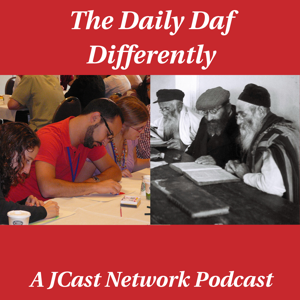


Welcome to the Daily Daf Differently. In this episode, Dr. Joshua Kulp looks at Masechet Moed Katan Daf 22.
When a parent dies, the mourning practices are more stringent than when another person dies. This daf lists such differences. Specifically we will examine the issue of attending a celebratory feast–how long must one refrain from entering such a celebration and what types of celebrations must be avoided?
The opening and closing music for this podcast is Ufros from The Epichorus album One Bead.
This podcast is a collaboration with The Conservative Yeshiva in Jerusalem.
Welcome to the Daily Daf Differently. In this episode, Dr. Joshua Kulp looks at Masechet Moed Katan Daf 21.
A mourner is not allowed to study Torah. In today’s Daily Daf we look at some rabbis who despite this prohibition continued to teach Torah even when their own children dies. What does this teach us about the study of Torah during the rabbinic period and about the role of Torah teaching in the rabbis’ live?
The opening and closing music for this podcast is Ufros from The Epichorus album One Bead.
This podcast is a collaboration with The Conservative Yeshiva in Jerusalem.
Welcome to the Daily Daf Differently. In this episode, Dr. Joshua Kulp looks at Masechet Moed Katan Daf 20.
In today’s daf we will explore the history of the halakhah that if one observes only one hour of shiva before the festival begins, there is no more shiva after the festival. This is one of the strangest laws among the Jewish laws of mourning. Today I will critically examine the history of the law and introduce you to a chapter from my latest book.
The opening and closing music for this podcast is Ufros from The Epichorus album One Bead.
This podcast is a collaboration with The Conservative Yeshiva in Jerusalem.
Welcome to the Daily Daf Differently. In this episode, Dr. Joshua Kulp looks at Masechet Moed Katan Daf 19.
Today we will look at a mishnah which finally gets into the laws of mourning, which are the main topic of the rest of the tractate. The Mishnah begins with the intersection of mourning and a festival, the main topic of Moed Katan. What happens when one is in the middle of mourning and a festival arrives? Does one continue after the festival or not?
The opening and closing music for this podcast is Ufros from The Epichorus album One Bead.
This podcast is a collaboration with The Conservative Yeshiva in Jerusalem.
Welcome to the Daily Daf Differently. In this episode, Dr. Joshua Kulp looks at Masechet Moed Katan Daf 18.
In this daf we explore the fascinating topic of determinism. Is what happens to us determined by our actions and our initiatives? Do we create our own destiny? Or is what happens to us dictated by heaven, predetermined by fate? Specifically we look at the question with regard to the choice of whom to marry. Was this couple put together “by Heaven”? Or was it the result of one partner actively pursuing the other?
The opening and closing music for this podcast is Ufros from The Epichorus album One Bead.
This podcast is a collaboration with The Conservative Yeshiva in Jerusalem.
Welcome to the Daily Daf Differently. In this episode, Dr. Joshua Kulp looks at Masechet Moed Katan Daf 17.
Today we look at a fascinating aggadah concerning a rabbi who seems to have engaged in some misconduct, perhaps even sexual misconduct. Does his leadership role in the rabbinic community gain him a pass for his misbehavior? Or does his misbehavior mean that the Torah that he teaches is not true Torah?
The opening and closing music for this podcast is Ufros from The Epichorus album One Bead.
This podcast is a collaboration with The Conservative Yeshiva in Jerusalem.
Welcome to the Daily Daf Differently. In this episode, Dr. Joshua Kulp looks at Masechet Moed Katan Daf 16.
It is often difficult to use the Bavli to see how Jews/rabbis actually lived their lives during the Talmudic period. Today’s daf gives us the opportunity to see how the sages used the power to excommunicate people as a major threat in their adjudication of the law. We can learn a little bit about how this procedure was conducted and what power the rabbis had in Babylonia to enforce their authority over civil matters.
The opening and closing music for this podcast is Ufros from The Epichorus album One Bead.
This podcast is a collaboration with The Conservative Yeshiva in Jerusalem.
Welcome to the Daily Daf Differently. In this episode, Dr. Joshua Kulp looks at Masechet Moed Katan Daf 15.
This daf lists fourteen practices of mourning, and compares them with laws related a person who has been excommunicated or a person with skin disease (tzaraat). Most of these mourning practices either deprive the person of regular comforts or remove him/her from the community. One custom though seems to be different–overturning the bed. In today’s daf we learn about the symbolic meaning of this ancient mourning custom.
The opening and closing music for this podcast is Ufros from The Epichorus album One Bead.
This podcast is a collaboration with The Conservative Yeshiva in Jerusalem.
Welcome to the Daily Daf Differently. In this episode, Dr. Joshua Kulp looks at Masechet Moed Katan Daf 14.
Today’s daf is the first daf of the third chapter, a chapter which is concerned mostly with the laws of mourning. The passage upon which I focus today deals with the issue of standardization of halakhah. When an activity has been prohibited in order to steer people’s behavior in the right direction does the prohibition still apply when there is no such concern. Specifically, the Talmud addresses the issue of shaving/cutting hair during the festival. This is usually prohibited because the rabbis wanted people to get their hair cut/shave before the festival, so that they could look good from the beginning. But what if something happened to prevent the person from going to the barber before the festival, something out of his control? Can he go during the festival? And what will people say?
The opening and closing music for this podcast is Ufros from The Epichorus album One Bead.
This podcast is a collaboration with The Conservative Yeshiva in Jerusalem.
Welcome to the Daily Daf Differently. In this episode, Rabbi Abby Sosland looks at Masechet Moed Katan Daf 13.
Should the sins of the fathers be visited upon the children? Theologically, perhaps, but the rabbis have a different understanding of how things should work–practically and ritually– in the world of here and now.
The opening and closing music for this podcast is Ufros from The Epichorus album One Bead.
This podcast is a collaboration with The Conservative Yeshiva in Jerusalem.
From the publisher's feed
14 Listeners
6 Listeners

20 Listeners

0 Listeners

12 Listeners
6 Listeners
20 Listeners
0 Listeners

26 Listeners
2 Listeners