
Sign up to save your podcasts
Or

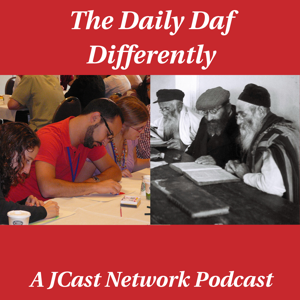


Welcome to the Daily Daf Differently. In this episode, Rabbi Ute Steyer looks at Masechet Nedarim, Daf 11.
Some notes on variations in Talmudic manuscripts and how they relate to our daf — where we see a strange phrase that doesn’t seem to fit and indeed isn’t found in other manuscripts.
To view the text of Nedarim, Daf 11 on Sefaria, please click here.
The opening and closing music for this podcast is Ufros from The Epichorus album One Bead.
This podcast is a collaboration with The Conservative Yeshiva in Jerusalem.
Welcome to the Daily Daf Differently. In this episode, Rabbi Ute Steyer looks at Masechet Nedarim, Daf 10.
Are all nazirim sinners? And why seem some of the rabbis convinced that anyone who does take the oath of nazirut is indeed a sinner? What is Judaisms relationship to self-imposed stringencies?
To view the text of Nedarim, Daf 10 on Sefaria, please click here.
The opening and closing music for this podcast is Ufros from The Epichorus album One Bead.
This podcast is a collaboration with The Conservative Yeshiva in Jerusalem.
Welcome to the Daily Daf Differently. In this episode, Rabbi Ute Steyer looks at Masechet Nedarim, Daf 9.
We look at the difference between nedavot and nedarim, we learn about the “oath of the wicked” and the “oath of righteous” and why the first one is valid and the latter is not.
To view the text of Nedarim, Daf 9 on Sefaria, please click here.
The opening and closing music for this podcast is Ufros from The Epichorus album One Bead.
This podcast is a collaboration with The Conservative Yeshiva in Jerusalem.
Welcome to the Daily Daf Differently. In this episode, Rabbi Ute Steyer looks at Masechet Nedarim, Daf 8.
Can you swear an oath to fulfill a mitzah? And what happens if you fail to fulfill it — would you have to bring a sin offering? How can you even swear to fulfill something for which you are obligated in the first place?
To view the text of Nedarim, Daf 8 on Sefaria, please click here.
The opening and closing music for this podcast is Ufros from The Epichorus album One Bead.
This podcast is a collaboration with The Conservative Yeshiva in Jerusalem.
Welcome to the Daily Daf Differently. In this episode, Rabbi Ute Steyer looks at Masechet Nedarim, Daf 7.
Certain transgressions bring the punishment of “nidui” — excommunication. What does this mean? And can a person revoke a “nidui” that he placed on himself or herself?
To view the text of Nedarim, Daf 7 on Sefaria, please click here.
The opening and closing music for this podcast is Ufros from The Epichorus album One Bead.
This podcast is a collaboration with The Conservative Yeshiva in Jerusalem.
Certain transgressions bring the punishment of “nidui” — excommunication. What does this mean? And can a person revoke a “nidui” that he placed on himself or herself?
Welcome to the Daily Daf Differently. In this episode, Rabbi Ute Steyer looks at Masechet Nedarim, Daf 6.
Is a partial declaration, a “yad” valid in the case of kiddushin? There are all kinds of misunderstandings that can happen as some of the sages will point out. And what are some other examples where a “yad” might have more than one meaning — and are these declarations valid?
To view the text of Nedarim, Daf 6 on Sefaria, please click here.
The opening and closing music for this podcast is Ufros from The Epichorus album One Bead.
This podcast is a collaboration with The Conservative Yeshiva in Jerusalem.
Welcome to the Daily Daf Differently. In this episode, Rabbi Ute Steyer looks at Masechet Nedarim, Daf 5.
What becomes forbidden and what remains permitted in a vow? What effect has a vow that is in some sort “shortened” in the way it was articulated — a “yad b’nedarim”. Is such a “yad” valid or not?
To view the text of Nedarim, Daf 5 on Sefaria, please click here.
The opening and closing music for this podcast is Ufros from The Epichorus album One Bead.
This podcast is a collaboration with The Conservative Yeshiva in Jerusalem.
Welcome to the Daily Daf Differently. In this episode, Rabbi Noam Raucher looks at Masechet Nedarim, Daf 4.
By letting us know how certain vows can be understood, specifically or generally, distinct or related to something else, the Talmud reminds us that we should have intent behind our words. Not only do the words we speak carry weight in that they can change our status- whatever that may be- in an instant, but they also must be carefully thought out in order to create the desired result.
To view the text of Nedarim, Daf 4 on Sefaria, please click here.
The opening and closing music for this podcast is Ufros from The Epichorus album One Bead.
This podcast is a collaboration with The Conservative Yeshiva in Jerusalem.
Welcome to the Daily Daf Differently. In this episode, Rabbi Noam Raucher looks at Masechet Nedarim, Daf 3.
On this page we address the differences between “equivalent terms” and “partial declarations.” Both hold weight within the concept of vows, but have different methods of enactment.
To view the text of Nedarim, Daf 3 on Sefaria, please click here.
The opening and closing music for this podcast is Ufros from The Epichorus album One Bead.
This podcast is a collaboration with The Conservative Yeshiva in Jerusalem.
Welcome to the Daily Daf Differently. In this episode, Rabbi Noam Raucher looks at Masechet Nedarim, Daf 2.
Nedarim kicks off a discussion about different types of vows and their consequences. Here we introduce four different types of vows with overarching similarities. Words have a great deal of weight our tradition. They can obligate us, and prohibit us. Tractate nedarim takes our words serious and asks us to consider why they are so important.
To view the text of Nedarim, Daf 2 on Sefaria, please click here.
The opening and closing music for this podcast is Ufros from The Epichorus album One Bead.
This podcast is a collaboration with The Conservative Yeshiva in Jerusalem.
From the publisher's feed
14 Listeners
6 Listeners

20 Listeners

0 Listeners

12 Listeners
6 Listeners
20 Listeners
0 Listeners

26 Listeners
2 Listeners