
Sign up to save your podcasts
Or



Based on Podcast App listening data
Germans soldiers called it Blitzkatarrh, British soldiers called it Flanders Grippe, but the 1918 pandemic was most commonly known as 'Spanish Flu'. Catherine Arnold is the author of 'Pandemic 1918', and she joined me on the pod to discuss this terrible disease. A disease where victims suffered haemorrhages from the lungs and nose, skin turning blue from lack of oxygen and choking to death from 'air hunger' as the lungs filled with blood and pus. As Catherine explains, communities across the world battled with the infection in different ways, sometimes confronted with whole swathes of disobedient citizens. Yet again, it seems looking into the past provides valuable guidance for our actions today.
Subscribe to History Hit and you'll get access to hundreds of history documentaries, as well as every single episode of this podcast from the beginning (400 extra episodes). We're running live podcasts on Zoom, we've got weekly quizzes where you can win prizes, and exclusive subscriber only articles. It's the ultimate history package. Just go to historyhit.tv to subscribe. Use code 'pod1' at checkout for your first month free and the following month for just £/€/$1.
Hosted on Acast. See acast.com/privacy for more information.
Germans soldiers called it Blitzkatarrh, British soldiers called it Flanders Grippe, but the 1918 pandemic was most commonly known as 'Spanish Flu'. Catherine Arnold is the author of 'Pandemic 1918', and she joined me on the pod to discuss this terrible disease. A disease where victims suffered haemorrhages from the lungs and nose, skin turning blue from lack of oxygen and choking to death from 'air hunger' as the lungs filled with blood and pus. As Catherine explains, communities across the world battled with the infection in different ways, sometimes confronted with whole swathes of disobedient citizens. Yet again, it seems looking into the past provides valuable guidance for our actions today.
Subscribe to History Hit and you'll get access to hundreds of history documentaries, as well as every single episode of this podcast from the beginning (400 extra episodes). We're running live podcasts on Zoom, we've got weekly quizzes where you can win prizes, and exclusive subscriber only articles. It's the ultimate history package. Just go to historyhit.tv to subscribe. Use code 'pod1' at checkout for your first month free and the following month for just £/€/$1.
See acast.com/privacy for privacy and opt-out information.
Hosted on Acast. See acast.com/privacy for more information.
See acast.com/privacy for privacy and opt-out information.
Dr Emma Liggins is an expert on Victorian Gothic literature. She joined me on the pod to examine how great female writers of the 19th century - such as Elizabeth Gaskell and the Brontes - responded to the impact of fatal diseases on their home lives. How did their literary perspective influence their views on contagion and quarantining? We also discussed Emma's work on haunted houses, and how the nightmarish terrors of a deadly fever distorted the domestic space.
Subscribe to History Hit and you'll get access to hundreds of history documentaries, as well as every single episode of this podcast from the beginning (400 extra episodes). We're running live podcasts on Zoom, we've got weekly quizzes where you can win prizes, and exclusive subscriber only articles. It's the ultimate history package. Just go to historyhit.tv to subscribe. Use code 'pod1' at checkout for your first month free and the following month for just £/€/$1.
Hosted on Acast. See acast.com/privacy for more information.
Dr Emma Liggins is an expert on Victorian Gothic literature. She joined me on the pod to examine how great female writers of the 19th century - such as Elizabeth Gaskell and the Brontes - responded to the impact of fatal diseases on their home lives. How did their literary perspective influence their views on contagion and quarantining? We also discussed Emma's work on haunted houses, and how the nightmarish terrors of a deadly fever distorted the domestic space.
Subscribe to History Hit and you'll get access to hundreds of history documentaries, as well as every single episode of this podcast from the beginning (400 extra episodes). We're running live podcasts on Zoom, we've got weekly quizzes where you can win prizes, and exclusive subscriber only articles. It's the ultimate history package. Just go to historyhit.tv to subscribe. Use code 'pod1' at checkout for your first month free and the following month for just £/€/$1.
See acast.com/privacy for privacy and opt-out information.
In the second half of the twentieth century, western Europe was shaped by a revolutionary political force: democracy. Or at least that's what Professor Martin Conway has argued in his major new history. On this podcast, Martin - a teacher from my university days - interrogated the years following the Second World War. What provoked democratic revolution in the western half of Europe? How did this stable, durable, and remarkably uniform model of parliamentary democracy change society? And why did this democratic ascendancy drop away in the latter decades of the twentieth century?
Subscribe to History Hit and you'll get access to hundreds of history documentaries, as well as every single episode of this podcast from the beginning (400 extra episodes). We're running live podcasts on Zoom, we've got weekly quizzes where you can win prizes, and exclusive subscriber only articles. It's the ultimate history package. Just go to historyhit.tv to subscribe. Use code 'pod1' at checkout for your first month free and the following month for just £/€/$1.
Hosted on Acast. See acast.com/privacy for more information.
In the second half of the twentieth century, western Europe was shaped by a revolutionary political force: democracy. Or at least that's what Professor Martin Conway has argued in his major new history. On this podcast, Martin - a teacher from my university days - interrogated the years following the Second World War. What provoked democratic revolution in the western half of Europe? How did this stable, durable, and remarkably uniform model of parliamentary democracy change society? And why did this democratic ascendancy drop away in the latter decades of the twentieth century?
Subscribe to History Hit and you'll get access to hundreds of history documentaries, as well as every single episode of this podcast from the beginning (400 extra episodes). We're running live podcasts on Zoom, we've got weekly quizzes where you can win prizes, and exclusive subscriber only articles. It's the ultimate history package. Just go to historyhit.tv to subscribe. Use code 'pod1' at checkout for your first month free and the following month for just £/€/$1.
See acast.com/privacy for privacy and opt-out information.
Anthony Ray Hinton was held on death row for 28 years. He was incorrectly convicted of the murders of two restaurant managers, John Davidson and Thomas Wayne Vasona, in 1985. He was released in 2015 after winning a new trial. In this podcast, Anthony and I walked and talked our way through the streets of Birmingham, Alambama. I was overwhelmed by his generosity of spirit, lack of animosity and determination to live a good life despite the fact that so many years were taken away from him.
Subscribe to History Hit and you'll get access to hundreds of history documentaries, as well as every single episode of this podcast from the beginning (400 extra episodes). We're running live podcasts on Zoom, we've got weekly quizzes where you can win prizes, and exclusive subscriber only articles. It's the ultimate history package. Just go to historyhit.tv to subscribe. Use code 'pod1' at checkout for your first month free and the following month for just £/€/$1.
-------------------
Hosted on Acast. See acast.com/privacy for more information.
Anthony Ray Hinton was held on death row for 28 years. He was incorrectly convicted of the murders of two restaurant managers, John Davidson and Thomas Wayne Vasona, in 1985. He was released in 2015 after winning a new trial. In this podcast, Anthony and I walked and talked our way through the streets of Birmingham, Alambama. I was overwhelmed by his generosity of spirit, lack of animosity and determination to live a good life despite the fact that so many years were taken away from him.
Subscribe to History Hit and you'll get access to hundreds of history documentaries, as well as every single episode of this podcast from the beginning (400 extra episodes). We're running live podcasts on Zoom, we've got weekly quizzes where you can win prizes, and exclusive subscriber only articles. It's the ultimate history package. Just go to historyhit.tv to subscribe. Use code 'pod1' at checkout for your first month free and the following month for just £/€/$1.
-------------------
See acast.com/privacy for privacy and opt-out information.
From the publisher's feed
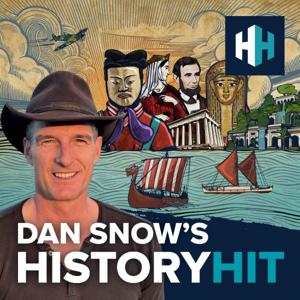
Historian Dan Snow journeys across the globe to tell the stories of history's defining moments. From the Colosseum in Rome to the Great Wall of China, the battlefields of Waterloo to the Tomb of Tutankhamun, join Dan as he explores the how and why of the greatest monuments, battles, heroes, villains and events that have shaped our world.
New episodes on Mondays and Thursdays with bonus subscriber only episodes every other Friday.
You can get in touch with us at [email protected]
A podcast by History Hit, the world's best history channel and creators of award-winning podcasts The Ancients, Gone Medieval, and Betwixt the Sheets.
History Hit is part of Little Dot Studios, a Certified B Corp™
Sign up to History Hit for hundreds of hours of original documentaries, with a new release every week and ad-free podcasts. Sign up at https://www.historyhit.com/subscribe.
Hosted on Acast. See acast.com/privacy for more information.
Ranked by our users in the last 21 days