
Sign up to save your podcasts
Or

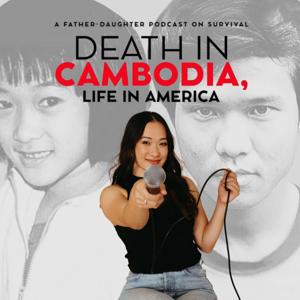


In this episode of Death in Cambodia, Life in America, I sit down with Vanna Sann, a Cambodian American entrepreneur and the founder of Dorsu, an ethical garment company based in Cambodia.
Vanna was born in a refugee camp in Thailand and grew up working class in Lowell, Massachusetts. Like a lot of us in the diaspora, he grew up knowing pieces of what happened to his family, but without always having the historical context to understand how those stories shaped him. He did well in school, eventually earning degrees from Vassar and Georgetown, but there was still this lingering question of Cambodia. At some point, hearing the stories wasn’t enough. He wanted to go see and understand the country for himself. So in 2010, Vanna went back to a place he says he “never really knew” looking for identity.
We talk about what it felt like to arrive in Cambodia as a Cambodian American, the optimism and entrepreneurial energy that made him want to stay, and how his experience eventually led him to Dorsu. Today, Vanna works alongside a team of 30 to rethink what garment production can look like when Cambodian ownership, female leadership, ethical practices, and the people actually making the clothes are put at the center of the business.
In this conversation we touch on some key topics like what it means to be Cambodian American while building a business in Cambodia. What responsibility comes with local ownership? How do you compete in an industry built around producing more, faster and cheaper while also talking seriously about waste and sustainability? How do you measure the value of a business when some of its biggest impacts can’t easily be put into a spreadsheet?
Vanna’s story also gets at something I think a lot of us in the diaspora understand: sometimes going “back” isn’t really going back at all. You’re building a relationship with a country you inherited through your parents’ memories, while figuring out what your own relationship with it gets to look like.
This is a conversation about identity, ownership, business, and what can happen when Cambodian people are given the space to build something on our own terms.
Supporting Vanna’s Work:
https://www.vannasann.com
https://shopdorsu.com
https://www.instagram.com/dorsu_cambodia
What does it mean to build a business that refuses to compromise its values?
In this episode of Death in Cambodia, Life in America, Dorothy sits down with Camilla Mayer, CEO and co-founder of Nary Resort, an ethical fashion brand rooted in Cambodia that is redefining what sustainable manufacturing can look like.
Although Camilla grew up in Chicago, her Cambodian heritage has always shaped the way she sees the world. In this conversation, she reflects on navigating identity as a Cambodian American, the influence of family and culture, and how those experiences ultimately inspired her to build a company that invests directly in Cambodian artisans, ethical production, and environmentally responsible practices.
Camilla talkings about some of the harsh realities of fast fashion—an industry responsible for nearly 10% of global carbon emissions, 20% of the world's wastewater, and 35% of the microplastics polluting our oceans (UniformMarket). They discuss how a culture of overconsumption, where many garments are worn only 7-10 times before being discarded, has fueled demand for cheaper production at the expense of both people and the planet.
Camilla shares why staying true to your values is often the hardest part of entrepreneurship, how Nary Resort approaches sustainability beyond marketing buzzwords, and why preserving Cambodian craftsmanship matters now more than ever.
Whether you're passionate about Cambodia, ethical fashion, entrepreneurship, or building a purpose-driven business, this episode offers an inspiring look at how culture and values can become the foundation of lasting change.
Supporting Camilla Mayer’s Work:
www.naryresort.com
Instagram: @cvmayer
In this episode of Death in Cambodia, Life in America, I sit down with Vanndearlyn Bermudez Vong, a Cambodian Chinese-American ceramist based in Long Beach, California, whose work is rooted in cultural revival and resistance.
A daughter of genocide survivors, Vanndearlyn shares what it was like growing up in Long Beach—home to one of the largest Cambodian diasporic communities—while still feeling “othered” in predominantly white academic spaces. She reflects on navigating her Khmer identity, studying Cambodian Language & Culture at California State University, Long Beach, and the ways art helped her reconnect with her roots.
We talk about the near-erasure of Khmer ceramics during the Khmer Rouge regime and how learning traditional pottery techniques from master ceramist Yary Livan transformed her creative path. Through traditional motifs, ancient techniques, and even contemporary pieces like her symbolic “donut pipe,” she explores what it means to carry culture forward through rebellion and healing.
This conversation is about reclaiming what was nearly lost and a new generation of Cambodian Americans using creativity to ensure that Khmer culture is not only remembered, but reimagined and revived.
Supporting Vanny Vong’s Work:
https://www.vanndearlyn.com/
Facebook: https://www.facebook.com/vanndearlyn
Instagram: @vanndearlyn TikTok: @vanndearlyn
In this episode of Death in Cambodia, Life in America, I sit down with Cambodian American culinary creator and MasterChef USA Season 13 contestant, Charles Calvino, to talk about identity, authenticity, and the responsibility of representing Khmer cuisine on a global stage.
Born in Long Beach and now based in the Midwest, Charles shares how growing up in a large Khmer family shaped his earliest memories of food, culture, and community. From watching his mother cook in the kitchen as a child to building a food platform that now reaches hundreds of thousands online, his journey has always been deeply rooted in family and preserving Cambodian traditions through storytelling.
We talk about his unexpected path from hairstylist to food creator, the viral rise of his Khmer cooking videos, and the moment MasterChef producers first reached out to him through Instagram. Charles opens up about the intense pressure of becoming the first Cambodian contestant to receive an apron from Gordon Ramsay, what it felt like to present Amok on national television, and why he refused to water down Khmer flavors to make them more “acceptable” to mainstream audiences.
This conversation dives deep into representation, cultural pride, and the emotional weight of carrying your community with you in spaces where Cambodian cuisine is still widely misunderstood or overlooked. Charles reflects on hearing Gordon Ramsay tell him that Cambodian food deserves far more recognition, a moment that ultimately inspired him to dedicate his platform entirely to Khmer cuisine after the show.
We also explore the complexities of authenticity in food, the importance of preserving traditional recipes, and the impact of reconnecting with Cambodia through yearly trips back to the motherland. Charles shares how traveling throughout Cambodia, learning directly from locals and family members, and studying ingredients like kroeung, prahok, and palm sugar has transformed not only his cooking, but also his understanding of himself as a Khmer American.
At its heart, this episode is about memory, survival, healing, and using creativity to keep culture alive for future generations.
Supporting Charles Calvino’s Work:
https://www.instagram.com/charlescalvino/
In this episode of Death in Cambodia, Life in America, I sit down with Alissa Iris, a Los Angeles–based model, actress, and cultural writer whose work explores beauty, media, and modern womanhood through a Southeast Asian lens.
Alissa shares what it was like growing up Khmer American in California’s Central Valley, struggling to see herself reflected in the world around her, and slowly learning to embrace her identity. From directing backyard self-portraits at 12 years old to modeling for brands like Fenty, Levi’s, Nike, and ULTA, her journey has been shaped by both resilience and intention.
We spend time unpacking colorism in a way that feels both personal and global, exploring how Eurocentric beauty standards shaped her experience in the U.S., and reflecting on how, in Cambodia, those ideals shift toward Korean and East Asian influence. Alissa reflects on seeing women lighten their skin, wear mismatched foundation, and adjust their features to fit a different standard even when their natural complexion and features are already beautiful.
We also talk about how the modeling industry reinforces these hierarchies, from being labeled “ethnically ambiguous” to not being seen as “Asian enough,” and what that reveals about who gets centered and who gets pushed to the margins.
This conversation is about visibility, authenticity, and what it means to take up space as a Khmer woman in industries that weren’t built with us in mind.
Supporting Alissa Iris’ Work:
https://alissairis.com/
Instagram: @alissa.iris
TikTok: @alissa.iris
In this episode of Death in Cambodia, Life in America, I sit down with Sambath Both Bou Chum, better known as Both Bou — award-winning designer, Co-Founder & Creative Director of Anagata Design, and one of Prestige’s 40 Under 40 honorees.
Self-taught and relentlessly curious, Both has become one of the leading forces shaping Cambodia’s modern design landscape. From reimagining the identity of Baramey Production to elevating Khmer typography and visual storytelling on a global stage, his work blends cultural heritage with contemporary design principles, proving that Cambodian creativity belongs in the world’s design conversations.
We talk about growing up in Cambodia, navigating an education system that doesn’t always nurture creativity, and the long road to self-discovery as an artist. Both shares what it really means when he says, “Creatives reflect society back to itself,” and why design must carry intention, strategy, and cultural responsibility.
This conversation is all about reclaiming narrative, modernizing Khmer identity without losing its soul, and building a creative future where “small doesn’t mean less.”
This episode is for all aspiring designers, entrepreneurs, and anyone invested in Cambodia’s cultural renaissance
Supporting Both Bou’s Work:
Instagram: @anagata.design & @both_bou
https://anagata.design
In the Season 4 premiere of the Death in Cambodia, Life in America Podcast, we're kicking things off with a new focus: amplifying the voices of young, bold Cambodian changemakers. First up is content creator and community builder Priscilla Kim Ong, also known as Sela — a Khmer-Krom American who moved to Cambodia to reconnect with her roots and reclaim her identity.
Sela shares how growing up in a predominantly white town shaped her early disconnect from Khmer identity, and how learning about Khmer-Krom history sparked a transformation that eventually led her to leave the U.S. and move to Cambodia. From learning Khmer with monks to launching Selarati, a homecoming experience for diasporic Khmer, Sela opens up about the healing, loneliness, and power of creating something deeply intentional for her community.
We talk about her vision for Selarati, her hopes for bridging intergenerational gaps, and the musical and cultural renaissance she sees blooming in Cambodia today. A deeply personal, expansive conversation about belonging, activism, and the journey home.
✨ Selarati is accepting signups now for the next homecoming experience in Cambodia, happening April 6–15 for Khmer New Year. Sign-ups close early February. 👉 Learn more at www.selarati.com or follow @selarati on IG for updates.
Supporting Sela’s Work:
www.selarati.com
Instagram
LinkedIn
YouTube
TikTok:
In the final episode of this season of Death in Cambodia, Life in America, I sit down with siblings Christina and Anthony Teav, co-founders of Mama Teav’s Hot Garlic Sauce, for a conversation about food, family, and what it means to build something rooted in legacy.
We talk about growing up Cambodian American in Stockton, navigating identity in the shadow of war, and how their family’s story inspired them to launch a business that celebrates Cambodian flavor. Christina and Anthony open up about the healing power of cooking with their mom, the early hustle of bringing Mama Teav’s to market, and their hopes for building a Southeast Asian brand with heart and purpose.
A beautiful close to the season, this episode is all about food, family, and finding your way back to yourself through flavor.
Supporting Anthony & Christina’s Work:
www.mamateavs.com
https://www.tiktok.com/@mamateavs
https://www.instagram.com/mamateavs/?hl=en
In this episode of Death in Cambodia, Life in America, I sit down with Chef Nite Yun, the visionary behind the beloved Oakland restaurant Nyum Bai, author of the new cookbook My Cambodia, and one of the stars of Netflix’s Chef’s Table: Noodles.
Her episode introduced millions to the richness of Khmer cuisine, but behind the camera, Chef Nite’s story is one of identity, intergenerational trauma, and healing through food. Born to Cambodian refugee parents and raised in Stockton, California, Chef Nite grew up immersed in Khmer food and language, but it wasn’t until her 20s, during a trip to Cambodia, that she fully understood how deeply food was tied to memory, trauma, and healing.
We talk about the surreal experience of filming Chef’s Table, the complexities of authenticity, and the joy and pressure of representing your people on a global platform. We also touch on the legacy of war and loss that shaped her family, how cooking became her way to reconnect with her roots, and why she felt both grief and relief when closing Nyum Bai at the height of its success. Plus, Nite opens up about her new restaurant Lunette and the upcoming release of her debut cookbook My Cambodia.
From learning her mother’s recipes to finding her voice on Chef’s Table, Chef Nite shares what it means to reclaim Cambodian identity, one dish at a time. This episode is about food, family, and the stories we carry in every bite.
Supporting Chef Nites Work:
IG: @nite_nite_nite
https://www.nyumbai.com/
https://www.amazon.com/My-Cambodia-Cookbook-Nite-Yun/dp/1984863371
In this episode of Death in Cambodia, Life in America, I speak with Li-Da Kruger, a Cambodian-born British filmmaker and adoptee, whose search for identity has shaped the course of her life. Adopted as a baby just before the Khmer Rouge came to power, Li-Da was raised in the UK with little connection to her roots. For decades, she carried the weight of survival, guilt, and longing for a culture that felt both hers and not hers.
We talk about the emotional complexities of growing up as an adoptee, the guilt that comes with being spared, and the moment she finally felt permission to claim her Cambodian identity. Through her documentaries Belonging and Prue Leith: Journey with My Daughter, and her charity Reconnecting Cambodia, Li-Da has transformed her personal story into a mission to help others find their missing family and sense of self.
This episode is for anyone asking where they come from, and what it means to belong.
Supporting Li-Da’s Work:
DONATE | Facebook | LinknedIn
Insta | Youtube | Tiktok
www.reconnectingcambodia.org
[email protected]
From the publisher's feed
A father-daughter podcast where I interview my father, Robert Chau, on exactly how he survived and escaped the Khmer Rouge aka 1970's Cambodian Genocide. We will follow along his journey on how a…