
Sign up to save your podcasts
Or

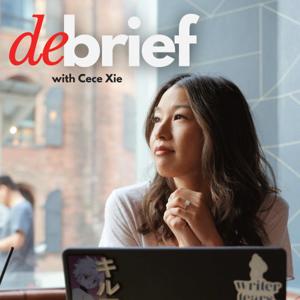


It's time to DTR! In this episode, I discuss my thoughts on a popular YouTuber who suddenly stopped posting on YouTube after perhaps a bad parasocial experience with her fans (and Amazon?). Are parasocial relationships bad? Are we in one, right now? I go through the pros and cons of parasocial relationships and hypothesize why some parasocial relationships sour in more extreme (and terrifying) ways than others, rooted in a theory of how the creator/influencer/whatever got their power in the first place--traditional bestowment or grassroots. I draw parallels between subscribing to someone and being a shareholder in a corporation--what can we learn about our relationship with online creators from corporate law, of all things? And finally, I answer the meta question--are we in a parasocial relationship?
[timestamps]
intro - 0:00
what is a parasocial relationship? - 2:21
parasocial relationships are normal/good - 4:44
drawing parallels from other settings - 8:09
the source of power/clout - 10:46
responsibility and ownership - 12:30
corporate law - 16:12
let's DTR - 19:12
[additional references]
Dream's face reveal https://www.forbes.com/sites/danidiplacido/2022/10/03/the-internet-had-a-cruel-response-to-dreams-face-reveal/
You can check out Cece's other projects at www.cecexie.com/links.
You know what they say--one's a point, and two's a line! This week, we unpack one of my favorite fascinations--scams and scammers. I discuss how my imposter syndrome likely impacted why I found scammers so magnetic and how scams are mostly the same old bones dressed up in new disguises. The million-dollar question is: are we all vulnerable to scams because they implicate the human condition? From LuLaRoe to crypto to Baudrillard, I connect the dots right into our favorite scammers, Brittany Dawn, Anna Delvey, and Elizabeth Holmes--plus an alleged scammer whom I met in real life, to a confusing set of feelings.
[timestamps]
1:16 - imposter syndrome
5:13 - scams are a tale as old as time
6:58 - how new technologies encourage scams
11:18 - how social media encourages scams
15:10 - scams represent the human condition
19:35 - q&a: soft skills for corporate workplace success
[additional references]
NYT: Why Do We Love Scammers So Much? https://www.nytimes.com/2019/02/12/style/liars-catfishing-deception.html
How Scams Worked In The 1800s https://www.npr.org/sections/npr-history-dept/2015/02/12/385310877/how-scams-worked-in-the-1800s
Investopedia: MLM https://www.investopedia.com/terms/m/multi-level-marketing.asp
You can check out Cece's other projects at www.cecexie.com/links.
In this very first episode, I'm unpacking my thoughts on the resurfaced video from Mikayla Nogueira, one of TikTok's top beauty gurus, in which she vents about how hard being an influencer is. The backlash has prompted discussions around work and criticism of the full-time influencer, which contrast interestingly with the rise of the anti-work movement and the popularity for kids of vlogging/YouTube as a career aspiration just a few years ago. I dissect the "creator" career through the lens of changing paradigms--entertainer, aspirational influencer, and neighbor--that are drawn from William Deresiewicz's theory of paradigm shifts for "artists" and ponder whether we have all just fallen victim to "producerism," the mutation of consumerism to make itself more palatable amidst growing anti-consumerism sentiments. Maybe we shouldn't all aspire to create, after all, or maybe creation is simply the latest iteration of entrepreneurship.
[timestamps]
2:02 - what my parents think
5:17 - the paradigm for creators
11:57 - the paradigm for artists
16:12 - artist/creator as entrepreneur
21:15 - the real question
You can check out Cece's other projects at www.cecexie.com/links.
From the publisher's feed