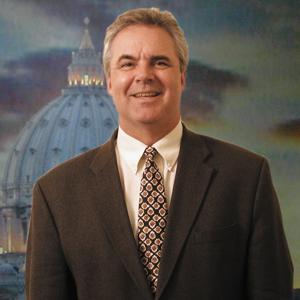
Deep in Scripture Radio

Deep in Scripture Radio

Download on the App Store

Deep in Scripture Radio episodes

  • Good Example or Scandal? – Romans 14
    Again, following St Paul's instructions to transform our thinking (Rom 12:1,2), this requires examining our lifestyles down to most simple habits of eating and drinking. The truth is, in many ways our Christian Faith frees us up from the scrupulous and o...
    0 min
  • The Christian and the Governing Authorities, Romans 13:1-14 Continued
    In Romans 12:1,2, St Paul calls Christians to continue their conversion by transforming their minds—and not conforming to the world, or the culture around them. In chapter 14 we see that this involves trusting that God is in control of our Country, our government, and its leaders, to whom we are to submit. But what if the laws they have passed are contradictory to the moral laws of our faith? Must we submit? This is part of what we discuss today on DIS.

    EMAIL:

    Dear Ken and Marcus, how do you juxtapose these exhortations by Saint Paul with the fact that many of the earliest Christian martyrs, whom we are called to emulate and honor, died specifically because they were refusing to be subject to Rome? Thanks, Steve.


    Today's Show Notes

    55 min
  • Romans 13:1-14
    Today’s email points to the need the Church to instruct us on the seriousness of scriptural exhortation like those of St. Paul, including those we will discuss today from Roman's 13. All of this relates to salvation, and to verse 13:14: "But put on the Lord Jesus Christ, and make no provision for the flesh, to gratify its desires.
    55 min
  • Question About the "Pillar & Bullwark" and Romans 12:9-21

    Email: Mr. Grodi, I have heard you quip many times & in your books that when Scripture says (1 Tim 3:15) that the pillar and bulwark of the truth is the Church, Jesus could not have meant the thousands of denominations divided by contrary interpretations of Scripture we now have in our world, for how could an invisible church of faithful believers be the pillar and bulwark of anything? This may sound reasonable, but if this seeming disunited diversity is contrary to God’s will, then why does God continue to bless hundreds of thousands of non-Catholic Christians? Why does He continue to use these non-Catholic Christian traditions to inspire and evangelize thousands of people every year around the globe out of darkness, into faith in Jesus Christ, away from sin, into prayerful, devotional lives, and even out of secular lives into lives dedicated to ministry? With so few people worldwide converting to the Catholic Church, it appears God is quite willing to work with a universal invisible church just as it is? Thank you, Aran.


    55 min
  • Question About the "Pillar & Bullwark" and Romans 12:9-21
    Email: Mr. Grodi, I have heard you quip many times & in your books that when Scripture says (1 Tim 3:15) that the pillar and bulwark of the truth is the Church, Jesus could not have meant the thousands of denominations divided by contrary interpretations of Scripture we now have in our world, for how could an invisible church of faithful believers be the pillar and bulwark of anything? This may sound reasonable, but if this seeming disunited diversity is contrary to God’s will, then why does God continue to bless hundreds of thousands of non-Catholic Christians? Why does He continue to use these non-Catholic Christian traditions to inspire and evangelize thousands of people every year around the globe out of darkness, into faith in Jesus Christ, away from sin, into prayerful, devotional lives, and even out of secular lives into lives dedicated to ministry? With so few people worldwide converting to the Catholic Church, it appears God is quite willing to work with a universal invisible church just as it is? Thank you, Aran.
    55 min
  • Question About the “Pillar & Bullwark” and Romans 12:9-21

    Email: Mr. Grodi, I have heard you quip many times & in your books that when Scripture says (1 Tim 3:15) that the pillar and bulwark of the truth is the Church, Jesus could not have meant the thousands of denominations divided by contrary interpretations of Scripture we now have in our world, for how could an invisible church of faithful believers be the pillar and bulwark of anything? This may sound reasonable, but if this seeming disunited diversity is contrary to God’s will, then why does God continue to bless hundreds of thousands of non-Catholic Christians? Why does He continue to use these non-Catholic Christian traditions to inspire and evangelize thousands of people every year around the globe out of darkness, into faith in Jesus Christ, away from sin, into prayerful, devotional lives, and even out of secular lives into lives dedicated to ministry? With so few people worldwide converting to the Catholic Church, it appears God is quite willing to work with a universal invisible church just as it is? Thank you, Aran.


    55 min
  • "Do not be conformed to this world but be transformed", Romans 12:1-8

    Some key points in today’s passage:

    • (vs. 1) The idea of “sacrifice” is still very much an important aspect of our Christian faith;
  • (vs. 1) Our entire person—body and soul—is our personal share in the daily sacrifice of the Body of Christ; “what we do in the body” daily, as St. Paul say elsewhere, is how we “suffer with Christ”; (Col 1:24; Rom 8:17; Phil 1:29);
  • (vs. 2) This requires a transformed state of mind, living out the Our Father;
  • (vs. 2) By doing this, our conscience is formed by the indwelling Holy Spirit;
  • (vs. 3-5) Behind these verses, is St. Paul assumption of the Mystical Body of Christ: through baptism believers become united with Christ and one another in the Church;
  • (vs. 3-5) Living together in the Body requires living out the Beatitudes: detachment from world, sin, self;
  • (vs. 6-8) This also requires that we recognize the importance of being a faithful individual in the Body of Christ, yet using our individual gifts to work together for the building up of the Body (Eph 4)
  • Email: Dear Ken & Marcus, last week you discussed Rom 12:2, “Do not be conformed to this world but be transformed by the renewal of your mind, that you may prove what is the will of God, what is good and acceptable and perfect.” In your discussion you didn’t address what Paul meant by being able to “prove” “what is the will of God, and “what is good and acceptable and perfect.” This term, “prove”, would seem to imply that this process would help one “know” clearly what God’s will is. Yet, in my experience, I’ve known many many faithful Christians—Catholic or non—who have dedicated their lives to doing this very thing, yet they can’t seem to agree on what God’s will is for lots of things. What does Paul mean here?

    55 min
  • "Do not be conformed to this world but be transformed", Romans 12:1-8
    Some key points in today’s passage:(vs. 1) The idea of “sacrifice” is still very much an important aspect of our Christian faith;(vs. 1) Our entire person—body and soul—is our personal share in the daily sacrifice of the Body of Christ; “what we do in the body” daily, as St. Paul say elsewhere, is how we “suffer with Christ”; (Col 1:24; Rom 8:17; Phil 1:29);(vs. 2) This requires a transformed state of mind, living out the Our Father;(vs. 2) By doing this, our conscience is formed by the indwelling Holy Spirit;(vs. 3-5) Behind these verses, is St. Paul assumption of the Mystical Body of Christ: through baptism believers become united with Christ and one another in the Church;(vs. 3-5) Living together in the Body requires living out the Beatitudes: detachment from world, sin, self;(vs. 6-8) This also requires that we recognize the importance of being a faithful individual in the Body of Christ, yet using our individual gifts to work together for the building up of the Body (Eph 4)Email: Dear Ken & Marcus, last week you discussed Rom 12:2, “Do not be conformed to this world but be transformed by the renewal of your mind, that you may prove what is the will of God, what is good and acceptable and perfect.” In your discussion you didn’t address what Paul meant by being able to “prove” “what is the will of God, and “what is good and acceptable and perfect.” This term, “prove”, would seem to imply that this process would help one “know” clearly what God’s will is. Yet, in my experience, I’ve known many many faithful Christians—Catholic or non—who have dedicated their lives to doing this very thing, yet they can’t seem to agree on what God’s will is for lots of things. What does Paul mean here?
    55 min

About Deep in Scripture Radio

From the publisher's feed

We have come to believe in the necessity of reading and interpreting Scripture as members of the Body of Christ. Come along as we seek to go Deep in Scripture and thereby deeper in Jesus Christ.

More shows like Deep in Scripture Radio

Journey Home by EWTN

Journey Home

145 Listeners

The Rosary in a Year (with Fr. Mark-Mary Ames) by Ascension

The Rosary in a Year (with Fr. Mark-Mary Ames)

5,220 Listeners