
Sign up to save your podcasts
Or

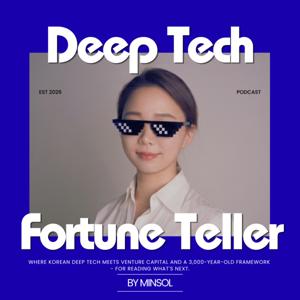


[EP.12] Tesla Optimus Is Further Away Than You ThinkWhen can you actually buy a Tesla Optimus, and what will it cost?
Tesla says production has started. From the supplier side, my prediction is that real sales won't happen before 2030.
I used to review robotics and physical AI startups as a corporate VC at a Korean auto supplier. In this video, I explain what Tesla actually announced, why Musk's timelines need a discount, and the 3 walls every humanoid robot has to get past before factories will buy it: design changes, volume, and China.
Then I run the numbers on what an Optimus-class robot costs to build, and show the one advantage Tesla has that no robot startup does.
⏱️ Chapters
0:00 Can you buy a Tesla Optimus yet?
00:30 What Tesla announced about Optimus production
01:38 The Musk discount
02:50 Wall 1 & 2
04:53 Wall 3
06:20 How much does an Optimus cost to build?
07:25 Tesla's hidden advantage
08:28 4 signals that would change my mind
💬 If you ran a factory, would you buy an Optimus today? YES or NO, and why?
📚 Sources
- Tesla Q3 2026 Earnings Call
- TechCrunch (Oct 21, 2026) · Electrek (Jan 28, 2026)
- The Information via Quartz · Reuters (2025) · WSJ · CNBC (Jun 6, 2025)
- IDC, humanoid robot shipments H1 2026
- Morgan Stanley, humanoid robot bill of materials estimate
- humanoid.guide, harmonic reducer pricing
This video reflects my personal analysis and predictions. It is not investment advice.#TeslaOptimus #HumanoidRobot #Tesla #Robotics #DeepTech #PhysicalAI #elonmusk
===============================
Subscribe and listen to this podcast HERE :
===============================
➡︎ Apple: https://rb.gy/z032c7
➡︎ Spotify: sptfy.in/tvku
[EP.11] Sarvam AI: India's $1.5B Bet — Anchored or Outgrow?
India picked Sarvam AI to build its first sovereign LLM.
It made ~$5M last year, is valued at $1.5B, and is reportedly in talks at double that.
So is this India's AI moment, or the most expensive bet on national pride?
I'm Minsol, a former CVC investor.
I review deep tech startups money first, then read their founding date through two traditions: Korean Saju and Indian Jyotish. This time, they disagree.
Stay to the end for the one question I'd ask before investing.
-------------
⏱ Timelines :
0:00 The $1.5B question
0:56 The startup review
2:54 Saju verdict
4:06 Jyotish verdict
5:09 Where they agree & split
5:40 5-year forecast
6:17 Investor check-point
6:52 Which reading is closer?
------------
📰 Sources
• ET EnterpriseAI: Sarvam AI in talks to raise up to $300M at $3B valuation (Oct 13, 2026)
• Business Today: India selects Sarvam to build sovereign AI model under IndiaAI mission (Apr 28, 2025)
⚠️ Entertainment and personal opinion only. Not investment advice. Saju and Jyotish are traditions, not forecasting tools. Founding hour unknown; Jyotish reading assumes noon, Bengaluru.
#SarvamAI #IndianStartups #DeepTech #SovereignAI #VentureCapital #Saju #vedic
===============================
Subscribe and listen to this podcast HERE :
===============================
➡︎ Apple: https://rb.gy/z032c7
➡︎ Spotify: sptfy.in/tvku
[EP.10] Why Robot Startups Die at Car Companies. I Saw It From Inside.
Hyundai wants 25,000 humanoid robots. And Its own union said no.
Everyone's talking about Hyundai's Atlas, Figure at BMW, and Agility at Toyota like the robot takeover already started. I used to invest in robotics and physical AI startups from inside a Korean auto company.
I watched those deals die, one after another.In this video:
→ What Figure's robot actually did at BMW (one job)
→ The 3 walls that kill robotics deals inside carmakers
→ Why humanoid robots get into North America first, not Korea
→ What robotics founders and VCs should ask instead of "does it work?"
If you're building or investing in physical AI, this is the part nobody tells you.
Have you seen great tech die inside your company? Tell me in the comments.
--------
Time Stamp:
0:00 Intro
00:55 Who I am?
01:25 BMW & Toyota
02:41 Hyundai's plan
03:38 The 3 walls
04:46 One inch at a time
05:10 Korea vs. US
06:17 My take
07:55 Dear investors
08:47 Update
09:30 Your turn
--------
SOURCES
- Hyundai Motor Group: Atlas at CES 2026, HMGMA (Georgia), Boston Dynamics acquisition (June 21, 2021)
- Figure AI: Figure 02 / Figure 03 at BMW Plant Spartanburg
- Agility Robotics / Global News: Digit at Toyota Canada- Kyunghyang Shinmun (Jan 22, 2026): Hyundai Motor union statement on Atlas
- Reuters (Aug 21, 2026): Hyundai Motor union's first full strike in 10 years
- Reuters (Sep 1, 2026): Hyundai union approves wage deal- Quartz via Yahoo Finance (Aug 25, 2026): JPMorgan on humanoid robot demand
- AMS (Apr 7, 2026): Are Humanoid Robots about to take over carmaking?
- Robot density: International Federation of Robotics (IFR), World Robotics
-------
🎙️ Deep-Tech Fortune Teller
Where deep-tech startups meet venture capital, business analysis, and Saju.
I analyze the companies shaping the future of AI, robotics, energy, semiconductors, and other deep-tech industries — then use Saju to ask a different question:
What kind of company are they built to become?
--------
⚠️ Disclaimer:
This is not legal or financial advice. Some visuals in this video are AI-generated illustrations.Views are my own and not investment advice.
#robotics #humanoidrobots #physicalAI #venturecapital #hyundai
===============================
Subscribe and listen to this podcast HERE :
===============================
➡︎ Apple: https://rb.gy/z032c7
➡︎ Spotify: sptfy.in/tvku
[EP.9] Big Dream or Steady Revenue? 3 Investors Picked Startups Blind
We hid the real company names from 3 investors — a VC, an investment banker, and an equity investor — and had them pick their favorite startup blind, based only on personality traits (Saju-style reads, not real financials).
By the end, not everyone was even playing the same game anymore.
8 real startups. 4 rounds. 3 very different investor brains.
🔹 A VC who bets on big dreams, even at low odds
🔹 A banker who only trusts sustainable revenue
🔹 An equity investor stuck in the middle — and changing her mind mid-vote
Watch who agrees, who doesn't, and why.
------
⏱ Timestamps
00:00 – Intro
00:28 – Round 1
02:05 – Round 2
03:04 – Round 3
04:13 – Round 4
05:42 – The VC splits off
06:54 – Semifinals (IB & Equity)
07:57 – Final
08:44 – Final bracket
--------
🎙️ Deep-Tech Fortune Teller
Where deep-tech startups meet venture capital, business analysis, and Saju.
I analyze the companies shaping the future of AI, robotics, energy, semiconductors, and other deep-tech industries — then use Saju to ask a different question:What kind of company are they built to become?
-------
⚠️ Disclaimer:
This content is for entertainment and educational purposes only.
Saju interpretations are speculative and should not be considered financial, investment, or business advice.
#startup #VC #investing #venturecapital #investmentbanking
===============================
Subscribe and listen to this podcast HERE :
===============================
➡︎ Apple: https://rb.gy/z032c7
➡︎ Spotify: sptfy.in/tvku
[SE.2] His Stock Options Became Worthless Paper Overnight (Part.2)
.
The company that hit $1 billion in valuation, dominated its category, and rode a pandemic-era boom — it all ended on a single, ordinary day.
In Part 2, my guest picks up right where the warning signs began, and walks me through the day the company actually collapsed:
watching the team get cut in half, receiving a message that stock options were now worthless paper, and what the company's own Saju chart had to say about why a company this strong could still fall apart.
We go deeper into the corporate Saju chart from Part 1 — how "weaker than weak" showed up in real decisions, why the company couldn't handle carrying its own weight, and what internal conflict in 2024 and 2025 actually looked like from the inside.
My guest was one step away from watching the company become a unicorn.
Instead, she watched it become a cautionary tale — and she doesn't regret a single year of it.
Note:
our guest's former employer is currently in active litigation, so their face, voice, and the company's name have all been withheld to protect their identity.This is the final part of a two-part story. If you haven't seen how it started, Part 1 is linked below.
🎥 Part 1: https://youtu.be/m_SZCaURIow
---------------------------------
What we cover:
- The exact moment she realized something was wrong — "just on that very day"
- Watching the team get cut in half, and what the final days actually felt like
- The moment her stock options became worthless paper- Revisiting the company's Saju chart: why "weaker than weak" wasn't just a metaphor
- The leadership conflict of 2024–2025 that never made it outside the company
- How close the company came to becoming a unicorn — and what actually got in the way
- A new Saju reading, live: what her next career move might look like
-----------------------------
Time Stamp:
00:00 - Intro
01:43 The last day
03:14 “Money that never existed”
03:40 Why the company was too fragile
06:58 How '24–'25 went wrong
08:15 A letter to myself
---------------------------
🎙️ Deep-Tech Fortune Teller
Where deep-tech startups meet venture capital, business analysis, and Saju.
I analyze the companies shaping the future of AI, robotics, energy, semiconductors, and other deep-tech industries — then use Saju to ask a different question:
What kind of company are they built to become?
⚠️ Disclaimer:
This is not legal or financial advice. Saju is used here as a storytelling and analytical lens — one perspective among many, not a factual claim about any real company.
Identifying details have been changed or withheld to protect our guest.
#StartupStory #Saju #StartupFailure #KoreanStartup #FounderStory #StartupCulture #VC #Unicorn #StartupInterview #BusinessFailure
===============================
Subscribe and listen to this podcast HERE :
===============================
➡︎ Apple: https://rb.gy/z032c7
➡︎ Spotify: sptfy.in/tvku
[SE.2] How This Unicorn Startup Went Bankrupt — Ex-Employee Tells All (Part. 1)
A $1 billion online high-end marketplace — #1 in its category, riding an explosive pandemic-era boom — collapsed almost as fast as it rose.
In Part 1, I sit down with someone who was inside the company from Series A all the way to its final days, to find out what really happened and whether the company's own Saju chart could have called it.
We start from the beginning: how a total outsider landed inside a scrappy 20-person team, the growth spurt that turned a month's revenue into a single day's, and what the company's corporate Saju chart reveals about the culture that built it — and eventually broke it.
My guest's verdict on how accurate the chart really was: "8, maybe 9 out of 10."
Note: our guest's former employer is currently in active litigation, so their face, voice, and the company's name have all been withheld to protect their identity.
Part 1 ends right as the warning signs start.
Part 2 covers the fall.Know a founder or early employee with a story like this?
Drop a suggestion in the comments — I might read that company's chart next.
---------------------------------
What we cover:
- How he landed a job at a 20-person luxury startup with zero relevant experience
- The pandemic-era growth spurt that turned a month's revenue into a single day's
- Reading the company's Saju chart — and why the culture it describes lines up almost perfectly
- Scaling from 20 to 200 people, and what got lost along the way
- The leadership turnover and internal conflict nobody saw from outside
- Where Part 1 ends — right as the warning signs begin
-----------------------------
Time Stamp:00:00 - Intro00:30 - The 10x Boom02:19 - Insider’s Perspective05:47 - Saju Analysis09:46 - Series C Friction11:40 - The First Red Flag-------------------------------
🎙️ Deep-Tech Fortune Teller
Where deep-tech startups meet venture capital, business analysis, and Saju.
I analyze the companies shaping the future of AI, robotics, energy, semiconductors, and other deep-tech industries — then use Saju to ask a different question:
What kind of company are they built to become?
⚠️ Disclaimer:
This content is for entertainment and educational purposes only.
Saju interpretations are speculative and should not be considered financial, investment, or business advice.
#StartupStory #Saju #StartupFailure #KoreanStartup #FounderStory #StartupCulture #VC #Unicorn #StartupInterview #BusinessFailure
===============================
Subscribe and listen to this podcast HERE :
===============================
➡︎ Apple: https://rb.gy/z032c7
➡︎ Spotify: sptfy.in/tvku
[EP.8] Forget the Robot Makers. This Startup Makes What They All Need | Aidin Robotics
In this episode, we look at Aidin Robotics, a Korean deep-tech startup developing force/torque sensors and robotics components for the next generation of robots.
You don't always have to build the robot to win the robotics industry.
Sometimes, the bigger opportunity is in the technology that every great robot needs.
🔮 In this episode,
we explore:
• Why the robotics component market could be a powerful position to play
• The opportunities emerging from humanoid robots, cobots, and Physical AI• What could determine Aidin Robotics' next stage of growth
• The key risks investors should keep an eye on
• And what the company's Saju chart suggests about its 2026–2030 trajectoryCan Aidin Robotics become the part that the next generation of robots can't do without?
----
Time stamp:
00:00 Intro
01:28 Startup Review
11:01 Saju Verdict
12:38 Conclusion
----
🎙️ Deep-Tech Fortune Teller
Where deep-tech startups meet venture capital, business analysis, and Saju.
I analyze the companies shaping the future of AI, robotics, energy, semiconductors, and other deep-tech industries — then use Saju to ask a different question:
What kind of company are they built to become?
⚠️ Disclaimer:This content is for entertainment and educational purposes only.
Saju interpretations are speculative and should not be considered financial, investment, or business advice.
#Robotics #HumanoidRobots #RoboticsStartup #DeepTech #PhysicalAI #VentureCapital #ForceTorqueSensor #startup #Saju
[EP. 7] Robotics Startups Are Building The Wrong Thing | Plaif
.
Most robotics startups are racing to build the robot. This episode argues that's backwards.
.
We ran the founding chart on an AI robotics startup building physical AI for industrial automation — and the numbers make an unusually clean case.
Heavy on build energy, empty on the part of the chart tied to closing deals. Which lines up with what's already happening: strong demos, weak conversion.
.
The bigger finding: this company's chart runs on "unorthodox" placements, not the standard ones. In plain terms, it was never built to chase the obvious path — full humanoid robots, vertical hardware.
It's built to take existing tech and bend it toward problems nobody else is solving.
.
-------------
.
We cover:
.
- What the chart reveals about how this team actually operates
- Where the real revenue could come from — three industries worth watching
- The next five years, and where the real test comes
- What we'd want verified before writing a check.
------------
.
Deep-Tech Fortune Teller breaks down deep tech startups — AI, semiconductors, robotics, aerospace — through the lens of investment analysis and Korean fortune-telling.
.
→ New episodes every Thursday.
.
.
#DeepTech #startup #ai #venturecapital #robotics #entrepreneur
.
================================
Subscribe and listen to this podcast HERE :
================================
➡︎ Apple: https://rb.gy/z032c7
➡︎ Spotify: sptfy.in/tvku
[EP. 6] How Did Korea's First AI Unicorn Land a $3.4B IPO Target? | Upstage | The Lone Wolf Chart
.
Upstage just became Korea's first AI unicorn — a $120M Series C, a $3.4B IPO target, and a surprise acquisition of 'Daum'(Est. $130M value)
.
We break down how, using an unconventional lens: Korean fortune-telling..In this episode of Deep-Tech Fortune Teller, we look at Upstage — the Korean AI startup behind Solar LLM, OCR technology, and the recent acquisition of Daum, one of Korea's major web portals.
.
With only $17M in reported revenue but a valuation target of $3.4B ahead of its IPO, Upstage has become one of the most closely watched AI startups in Korea's Sovereign AI strategy
.
.
---------------
.
We cover:— Upstage's business model across B2B AI solutions, the Daum acquisition, and its AI platform layer— Why the Korean government is backing Upstage as part of its Sovereign AI initiative— What investors should watch for before considering an investment— A Saju (Korean four-pillar astrology) analysis of the company's organizational structure and 5-year outlook
.
--------------
.
Time Stamp:
.
00:00 - Intro
01:40 - Part 1. Startup Review: Upstage BM
05:28 - Part 2. Saju Verdict: Team
08:57 - Part 2. Saju Verdict: Monetization
10:26 - Part 2. Saju Verdict: 5-Year Outlook
13:02 - Outro: AI Sovereignty
.
------------
.
Deep-Tech Fortune Teller breaks down deep tech startups — AI, semiconductors, robotics, aerospace — through the lens of investment analysis and Korean fortune-telling.
.
→ New episodes every Thursday
.
.
#AIStartup #sovereignai #VentureCapital #DeepTech #Upstage
.
===============================
Subscribe and listen to this podcast HERE :
===============================
➡︎ Apple: https://rb.gy/z032c7
➡︎ Spotify: sptfy.in/tvku
[EP. 5] Why This Space Startup Could Win a Nobel Prize... But Never Make Money | LeoSpace | The Hermit Chart
.
.
Can a startup build world-class technology... and still fail as a business?
.
In this episode of Deep-Tech Fortune Teller, we dive into LeoSpace, a Korean space-tech startup developing high-resolution satellite cameras and laser communication systems.
.
From a VC perspective, LeoSpace has impressive technical capabilities and a strong engineering foundation.
But one question remains:
.
Can brilliant technology become a profitable company?
.
.
In this episode, we cover:
.
🚀 Why LeoSpace builds both satellite cameras and laser communication systems
🛰 Why space startups often wait years before meaningful revenue arrives
💰 Three realistic revenue opportunities before large satellite contracts
📈 The biggest commercialization risks investors should watch
🔮 A VC + Saju analysis of LeoSpace's long-term outlook through 2030
.
This isn't investment advice.It's one investor's perspective—where venture capital meets Korean fortune charts.
.
--------
.
🎙 Deep-Tech Fortune Teller
Hosted by Minsol
.
New episodes every Thursday
.
.
#SpaceTech #Startup #VC #Satellite #deeptech #VentureCapital #NewSpace #Founder #entrepreneur
.
.
===============================
Subscribe and listen to this podcast HERE :
===============================
➡︎ Youtube: www.youtube.com/@DeepTechFortuneTeller
➡︎ Apple: https://rb.gy/z032c7
➡︎ Spotify: sptfy.in/tvku
From the publisher's feed