
Sign up to save your podcasts
Or

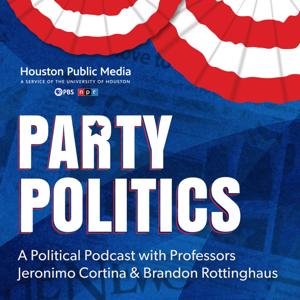

The 2028 presidential election may feel far away, but the race to define it is already underway. On this week’s Party Politics, Co-hosts Brandon Rottinghaus and Jeronimo Cortina break down how Democrats are quietly shaping their next presidential strategy—long before a single vote is cast.
At the center of the conversation is the “invisible primary,” the behind-the-scenes competition where candidates build support from donors, party elites, and voters. It’s not just about who runs—it’s about what the Democratic Party stands for moving forward.
Potential contenders are already signaling interest. Former Vice President Kamala Harris and California Governor Gavin Newsom appear to lead the early field, while figures like Pete Buttigieg, Gretchen Whitmer, and Josh Shapiro represent a second tier focused on broader voter appeal. A deeper bench of governors and national figures adds even more uncertainty to an already crowded picture.
But the bigger question isn’t just the candidates—it’s the strategy.
Democrats face a familiar challenge: how to rebuild a winning coalition. That means re-engaging core voters like African Americans, energizing younger voters, and improving outreach to Latino communities—especially in states like Texas, where turnout and margins remain critical.
Messaging will be key. The hosts argue that while Democrats have struggled to communicate clearly in recent cycles, there are signs of a shift toward more direct, policy-focused language. Economic concerns—particularly affordability—are expected to dominate, cutting across ideological lines and resonating with a wide range of voters.
Another debate is how much to focus on Donald Trump. While he remains a powerful political force, relying too heavily on opposition to him may not be enough to win in 2028. Instead, Democrats must define a forward-looking vision that connects with voters’ everyday concerns.
Ultimately, the 2026 midterms will offer the first real clues. They’ll test messages, measure turnout, and reveal whether Democrats are rebuilding momentum—or still searching for direction.
One thing is clear: the road to 2028 has already begun.
 View all episodes
 By Houston Public Media

4.8
6868 ratings
The 2028 presidential election may feel far away, but the race to define it is already underway. On this week’s Party Politics, Co-hosts Brandon Rottinghaus and Jeronimo Cortina break down how Democrats are quietly shaping their next presidential strategy—long before a single vote is cast.
At the center of the conversation is the “invisible primary,” the behind-the-scenes competition where candidates build support from donors, party elites, and voters. It’s not just about who runs—it’s about what the Democratic Party stands for moving forward.
Potential contenders are already signaling interest. Former Vice President Kamala Harris and California Governor Gavin Newsom appear to lead the early field, while figures like Pete Buttigieg, Gretchen Whitmer, and Josh Shapiro represent a second tier focused on broader voter appeal. A deeper bench of governors and national figures adds even more uncertainty to an already crowded picture.
But the bigger question isn’t just the candidates—it’s the strategy.
Democrats face a familiar challenge: how to rebuild a winning coalition. That means re-engaging core voters like African Americans, energizing younger voters, and improving outreach to Latino communities—especially in states like Texas, where turnout and margins remain critical.
Messaging will be key. The hosts argue that while Democrats have struggled to communicate clearly in recent cycles, there are signs of a shift toward more direct, policy-focused language. Economic concerns—particularly affordability—are expected to dominate, cutting across ideological lines and resonating with a wide range of voters.
Another debate is how much to focus on Donald Trump. While he remains a powerful political force, relying too heavily on opposition to him may not be enough to win in 2028. Instead, Democrats must define a forward-looking vision that connects with voters’ everyday concerns.
Ultimately, the 2026 midterms will offer the first real clues. They’ll test messages, measure turnout, and reveal whether Democrats are rebuilding momentum—or still searching for direction.
One thing is clear: the road to 2028 has already begun.

38,062 Listeners

6,826 Listeners

38,856 Listeners
5,101 Listeners
1,379 Listeners
3,938 Listeners

177 Listeners
97 Listeners
252 Listeners
373 Listeners
4,681 Listeners

5 Listeners

111,948 Listeners

18 Listeners
10,282 Listeners
45 Listeners
16 Listeners
5 Listeners
8,473 Listeners

10,745 Listeners
1,688 Listeners