
Sign up to save your podcasts
Or

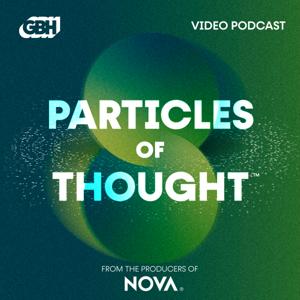

What does it feel like to make one of the biggest discoveries in physics? Adam Riess knows — because his work revealed that the universe isn’t just expanding, it’s accelerating. In this episode, the Nobel Prize–winning astrophysicist takes us behind the scenes of the moment that changed cosmology forever. How did his team use exploding stars as “standard candles” to measure the cosmos? Why did the data point to a mysterious force now called dark energy, making up nearly 70% of the universe? And what’s behind today’s biggest cosmic puzzle: the Hubble tension? Plus, Adam shares what new telescopes could uncover — and why the next decade might rewrite the laws of physics all over again.
Learn more about NOVA and subscribe to our YouTube channel.
—————————
Guest Bio:
Adam Riess is an astrophysicist, professor at Johns Hopkins University, and a distinguished astronomer at Space Telescope Science Institute. In 2011, he was named as a co-winner of the Nobel Prize in Physics for his contributions to the discovery that the expansion rate of the universe is accelerating. Since then, he has continued refining measurements of cosmic expansion and the Hubble constant, aiming to find and measure the most distant type Ia supernovae known, to probe the origin of cosmic acceleration.
Timestamps
(00:00:00) Introduction
(00:03:16) What Is a Type Ia Supernova?
(00:10:52) The Discovery of Dark Energy
(00:44:39) What Is the Hubble Tension?
(00:58:59) Winning a Nobel Prize
(01:15:32) Credits
 View all episodes
 By GBH

4.9
130130 ratings
What does it feel like to make one of the biggest discoveries in physics? Adam Riess knows — because his work revealed that the universe isn’t just expanding, it’s accelerating. In this episode, the Nobel Prize–winning astrophysicist takes us behind the scenes of the moment that changed cosmology forever. How did his team use exploding stars as “standard candles” to measure the cosmos? Why did the data point to a mysterious force now called dark energy, making up nearly 70% of the universe? And what’s behind today’s biggest cosmic puzzle: the Hubble tension? Plus, Adam shares what new telescopes could uncover — and why the next decade might rewrite the laws of physics all over again.
Learn more about NOVA and subscribe to our YouTube channel.
—————————
Guest Bio:
Adam Riess is an astrophysicist, professor at Johns Hopkins University, and a distinguished astronomer at Space Telescope Science Institute. In 2011, he was named as a co-winner of the Nobel Prize in Physics for his contributions to the discovery that the expansion rate of the universe is accelerating. Since then, he has continued refining measurements of cosmic expansion and the Hubble constant, aiming to find and measure the most distant type Ia supernovae known, to probe the origin of cosmic acceleration.
Timestamps
(00:00:00) Introduction
(00:03:16) What Is a Type Ia Supernova?
(00:10:52) The Discovery of Dark Energy
(00:44:39) What Is the Hubble Tension?
(00:58:59) Winning a Nobel Prize
(01:15:32) Credits

78,430 Listeners

43,827 Listeners

43,580 Listeners
1,479 Listeners
12,216 Listeners
24,414 Listeners
16,355 Listeners
243 Listeners
2,312 Listeners
52 Listeners

209 Listeners

141 Listeners

204 Listeners
31 Listeners