
Sign up to save your podcasts
Or

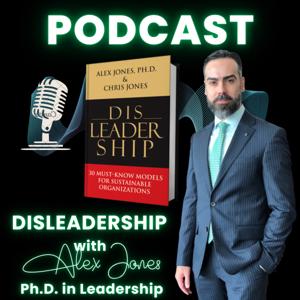


🎙 DISLEADERSHIP Podcast — Episode 11
Leadership During Crisis
Hello everyone, and welcome back to the DISLEADERSHIP Podcast.
I’m Dr. Alex Jones.
In this podcast, we explore the hidden dynamics of leadership — the psychological patterns, decision-making challenges, and leadership behaviors that influence how organizations succeed or struggle.
Today’s episode focuses on a leadership situation that tests individuals more than almost any other:
Leadership during crisis.
🎙 DISLEADERSHIP Podcast — Episode 10
When Vision Turns Into Delusion
Hello everyone, and welcome back to the DISLEADERSHIP Podcast.
I’m Dr. Alex Jones.
In this podcast, we explore the hidden dynamics of leadership — the psychological patterns, decision-making traps, and leadership behaviors that influence the success or failure of organizations.
Today we are going to discuss a topic that sits at the heart of leadership thinking:
Vision.
🎙 DISLEADERSHIP Podcast — Episode 9
Why Great Companies Collapse
Hello everyone, and welcome back to the DISLEADERSHIP Podcast.
I’m Dr. Alex Jones.
In this podcast, we explore the hidden dynamics of leadership — the psychological patterns, strategic traps, and decision-making behaviors that shape the rise and fall of organizations.
Today’s episode begins with a fascinating and important question:
Why do market leaders sometimes disappear?
🎙 DISLEADERSHIP Podcast — Episode 8
The Neuroscience of Leadership Decisions
Hello everyone, and welcome back to the DISLEADERSHIP Podcast.
I’m Dr. Alex Jones.
In this podcast, we explore the hidden dynamics of leadership — the psychological forces, decision-making patterns, and behavioral influences that shape how leaders guide organizations.
Today’s episode focuses on a fascinating and rapidly growing area of leadership research:
The neuroscience of leadership decisions.
Hello everyone, and welcome back to the DISLEADERSHIP Podcast.
I’m Dr. Alex Jones.
In this podcast, we explore the hidden dynamics of leadership — the psychological patterns, leadership mistakes, and organizational traps that quietly shape the success or failure of institutions.
Today’s episode focuses on an important but often uncomfortable topic.
Toxic leadership.
Hello everyone, and welcome back to the DISLEADERSHIP Podcast.
I’m Dr. Alex Jones.
In this podcast, we explore the hidden dynamics of leadership — the psychological traps, decision-making patterns, and leadership mistakes that quietly influence organizations, governments, and institutions around the world.
Today’s episode focuses on a topic that sits at the intersection of psychology, decision science, and leadership.
Cognitive bias in leadership.
Many leadership books emphasize strategy, vision, and decision-making frameworks. They often assume that leaders make decisions in a rational and objective manner.
But decades of research in psychology and behavioral economics show that human decision-making is not purely rational.
Instead, our judgments are influenced by mental shortcuts known as cognitive biases.
In this podcast, we explore the hidden dynamics of leadership — the mistakes leaders make, the psychological traps that influence decisions, and the insights that help leaders build stronger, healthier, and more sustainable organizations.
Today we’re going to discuss a topic that appears again and again in organizations, and institutions around the world.
Ego and power in leadership.
Let me begin with an important question.
Why do some leaders who were once highly respected, capable, and successful eventually damage their own organizations?
One of the most dangerous leadership problems is also one of the hardest to see.
Because it’s invisible.
Not to others.
But to the leader.
These are called leadership blind spots.
They often emerge when leaders become successful… when feedback becomes limited… or when people stop challenging authority.
Over time, important signals disappear.
Warnings go unnoticed. Innovation slows down. Decisions go unchallenged.
And the leader may never realize it is happening.
In Episode 4 of the DISLEADERSHIP Podcast, we explore why leadership blind spots emerge — and why even capable leaders can become unaware of them.
Why do highly intelligent leaders sometimes make decisions that damage their own organizations?
History shows this pattern repeatedly.
Successful executives. Experienced leaders. Highly educated decision-makers.
Yet sometimes their decisions lead to major strategic mistakes.
The explanation is not always incompetence.
Often it is something far more subtle.
Human judgment is influenced by invisible psychological patterns that shape how leaders interpret information, evaluate risks, and choose strategies.
The most surprising part?
These patterns affect even the smartest leaders.
In Episode 3 of the DISLEADERSHIP Podcast, we explore why intelligent leaders still make poor decisions — and what organizations can do to reduce these risks.
Most organizations confuse authority with leadership.
A title can give someone power.But it does not automatically give them influence.
Many people follow authority because they have to.
But they follow leadership because they want to.
This difference quietly shapes:• employee engagement• organizational culture• long-term success
The real question is:
Are people following the title…or the person?
In Episode 2 of the DISLEADERSHIP Podcast, we explore a distinction that many organizations overlook — yet it changes how leadership actually works.