
Sign up to save your podcasts
Or

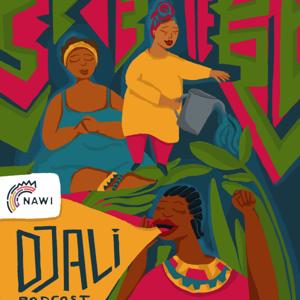


We are pleased to introduce a new three-part mini podcast series on Structural Adjustment Programs (SAPs) and how they continue to affect the continent.
This series is in collaboration with Omolara Oriye of Liberation Alliance and our conversations will be guided by the book : "Our Continent, Our Future African Perspectives on Structural Adjustment by Thandika Mkandawire & Charles C. Soludo".
Our aim is to have discussions that explore how the SAPs in the 1990s shaped African lives and our futures and what this means in light of the new round of SAPs currently being implemented in various countries all over the continent.
Our first guest Nombuso Mathibela, is an archivist and cultural worker, who will share with us the shifts experienced in the cultural landscape during the post-colonial era as a result of the SAPs.
Get in touch with us!
Instagram: @nawi.africa
Twitter: @NawiAfrica
Website: www.nawi.africa
We have come to the end of our first series, in 2022 the Nawi Collective commissioned a collection of papers on the AfCFTA from a pan african feminist perspective,
We unpacked some of these papers during this series and provided analysis and critique of the AfCFTA and considered tangible alternatives that would make the AfCFTA work better for African women in different areas such as extractives, ecology, agriculture.
In this episode , we speak to Africa Kiiza our reviewer and expert who saw us to the finish line as he shares his thoughts on how the series of papers offered necessary critique of the AfCFTA
Get in touch with us!
Instagram: @nawi.africa
Twitter: @NawiAfrica
Website: www.nawi.africa
Agriculture plays a key role on the African Continent. It is the biggest sector employer, directly supporting 90% of livelihoods and accounting for up to a quarter of the Continent’s total GDP.
The sector also accounts for the work done by the majority of the population, where 80% of this farming is done by smallholders many of whom are women. As such, the status and role of women on the African Continent is key to any gains that the agricultural sector intends to make on the Continent.
Our conversation today will explore the question: Where does The AfCFTA Meet African Women in Agriculture? with our guest Dr. Njoki Ngumi who authored a paper exploring the AfCFTA and feminist reflections, insights and strategies to consider when looking at the intersection of agriculture and trade.
Get in touch with us!
Instagram: @nawi.africa
Twitter: @NawiAfrica
Website: www.nawi.africa
The AfCFTA has been founded on a pan-African premise, more specifically the Africa Union’s Agenda 2063: The Africa We Want, which proposes a vision of an “integrated, prosperous and peaceful Africa, but what does this mean in the face of current realities of our ongoing neo-colonial relationship with global northern countries that is characterized by a power imbalance that actively harms the lives and stifles the futures of African citizens.
This week’s episode is part of a two part series exploring the AfCFTA and Feminist considerations on pan-African sovereignty with our guest Fatimah Kelleher.
In this episode Fatimah uses a pan African feminist lens to guide us in imagining what an AfCFTA working towards securing a more sovereign and economically just future especially for African women looks like. Some of the issues that African countries should be building consensus on and how feminist movement building can inform our collective activism?
Fatimah Kelleher is a Pan African feminist technical adviser/strategist engaged in feminist advocacy.
Get in touch with us!
Instagram: @nawi.africa
Twitter: @NawiAfrica
Website: www.nawi.africa
The AfCFTA has been founded on a pan-African premise, more specifically the Africa Union’s Agenda 2063: The Africa We Want, which proposes a vision of an “integrated, prosperous and peaceful Africa, but what does this mean in the face of current realities of our ongoing neo-colonial relationship with global northern countries that is characterized by a power imbalance that actively harms the lives and stifles the futures of African citizens.
This week’s episode is part of a two part series exploring the AfCFTA and Feminist considerations on pan-African sovereignty with our guest Fatimah Kelleher.
In this episode we talk about global geo-political realities and their implications on the quest to deepen intra African trade, exploitative power relationships between former colonisers, and newcomers to the continent. Furthermore, how do these relationships impact the idea of sovereignty and integration as envisioned during the post-independence movements?
Fatimah Kelleher is a Pan African feminist technical adviser/strategist engaged in feminist advocacy.
Get in touch with us!
Instagram: @nawi.africa
Twitter: @NawiAfrica
Website: www.nawi.africa
The freedom of movement of people, capital, goods, and services is at the core of the African continental and regional integration agendas. Under the AfCFTA free movement of persons is fundamental to boosting intra-African trade.
However the implementation towards a borderless Africa is still a work in progress due to some concerns from African states which include security threats.
This episode explores a feminist/human rights based approach towards the AfCFTA and the issue of human trafficking.
Our guest, Sodfa Daaji explores how the AfCFTA has the potential to address one of the main factors exacerbating the vulnerability of the victims of human trafficking through economic empowerment.
She also proposes the integration of a human rights-based approach and the introduction of provisions within the AU Protocol on Free Movement of Persons against the danger of human trafficking.
Sodfa Daaji is a women’s rights advocate, passionate about feminist jurisprudence. She is the Founder and Executive Director of the African Legal Think Tank on Women’s Rights, a continental institute aiming at addressing modern forms of violence against women. She is currently a Research Fellow at MS Training Center for Development Cooperation in Arusha, Tanzania.
Get in touch with us!
Instagram: @nawi.africa
Twitter: @NawiAfrica
Website: www.nawi.africa
An enduring feature of most African economies is the extraction of natural resources for the accumulation of wealth in global north countries.
The extraction of these natural resources is one of the most important issues affecting communities in Africa today and the use and governance of these natural resources are fundamental to how economies can cope with the urgency of climate change.
The conversation with Sonia Phalatse will explore a paper she authored on why we should apply a feminist political ecology (FPE) lens to critically assess the AfCFTA, within the context of extractivism in Africa.
Sonia Phalatse is a feminist economist researching and writing at the intersection of climate and economic justice.
Get in touch with us!
Instagram: @nawi.africa
Twitter: @NawiAfrica
Website: www.nawi.africa
Guest Fatimah Kelleher (@fatimahkelleher) discusses the politics of feeding Africa
Resources
Feminist Parenting: Perspectives from Africa and Beyond
Article: The Real Pandemic Lebohang Liepollo Pheko
The temple of her skin, a visual documentary project exploring the stories and aesthetics around African women and our tattooing and scarification journeys
The show is made possible by financial support from the Nawi Collective.
Get in touch with us!
Instagram: @nawi.africa
Twitter: @NawiAfrica
Website: www.nawi.africa
Get in touch with us!
Instagram: @nawi.africa
Twitter: @NawiAfrica
Website: www.nawi.africa
Guest Everlyn Muendo, a Nairobi based researcher, discusses her work around the Nairobi International Financial Centre Act, 2017 and its implications.
The show is made possible by financial support from the Nawi Collective.
Get in touch with us!
Instagram: @nawi.africa
Twitter: @NawiAfrica
Website: www.nawi.africa
Get in touch with us!
Instagram: @nawi.africa
Twitter: @NawiAfrica
Website: www.nawi.africa
Guest Wangari Kinoti discusses insights from her latest research on the Managed Equipment Services Partnership (MES), the promise of promoting
improved healthcare for sustainable development and its implications on the Kenyan healthcare system.
The show is made possible by financial support from the Nawi Collective.
Get in touch with us!
Instagram: @nawi.africa
Twitter: @NawiAfrica
Website: www.nawi.africa
Get in touch with us!
Instagram: @nawi.africa
Twitter: @NawiAfrica
Website: www.nawi.africa
From the publisher's feed