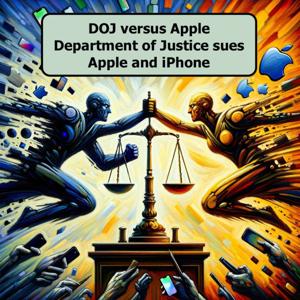
In a monumental turn of events, Apple, the tech tycoon known for its cutting-edge technology, now finds itself locked in an antitrust suit that mirrors a strategy once used to beat Microsoft. According to documents presented in the courtroom, the lawsuit has been filed by none other than the U.S. Department of Justice (DOJ).
The Department of Justice, with its primary responsibility for enforcing federal statutes prohibiting unfair and anti-competitive business practices, has now turned its focus on Apple. This raises crucial questions about antitrust law enforcement and the future of digital competition. With splitting resemblances to Microsoft's antitrust suit, the ongoing legal saga between the DOJ and Apple potentially signifies a new era in the tech industry.
At the core of the lawsuit is the allegation that Apple utilizes its vast market dominance to stifle competition. Specifically, the DOJ argues that Apple's control over its App Store, the primary portal for downloading apps on an iPhone or iPad, permits it to unfairly profit at the expense of app developers. Apple charges a commission, ranging from 15% to 30% for purchases made within the apps, a practice that the DOJ contends impedes competition and insulates Apple from having to improve its products.
Framing Apple's alleged anti-competitive behavior as harmful to innovation and consumers, the DOJ has reiterated its commitment to fostering competitive conditions in the marketplace. The implication of such an argument is far-reaching, as it positions Apple's practices as a significant barrier to market competitiveness.
The legal confrontation between the DOJ and Apple is not just a saga enveloped within the walls of a courtroom, but rather, it represents a historic clash between big tech and government regulators. If Apple is found guilty, it could potentially reshape not just its business model but the very essence of app marketplaces as we recognize them today.
However, Apple vehemently defends its practices, stating that the commission it charges is a standard industry practice and crucial to maintaining a high-quality, secure app ecosystem. The company states that the fees it charges cover the costs of maintaining the App Store, including software development, customer service, marketing, and the underlying technology required for its operation.
This lawsuit, a colossal face-off between the DOJ and Apple, is substantially more significant than a mere dispute over monetary commissions. It essentially lays bare the very foundations of big tech's unfair practices, potentially leading to a watershed moment in the heart of digital competition.
The trial undoubtedly has both companies and consumers across the globe riveted as it progresses. With each side committed to vigorously defending their arguments, the world eagerly awaits its conclusion. The final decision holds the potential to redefine the norms of the tech industry, marking a pivotal point in the age-long debate on digit
This content was created in partnership and with the help of Artificial Intelligence AI.