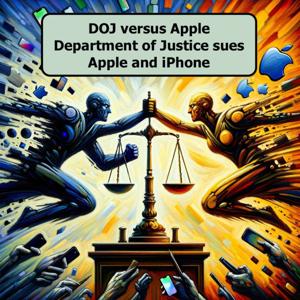
On March 21, 2024, the U.S. Department of Justice (DOJ) filed a significant antitrust lawsuit against Apple, alleging the company has unlawfully exercised monopoly power in the smartphone market. Here are the key points and recent developments in the case:
### Allegations
The DOJ lawsuit, supported by sixteen states, accuses Apple of violating Section 2 of the Sherman Antitrust Act by monopolizing and attempting to monopolize parts of the smartphone industry. The allegations include several specific anticompetitive practices:
- Apple is accused of maintaining monopoly power by making it harder for consumers to switch from iPhones to other smartphones.
- The company is alleged to have suppressed cross-platform messaging, limiting the functionality between iPhones and non-Apple devices.
- Apple has been accused of limiting the functionality of third-party digital wallets and smartwatches, blocking competitors from the market.
- The lawsuit also claims Apple has blocked mobile cloud streaming services, which could have provided competition to its own services.
- Apple's App Store restrictions are highlighted as part of a broader pattern of anticompetitive behavior, including high fees charged to developers for app subscriptions and in-app purchases[1][2][3].
### Recent Developments
In June 2024, four additional states—Indiana, Massachusetts, Nevada, and Washington—joined the Justice Department's suit against Apple, further solidifying the coalition against the tech giant[5].
### Impact on Consumers and Developers
The lawsuit argues that Apple's practices have resulted in fewer choices, higher prices, and lower quality smartphones, apps, and accessories for consumers. Developers face increased costs and barriers to listing their apps on Apple's App Store, which can lead to duplicated efforts and higher costs for businesses[1][2][3].
### Potential Outcomes
If the DOJ is successful, the lawsuit could have a profound impact on the future of the smartphone market. Apple may be forced to open up its ecosystem, enhancing interoperability, particularly with messaging services like iMessage. This could lead to lower prices for apps and services, making digital purchases less expensive for consumers. Additionally, the lawsuit could pave the way for more competitive markets in related areas such as smartwatches and digital wallets[1][2].
### Industry Ramifications
The case is seen as a significant challenge to Apple's integrated business model, which, while not inherently illegal, is alleged to be used to exclude competitors and limit consumer choice. The outcome could influence how other tech companies design their products and services, emphasizing the importance of fair competition and consumer choice[2].
As the case progresses, it remains to be seen how Apple will respond to these allegations and what the ultimate ramifications will be for both the company and the broader tech industry. The DOJ's actions are aimed at promoting competition and innovat
This content was created in partnership and with the help of Artificial Intelligence AI.