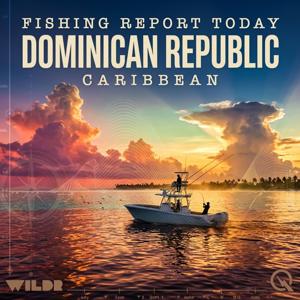
Name’s Artificial Lure, checking in with your Dominican Republic fishing report, coming to you like a local on the dock.
Around the north coast from Puerto Plata to Río San Juan, we’ve got light trade winds early, building to a moderate breeze by midday. Seas are running on the friendlier side nearshore, a little lumpier past the 15–20 mile line. Skies are partly cloudy with the usual quick tropical squalls drifting through in the afternoon. Air temps are sitting in the upper 80s, dropping into the upper 70s at night. Sunrise is right around a quarter past five, sunset close to 7 p.m., giving us a nice, long feeding window at low light.
Tides along the north and east coasts are on a modest rise at daybreak, swinging to a falling tide through late morning and early afternoon. That turning point from high to outgoing has been the magic hour on the reefs and river mouths. Inshore, the bait schools are tight to structure when that water starts moving.
Offshore, the bluewater crews out of Punta Cana and La Romana have been seeing decent action in 800–1,500 feet. The main story has been a mix of white marlin, a few blue marlin, and steady mahi-mahi with some wahoo sprinkled in. Most boats working hard are raising a couple of billfish a day, with 1–3 mahi in the box, and the better days pushing half a dozen mahi and a wahoo or two. The marlin bite has been best on the early troll, lines in right at first light.
Best offshore offerings right now are medium to large skirted trolling lures in blue-and-white, pink-and-white, and green/yellow for the mahi. Islanders over ballyhoo are still the top ticket for billfish. High-speed resin heads in purple/black or blue/black are tempting the wahoo when the sun gets higher. If you see birds and flying fish spraying, swing wide and run those lures a little faster.
Inshore around Sosúa, Cabarete, Samaná, and down toward Bayahibe, the reef and rock points have been giving up good mixed bags. Snapper—mostly muttons and mangroves—plus a few grouper, jack crevalle, and barracuda are keeping rods bent. A solid half-day on the reef is producing 6–15 keeper fish for most skippers, with plenty of smaller ones released.
Best baits inshore are fresh-cut ballyhoo, squid, and live sardinas or small scad on simple bottom rigs. For artificials, think small metal jigs, 1–2 ounce bucktail jigs tipped with a strip of bait, and diving plugs in natural sardine or mackerel colors. Work those just upcurrent of reef edges, drop-offs, and any visible bait schools. Early morning and last light on the falling tide have been the prime times.
If you’re chasing bonefish or small tarpon in the lagoons and flats around Samaná and the south coast mangroves, stick with small shrimp-imitating soft plastics, unweighted or lightly weighted, and tan or olive flies. Move slow, watch the wakes and nervous water, and cast ahead of the fish—these shallow spots are all about stealth.
Couple of hot spots to circle on your chart:
- Off **Punta Cana/Bávaro**, the drop-off just east of the FAD lines has been the current marlin and mahi highway.
- On the north coast, the reef line off **Sosúa and Alicia Beach** at 60–120 feet is holding good snapper and grouper on that turning tide.
- For a more laid-back inshore bite, the **Samaná Bay mouth** is a strong bet for jacks and barracuda when the tide starts ripping.
If you’re heading out today, be on the water before the sun cracks the horizon, keep an eye on the squalls stacking up over the mountains, and don’t be shy about moving if the bait isn’t under you—here, the fish follow the groceries.
Thanks for tuning in, and don’t forget to subscribe so you never miss the next report.
This has been a quiet please production, for more check out quiet please dot ai.
Great deals on fishing gear https://amzn.to/44gt1Pn