
Sign up to save your podcasts
Or

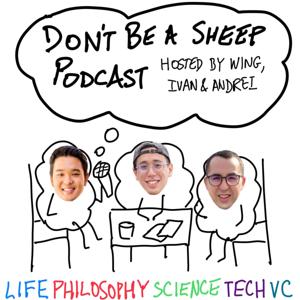


We all love our friends (for the most part), but how often do you actually stop to think deeply about friendship itself? How did you meet your closest friends and how much thought did you put into who became your friends? In this episode we discuss social circles, mimetic theory, the true value of going to a good school, the unfortunate importance of random circumstance, the influence of the pandemic on friendships and how all of this can be contextualized by Personality Vectors, an elegant social (and mathematical) theory by Vincent Yang (https://www.yangvincent.com/resources/personality-vectors/).
0:00 Intro
0:49 You are the average of those who you spend time with, what defines your individuality is your choice in who these people are.
7:13 Who you put high quality time into is who you become close to - time can either be intentional or by chance.
14:23 How do friend groups change? Shared stories don't evaporate.
19:20 Different friends have different roles in your life.
21:51 Andrei took a test to see how funny he is and he got 3/100 (https://principlesyou.com/).
23:15 "nice", "cool", "chill"
25:58 Pessimistic mindsets are a turn off.
30:34 A framework to approach and understand friendships applied to the question: surround yourself with the same or different values as you? Two opposing frameworks that seem to work, how do you decide which to pick and when?
36:09 How do you approach finding new friends today? Pre- & post- college friend making is very different.
41:18 Money could change the dynamic of a friendship.
45:17 How could a new person enter your friend group?
More about us:
- Wing (https://wingvasiksiri.com): "Founder and Managing Partner at iSeed SEA"
- Ivan (https://ivanfj.com): "PhD researcher in Biodegradable Plastics at UC Berkeley"
- Andrei (https://andrei.ai): "PhD researcher in Machine Learning at University of Cambridge"
From previous episodes we have concluded that (1) power will naturally accumulate in a very few (2) all humans will act selfishly and that is not always bad. Today we discuss, based on those 2 premises, what is the responsibility of those in power to society? Our discussion is split into 3 sections/contexts: individuals, businesses, nations. We conclude with our opinions post-discussion if we agree with Spiderman's uncle Ben - does/should great responsibility come with great power?
0:00 Introducing the premise
2:24 Should people with great power simply try not to cause damage or should they act and do proactive good ?
5:19 Individuals: bullying, bystander dilemma, harassment, social responsibility
23:53 Businesses: what is the responsibility of businesses to their stakeholders? Is brainwash kids with selfish goals that align with global good the long-term solution?
32:25 Nations: what is the responsibility of a powerful nation like the US in the global theatre? Should they do nation building to "liberate" people i.e. North Korea?
39:00 Conclusion: do we agree that with great power comes great responsibility? (Prelude into future topic - should billionaires exist?)
More about us:
- Wing (https://wingvasiksiri.com): "Founder and Managing Partner at iSeed SEA"
- Ivan (https://ivanfj.com): "PhD researcher in Biodegradable Plastics at UC Berkeley"
- Andrei (https://andrei.ai): "PhD researcher in Machine Learning at University of Cambridge"
Our society is based on the premise of infinite growth - is it a manmade story? Is human society a giant pyramid scheme destined to fail? What about infinite growth on a personal level - are we hardwired to like the idea of growth and yearn for it? What parallels can be drawn between the individual and societal level? Listen to hear Ivan change his opinion from the start to the end of the episode!
0:00 Is the premise of infinite growth an inherent fallacy?
4:30 Is there a distinction between infinite growth and the end of your life or the extinction of humanity?
8:35 Infinite growth is limited by finite resources. But are our resources really finite? Human society is bad at encouraging preemptive problem solving but very good at rapid solutions when it is a really big, profitable problem.
10:24 Is there a problem with a society built on infinite growth? Are the systems we build reflective of our human nature and flaws? Is it naturally true to desire stuff or are greed and desire learned from the world in which we are raised?
15:30 Is growth is all there is for a person or is there merit to a "stagnate and chill" life philosophy? // Is there a distinction between pursuing physical vs intellectual vs emotional growth?
27:18 What would a society without infinite growth look like? (De-growth, slow growth, shrinking growth) // Why is GDP our #1 metric for success?
46:03 Are there any aspects of your life where you think it's ok not to grow? Maybe in small local time points i.e. deadlines or changing priorities.
51:03 Conclusion: infinite growth is not a fallacy.
More about us:
- Wing (https://wingvasiksiri.com): "Founder and Managing Partner at iSeed SEA"
- Ivan (https://ivanfj.com): "PhD researcher in Biodegradable Plastics at UC Berkeley"
- Andrei (https://andrei.ai): "PhD researcher in Machine Learning at University of Cambridge"
The news is often sad and anger inducing - a perennial showcase of the worst of humanity and natural tragedies. Is there then any benefit in soldiering through this and keeping up-to-date with national and world affairs? In this episode we discuss how we keep up with world news, if we think we should be consuming more or less news, the responsibility of big tech and have a long discussion about trust. Give this episode a listen if you want to find out what Brad Pitt's love life and Japanese trade policy have in common!
0:00 Intro
0:44 The most impactful world affairs are the ones that close to home.
8:28 Value from keeping up with the news: perspective, gratitude, food for thought.
11:15 Problems with the news: bias, tribalism inducing, depression inducing.
14:11 So should we pay attention to the news or not?
18:35 Big debate on news regulation and trust - what are the roles of big tech, government, credentialed organizations and individuals. Example: Dr. Fauci & lab leak hypothesis.
38:15 What are the similarities & differences of celebrity gossip vs world affairs?
43:08 Summary
More about us:
- Wing (https://wingvasiksiri.com): "Founder and Managing Partner at iSeed SEA"
- Ivan (https://ivanfj.com): "PhD researcher in Biodegradable Plastics at UC Berkeley"
- Andrei (https://andrei.ai): "PhD researcher in Machine Learning at University of Cambridge"
We conclude quite depressingly that true altruism doesn't exist. Fortunately, although all actions are inherently selfish, this implies that giving, sharing and acting with short-term selflessness are amazing things as they create positive long-term value for both the giver and the receiver. Even if it's fundamentally fake, if everyone in society acted altruistically then our world would be a much better place as life is not a zero sum game. If this doesn't make sense to you, give this episode a listen to see how we reached this conclusion!
0:00 Intro
0:51 Selfishness is acting in your own self interest usually at the expense of others, it can be split into short-term and long-term selfishness, and definitionally it carries no moral judgement.
3:15 Altruism doesn't exist.
6:05 Selflessness is an evolved survival trait and explains why donating money and helping an old lady across the street are not altruistic (green beard genes).
7:53 Can you think of a truly altruistic act? If you derive peace or joy from an action does it become selfish?
17:09 Entirely selfless actions can only exist in irrational players (i.e. all humans) - true altruism is sad miscalculations that are self damaging.
19:44 Can you be altruistic and selfish at the same time? // Even if you're not acting in your best self interest you think you are.
27:06 Why does society think it is bad to be selfish? Why is sacrifice the pinnacle of morality? Example: babbler birds
32:57 Would you act unselfishly to save your species at the cost of yourself? Is climate action true altruism?
34:30 Do our conclusions and framework of morality scale from the individual level to a company or a nation?
41:17 In VC world it is clearly spelled out via fiduciary responsibility that altruism is just a scam.
42:59 3 key takeaways: (1) emotional return from selfless actions (2) short term selflessness leads to long term selfishness (3) morality gets murky when you apply conclusions on the individual level to group and societal levels.
More about us:
- Wing (https://wingvasiksiri.com): "Founder and Managing Partner at iSeed SEA"
- Ivan (https://ivanfj.com): "PhD researcher in Biodegradable Plastics at UC Berkeley"
- Andrei (https://andrei.ai): "PhD researcher in Machine Learning at University of Cambridge"
It's the summer of 2021: highly vaccinated cities are finally opening back up again and it seems like everyone is in a state of exploration. In this episode we discuss how the explore-exploit framework applies to our lives and how it might be useful to apply to yours.
0:00 Intro
1:06 The period of life you are in will largely dictate your explore vs exploit ratios; explore a lot while young.
3:08 Is the ultimate goal to 100% exploit or is there intrinsic value in exploration?
8:45 In society people spend too much time keeping options open (liquid modernity / infinite browsing mode / optionality) // Compound interest is where we actually get good at things - long term games are non luck success strategies.
13:07 The goal of the explore-exploit framework is to assist in regret minimization (energy landscapes, football players & kpop as examples).
19:23 Most people never find what they really love or get good at anything // Exploration is an additive that keeps you excited to do your exploitation.
22:05 The success of an exploration is the number of meaningful conclusions that you reach.
23:39 Commitment vs travel / wanderlust in exploring culture?
28:05 When and how did Wing commit to becoming a VC?
29:13 Professional explore exploit ratios for the 3 of us right now & what would motivate us to leave our happy local minima.
38:15 Our social explore-exploit ratios right now.
41:46 For those stuck in either explore or exploit, tips to commit or force exploration: internal reflection, have a goal, make proactive moves.
43:21 All of our episodes start with different topics and converge to the same models.
More about us: Wing (https://wingvasiksiri.com): "Founder and Managing Partner at iSeed SEA" ; Ivan (https://ivanfj.com): "PhD researcher in Biodegradable Plastics at UC Berkeley" ; Andrei (https://andrei.ai): "PhD researcher in Machine Learning at University of Cambridge"
Out of all the topics in the world to discuss, why would 3 non-married guys with no children choose this as a topic to discuss? Listen to find out!
0:00 Intro
1:35 Rapid fire questions
7:29 Good parents > income , race, gender etc.
7:55 Values you aim to instill in your children vs child value self discovery
11:48 Developing a respect for money
15:19 Where do you draw the line for forcing kids to do things you know will be good for them?
17:53 Good things come as a reward for doing hard things
19:50 How would you measure your success as a parent?
23:06 Intentional grand challenges for children to overcome
27:11 Differences in parenting boys vs girls
30:56 Is having a kid even a good thing?
39:14 The world is not a fair place - is it more beneficial for boys to be more trusting and for girls to be less trusting in strangers?
41:05 Husband vs wife parenting responsibility differences
45:16 What expectations do you have for your children and what expectations should they have for you as a parent // Tim Ferris traits of successful people's parents
47:25 Wrap up
More about us:
- Wing (https://wingvasiksiri.com): "Founder and Managing Partner at iSeed SEA"
- Ivan (https://ivanfj.com): "PhD researcher in Biodegradable Plastics at UC Berkeley"
- Andrei (https://andrei.ai): "PhD researcher in Machine Learning at University of Cambridge"
Andrei & Ivan are joined by a special guest: Amanda, a lighting artist with experience at Pixar and Activision. Together they discuss how Amanda found herself in her non-sheeplike career path and try to understand what exactly she does as a lighting artist. Check out her work below:
https://www.instagram.com/amandajyp.art
https://www.amandajayapurna.com/
0:00 Intro
2:32 What is a lighting artist?
3:50 How much of your work was degree vs self taught?
5:08 Where do artistic tendencies come from in your family?
12:24 Storytelling through the medium of light: mesh between traditional painting and weather science NOT animation
15:02 Is your job more technical or artistic?
17:01 How do you measure how good lighting is?
21:08 Can you also work on live action films?
22:14 Skill, networking & personal brand in a niche artistic field
32:24 Shape language
34:39 Fears before studying art? Journey on how you got to your career point right now
42:08 Can you be replaced by AI? // Randomness as a creative tool
50:27 Importance of role models who are relatable (gender & culture)
53:57 Life principles of engineers vs artists
58:21 Plugs
More about us:
- Wing (https://wingvasiksiri.com): "Founder and Managing Partner at iSeed SEA"
- Ivan (https://ivanfj.com): "PhD researcher in Biodegradable Plastics at UC Berkeley"
- Andrei (https://andrei.ai): "PhD researcher in Machine Learning at University of Cambridge"
Following episode #6 on freedom, this week Wing, Ivan & Andrei focus more specifically on freedom of speech. We conclude that our ideal society would have total freedom of speech. Listen to find out why!
0:00 Intro
1:17 Freedom of speech is the ability to challenge the status quo
4:13 West vs East cultural split
5:59 Who is our speech free from? Government vs the majority vs consequences
11:07 Words have meaning as humans are irrational // you are the sum of your opinions // opinions should be strong but loosely held
19:52 The difference between fact and opinion is falsifiability
21:36 What would change your mind that freedom of speech is good?
25:34 Downsides to freedom of speech: slow velocity of decision-making, excuse for hateful rhetoric & emotional exploitation
32:47 What shouldn't you be allowed to say in an ideal society // hate speech is just speech that you hate
39:52 Education is the solution
41:34 Summary
More about us:
- Wing (https://wingvasiksiri.com): "Founder and Managing Partner at iSeed SEA"
- Ivan (https://ivanfj.com): "PhD researcher in Biodegradable Plastics at UC Berkeley"
- Andrei (https://andrei.ai): "PhD researcher in Machine Learning at University of Cambridge"
This week we explore what it means to have a personal brand, whether or not you should build one, and if so how.
0:00 Intro: personal brand == reputation
1:30 No matter what you do you will have a brand --> be intentional about the kind of brand you want to build and choose how you want the world to perceive you
2:47 Personal branding affords leverage to fulfill ambition --> personal branding efforts should scale with ambition
4:26 The paradox / hypocrisy in "I'm internally motivated, it doesn't matter what others think of me"
10:23 Personal brand is a mechanism to filter to your niche audience
11:45 Example 1: two types of VCs - press machines vs super low key
13:04 Example 2: research / academia world
16:46 Why it does matter what other people think of you
18:48 Inflexibility is the downside to having a really strong personal brand
20:55 Niche fame has less downsides
22:24 Personal brands as a primary source of income vs source of leverage
28:51 Brands are just a slice you so take it with a grain of salt always
32:12 Irony that none of us are active on social media / have strong personal brands
33:51 Post social media, don't consume it
34:17 Andrei vs Wing on influencers
35:26 Wing does not want to be an influencer as he dreams of living in New Zealand far away from people
37:00 Roadblocks stopping our own personal brand development: social media is a plague on society, operational work, inexperience, not high priority
41:47 Wing, Ivan & Andrei's rough personal brand definitions
44:35 Summary
More about us:
- Wing (https://wingvasiksiri.com): "Founder and Managing Partner at iSeed SEA"
- Ivan (https://ivanfj.com): "PhD researcher in Biodegradable Plastics at UC Berkeley"
- Andrei (https://andrei.ai): "PhD researcher in Machine Learning at University of Cambridge"
From the publisher's feed