
Sign up to save your podcasts
Or



Today's leaders are nearly spent. Many of our priests, parents, teachers, healthcare workers, and business leaders are pushed to do more with fewer resources. When will it end?
While it may be tempting to turn to a book like Lamentations for a dose of consolation, if we listen carefully to the entire text, the scripture warns us through poetry crafted to break our hearts of stone. Rather than lamenting the destruction of that which is temporary and built by our own hands, the biblical writer laments Israel's disobedience. Lamentations is merciful in its warning and is followed by Ezekiel's hope that God would grant a heart of flesh so that we might walk according to His commandments.
Blessed Feast of the Nativity and of the Circumcision of Our Lord Jesus Christ on this new year's day, 2022!
This week's podcast remembers those who have led by example. The best leaders on the path of righteousness lead not by their own examples, relying on their own strength and resources. Instead they point to the Lord's instruction and examples of obedience, like the Theotokos who responded, "I am the Lord's servant. Be it unto me according to thy word!" (Luke 1:38)
May the prayer of 2022 be for all who serve in the Lord's household, "Not my will, but Thine be done!"
Who among us doesn't like a bit of recognition, a pat on the back for effort and a job well done? Fr. Timothy Lowe emphasizes the relational aspects of trust and mercy as he unfolds the ego-busting lesson in Luke's gospel. "So you also, when you have done all that is commanded you, say, 'We are unworthy servants; we've only done what was our duty.'" (Luke 17:10) Ultimately, it's not just about doing the basics, but about going the extra mile.
Many of us have comfortable lives, presumably made possible through sacrifice and hard work. We applaud young David, seeing him deserving of the King's throne because he faced Goliath bravely and worked hard as a shepherd. And like David, it's possible that the comfort of power and possession once positioned, blinds us to our own destructive force of entitlement. King David failed to recognize that with more power comes more responsibility. Fortunately for us, we have the opportunity to learn from King David's mistakes. Fr. Dustin Lyon encourages us to repent and with thanksgiving, remember all that the Lord provides that we are called only to steward.
Do we professing Christians today face the same discomfort and conviction experienced by the Rich Young Ruler who is told to sell all that he has and give to the poor and follow Jesus? Like the rich ruler, do we lack trust in the commandments we profess to keep?
The story of the Rich Young Ruler immediately follows the scene of Jesus calling the little children to him. He takes the moment to teach, "Whoever does not receive the kingdom of God like a child shall not enter it.” (Luke 18:17) Dependent children cannot but trust and receive from the one who provides for them. Fr. Dustin Lyon, host of The Way, contrasts the trusting children with the Rich Young Ruler, reminding us of the call to seek the treasures of heaven found in obedience to the instruction we receive.
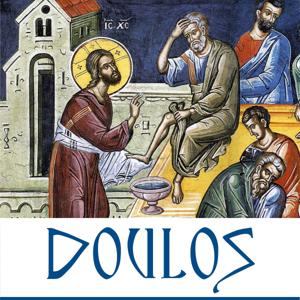
The story of Jesus washing the feet of his disciples is unique to the Gospel of John and replaces the Eucharistic element expressed in the other Gospels. Jesus demonstrates that unity in love and compassion is essential within the leadership hierarchy for the witness of the gospel. He instructs His disciples to behave according to the Gospel message they carry, urging them "to wash one another's feet."
Fr. Timothy Lowe, former Rector of the Tantur Ecumenical Institute in Jerusalem, exegetes John 13, and reminds us that this intimate act of service and love is transformative for all who hear and do as the Lord instructs.
What does the Bible say about teamwork? The Apostle Paul teaches in his letter to the Galatians to "Bear one another's burdens," and that "each must bear his own load." For servant leaders the responsibility goes way beyond sharing the load equally.
Dr. Michael Sider-Rose and Kyra Limberakis share their hopes for the new Orthodox Volunteer Corps, modeled by Jesus's interaction with the Samaritan woman at Jacob's well where Jesus offers water welling up to eternal life. Inspired by Jesus who challenged divisions between the Jews and Samaritans and their toil for what they might build or earn by the work of their own hands, the Orthodox Volunteer Corps invites communal living across jurisdictional divisions, seeking to be sustained by the food which Jesus describes as doing the will of His Father.
"You scratch my back, and I'll scratch yours. . ." Isn't this the way we typically operate in our leadership responsibilities? Why do we work harder to impress the boss and wealthy clients and slack when surrounded by lower-level employees and customers who appear less important? Are we motivated to perform only for those who can help us get ahead? In this week's episode, the epistle of James challenges those who would serve and lead in the Lord's household to "show no partiality," with the reminder that "mercy triumphs over judgment."
Winston Churchill once said, "I love learning, but hate being taught." Just how grateful are we to receive instruction or correction? It's easy to feel defensive, misunderstood, or even abused when we hear criticism.
This week's episode is Part 3 of "Speaking the truth in love," and explores the receiving end - hearing the truth. And even when the criticism seems ungodly and spoken not in love, it is a kairos - an opportunity to submit to your neighbor as you would in deference to the Lord.
From the publisher's feed