
Sign up to save your podcasts
Or

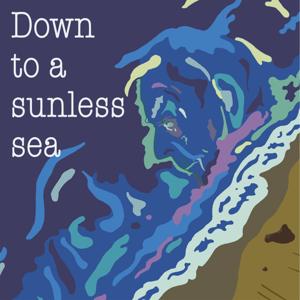


General content note for the series: death, dementia, old age, mental health issues Additional content note: sexism, misogyny, questionable behavior, power dynamics and age gaps within romantic and sexual situations. When I made a show about my relationship with masculinity, I talked a lot about my mum and my stepdad, but my dad hardly featured at all. When he did, he was a positive presence and represented an alternative version of masculinity. When you're trying to condense your history into an hour-long show, you have to leave some bits out. But there's also something inside me that doesn't want to deconstruct my dad. I don't want to mess too much with the positive parts of my childhood. This episode is about masculinity, privilege and performance.
Artwork by my brother Tony Pickering: http://www.pick-art.co.uk/ The BPA Fund has a survey that I'd really appreciate you filling in if you have a few moments. You can find it here: http://podcastviews.com
For some extra incentive if you fill it in you can be entered into a draw for a £50 Amazon voucher. For the purposes of this survey "Getting Better Acquainted" counts as "Down to a sunless sea" whether you are listening to it via the GBA feed or not.
General content note for the series: death, dementia, old age, mental health issues It's important to keep in mind that the story of my relationship with my dad is only one part of his life. It's only one of the ways he has been a father: the context of my childhood has been very different from the context of my siblings' childhoods. While he was retired for most of my life, for the rest of my siblings, he was someone who went out to work.
This episode is about friendship, parenting, love and care. Artwork by my brother Tony Pickering: http://www.pick-art.co.uk/ The BPA Fund has a survey that I'd really appreciate you filling in if you have a few moments. You can find it here: http://podcastviews.com
For some extra incentive if you fill it in you can be entered into a draw for a £50 Amazon voucher. For the purposes of this survey "Getting Better Acquainted" counts as "Down to a sunless sea" whether you are listening to it via the GBA feed or not.
General content note for the series: death, dementia, old age, mental health issues Extra content note: Bereavement, suicide, disability, abortion, terminal illness In the third full episode of the podcast using content funded by the British Podcast Awards and the Wellcome Trust I talk to three doctors with different perspectives and experiences that inform their opinions around assisted dying and euthanasia, something my dad has long advocated for and wishes was available to him. Dr Rob Jonquiere is the executive director of The World Federation of Right to Die Societies: https://www.worldrtd.net Dr Jacqueline Davis chairs Healthcare Professionals for Assisted Dying which is part of UK organisation Dignity in Dying: https://www.dignityindying.org.uk
Dr Mark Pickering is chief executive officer of the Christian Medical Fellowship and part of UK organisation Care Not Killing: https://www.carenotkilling.org.uk
Artwork by my brother Tony Pickering: http://www.pick-art.co.uk/
General content note for the series: death, dementia, old age, mental health issues
Memories are like desire paths: when you first walk down them, they are overgrown and full of details. The more you walk them, the more eroded they become; they are smoothed out and set. You get to what you remember more quickly, but what you remember has become something else. You no longer have to look for landmarks because there is a path for you to walk. This episode is about time memory, childhood, dementia and Citizen Kane. Artwork by my brother Tony Pickering: http://www.pick-art.co.uk/ The BPA Fund has a survey that I'd really appreciate you filling in if you have a few moments. You can find it here: http://podcastviews.com
For some extra incentive if you fill it in you can be entered into a draw for a £50 Amazon voucher. For the purposes of this survey "Getting Better Acquainted" counts as "Down to a sunless sea" whether you are listening to it via the GBA feed or not.
General content note for the series: death, dementia, old age, mental health issues
In the second full episode of the podcast using content funded by the British Podcast Awards and the Wellcome Trust I talk to Dr Jonathan Huntley about the work he is doing looking into awareness in people living with advanced dementia. And to Dr Daniel Davis about the work he is doing looking at how delirium and dementia impact society and health at a population level. Artwork by my brother Tony Pickering: http://www.pick-art.co.uk/
General content note for the series: death, dementia, old age, mental health issues
Additional content note for this episode: Euthanasia, suicide
Time is the longest distance between two places. Even when we are no longer here, we are always in time.
This episode is about time travel, death, dementia and love. Artwork by my brother Tony Pickering: http://www.pick-art.co.uk/
General content note for the series: death, dementia, old age, mental health issues
In the first full episode of the podcast using content funded by the British Podcast Awards and the Wellcome Trust I talk to fellow Pulse Award recipient and podcaster Penny Bell. We compare notes on documenting a parent living with dementia, and discuss the similarities and differences between our parents' experience of, and attitude towards, dementia. You can find Penny's podcast Discovering Dementia wherever you get your podcasts. Here for example: https://podcasts.apple.com/gb/podcast/discovering-dementia/id1239196983 Artwork by my brother Tony Pickering: http://www.pick-art.co.uk/
General content note for the series: death, dementia, old age, mental health issues A document is a piece of evidence; a record; a proof of something. By this definition, we are all living documents, documents that may or may not be lost to history. What parts of us are recorded? What parts of us are seen? We record our lives and the lives of others, using our memory and our technology. We choose what to record, how we record it and how we present it, sometimes consciously and sometimes subconsciously. We don't always fully choose because we can only work with what we have; sometimes our choices are more restricted than others. We are all documents; we are all documenters; we are all Documentary Makers. Artwork by my brother Tony Pickering: http://www.pick-art.co.uk/
From the publisher's feed