
Sign up to save your podcasts
Or

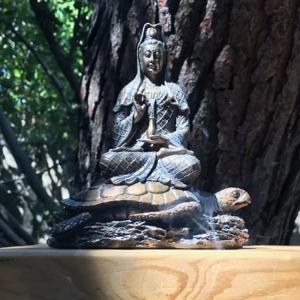


John presents his theoretical framework of the four modes of knowledge production and then Corey and Dustin discuss the framework with John. The four modes are the village shamanic, the city-state yogic, the imperial clerical scholastic, and the nation-state academic.
John talks about the Discourse on Rolling Forth the Wheel of Dhamma (Dhammacakkappavattanasutta) from the Chapter on the Four Noble Truths (Saccasamyutta) of the Great Book (Mahavagga).
Rolling Forth the Wheel of Dhamma (Dhammacakkappavattanasutta)
SN 56:11
https://suttacentral.net/sn56.11/en/sujato?layout=linebyline&reference=none¬es=asterisk&highlight=false&script=latin
The Realized Ones (Tathāgatasutta)
SN 56:12
https://read.amazon.com/?asin=B003XRDC16&ref_=kwl_kr_iv_rec_1
John talks about the chapter on the Eightfold Path (Maggasamyutta) from the Great Book (Mahavagga) in the Samyutta NIkaya. He breaks down the Pali terms for each of the eight limbs that make up the Eightfold Path.
SN 45:1 Discourse on Ignorance (Avijjāsutta)
https://suttacentral.net/sn45.1/en/sujato?layout=plain&reference=none¬es=asterisk&highlight=false&script=latin
SN 45:4 Discourse Regarding the Brahmin Janussoni (Janussonibrahmanasuta)
https://suttacentral.net/sn45.4/en/sujato?layout=plain&reference=none¬es=asterisk&highlight=false&script=latin
SN 45:8 Analysis Discourse (Vibhangasutta)
https://suttacentral.net/sn45.8/en/sujato?layout=plain&reference=none¬es=asterisk&highlight=false&script=latin
John is joined again by fellow former monks from the Thich Nhat Hanh tradition Dat and Jem for the second part of their discussion on Buddhist monastic life. In this episode they talk about their experiences going from being monastics to returning to lay life.
Jem's website from Sweden
https://hjartatsgladje.se/sun-of-wisdom/
Dat's website from France
https://maisonauxcedresbleus.com/
John discusses the Chapter of Mindfulness of Breathing (Anapanasamyutta) from the Book of the Path (Maggavagga) in the Samyutta Nikaya. He compares the 16 exercises of mindfulness of breathing with the 12 links of dependent origination.
Here are the discourses (suttas) discussed.
SN 54:1
https://suttacentral.net/sn54.1/en/sujato?layout=plain&reference=none¬es=asterisk&highlight=false&script=latin
SN 54:8
https://suttacentral.net/sn54.8/en/sujato?layout=plain&reference=none¬es=asterisk&highlight=false&script=latin
SN 54:11
https://suttacentral.net/sn54.11/en/sujato?layout=plain&reference=none¬es=asterisk&highlight=false&script=latin
SN 53:1
https://suttacentral.net/sn53.1-12/en/sujato?layout=plain&reference=none¬es=asterisk&highlight=false&script=latin
AN 5:28
https://suttacentral.net/an5.28/en/sujato?layout=plain&reference=none¬es=asterisk&highlight=false&script=latin
SN 12:1
https://suttacentral.net/sn12.1/en/sujato?layout=plain&reference=none¬es=asterisk&highlight=false&script=latin
John talks about teachings on the 12 links of dependent origination from the Chapter of Links (Nidanasamyutta) from the Book of Links (Nidanavagga) from the Samyutta Nikaya (Conncected Discourses).
https://suttacentral.net/sn12.1/en/sujato?layout=plain&reference=none¬es=asterisk&highlight=false&script=latin
https://suttacentral.net/sn12.2/en/sujato?layout=plain&reference=none¬es=asterisk&highlight=false&script=latin
https://suttacentral.net/sn12.40/en/sujato?layout=plain&reference=none¬es=asterisk&highlight=false&script=latin
https://suttacentral.net/sn12.11/en/sujato?layout=plain&reference=none¬es=asterisk&highlight=false&script=latin
https://suttacentral.net/sn12.63/en/sujato?layout=plain&reference=none¬es=asterisk&highlight=false&script=latin
https://suttacentral.net/sn12.64/en/sujato?layout=plain&reference=none¬es=asterisk&highlight=false&script=latin
https://suttacentral.net/sn12.43/en/sujato?layout=plain&reference=none¬es=asterisk&highlight=false&script=latin
https://suttacentral.net/sn12.29/en/sujato?layout=plain&reference=none¬es=asterisk&highlight=false&script=latin
https://suttacentral.net/sn12.65/en/sujato?layout=plain&reference=none¬es=asterisk&highlight=false&script=latin
John talks about teachings on the six sense bases and on body sensation in the chapter on the sense bases (Salayatanasamyutta) and the chapter on sensations (Vedanasamyutta) from the Book of Sense Bases (Salayatanavagga) from the Samyutta Nikaya (Connected Discourses).
Giving Up SN 35:24
https://suttacentral.net/sn35.24/en/sujato?layout=plain&reference=none¬es=asterisk&highlight=false&script=latin
Immersion SN 36:1
https://suttacentral.net/sn36.1/en/sujato?layout=plain&reference=none¬es=asterisk&highlight=false&script=latin
Giving Up SN 36:3
https://suttacentral.net/sn36.3/en/sujato?layout=plain&reference=none¬es=asterisk&highlight=false&script=latin
An Arrow SN 36:6
https://suttacentral.net/sn36.6/en/sujato?layout=plain&reference=none¬es=asterisk&highlight=false&script=latin
Spiritual SN 36:31
https://suttacentral.net/sn36.31/en/sujato?layout=plain&reference=none¬es=asterisk&highlight=false&script=latin
John talks about the teachings from the Buddha and Sariputta about not identifying with the five aggregates of form, sensation, perception, mental formation, and the six consciousnesses.
SN 22:1 Nakulapitusutta (Nakula's Father Discourse)
https://suttacentral.net/sn22.1/en/sujato?layout=plain&reference=none¬es=asterisk&highlight=false&script=latin
SN 22:2 Devadahasutta (At Devadaha Discourse)
https://suttacentral.net/sn22.2/en/sujato?layout=plain&reference=none¬es=asterisk&highlight=false&script=latin
Rev Dhammabodhi (John Freese) provides a brief introduction to the Samyutta Nikaya (Connected Discourses) from the Pali Canon. Topics include how early Buddhism arose in Greater Magadha in northeast India separate from the Vedic culture or northwest India, how the Samyutta Nikaya may be the oldest collection of teachings in the Pali Canon, and how those teachings are an interconnected system of teachings on the Four Noble Truths from a yogic oral tradition.
John and Dat interview Jem (Chan Pháp Hô) about his experience becoming a monk with Thich Nhat Hanh, training as a novice in Plum Village, and training as a Bhikkshu in Deear Park Monastery where he also served as acting abbot. Jem was a monk for 18 years. He is now a lay Dharma teacher living in Sweden with his wife Emma Dinmali Holmund.
Jem's website Hjärtats Glädje for his teachings in Sweden
https://hjartatsgladje.se/?v=3acf83834396
From the publisher's feed