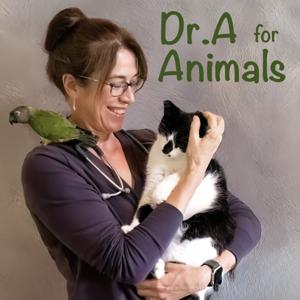
Dr. A for Animals
Download on the App Store

Dr. A for Animals episodes

  • Healthy supplement or snake oil for pets? What works to support animal health and what's just hype
    The world of pet supplements is booming—but are they really necessary? From joint chews and fish oils to probiotics, calming treats, and countless products claiming to boost your pet's health, it can be difficult to separate science from marketing.
    In this episode of Dr. A for Animals, we take a closer look at the evidence behind some of the most popular nutritional supplements for dogs, cats, and other companion animals. We'll discuss which supplements have proven benefits, which ones show promise but need more research, and which may be little more than expensive hype.
    You'll also learn how pet supplements are regulated, why product quality can vary dramatically between brands, and what questions to ask before adding any supplement to your pet's routine. We'll cover common misconceptions, potential safety concerns, and why more isn't always better when it comes to your pet's nutrition.
    Whether you're considering a supplement for an aging dog with arthritis, a cat with digestive issues, or you're simply wondering if your healthy pet needs anything beyond a balanced diet, this episode will help you make informed, evidence-based decisions.
    Join us as we explore what really works, what's still uncertain, and how to choose supplements that support your pet's health—not just the latest marketing trend.

    45 min
  • Should your dog or cat really be eating that? Nutrition for Dogs and Cats: Facts, Myths, and What Really Matters
    This week on Dr. A for Animals, we’re diving into one of the most confusing — and controversial — topics in pet care: nutrition for dogs and cats. With endless advice online and shelves full of foods claiming to be “natural,” “grain-free,” “human-grade,” or “ancestral,” how do pet owners know what’s actually healthy?Joining me is Dr. Amy Farcas, a board-certified veterinary nutritionist to help break down the science behind pet food and separate facts from marketing hype.In this episode, we discuss:
    What truly makes a diet healthy and balanced
    The differences between large pet food companies and boutique brands
    Common myths about ingredients and how to interpret pet food labels
    The pros and cons of homemade diets
    The evidence, concerns, and controversies surrounding raw feedingWhether you feed kibble, canned, homemade, raw, or a combination, this episode is designed to help you make informed, evidence-based decisions for your pets!
    Resources:
    World Small Animal Veterinary Association Nutrition Guidelines
    VeterinaryNutritionCare.com/signup
    Balance.it
    petdiets.com
    vetspecialists.com

    1 hr 48 min
  • Does my pet need all these tests? A guide to understanding diagnostic testing at the vet
    Why does your veterinarian recommend bloodwork when your pet seems perfectly healthy? What can a urine test or X-ray reveal that a physical exam can't? And how do veterinarians decide which tests are truly necessary?In this episode of Dr. A for Animals, we're taking a closer look at veterinary diagnostic testing and the important role it plays in keeping our pets healthy. From routine wellness screenings to advanced imaging, you'll learn what some of the most common tests are, what they can tell us, and how they help veterinarians detect disease early, monitor ongoing conditions, and make informed treatment decisions.We'll also discuss common questions and concerns about diagnostic testing, including cost, stress for pets, and why "normal" test results can be just as valuable as abnormal ones.Whether your veterinarian has recently recommended diagnostic testing or you're simply curious about what happens behind the scenes, this episode will help you better understand the "why" behind these recommendations—so you can feel more confident making healthcare decisions for your furry, feathery, and scaly family members.

    59 min
  • The Basics of Animal Behavior and Training
    Understanding animal behavior is the foundation of a safe, trusting, and joyful relationship with our pets. In this episode, we explore why animals behave the way they do, how they learn from the world around them, and why reward-based training methods are the most effective and humane approach.You’ll learn how to recognize common body language signals, avoid everyday training mistakes, and use simple, practical strategies to encourage the behaviors you want to see. For any of the animals you share your life with, this episode will give you the tools to communicate more clearly, reduce stress, and strengthen your bond through compassionate training.
    Time stamps:1:30: The importance of understanding animal behavior5:00: How behaviors are shaped, nature vs nurture7:10: Normal behavior vs problem behavior and abnormal behavior9:00: Antecedent - Behavior - Consequence11:50: What are positive and negative reinforcement/punishment?23:45: Providing alternate outlets for potentially problematic behaviors26:45: Flooding and learned helplessness29:30: Getting started on training using positive reinforcement40:30: Noticing body language and stress46:45: Desensitization and counter-conditioning51:10: Common mistakes in training or managing behavior 59:00: The importance of basic training and building trust1:00:00: When you need professional help
    1 hr 4 min
  • Can’t stand the heat! Keeping Animals Safe in Hot Weather
    Summer heat can become dangerous for animals much faster than many people realize. In this episode of Dr. A for Animals, we explore the risks hot weather poses to dogs, cats, rabbits, birds, exotic pets, and even wildlife. We discuss why animals are vulnerable to overheating, common situations that lead to heat stroke, and which pets are at highest risk during warm weather.You’ll also learn practical ways to keep animals safe and comfortable during heat waves, how to recognize the warning signs of heat exhaustion and heat stroke, and what to do in an emergency before getting veterinary care. From hot pavement and parked cars to outdoor hutches and wildlife dehydration, this episode is packed with tips to help animals stay safe all summer long.Whether you share your home with a dog, cat, rabbit, bird, reptile, or simply care about the wildlife around you, this episode offers important information that could save a life.
    39 min
  • Season 1 Wrap-Up
    A quick safety announcement for the upcoming holidays, a fun tidbit about really cool animals, and a big thank you!
    3 min
  • Supporting pets through normal aging, age related diseases, and osteoarthritis
    Caring for an aging pet can bring both deep joy and new uncertainty. In this episode, we explore what it truly means for a wide variety of species we love as pets to grow older — including the normal, healthy changes of aging and how to recognize when something more serious may be developing.We discuss the most common medical conditions seen in senior pets, many of which can be successfully managed to maintain comfort and quality of life. Because arthritis is one of the most widespread and under-recognized problems in older animals, we take a deeper look at the subtle signs of pain, available treatment options, and practical ways to make the home environment easier for aging companions.This episode is designed to help pet owners feel empowered rather than afraid of the senior years — with guidance on preventive care, quality-of-life monitoring, and the emotional side of loving an older pet.Aging is natural. Suffering doesn’t have to be.

    Resources:

    Episode 5 on oral health and dental disease: https://podcasts.apple.com/us/podcast/oral-health-and-dental-disease-in-dogs-and-cats/id1852856063?i=1000741808188

    Episode 6 on quality of life, end of life, and coping with grief:  https://podcasts.apple.com/us/podcast/navigating-end-of-life-for-beloved-pets-coping-with-grief/id1852856063?i=1000743400342

    https://pmc.ncbi.nlm.nih.gov/articles/PMC9484193/
    https://pmc.ncbi.nlm.nih.gov/articles/PMC7144988/
    https://pmc.ncbi.nlm.nih.gov/articles/PMC3525174/
    1 hr 31 min
  • Understanding and Managing Your Pets' Medications
    Giving your pet medication can feel confusing, stressful, or even overwhelming—especially if your pet isn’t cooperative. In this episode, we walk through the basics of understanding and managing your pet’s medications, including why medications are prescribed, how to read labels and instructions, tips for giving pills and liquids successfully, and what side effects to watch for. Whether your pet needs short-term treatment or long-term medication for a chronic condition, this episode is designed to help you feel more confident, informed, and supported as a pet parent.

    Resources:
    How to give medications tutorial: https://www.instagram.com/reel/DUpOWKSjsMJ/?utm_source=ig_web_copy_link&igsh=MzRlODBiNWFlZA==

    Time Stamps:1:00: Medications for animals4:40: Various formulations for medications5:30: Compounded and transdermal medications11:20: Generic drugs13:20: Off-label prescribing19:20: Medication labels - what’s required, and what it all means27:50: Timing of medication administration29:50: Getting the medication into the animal with minimal stress40:00: Do’s and don’t’s of giving medication in food45:30: Giving pills directly to dogs and cats 50:20: Giving liquid medication directly 52:00: Towel wrap for “handsy” pets54:55: Applying topical medications for skin, ears, eyes1:00:00: Applying transdermal medications1:02:00: Giving injectable medications1:13:00: Side note - don’t scruff the cat!1:15:30: What to do if your pet absolutely refuses all routes of medication1:21:40: Adverse drug reactions, when it’s manageable, when it’s an emergency1:37:00: Storing and handling medications1:38:00: Missed doses1:41:00: Long term/chronic medications and monitoring, managing costs1:49:00: Follow up
    1 hr 53 min
  • The Wild Side - How to Reap the Benefits of Nature Exposure While Protecting Wildlife, Habitats, and Our Pets
    This episode delves into the effects of nature exposure on human health and how we can enjoy and experience nature while minimizing our impact and helping to protect the animals and land around us. We discuss how to keep pets safe from wildlife, how to handle unwanted wildlife encounters, and how to help an injured wild animal.
    Resources:
    Cornell Lab of Ornithology: www.allaboutbirds.org
    Merlin Bird ID app: https://merlin.allaboutbirds.org/
    National Wildlife Federation: www.nwf.org
    Studies mention:
    https://www.nature.com/articles/s41598-022-20207-6?utm
    https://www.mdpi.com/2076-328X/15/2/153?utm
    https://pubmed.ncbi.nlm.nih.gov/24697969/
    https://pubmed.ncbi.nlm.nih.gov/39209768/

    Time stamps:1:00: How nature exposure affects human health8:40: Getting into nature: watching birds15:40: Feeding wild birds - pros, cons, and how to do it right31:30: Providing water sources for wildlife34:00: Handling unwanted wildlife interactions and “nuisance” wildlife55:30: Encountering injured or orphaned wildlife - what you can do1:09:00: Keeping pets safe from wildlife and wildlife safe from pets1:25:00: Making yourself a good steward of the land

    1 hr 37 min
  • Recognizing and managing thyroid disease in dogs and cats
    Is your senior cat losing weight but eating like a champ? Or has your dog been slowing down, gaining pounds, and losing that shine in their coat? These could be clues that your pet’s thyroid — a tiny gland with a big job — isn’t working as it should.In this episode, Dr. A breaks down how the thyroid regulates your pet’s metabolism and what happens when things go off balance. You’ll learn about hypothyroidism in dogs, hyperthyroidism in cats, and even a rare congenital form that can affect kittens. We’ll cover symptoms to watch for, how veterinarians diagnose these conditions, and the good news: with the right treatment, most pets live full, healthy lives.Whether you’re a curious pet owner or just love learning about animal health, this episode will help you understand how this little gland keeps your furry family members feeling their best.
    Time stamps:1:00: Basics of thyroid function5:45: Thyroid dysfunction - hypo and hyper6:38: Hypothyroidism in dogs, causes and symptoms10:00: Diagnosing hypothyroidism13:58: Treatment, monitoring, and prognosis for hypothyroidism16:20: Hyperthyroidism in dogs16:58: Hyperthyroidism in cats, causes and symptoms24:50: Diagnosing hyperthyroidism30:02: Treatment options for feline hyperthyroidism and monitoring concurrent conditions47:00: Monitoring and prognosis for hyperthyroidism49:15: Hypothyroidism in kittens, cause and symptoms55:00: Treatment for hypothyroidism57:30: Importance of regular senior check-ups58:15: Thyroid supplements
    1 hr 1 min

About Dr. A for Animals

From the publisher's feed

Join veterinarian Sharla Ansorge as she guides you through a wealth of science-supported information that will help you help animals. From learning how best to navigate your pets' health care and…