
Sign up to save your podcasts
Or



📌 If you're in Pennsylvania and want a complete psychiatric evaluation, contact Blue Mountain Psychiatry through https://bluepsychiatry.org
A simple cheek swab could explain why your antidepressant never worked. Two people can take the same pill at the same dose and have completely different experiences, and that difference is not random. It often comes down to genetics.
In this video, I'm going to explain how pharmacogenetic testing works, what the report actually tells a psychiatrist, and why the test alone can never replace clinical judgment.
⏱️ TIMESTAMPS
0:00 BREAKTHROUGH: A Simple DNA Test Could Change How Your Depression Is Treated
0:34 Who should watch this video
1:04 What a cheek swab test actually checks
1:49 Why the same antidepressant affects people differently
3:01 How genetic data changes dosing decisions
4:00 What the genetic report actually shows
5:37 The biggest mistake patients make reading these reports
7:15 Why DNA alone cannot explain your depression
9:14 What your genes cannot tell your doctor
11:24 Who should consider genetic testing
❓ QUESTIONS ANSWERED
What does a pharmacogenetic test for depression actually measure?
It checks genetic differences in the enzymes your body uses to process psychiatric medications. This helps predict whether a drug might build up too high, work too slowly, or carry a higher side effect risk for you specifically.
Can a DNA test tell me which antidepressant will work best?
No single test can guarantee which medication will work. It shows how your body may handle certain drugs, but a psychiatrist still has to combine that information with your medical history and symptoms to make a decision.
Who should consider genetic testing for antidepressants?
People who have already tried several medications with unusual or severe side effects are the best candidates. It is also useful when a patient and psychiatrist cannot explain why a seemingly reasonable treatment failed.
🎥 RESOURCES
Blue Mountain Psychiatry: https://bluepsychiatry.org
More from Dr. Rifai: https://www.drrifai360.com
Patient testimonials: https://www.kernelhelmet.com
🔔 If you found this helpful, subscribe for more straight talk on psychiatry, brain health, and what actually works when standard treatment has not.
💬 Have you ever had a strange or unexpected reaction to an antidepressant? Tell me about it in the comments, it may be more connected to your genetics than you think.
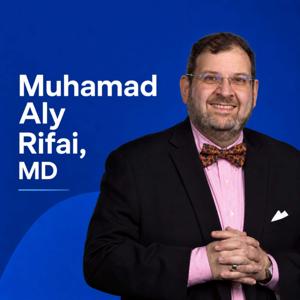
ABOUT DR. MUHAMAD ALY RIFAI
Dr. Muhamad Aly Rifai, MD, is a physician who practices adult psychiatry, internal medicine, addiction medicine, and consultation liaison psychiatry. He is board certified in Internal Medicine, Psychiatry, Consultation Liaison Psychiatry, and Addiction Medicine. He is a Distinguished Fellow of the American Psychiatric Association, a Fellow of the American College of Physicians, and a Fellow of the Academy of Consultation Liaison Psychiatry, and he completed advanced fellowship and research training at the National Institute of Mental Health and the National Institutes of Health. He leads Blue Mountain Psychiatry, an independent practice focused on complex psychiatric care, telepsychiatry, interventional psychiatry, and integrated medical psychiatric treatment. Over more than 25 years in practice, he has cared for close to 25,000 patients.
#Antidepressants #TreatmentResistantDepression #Psychiatry #MentalHealth #DepressionTreatment
📌 If you're in Pennsylvania and want a complete psychiatric evaluation, contact Blue Mountain Psychiatry through https://bluepsychiatry.org
If your antidepressant stopped working, the answer is not always another prescription. Many people end up on a rotating carousel of medications, changing doses, adding new pills, and still never feeling better. There is one mistake driving this cycle, and both patients and psychiatrists can fall into it.
In this video, I'm going to explain the biggest mistake people make when an antidepressant stops working and walk you through what I actually look at before recommending another medication.
⏱️ TIMESTAMPS
0:00 Psychiatrist Warns: Don’t Make This Mistake With Antidepressants
0:42 Why switching medications does not answer the real question
1:33 What I look for when three or four antidepressants fail
2:30 How medical problems can look like depression
3:36 Why complex cases need more than a quick medication visit
4:12 When medications pile up without anyone noticing
5:40 How caffeine, alcohol, and sleep aids quietly sabotage treatment
7:07 High functioning but exhausted, the hidden layer
8:43 Are we even treating the right condition
10:02 Genetic testing and what medication number five should look like
❓ QUESTIONS ANSWERED
Why does my antidepressant stop working even after switching medications several times? Often the issue is not the antidepressant itself but an unrecognized medical problem, medication interaction, substance use, or sleep disorder that has never been addressed. Simply trying another medication without reviewing the whole picture rarely solves the underlying issue.
Should I try genetic testing before starting a new antidepressant? Genetic testing can offer useful information about why certain medications have not worked, but it does not replace clinical judgment or a full evaluation. It works best as one additional data point alongside a complete review of your medical and medication history.
What should I ask before starting medication number five? Ask why the previous medications did not work. If nobody has clearly answered that question, the next medication should be chosen based on what was learned from the ones that failed, not as another guess.
🎥 RESOURCES
Blue Mountain Psychiatry: https://bluepsychiatry.org
More from Dr. Rifai: https://www.drrifai360.com
Patient testimonials: https://www.kernelhelmet.com
🔔 If you found this helpful, subscribe for more straight talk on psychiatry, brain health, and what actually works when standard treatment has not.
💬 Have you ever felt like your only option was to try yet another medication? Tell me what happened in the comments.
ABOUT DR. MUHAMAD ALY RIFAI
Dr. Muhamad Aly Rifai, MD, is a physician who practices adult psychiatry, internal medicine, addiction medicine, and consultation liaison psychiatry. He is board certified in Internal Medicine, Psychiatry, Consultation Liaison Psychiatry, and Addiction Medicine. He is a Distinguished Fellow of the American Psychiatric Association, a Fellow of the American College of Physicians, and a Fellow of the Academy of Consultation Liaison Psychiatry, and he completed advanced fellowship and research training at the National Institute of Mental Health and the National Institutes of Health. He leads Blue Mountain Psychiatry, an independent practice focused on complex psychiatric care, telepsychiatry, interventional psychiatry, and integrated medical psychiatric treatment. Over more than 25 years in practice, he has cared for close to 25,000 patients.
#Antidepressants #TreatmentResistantDepression #Psychiatry #MentalHealth #DepressionTreatment
From the publisher's feed
Muhamad Aly Rifai, MD (Dr. Rifai) - The Virtual Psychiatrist is a channel for expert insight on psychiatry, telepsychiatry, mental health, addiction medicine, brain health, and physician…