DurablePicks

DurablePicks

By
Download on the App Store

All DurablePicks episodes

  • Timbuk2 Clark Backpack Graded on What Kills Commuter Bags
    The one-line rule: the Timbuk2 Clark backpack is buy-it-for-life if you will maintain it, a pass if you won't, and worth a laptop liner either way.
    Structurally it clears the bar for a 15-inch commuter: load paths are repairable, repairs are cheap, and structural failures are warranty-plausible. Hydrologically it is a maintenance contract, a renewable coating and a shower-grade zipper doing downpour work over your most expensive cargo. Owners who honor the contract get a decade or more. Owners who won't should jump to the alternates below.
    ## Alternates if the Clark Falls Short
    Gate the alternate to whichever mode failed you, not to brand loyalty. The best commuter backpack for rain is rarely the best BIFL commuter backpack for a 15 inch laptop, so trade-offs are the point.
    | Pack | Fixes which Clark weakness | Rain defense | After-sale story | Trade-off |
    |---|---|---|---|---|
    | GoRuck GR1 | Stitch and anchor durability | Weather-resistant, not waterproof | [Scars lifetime guarantee](https://www.goruck.com/pages/scars-lifetime-guarantee), famously broad | Heavy, tactical silhouette |
    | Tom Bihn commuter packs | Repair economics and build care | Water resistant, like the Clark | [Tom Bihn's warranty terms](https://www.tombihn.com/pages/warranty) plus a repair-friendly ethos | Price, occasional waits |
    | Ortlieb welded packs | The zipper problem entirely | Genuinely waterproof, welded TPU | Robust and simple | Sweat-prone back, utilitarian looks |
    If rain disqualified the Clark, [Ortlieb's welded waterproof packs](https://us.ortlieb.com/collections/waterproof-backpacks) delete the failure mode instead of managing it, which is the right answer for a sustained-rain city. If structure was the worry, the GR1 overbuilds exactly the anchors that kill other bags, at a weight and aesthetic cost. If long-horizon repair economics drove the decision, Tom Bihn is the design-led counterargument. None of these is sleeker than the Clark; all three out-specialize it.
    ## The Maintenance Plan for a Decade of Commutes
    This schedule closes all four loops, and it works on the commuter pack already in your closet:
    - **After every soaked commute:** empty the pack and air it fully. Storing it damp degrades the coating and invites mildew, a kill mode nobody budgets for.
    - **Monthly:** brush zipper teeth clear of grit and wipe shell grime away. Dirt is a DWR accelerant, and gritty coils chew up slider bodies.
    - **Each rainy season, two to four times:** run the bead test. Wetting out? Clean, spray with re-proofer, dry per the instructions. That is the coating loop closed on schedule instead of at failure.
    - **Twice a year:** inspect every bar-tack and stitch row where straps meet the body, and photograph any fray. Dated photos make defect claims dramatically easier.
    - **Yearly:** press the sleeve foam and confirm the laptop still sits above the pack floor. That is the suspension loop.
    The Reddit poster's real choice, and yours, reduces to this: $269 plus about an hour per season of attention buys a decade of service, or the same money buys two or three disposable packs and at least one nervy walk home in a downpour. The Timbuk2 Clark backpack rewards the first kind of owner. Everyone else has the table above, and the pack in the closet can start this schedule this week.]]>
    0 min
  • The Best Tool Belt Is the One That Fails Last
    **Cost per year = (purchase price + expected repairs) รท years of service life**
    Assume daily trade use, roughly 200 days a year or more, mixed weather, and basic care. Lighter use stretches every band upward. Here is a tool belt cost per year comparison using typical assumption bands. Rerun it with today's prices before you buy.
    | Tier | Example | Assumed price | Assumed life | Cost per year |
    |---|---|---|---|---|
    | Big-box consumer | Hardware store nylon | $60 | 1.5 years | $40 |
    | Mid-tier repairable | Ballistic nylon system | $130 | 4 years | $33 |
    | Heirloom leather | Occidental-class framer set | $320 | 12 years | $27 |
    Read the fine print. If neglected leather dies at year 8, it costs $40 per year, dead parity with cheap-belt churn, and you carried a stiff rig for nothing. Maintenance is the swing variable, which is why the care section below earns its place.
    Warranty and repair policy is the hidden column in that table, and makers vary widely. [Husky warranty coverage](https://www.homedepot.com/c/huskywarranty) is easy to check before you buy a big-box belt, though its fabric gear terms differ from its hand tool coverage. Some mid-tier and premium makers publish repair and rebuild programs that push service life well past the table's assumptions, which can materially improve a per-year number. A no-support brand quietly adds replacement cycles to your total.
    ## The Best Tool Belt for Framers, Electricians, and General Contractors
    ![A tool belt for framers must carry heavy daily loads, so riveted hammer loops and stitched-through pouch attachments are non-negotiable.](https://images.pexels.com/photos/35686205/pexels-photo-35686205.png?auto=compress&cs=tinysrgb&h=650&w=940)
    Here are the ranked picks for the best tool belt by trade, judged only on how each one handles the five failure points.
    ### Framers, Occidental Leather
    Framers load heavy and stress exactly the parts that fail first, the hammer loop and the bag-to-belt attachment. Heirloom leather rigs answer both with riveted, stitched-through construction and leather that improves with break-in. The [Occidental Leather framer lineup](https://www.occidentalleather.com/collections/framers) is the reference point, premium-priced and aimed at people who buy once. What seals the per-year math is that Occidental runs a [warranty and repair program](https://www.occidentalleather.com/pages/warranty-repair), so a torn loop can be rebuilt instead of replaced. Badger, now built under the Occidental umbrella, shares the same construction philosophy at similar money.
    ### General Contractors, Diamondback or a Mid-Tier Nylon System
    GCs and remodelers change loads daily, so modularity and repairability beat material prestige. A [Diamondback tool belt](https://toolbelts.com/pages/warranty) is the best-known modular nylon system, with movable pouches and a published warranty covering the wear that kills cheaper rigs. One honest caveat. Diamondback shifted production overseas and was acquired by Blaklader within the last few years, and long-term reports from the new setup are still coming in, so buy through a retailer with easy returns. If you want mid-tier value without the question mark, Custom LeatherCraft's ballistic nylon rigs cost a fraction of heirloom leather, carry a [limited warranty](https://toolexperts.com/en/tool-bags-custom-leather-craft-clc/tool-backpack-organizer-carrier-clc-customer-leathercraft.html), and pair replaceable rivets with cheap replacement pouches, the best cost-per-year play for mixed trade work.
    ### Electricians, Klein Leather
    Electricians carry lighter loads but need tool retention and non-marring pockets for finished spaces. The Klein [electrician tool belt](https://www.kleintools.com/catalog/electricians-tool-belts/electricians-leather-tool-belt-medium) in leather is the trade benchmark, with molded, leather-secured tool slots instead of floppy loops that drop pliers, and Klein's dealer network means you can usually resolve fit in person instead of paying return shipping. The leather version outlasts the vinyl alternatives by a wide margin.
    ### The Caution on Sub-$100 Consumer Belts
    If your belt earns its keep at work, the sub-$100 wall is the most expensive shelf in the store. These rigs commonly fail at the same stitched connections within a season or two of daily use, and no warranty replaces the hammer that lands on concrete when a loop lets go.
    ## The Two Minute Store Aisle Inspection
    This is how to inspect a tool belt before buying. It works on every brand and skips the marketing entirely.
    1. **Tug the hammer loop** hard, away from the pouch body. Look for stretch and daylight at the stitch line.
    2. **Count stitches per inch.** Durable belts run tight, consistent rows. Widely spaced stitches spread the same load over fewer threads.
    3. **Grab a pouch and tug off-axis.** Any lift or tearing motion at the bag-to-belt seam disqualifies the belt for trade use.
    4. **Thumb every rivet.** Sharp edges saw thread. Rivets should sit tight, ideally with backing washers.
    5. **Flex the buckle.** Stamped metal visibly twists. Roller and cast hardware feels solid and pivots smoothly.
    6. **Inspect edges and grommets.** Fraying, distorted holes, or pale, sun-faded panels mean the material is already losing.
    Two minutes, no tools, and you know more than most buying guides ever test.
    ## Care and Repair That Extends a Belt for Decades
    Match the care to the failure mode and lifespan multiplies.
    **Leather.** Dry rot prevention is the whole game. Never dry wet leather next to a heater, let it air-dry slowly, and condition it a few times a year with a neutral dressing. The [dry rot causes and prevention](https://www.barismil.com/blogs/shoe-care/dry-rot-in-shoes-causes-and-prevention-guide) playbook from shoe care applies directly, since neglect, heat, and wet-to-bone-dry cycling kill both the same way. Cracking starts at flex points, so check the hammer loop base monthly and condition before the chalky look appears.
    **Nylon.** Rinse off concrete dust and mud, then dry the belt out of direct sun, because UV exposure weakens nylon over time. Store it hung rather than crammed in a truck box where mold gets a dark, damp start.
    **Repairs.** Catch a failing stitch early and a saddler or cobbler can re-sew it for pocket change. Rivet and buckle repair is a five-minute job with a rivet press or a trip to a leather shop, since the hardware is standard. Rebuild beats replace whenever the shell is still sound. A re-stitched loop on good leather outlasts a fresh loop on cheap leather, because the material was always the part worth keeping.
    ## Who Should Buy Which Tier
    Decision rules by usage intensity:
    - **Daily trade use, any trade.** Buy heirloom leather or a modular, repairable nylon system. The per-year math favors you, and warranty support protects the investment.
    - **Regular mixed use, GCs and remodelers.** Mid-tier repairable nylon hits the value sweet spot, especially if you move pouches between tasks.
    - **Seasonal pro or heavy DIY.** Mid-tier still wins, because lighter use stretches even that band across many years.
    - **Occasional weekend use.** Here is the honest case for the cheap belt. If it leaves the shop a dozen times a year, a $60 rig can serve close to a decade, and the premium tiers never amortize. The cheap belt is only a mistake when it goes to work every day.
    One-line verdicts. Framer, buy the Occidental-class leather rig once. Electrician, buy the Klein leather belt. General contractor, buy modular and repairable. Weekend builder, the best tool belt for you is the cheap one with good stitching, inspected with the same two-minute checklist, because the failure points do not care what you paid.]]>
    0 min
  • Buy It for Life Couches Ranked by the Parts That Fail First
    **The decision rule:** repair money follows the frame. A repair is rational on a kiln-dried hardwood frame and irrational on a stapled engineered-wood one, because only the first is failing at a rate its upholstery can outlive.
    Run the cost per decade, using illustrative assumptions (typical US pricing, normal household use, no catastrophic damage):
    | Ownership path | Outlay pattern | Realistic service life | Rough cost per decade |
    |---|---|---|---|
    | Cheap stapled sectional, replaced at failure | About $700 each | 4 to 5 years | Roughly $1,400 to $1,750 |
    | Serviceable hardwood sofa (about $1,200), re-core near year 8, reupholster near year 15 | $1,200 plus a few hundred for foam, plus reupholstery later | 20+ years | Roughly $700 to $1,200 |
    | $3,000 statement sofa on the same stapled frame | $3,000 per unit | 6 to 8 years | Roughly $3,750 to $5,000 |
    The $3,000 sofa is the worst deal on the board when its frame is stapled, because you pay the fashion premium twice per decade. The roughly $1,200 serviceable couch costs less per decade than any of these and is the only one worth repairing, which closes the loop opened in the intro.
    ## Where to Find Buy It for Life Couches and Keep Them Alive
    Serviceable construction is not exotic, but you find it at bench-made and domestic upholsterers rather than in the fast-furniture aisle. The tell is the spec sheet. A maker worth buying from will name the frame species and drying, the joinery, the spring gauge and retention, and the seat core density in lb/ft3, because that information is their sales pitch. Red-flag vocabulary is anything vague: "hardwood solids," "select hardwoods," "premium foam." Read the warranty terms rather than the headline, too. Long, non-prorated coverage on frame and springs tells you which maker actually expects the couch to survive.
    If you are buying a durable sectional, one more failure point matters: the connectors. Bolted metal interlocks keep modules pulling together as one rigid unit. Tab-and-slot plastic hardware lets each module rack independently, which works the frame joints loose at exactly the rate described above.
    Keeping the couch alive is low-effort work aimed at each kill zone. Rotate and flip loose cushions monthly so foam compresses evenly. Vacuum the deck and crevices, because ground-in grit acts as an abrasive on both fabric and springs. Re-tighten legs and connector bolts once a year. Put a washable throw over the arm your dog claims. When you move the couch, lift it rather than dragging, since dragging racks the frame the same way bad joinery does.
    The final framework, applied to any couch you ever meet: grade the frame first because it is terminal, the springs second, the foam third, the fabric last. Spend in that order and accept plainer fabric over a weaker frame, because fabric and foam are repairable and joinery is not. That is what buy it for life couches actually are, not a brand on a list but a couch you can grade, repair, and keep.]]>
    0 min
  • Denier Fabric Is a Weight, Not a Durability Rating
    Fiber, weave, coating, construction, denier. Sixty seconds, in that order.
    How to tell if a backpack will last years turns out to be a construction question wearing a fabric costume, and now you can see through it. So when a hangtag shouts a four-digit denier at you, nod politely, then turn the bag inside out and read the back of the cloth. That is where the truth is stored.]]>
    0 min
  • Coffee Bean Storage Canister Ranked by 10-Year Survival
    If you finish a bag every two weeks, spend nothing. If you buy a canister, buy the one whose wearing part is a $12 gasket instead of a $45 lid.
    The verdict by reader type. Weekly fresh buyer: the free bag wins outright. Bulk buyer or two-bean household: Airscape Classic, spare gasket in the pantry. Valve-chemistry believer: Friis, with a few dollars a year budgeted for valves. Vacuum enthusiast who loves the ritual: Atmos, eyes open about the lid.
    ## Maintenance That Stretches Any Canister Past Ten Years
    Whatever you own, the parts that die are the soft ones, so the care plan targets them:
    1. **Hand wash only.** Dishwasher heat hardens silicone and swells polymers, which is how gaskets die early.
    2. **Degrease gaskets and seals monthly** with warm water and mild soap, drying fully before reassembly. Coffee oil is what turns a plunger gasket stiff and a one-way valve clogged, and a routine for [cleaning coffee oils off canisters](https://gadgetsfeed.com/how-to-clean-coffee-canister/) keeps both breathing.
    3. **Swap Friis valves on the cadence** printed on the valve pack rather than waiting for staleness you can taste.
    4. **Keep Atmos threads and seals oil-free**, and stop at the indicated twist. Over-cranking accelerates exactly the o-ring wear that ends the vacuum.
    5. **Buy one spare gasket or lid kit when you buy the canister.** Parts catalogs get pruned, and a $12 spare bought in year one is cheap insurance for year eight.
    6. **Park it away from the stove and window.** Heat and light are two of the four staling vectors, and the canister only truly blocks one.
    Do that and the decade math above turns conservative. Any of the steel options can outlast ten years of daily brewing. The bag never needs to, because the next one is always free, and that is the quiet punchline of coffee storage. The chemistry was never the hard part.]]>
    0 min
  • Buy It for Life Sunglasses Ranked by UV Survival
    )), the US equivalent for nonprescription sunglasses.
    Polarized vs UV protection is the most common confusion at this stage. Polarization filters reflected glare and says nothing about ultraviolet blocking; a polarized lens with no UV certification fails you on the only axis that protects the eye. Drop the dark-tint heuristic too. Behind a very dark lens with no UV filtering, the pupil dilates and the eye can admit more radiation than it would with nothing on at all, the mechanism Columbia's health service covers in its [dark lens explainer](https://goaskalice.columbia.edu/answered-questions/are-darker-sunglasses-worse-your-eyes). A certified light tint protects. An uncertified black one can injure.
    How long do sunglass UV coatings last? No standard certifies a lifespan; it depends entirely on abrasion, cleaning habits, and heat. Treat coated lenses as consumables and substrate-filtered lenses as permanent until their optics fail, not their protection.
    ## Wraparound vs Oversized, Which Shape Blocks More UV

    ![Wraparound sunglasses UV protection comes from a close side fit that blocks peripheral light, not from stronger frontal filtering.](https://images.pexels.com/photos/37310420/pexels-photo-37310420.jpeg?auto=compress&cs=tinysrgb&h=650&w=940)
    Do wraparound sunglasses block more UV than oversized frames? With equally certified UV400 lenses, frontal blocking is effectively identical between the two. Shape changes two other things.
    First, peripheral ingress. Solar UV scatters off sky, water, and pavement and reaches the eye from oblique angles, around the edges of the frame. Peer-reviewed measurement of [peripheral UV exposure](https://www.nature.com/articles/s41598-023-50831-9) suggests the side contribution can be a meaningful fraction of the UV reaching an eye even while a front lens is worn. The wraparound sunglasses UV protection advantage is real but narrow: it is about side light, not stronger filtering.
    Second, skin. Oversized frames shade more eyelid and cheek, the periorbital zone where skin cancers commonly develop, and both the [Skin Cancer Foundation](https://www.skincancer.org/skin-cancer-prevention/sun-protection/eye-protection/) and the [AAO sunglasses guidance](https://www.aao.org/eye-health/glasses-contacts/sunglasses-3) favor close-fitting or wrap styles partly for this reason. A bigger lens is, crudely, a bigger hat for your face.
    Note what did not make the list: arm thickness. Thin temples matter far less than gapping at the temple and cheekbone. A wrap that stands off the face leaks side light anyway, and an oversized frame that rides high leaks from above.
    > **Verdict:** open water, snow, high altitude, or driving into low sun favors wraparound. Eyelid and cheek coverage, or style latitude, favors oversized with certified lenses. Arm thickness is a red herring either way; fit against the face is what counts.
    ## Lens Materials Graded Over a Decade of Abrasion
    Every sunglasses lens material comparison trades the same five properties. The glass vs polycarbonate sunglasses durability debate is really a fight between two kinds of survivability, scratch resistance and impact resistance. A [full material guide](https://www.sailook.com/sun-lens-material-guide-cr-39-polycarbonate-trivex-glass-nylon-and-tac-compared/) covers the range; the decade view looks like this.
    | Material | Scratch resistance | Optics | Impact resistance | Weight | UV filter location |
    |---|---|---|---|---|---|
    | Mineral glass | Excellent | Excellent | Poor, can shatter | Heavy | Doped melt or coating |
    | CR-39 | Fair to good | Very good | Moderate, brittle | Moderate | Coating or additives |
    | Polycarbonate | Poor, marks readily | Good | Excellent | Light | Inherent to substrate |
    | Trivex | Good | Very good | Excellent | Very light | Inherent to substrate |
    Glass takes a decade of wiping and sandy towels and stays clear; drop it on tile and the story changes. Polycarbonate survives the drop and the face-plant but collects haze from cleaning grit. Trivex, profiled on [PPG's Trivex material page](https://www.ppg.com/en-US/optical/trivex-lens-material), splits the difference, with impact toughness near polycarbonate, optics close to glass, and the lightest weight of the group.
    So does a scratched sunglass lens lose UV protection? On substrate-filtered polycarbonate and Trivex, no. Scratches scatter light and wreck clarity while the filtering itself remains, because the filter is the lens. On a coated glass or CR-39 lens, a scratch that penetrates the treatment has plausibly removed the filter in that spot. That distinction reframes damage entirely: on a parts-supported frame, a scratch is a maintenance event, not a funeral.
    ## Hinge Fatigue and the One-Handed Removal Problem
    Almost nobody removes sunglasses with two hands, so the spring hinge vs barrel hinge sunglasses question is really a question about which architecture absorbs that daily abuse.
    - **Screw-barrel hinges** (the standard barrel with screws) are the most serviceable. You or an optician can tighten or replace screws in minutes, and failure arrives gradually. Over ten years, repairability wins.
    - **Spring (flex) hinges** absorb one-handed stress with a coil or flex cable inside the temple, which is genuinely gentler on the frame. When the mechanism finally fails, the repair is fiddlier and often not economical, as a practical [spring hinge guide](https://www.glassesshop.com/blog/exploring-spring-hinge-types-for-glasses) lays out. Comfort now, harder triage later.
    - **Riveted or pin hinges**, classic on aviators, stamp the barrel into soldered frame joints. Simple, nearly indestructible when well-made, and correctable by careful bending when they loosen.
    The mount matters as much as the mechanism. Monel and titanium hold screws and tolerate repeated adjustment; acetate hinge wells can dry out and crack, taking the barrel with them; nylon flexes instead. The most repairable hinge usually beats the cleverest one, because the decade belongs to whatever a screwdriver can reach.
    ## Replacement Lens Economics and Cost per Decade
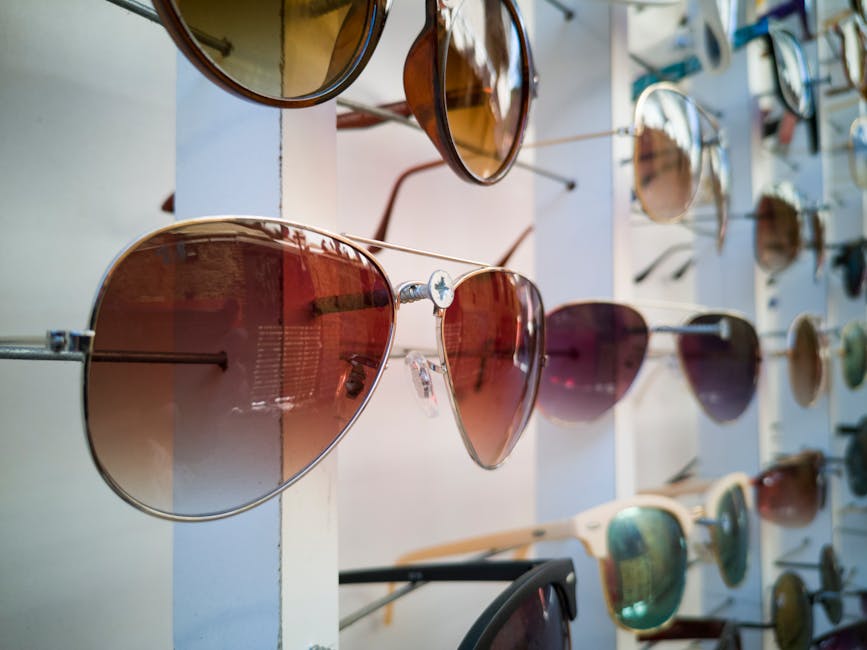
    ![Replacement lenses for sunglasses turn a deep scratch into an affordable maintenance step instead of retiring the whole frame.](https://images.pexels.com/photos/2767694/pexels-photo-2767694.jpeg?auto=compress&cs=tinysrgb&h=650&w=940)
    Which sunglass brands sell replacement lenses? That question decides more of your decade cost than any frame material, because replacement lenses for sunglasses convert scratches from retirement events into maintenance line items.
    Run the treadmill math with the assumptions on the table. Gas-station pairs at $15, replaced two or three times a year (scratched, sat on, lost to the lake), run $30 to $45 annually, or $300 to $450 per decade. A $200 serviceable platform plus one replacement lens set at $60 to $100, plus incidental nose pads and screws, lands around $270 to $320 for the same ten years, at a far higher optical standard the entire time.
    | | Disposable treadmill | Serviceable platform |
    |---|---|---|
    | Upfront | ~$15 | $150 to $250 |
    | Typical annual spend | $30 to $45 | Near zero |
    | Scratch outcome | Buy again | $60 to $100 lens set |
    | Decade total | $300 to $450 | Roughly $270 to $350 |
    | Optical quality | Declines from day one | Restored on each refresh |
    The ecosystems make this work. Maui Jim, Costa Del Mar, and Oakley all run brand-direct repair or lens replacement programs, and mature third parties like [Revant Optics](https://www.revantoptics.com/) cut precision lenses for Oakley, Costa, Ray-Ban, and other popular frames, often for less than manufacturer service.
    ## The Five Best Buy It for Life Sunglasses, Ranked
    These buy it for life sunglasses picks are scored on this article's axes: filter location, decade lens behavior, hinge serviceability, parts availability, and warranty. Program terms change, so verify each maker's current policy before buying.
    | Pick | Lens and filter | Hinge | Parts and warranty | Decade verdict |
    |---|---|---|---|---|
    | Randolph Engineering Aviator | Mineral glass or polycarbonate | Riveted barrel in soldered steel | Lifetime coverage plus paid repair, [Randolph warranty page](https://www.randolphusa.com/pages/warranty) | Most serviceable platform here |
    | Serengeti Drivers | Photochromic mineral glass, doped | Screw barrel in metal | Brand repair ecosystem | Best driving optics, real weight |
    | Maui Jim | SuperThin glass or polycarbonate | Screw barrel, varies by model | Brand lens replacement program | Best scratch recovery ecosystem |
    | Costa Del Mar | 580 glass or polycarbonate | Screw and spring by model | Brand lens replacement program | Best for water glare |
    | Oakley | Prizm polycarbonate, inherent UV | Screw and spring by model | OEM plus deep aftermarket | Cheapest refresh cycle |
    One-line verdicts:
    1. **Randolph Engineering** builds the aviator as industrial equipment: soldered joints, a riveted hinge, published lifetime coverage, and a repair service. The frame is the platform; the lens is the consumable.
    2. **Serengeti** bets on photochromic glass that out-abrades everything else here. Accept the weight and watch the coating question on doped lenses.
    3. **Maui Jim** pairs polarized glass or polycarbonate with a replacement process, making it the ecosystem where a scratch hurts least.
    4. **Costa Del Mar** matches 580 glass to a strong replacement program and water-first ergonomics.
    5. **Oakley** leans fully into the substrate camp with polycarbonate Prizm lenses and interchangeable-lens sport frames, the fastest refresh path.
    Value alternate: the **American Optical Original Pilot**, the mil-spec ancestor of this category, glass lenses, monel frame, typically well under the Randolph price. Fewer service options, identical hinge architecture.
    ## A Decade Care Routine and What Kills Glasses Early
    The platform only pays off if you stop committing the four routine murders:
    1. **Dry-wiping.** Dragging grit across a lens with a shirt tail is how abrasion haze is manufactured. Rinse or blow off dust first, then wipe with a damp microfiber cloth.
    2. **Dashboard storage.** A car dashboard is an oven; heat stresses coatings and warps frames at the hinge wells. Use a rigid case, and keep it out of the sun.
    3. **One-handed yanking.** Spring hinges tolerate it; barrel hinges do not. Train the two-hand habit or budget for earlier service.
    4. **Ignoring the first wobble.** A quarter-turn on a loose screw today is a five-minute fix. The same screw lost on a trail is a shop visit.
    Add periodic hinge checks and a freshwater rinse after saltwater days, and a good platform will still be protecting you in year ten, for roughly what the gas-station habit would have burned anyway, with one frame instead of a drawer of dead ones. That is the whole promise of buying once: protection that lives in the material, a hinge a screwdriver can reach, and a scratch that costs a lens instead of the pair.]]>

    0 min
