
Sign up to save your podcasts
Or

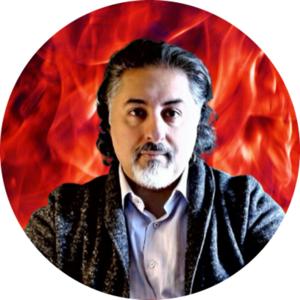


#53 ITW Roy Melzer - What Makes the Uniqueness of Israeli Startups & Innovation Ecosystem?
Israel is a global leader in technology and innovation, consistently producing successful startups and groundbreaking technologies.
Despite being a relatively small country, Israel has managed to develop a thriving ecosystem for tech startups, characterized by strong government support, a vibrant tech community, and a culture of innovation and entrepreneurship.
At the forefront of this ecosystem is Roy Melzer, a renowned Patent Attorney and Computer Engineer with extensive experience in developing IP portfolios for startups and providing due diligence analysis. As the Head of Computing Technologies at the Reichman University and Head of Software and Information Systems at The Ehrlich Group, Roy Melzer has a unique perspective on the Israeli startup landscape.
During our live stream, Roy will share his insights on what makes the Israeli startup ecosystem so successful, with a particular focus on how Israeli startups leverage their unique strengths to succeed in a highly competitive global market. He will shed light on the challenges facing Israeli startups and how they are able to overcome them, as well as exploring the key factors that have contributed to Israel's status as a global tech powerhouse.
Roy's presentation promises to be a fascinating and informative look into what makes the Israeli tech ecosystem so special. So don't miss out on the opportunity to learn from one of the best in the business.
https://www.linkedin.com/in/roymelzer/
https://www.ipatent.co.il/
------
Co-hosts:
Dr. Ari Massoudi / E² / https://www.linkedin.com/in/arimassoudi/
Dr. Benjamin DELSOL / DELSOL IP / https://www.linkedin.com/in/benjamindelsol/
Hosted on Acast. See acast.com/privacy for more information.
ITW Dr Sina Shahandeh, Computational Physicist, Founder of Plan with Flow
Can ChatGPT do financial planning? Connecting LLMs and Mathematical Models
Large Language Models (LLMs) used by AI such as ChatGPT have a limitation when it comes to complex mathematical tasks such as financial modelling, which requires intricate simulations.
For instance, while GPT-4 can compute the interest paid on a loan, it cannot determine the loan's duration over several years.
In this talk, Sina Shahandeh shows how we can use ChatGPT as an interface for a no-code financial planning application and allow users to build a financial plan and inquire about it in natural conversation.
Sina Shahandeh holds a PhD in scientific computing and has led data science teams at three startups in Toronto's ecosystem. Before founding Plan with Flow, Sina served as the Vice President of Data Science at ecobee Inc., leading to an exit valued at $770 million.
He is the founder of Plan with Flow, a no-code tool for modelling personal finance situations. Sina believes individuals and society can become more rational if we can foresee the outcome of our actions using mathematical models with the help of AI.
https://www.linkedin.com/in/sinashahandeh/
https://app.planwithflow.com/
---------------------------------
Co-hosts:
Dr. Ari Massoudi / E² / https://www.linkedin.com/in/arimassoudi/
Dr. Benjamin DELSOL / DELSOL IP / https://www.linkedin.com/in/benjamindelsol/
Hosted on Acast. See acast.com/privacy for more information.
ITW Hélène Plihon - Geochemist, PhD Candidate
Did you know Brazilian mangroves can absorb up to 4 times more carbon than Amazonian forest trees?
Hélène Plihon is a geochemist and PhD candidate who is a member of the laboratory "Marine Environmental Chemistry" led by Dr. Stéphane Mounier at the Mediterranean Institute of Oceanography of Marseille.
Hélène's research focuses on mangroves, with a particular interest in the spatial contamination of mangroves and carbon storage in Ceará, Brazil.
Mangroves are vital ecosystems that provide numerous benefits to local communities and the wider world. They are known to sequester large amounts of atmospheric carbon dioxide, helping to mitigate the effects of climate change. However, mangroves are also under threat from various sources of contamination, including industrial and agricultural pollution.
By studying mangroves in Ceará, Brazil, Hélène is shedding new light on the spatial distribution of contaminants in this important ecosystem. Her research uses a range of analytical techniques to identify and quantify various pollutants in the environment, and to understand how they interact with different components of the ecosystem.
Overall, Hélène's work is crucially important for informing policies and practices aimed at protecting mangroves and mitigating the impacts of climate change. Her research highlights the need for continued efforts to monitor and address pollution in mangrove ecosystems and the value of understanding.
In this new episode, discover Hélène's research and how we can raise awareness of the importance of mangroves.
Hosted on Acast. See acast.com/privacy for more information.
ITW Joel Niklaus - PhD Candidate - Cutting-Edge Research in Legal NLP
In this episode, we sit down with Joel Niklaus, a leading researcher in the application of Natural Language Processing (NLP) within the legal sector. Joel brings to the table a wealth of knowledge gained from his extensive work as a researcher and AI consultant.
Together, we'll take a measured look at how AI, and more specifically NLP, is beginning to influence the legal sector, aiding in understanding legal language, simplifying case research, and offering potential predictions for legal outcomes.
Joel's contribution to the field extends beyond consultancy, as he has been instrumental in making legal tasks more measurable by publishing large scale datasets. His scholarly publications, highly regarded in the field, provide a window into the practical application and potential of this technology in the legal industry.
This episode is a must-listen for attorneys, law firms, legal departments, or anyone interested in the intersection of law and technology. We aim to provide a balanced view, addressing the benefits, challenges, and common misconceptions surrounding Legal NLP.
Join us as Joel Niklaus shares his experiences, demystifies Legal NLP, and uncovers the realistic potential of AI in transforming the legal landscape. This discussion will guide anyone seeking to understand or employ AI solutions in their legal practices.
https://niklaus.ai/
https://www.linkedin.com/in/joelniklaus/
-------------------------------------------------------------
Co-host
Dr. Benjamin Delsol, Quantum Physicist, Deep Tech Expert and European Patent Attorney
https://www.linkedin.com/in/benjamindelsol/
https://www.delsol-ip.com/
ITW + IP Masterclass of Benjamin 👉https://www.episteme-entrepreneur.com/blog/benjamin-delsol-physique-quantique-propriete-intellectuelle-brevet-deep-tech
----------------------
E² - Épistémê Entrepreneur
https://www.episteme-entrepreneur.com/
Hosted on Acast. See acast.com/privacy for more information.
According to the United Nations, the number of people aged 60 and over is expected to double by 2050, reaching 2.1 billion globally. This trend presents significant economic and social challenges.
One aspect of the silver economy is the development of "silver technologies" - products, services, and solutions designed to help older adults age well. These technologies can address a range of needs and challenges including health, mobility, communication, home automation, and socialization.
One area of rapid development in silver technologies is healthcare and medical devices. With the aging of populations comes an increased demand for medical services and assisted living technologies. Remote health monitoring and telemedicine services are becoming more common, allowing older adults to receive medical care and support in their homes more easily.
Another area of growth is in mobility assistance technologies which help older adults maintain their independence and mobility. Smart home automation and safety devices can make daily living easier and safer for seniors.
In addition, silver technologies can also facilitate socialization and connection. Social media and communication platforms are increasingly used by seniors to stay in touch with family and friends, and virtual reality and gaming technologies are being developed to provide seniors with social and entertainment options.
The market for silver technologies is projected to reach trillions of dollars in the coming decades, presenting significant opportunities for investment and growth.
However, there are also challenges associated with the silver economy and silver technologies. One challenge is ensuring that these technologies are accessible and affordable to seniors from all socioeconomic backgrounds. Another challenge is ensuring that these technologies are developed with the input and needs of older adults in mind, to ensure that they are effective and user-friendly.
The silver economy and silver technologies are rapidly evolving fields with significant potential economic and social benefits. These technologies can help older adults age well, maintain their independence, and stay connected with their communities. The development of silver technologies presents significant opportunities for innovation and investment, but also requires careful consideration of accessibility and user needs.
I read in the news that an emerging VC raised $30m to invest in silver tech startups.
https://longevity.technology/news/longevity-venture-partners-raises-30m-to-advance-aging-in-place-and-longevity-solutions/
Curious to know more, I invited Raissa Hacohen, Managing Partner at Longevity Venture Partners. Discover her WHY, vision and how she invests and supports founders.
https://www.linkedin.com/in/raissa-hacohen-6533854/
https://www.longevityventurepartners.com/
I would like also to warmly thank Stephane Nasser, cofounder-CEO at OpenVC for his precious help in the preparation of this ITW.
OpenVC is unique platform enabling founders to connect with a warm introduction to right investors.
https://www.linkedin.com/in/stephanenasser/
https://www.openvc.app/
Hosted on Acast. See acast.com/privacy for more information.
ITW Jérémy Talon - Fondateur DISECT Consulting
Expert création de valeur et management de l'innovation
Il n’y a pas un entrepreneur qui ne s’est pas entendu dire :
Vous devez créer de la valeur !
Vous devez créer de la valeur pour vos clients !
Vous devez créer de la valeur pour vos employés !
Vous devez créer de la valeur pour fournisseurs !
Vous devez créer de la valeur pour vos investisseurs !
Vous devez créer de la valeur pour la société et la planète !
Intuitivement, on comprend tous ce qui a de la valeur : quelque chose qui attire notre attention, attise notre désire, pour lequel nous sommes prêts à sortir notre carte bleue pour l’acquérir.
Mais en réalité, peu d’entrepreneurs pourraient lister de façon exhaustive les attributs qui confèrent au produit (bien et/ou service) de la valeur ; valeur qui sera perçue par le client.
Jérémy Talon, auteur du livre "Création de valeur mode d'emploi: Construisez votre grille d'analyse pour valoriser votre offre - édition Pearson est mon invité dans ce nouvel épisode d’e².
Dans son livre, Jérémy explique de façon limpide la notion de valeur et comment les entreprises peuvent créer de la valeur en utilisant une approche axée sur le client.
Fruit de ses recherches, dans son livre, Jérémy partage avec le lecteur les clés de la création de valeur et explique comment mettre en oeuvre son approche pragmatique à travers la méthode DISECT.
Valeur perçue par le client = (Bénéfices perçus par le client) - (Sacrifices perçus par le client)
En partant de la formule, Jérémy vous dévoile les 9 attributs (ou dimensions) liés aux bénéfices, et comment diminuer - voire augmenter - les sacrifices pour créer de valeur à chaque étape du parcours client. Sa méthode permet également d’identifier dans le parcours client, les étapes où vous avez créé de la valeur sans le savoir. Cette prise de conscience est une opportunité pour vous de capter une part de cette valeur en la monétisant.
A cette combinatoire bénéfices/sacrifices, Jérémy vous propose 6 typologies de clients. Contrairement aux méthodes de segmentation classiques, comprendre ces 6 typologies de clients vous permet de dénicher des opportunités de marché à fort potentiel.
Avec 16 années d’expérience professionnel en sales, marketing, product et project management, Jérémy vient de lancer son cabinet de conseil DISECT ce janvier 2023.
https://www.linkedin.com/in/jeremytalon/
https://www.methode-disect.com/
Si vous êtes intéressé par le sujet de la création de valeur, je vous recommande vivement le livre de Jérémy Talon. Que vous soyez entrepreneur startup (de pre-seed à scale-up), marketer, product manager ou designer indépendant ou dans une entreprise établie, ce livre vous sera précieux.
Hosted on Acast. See acast.com/privacy for more information.
ITW-2 Dr Benjamin Delsol - Physicien Quantique | Consultant Stratégiste en PI et Innovation Deep Tech | Mandataire en Brevets Européens
Dans ce second entretien, Benjamin vous offre une MASTERCLASS en Propriété Intellectuelle et Stratégie d'Innovation IP.
👉https://www.episteme-entrepreneur.com/blog/benjamin-delsol-physique-quantique-propriete-intellectuelle-brevet-deep-tech
Benjamin Delsol est fondateur du cabinet Delsol IP expert en conseil en propriété intellectuelle. Benjamin a une vision holistique et stratégique de l'innovation en utilisant la propriété intellectuelle comme une Arme de Construction Massive.
Benjamin a une conviction : la propriété intellectuelle est un outil précieux qui peut transformer les idées d'une entreprise en actifs rentables.
Pour Benjamin, une approche stratégique est nécessaire pour aligner la stratégie de propriété intellectuelle d'une entreprise sur son plan d'affaires, en particulier dans le monde hautement concurrentiel d'aujourd'hui.
DELSOL IP ne se limite donc pas à la seule question de la propriété intellectuelle ; elle propose également des services d'encadrement et de mentorat sur un large éventail de sujets liés aux affaires, au leadership, à la gestion d'équipe, à la collecte de fonds et à la résolution de problèmes.
Benjamin croit au pouvoir de l'innovation par la propriété intellectuelle pour stimuler la croissance des entreprises. C'est le partenaire idéal pour toute entreprise qui cherche à protéger et à valoriser sa propriété intellectuelle.
Benjamin Delsol est docteur en physique quantique de l'Université de Grenoble (2014), formé au droit de la propriété intellectuelle CEIPI (Center for International Intellectual Property) et à l'INPI, il est European Patent Attorney (Mandataire en brevets) du European Patent Office.
-------------------
https://www.delsol-ip.com/
https://www.linkedin.com/in/benjamindelsol/
Hosted on Acast. See acast.com/privacy for more information.
ITW-1 Dr Benjamin Delsol - Physicien Quantique | Consultant Stratégiste en PI et Innovation Deep Tech | Mandataire en Brevets Européens
Dans ce premier entretien, découvrez le parcours inspirant de Benjamin, un passionné de science et un guerrier de la vie !
Dans le second entretien, Benjamin vous offre une MASTERCLASS en Propriété Intellectuelle et Stratégie d'Innovation IP.
👉https://www.episteme-entrepreneur.com/blog/benjamin-delsol-physique-quantique-propriete-intellectuelle-brevet-deep-tech
Benjamin Delsol est fondateur du cabinet Delsol IP expert en conseil en propriété intellectuelle. Benjamin a une vision holistique et stratégique de l'innovation en utilisant la propriété intellectuelle comme une Arme de Construction Massive.
Benjamin a une conviction : la propriété intellectuelle est un outil précieux qui peut transformer les idées d'une entreprise en actifs rentables.
Pour Benjamin, une approche stratégique est nécessaire pour aligner la stratégie de propriété intellectuelle d'une entreprise sur son plan d'affaires, en particulier dans le monde hautement concurrentiel d'aujourd'hui.
DELSOL IP ne se limite donc pas à la seule question de la propriété intellectuelle ; elle propose également des services d'encadrement et de mentorat sur un large éventail de sujets liés aux affaires, au leadership, à la gestion d'équipe, à la collecte de fonds et à la résolution de problèmes.
Benjamin croit au pouvoir de l'innovation par la propriété intellectuelle pour stimuler la croissance des entreprises. C'est le partenaire idéal pour toute entreprise qui cherche à protéger et à valoriser sa propriété intellectuelle.
Benjamin Delsol est docteur en physique quantique de l'Université de Grenoble (2014), formé au droit de la propriété intellectuelle CEIPI (Center for International Intellectual Property) et à l'INPI, il est European Patent Attorney (Mandataire en brevets) du European Patent Office.
https://www.delsol-ip.com/
https://www.linkedin.com/in/benjamindelsol/
Hosted on Acast. See acast.com/privacy for more information.
Teachers write words on the whiteboard, teach and ask questions to their schoolchildren by using words, and schoolchildren are supposed to answer questions in words. Words are the basement of teaching.
What if we were wrong?
What if words were the problem of children dropping out of Maths?
As you may know, dropping out of maths can often lead to a domino effect in which students give up on other subjects as well.
In Luxembourg, the National language is Luxembourgish, but Luxembourg is a highly international country in which only 37% of children are native Luxembourgish speakers at primary school. You can find in a classroom children coming from 10 different European countries!
Therefore teaching maths with words can be a good fit only for native children. The others will drop out.
In fact, even among native speakers, trying to understand maths taught with words is still a challenge. Maths are not made to express words, and therefore, maths should not be taught with words!
This is the challenge Dr Tahereh Pazouki took up.
Dr Tahereh Pazouki is a computer engineer by training and holds a PhD in psychology from the University of Luxembourg. During her research, she applied her computer science skills to the field of cognitive psychology. This is how Magrid came to life.
Magrid offers a revolutionary solution for teachers to teach maths to primary school children without a sentence, and now the solution is also available for parents and children at home!
Designed for children aged 3 to 9, the solution enables children to build and develop their understanding of mathematics at their own pace.
In recent years, Magrid has won several awards, including the World Summit Awards Global championship in learning and education, an award from the European Investment Bank and the MIT Solve challenge.
Magrid caters for the needs of all children including those with autism spectrum disorders, dyslexia, dyspraxia, dyscalculia, dysgraphia, AD(H)D, hearing impairments and second language learners.
Magrid is so effective that 100% of schools in Luxembourg have adopted it, and many private schools in France, Portugal, the UK and the US have adopted it.
In this new episode of Epistémê Entrepreneur, discover the inspiring journey of Tahereh from Iran to Luxembourg, from Science to a Startup that will make the World a better place ... for real!
Tahereh's LinkedIn https://www.linkedin.com/in/tahereh-pazouki-ph-d-9a5bb238/
Magrid website https://magrid.education/
Magrid Twitter https://twitter.com/LearningMagrid
Magrid Facebook page https://www.facebook.com/profile.php?id=100063022640523
-----
In this episode, we are honoured to have Dr Fanny Nusbaum as co-host.
Dr Nusbaum is a leading expert and Academic researcher in the psychology and neuroscience of Human intelligence and performance. She is the author of best-selling books and the founder of Centre Psyrène based in Lyon (France).
https://centre-psyrene.fr/
https://twitter.com/FannyNusbaum
https://www.linkedin.com/in/dr-fanny-nusbaum/
Hosted on Acast. See acast.com/privacy for more information.
ITW Dr David Daudé - CEO/CSO Gene&GreenTK - Solution révolutionnaire dans la lutte antibactérienne
L'antibiorésistance est un phénomène qui se produit lorsque des bactéries deviennent résistantes aux antibiotiques couramment utilisés pour traiter les infections. Cette résistance peut rendre les infections bactériennes difficiles, voire impossibles à traiter, ce qui peut entraîner des complications pour les patients, ainsi que des coûts de soins de santé plus élevés.
L'utilisation excessive et inappropriée d'antibiotiques est l'une des principales causes de l'antibiorésistance. C'est pourquoi il est important de prendre des mesures pour limiter l'utilisation d'antibiotiques lorsqu'ils ne sont pas nécessaires, comme dans le cas d'infections virales ou bactériennes mineures qui peuvent guérir d'elles-mêmes.
Des mesures visant à limiter l'antibiorésistance comprennent également la promotion de bonnes pratiques d'hygiène pour prévenir la propagation d'infections, ainsi que la recherche et le développement de nouveaux antibiotiques et de traitements alternatifs pour les infections bactériennes.
L'antibiorésistance est une préoccupation croissante dans l'industrie agricole.
Dans l'élevage, les antibiotiques sont principalement utilisés à des fins prophylactiques (afin de prévenir les animaux de tomber malades) mais aussi pour autre effet, stimuler la croissance de l’animal. Cette utilisation augmente considérablement le risque d'exposition des humains aux bactéries résistantes par la consommation de viande ou d'autres produits d'origine animale, ou encore par contact direct, notamment chez les éleveurs eux-mêmes.
Pour répondre de manière adéquate au problème de la résistance aux antibiotiques dans l'agriculture, davantage de chercheurs devraient s'efforcer de trouver des alternatives durables à l'utilisation des antibiotiques. La compréhension des schémas et du comportement des microbes dans les exploitations agricoles peut ouvrir la voie à la création d'interventions efficaces contre les infections. Réduire le risque d'émergence de bactéries résistantes aux antibiotiques dans la chaîne alimentaire est également nécessaire pour la santé publique.
Pour trouver une solution solide et durable, il faut des efforts de la part de différents acteurs de l'industrie agricole, des secteurs de la santé et des décideurs politiques.
Dans cet épisode d’E², je vous invite à découvrir le parcours du Dr David Daudé, CEO/CSO de la startup Gene&GreenTK qui a développé une approche révolutionnaire pour combattre les bactéries pathogènes sans entrainer de résistance.
David Daudé est Ingénieur en biochimie et microbiologie de l'INSA Toulouse (2009) et Docteur en biochimie enzymatique de l'Université Toulouse (2013). Il a également le HDR (2019) ce qui lui permet d'accueillir et d'encadrer des chercheurs doctorants.
La startup Gene&GreenTK a été fondée en 2013. Spin-off de l’Université Aix-Marseille, Gene&GreenTK est issue de la découverte du Dr Eric Chabrière, Professeur de biochimie à l'Université d'Aix-Marseille Université
Pour contacter le Dr Daudé :
https://www.gene-greentk.com/
https://www.linkedin.com/in/david-daud%C3%A9-13387578/
------------------------------------------------------------------------------------
E² - Épistémê Entrepreneur
https://www.episteme-entrepreneur.com/
https://www.facebook.com/createurdefutur/
https://twitter.com/createurdefutur
Hosted on Acast. See acast.com/privacy for more information.
From the publisher's feed
Épistémê Entrepreneur
The podcast that gives voice to Scientist-Entrepreneurs.
The podcast dedicated to Deep Tech Startups because we believe what you do is…
👉 www.episteme-entrepreneur.com/
Hosted on Acast. See acast.com/privacy for more information.