
Sign up to save your podcasts
Or

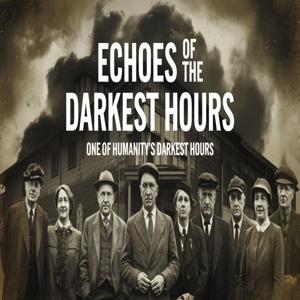


Excerpts from book, One of Humanity's Darkest Days, the Truth about the Holocaust
Chapter 19 emphasizes the importance of Holocaust remembrance and education to prevent future atrocities. Holocaust memorials, such as Yad Vashem in Jerusalem and the United States Holocaust Memorial Museum, serve as solemn reminders of the horrors committed. Including Holocaust education in school curriculums and observing International Holocaust Remembrance Day on January 27, the anniversary of the liberation of Auschwitz ensures global awareness and understanding of this tragic event. These initiatives aim to combat prejudice and hate and foster a future where such events never occur again.
Excerpts from book, One of Humanity's Darkest Days, the Truth about the Holocaust
Chapter 18 explores the aftermath of World War II, focusing on the pursuit of justice for Nazi war criminals. The Nuremberg Trials, held from November 20, 1945, to October 1, 1946, saw the prosecution of 24 high-ranking Nazis. Key figures included Hermann Göring, who was sentenced to death but committed suicide, and Rudolf Höss, who was tried separately and executed. Additional trials targeted SS officers, doctors, and others involved in the Nazi regime, notably the Doctors' Trial, which focused on unethical medical practices conducted on prisoners. The chapter highlights the capture and trial of Adolf Eichmann, the architect of the Holocaust, who was apprehended in Argentina in 1960 and executed in Israel on May 31, 1962.
Excerpts from book, One of Humanity's Darkest Days, the Truth about the Holocaust
Chapter 17 discusses the liberation of concentration and extermination camps as Allied forces advanced across Europe during the final phase of World War II. The liberation of Auschwitz in January 1945 by Soviet troops exposed the full horrors of the Holocaust to the world. The chapter emphasizes the importance of remembering and learning from this dark period to prevent future atrocities. The liberation of the camps, a pivotal moment, provided survivors like Elie Wiesel and Primo Levi a chance to rebuild their lives, many seeking refuge in Displaced Persons Camps. Chapter 17 emphasizes the resilience of the human spirit and the importance of fighting injustice.
Excerpts from book, One of Humanity's Darkest Days, the Truth about the Holocaust
Chapter 16 highlights the acts of resistance and the efforts to save Jewish lives during the Holocaust. Both Jewish and non-Jewish individuals and groups risked their lives to fight against Nazi oppression. The chapter explores ghetto uprisings, particularly the Warsaw Ghetto Uprising led by figures like Mordecai Anielewicz. It also examines partisan groups, like the one led by the Bielski brothers, that fought from forests. The chapter emphasizes the crucial roles women and even children played in these resistance movements, citing individuals like Zivia Lubetkin, Hannah Szenes, and "Little Flame". Furthermore, the chapter discusses non-Jewish rescuers, such as Oskar Schindler and the collective efforts of the Danish people, who saved thousands of Jewish lives. It highlights the significance of the Righteous Among the Nations and the courageous acts of individuals like André Trocmé and Irena Sendler.
Excerpts from book, One of Humanity's Darkest Days, the Truth about the Holocaust
The Nazi plan to systematically exterminate European Jews, known as the Final Solution, was officially implemented at the Wannsee Conference in 1942. During this meeting, high-ranking Nazi and SS officials, including Heinrich Himmler and Adolf Eichmann, devised the logistics of transporting Jews to extermination camps in occupied Poland. Auschwitz, Treblinka, and Sobibor were among the most notorious death camps where victims were murdered using gas chambers, mass shootings, and forced labor. The sources emphasize the human cost of the Holocaust, reminding us that the millions killed were individuals with families and dreams.
Excerpts from book, One of Humanity's Darkest Days, the Truth about the Holocaust
The sources describe the horrific conditions of concentration camps during World War II, with selections upon arrival that often led to immediate death in gas chambers. The sources note the resilience of prisoners, such as those in the Sobibor uprising and survivor Elie Wiesel, and their attempts to maintain dignity through cultural practices. The sources also detail the story of Janusz Korczak, who chose to die with the orphans in his care rather than abandon them. The sources highlight the role of the SS, specifically individuals like Heinrich Himmler and Reinhard Heydrich, and camp commandants like Rudolf Höss and Amon Goeth, in perpetrating these atrocities. The sources also discuss the complex moral questions arising from the Kapos, prisoners forced to oversee others. The sources emphasize the need to learn from these events and defend human rights.
Excerpts from book, One of Humanity's Darkest Days, the Truth about the Holocaust
Chapter 13 explores the evolution of Nazi concentration camps, starting with their initial purpose of imprisonment and forced labor for those deemed enemies of the state. Early camps like Dachau, Sachsenhausen, and Buchenwald, overseen by figures like Heinrich Himmler and Theodor Eicke, held political prisoners and others the Nazis viewed as threats—the Schutzhaftbefehl, or "protective custody order," allowed for indefinite detention without trial6. As World War II progressed, some camps, most notably Auschwitz under Rudolf Höss, transitioned into death camps designed for mass extermination. Operation Reinhard, spearheaded by Adolf Eichmann, focused on exterminating Polish Jews and led to the creation of death camps like Treblinka, Sobibor, and Belzec, where horrific methods like gas chambers with Zyklon B were used. The chapter emphasizes the tragic consequences of unchecked power and hate and the importance of vigilance against human rights violations.
Excerpts from book, One of Humanity's Darkest Days, the Truth about the Holocaust
Kristallnacht, or the "Night of Broken Glass," was a pogrom against Jews throughout Germany and Austria on November 9-10, 1938, that was orchestrated by Nazi officials like Joseph Goebbels and Reinhard Heydrich. During Kristallnacht, Nazi party officials, the SA, and Hitler Youth set fire to synagogues, vandalized Jewish businesses and homes, and killed many Jews. Following the pogrom, 30,000 Jewish men were sent to concentration camps, and a fine was imposed on the Jewish community. Kristallnacht was widely covered in international news and condemned by President Franklin D. Roosevelt, prompting some countries to accept more Jewish refugees.
Excerpts from book, One of Humanity's Darkest Days, the Truth about the Holocaust
Chapter 11 explores the legalized persecution of Jews in Nazi Germany, highlighting how laws and policies were weaponized to discriminate and harm. After Hitler's rise to power, laws like the "Law for the Restoration of the Professional Civil Service" (April 7, 1933) fired Jews from government jobs. The Nuremberg Laws (September 15, 1935) stripped Jews of citizenship and banned intermarriage. Further policies restricted Jewish businesses, property ownership, and mandated the wearing of yellow stars. Kristallnacht (November 9, 1938) marked a horrific escalation of violence, foreshadowing the atrocities to come. Chapter 11 emphasizes the dangers of discrimination embedded in legal systems and the importance of understanding this history to combat hatred and injustice.
Excerpts from book, One of Humanity's Darkest Days, the Truth about the Holocaust
The Nazi T4 program, officially operating from 1939 to 1941, though continuing secretly until the end of World War II, sought to eliminate those deemed "unworthy of life" through "involuntary euthanasia." Based on the pseudoscience of eugenics, the program targeted disabled individuals, the mentally ill, the elderly, and others, claiming an estimated 200,000 to 300,000 lives. Victims were often taken from their families and killed in "euthanasia centers" under the guise of "cleansing" the population.6 Despite its horrific nature, there was resistance to the program, notably from individuals like Bishop Clemens von Galen, whose sermons condemning the T4 program were circulated throughout Germany.
From the publisher's feed