Send us Fan Mail
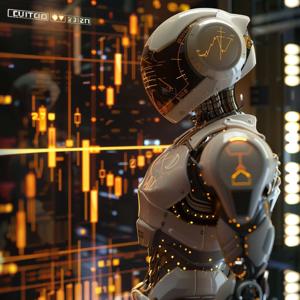
As foundation models move from the cloud into physical robots, a fundamental question emerges: who is accountable when an AI-controlled machine makes a decision that causes harm?
In this episode, we examine the growing collision between embodied AI, functional safety, and emerging regulation. We explore how new frameworks such as the EU AI Act and the Machinery Regulation are reshaping expectations for developers, manufacturers, and deployers of intelligent robots. From humanoid robots and autonomous mobile manipulators to AI-enabled industrial machinery, the challenge is no longer simply making robots smarter. It is making them governable.
We investigate a proposed architectural solution that is gaining traction across industry and academia: the hardware-isolated safety supervisor. By separating non-deterministic AI reasoning from deterministic safety-critical control systems, this approach aims to create clear lines of accountability while preserving the benefits of onboard intelligence.
Along the way, we examine NVIDIA’s Cosmos Reason 2 model, the EmbodiedGovBench governance framework, emerging standards efforts, and the practical realities of deploying foundation models on embedded platforms. We also ask whether traditional functional safety concepts such as SIL and ASIL can adequately address the unique challenges posed by robots whose actions are selected by large vision-language models.
The broader question is one that every roboticist, embedded engineer, and AI practitioner will soon face: when intelligence becomes local, autonomous, and physically embodied, what mechanisms ensure that accountability remains local too?
Support the show
If you are interested in learning more then please subscribe to the podcast or head over to https://medium.com/@reefwing, where there is lots more content on AI, IoT, robotics, drones, and development. To support us in bringing you this material, you can buy me a coffee or just provide feedback. We love feedback!