
Sign up to save your podcasts
Or

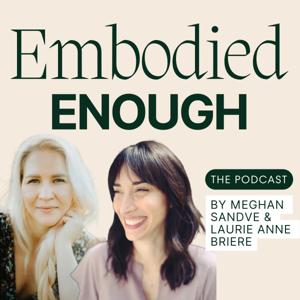


In our first episode, Laurie-Anne and Meghan explore embodied humility: what it means to hold our knowledge, training, and lived experience with an open hand. We talk about not-knowing as a somatic skill, how the body signals when we’ve slipped into “expert mode,” and why humility isn’t about shrinking, it’s about staying in honest relationship with ourselves and the people we serve.
Full show notes
Welcome to the very first episode of Embodied Enough. We start with the idea that sits underneath this whole podcast: humility isn’t something we perform.
Both are practices we return to, over and over, in our bodies, in our work, and in our relationships.
In this episode, we explore:
Why we named this podcast Embodied Enough, and what it means to stop chasing a “more embodied” version of ourselves
What we mean by embodied humility, and how it differs from self-doubt, self-deprecation, or false modesty
How the body shows us when we’ve moved into certainty, performance, or “expert mode,” and what the nervous system might be protecting
Not-knowing as a somatic skill: staying present with a client, student, or friend when we don’t have the answer
The role of positionality and context in humble practice, including how our own histories, privileges, and limits shape what we can offer
Rupture and repair: what it feels like in the body to get it wrong, and how humility supports repair
Why humility is a trauma-informed practice: it makes room for clients to be the authority on their own experience
A practice to try this week
Before your next session, class, or conversation, pause for three breaths. Let your feet settle and notice where your body is holding the wish to be useful, impressive, or right. See if you can soften one notch, not to disappear, but to make room for what’s actually here. Afterward, notice what shifted for you and for the other person.
Reflection questions
Where in my body do I feel the pull to know?
What happens in my system when I say “I don’t know” out loud?
Who or what has taught me the most about humility, and how did my body learn it?
Learn more about our trainings
Embodied Somatic Practitioner Program (ESPP): a 12-week somatic skills training for facilitators, coaches, and practitioners
Advanced Breath Practitioner Program (ABPP)
Visit espptraining.com
Connect with us
Laurie Anne: laurieannebriere.com
Meg: meghansandve.com
A note on this podcast
Embodied Enough is for educational and informational purposes. It is not psychotherapy or medical treatment, and it isn’t a substitute for care from a qualified professional.