
Sign up to save your podcasts
Or

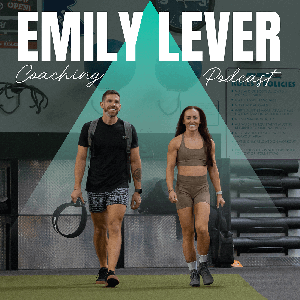


In this episode, Emily and AJ break down how to navigate restaurant menus without abandoning your nutrition goals. Rather than an all-or-nothing approach, they teach a practical framework, identify your protein source first, add vegetables, choose a carb, and account for hidden fats, so you can enjoy dining out as part of a consistent lifestyle. They also cover menu buzzwords, easy swaps, the truth about "healthy" salads, how alcohol affects hunger and fat burning, and why skipping meals or labeling foods as "good" or "bad" backfires.
5 Key Takeaways
"Foods do not have morals. There are no bad foods and there are no good foods. It is all how you use them and the portions that you consume them in." - AJ
Connect with Emily and AJ:
Website: https://www.emilylevercoaching.com/
Instagram: https://www.instagram.com/bedellever/
References
https://link.springer.com/article/10.1186/s44410-025-00011-9
https://pubmed.ncbi.nlm.nih.gov/31377851/
Enjoyed the Episode?
If this conversation resonated with you, make sure to subscribe, leave a review, and share this episode with a friend who's stuck in the start-over cycle. Your support helps more people find the podcast and build healthier habits that last.
Until next time—keep showing up, stay consistent, and remember: small steps add up to big change.
Sarcopenia, the gradual loss of muscle mass and function, affects everyone as they get older, typically beginning in our late 30s to early 40s. In this episode, we break down why it happens, what's actually proven to combat it, and how to build a realistic plan that doesn't require living in the gym. From the role of resistance training, protein, and vitamin D, to why the scale is the wrong measuring stick for progress, this conversation covers everything you need to stay strong and functional for life.
5 Key Takeaways:
"Your body isn't going to build something or do something unless it has to adapt. So you need to give it something to adapt to." - AJ
Connect with Emily and AJ:
Website: https://www.emilylevercoaching.com/
Instagram: https://www.instagram.com/bedellever/
References
https://link.springer.com/article/10.1186/s44410-025-00011-9
https://pubmed.ncbi.nlm.nih.gov/31377851/
Enjoyed the Episode?
If this conversation resonated with you, make sure to subscribe, leave a review, and share this episode with a friend who's stuck in the start-over cycle. Your support helps more people find the podcast and build healthier habits that last.
Until next time—keep showing up, stay consistent, and remember: small steps add up to big change.
This week, we dive into why runners, and endurance athletes of all kinds, should be incorporating resistance training into their routines. We break down how lifting complements running by improving running economy, reducing injury risk, strengthening connective tissue, and building the muscular support your joints need to handle thousands of impacts per run. We also cover specific movements to prioritize, how to program lifting around your running schedule, and why strength training shouldn't compete with your endurance goals, it should support them.
5 Key Takeaways:
"What if becoming stronger actually helps you run more efficiently, produce more force, you tolerate your training better, especially if you're doing something like really endurance, like an Ironman or a marathon. Your training is intense and takes a toll, so whatever you can do to help you tolerate and manage that better, and potentially reduce your risk of injuries." - AJ
Connect with Emily and AJ
Website: https://www.emilylevercoaching.com/
Instagram: https://www.instagram.com/bedellever/
References
https://link.springer.com/article/10.1186/s44410-025-00011-9
https://pubmed.ncbi.nlm.nih.gov/31377851/
Enjoyed the Episode?
If this conversation resonated with you, make sure to subscribe, leave a review, and share this episode with a friend who's stuck in the start-over cycle. Your support helps more people find the podcast and build healthier habits that last.
Until next time—keep showing up, stay consistent, and remember: small steps add up to big change.
In this episode, the Emily and AJ dig into the gut-brain connection, busting the myth that gut-produced serotonin directly controls your mood, and explaining how exercise redirects blood flow away from the GI tract, causing the nausea, cramping, and bathroom emergencies endurance athletes know all too well. They close out with practical guidance on tuning nutrition, hydration, and training around your body's individual GI responses rather than chasing a one-size-fits-all "perfect plan."
5 Key Takeaways:
"Remember that your body is a very intricate system, and you can't always isolate nutrition from stress. They truly go hand-in-hand, and you also can't isolate digestion from your nervous system. So if you're looking at it that way, you basically can't isolate performance from recovery either." - Emily
Connect with Emily and AJ
Website: https://www.emilylevercoaching.com/
Instagram: https://www.instagram.com/bedellever/
References
https://link.springer.com/article/10.1186/s44410-025-00011-9
https://pubmed.ncbi.nlm.nih.gov/31377851/
Enjoyed the Episode?
If this conversation resonated with you, make sure to subscribe, leave a review, and share this episode with a friend who's stuck in the start-over cycle. Your support helps more people find the podcast and build healthier habits that last.
Until next time—keep showing up, stay consistent, and remember: small steps add up to big change.
Ever felt butterflies before a big presentation, or a stomach-drop when you're stressed? That's not "all in your head", it's the gut-brain axis at work. In this episode, we break down the science of how your brain and gut constantly talk to each other through the enteric nervous system, the vagus nerve, and the HPA axis. We cover why blood flow matters for digestion, how stress and cortisol shape your gut health, and why everyone's stress response looks different, plus practical takeaways on eating around workouts and managing chronic stress for better digestion.
5 Key Takeaways
"My point is recovery exists in all aspects of stress. Stress is actually a very positive thing. It's how we change. It's how we grow. It's just what we do afterwards to help recover from that in other forms."- Emily
Connect with Emily and AJ
Website: https://www.emilylevercoaching.com/
Instagram: https://www.instagram.com/bedellever/
References
https://link.springer.com/article/10.1186/s44410-025-00011-9
https://pubmed.ncbi.nlm.nih.gov/31377851/
Enjoyed the Episode?
If this conversation resonated with you, make sure to subscribe, leave a review, and share this episode with a friend who's stuck in the start-over cycle. Your support helps more people find the podcast and build healthier habits that last.
Until next time—keep showing up, stay consistent, and remember: small steps add up to big change.
Fad diets keep resurfacing because they promise fast, dramatic results but this episode breaks down why the "next big thing" almost never works long-term. From juice cleanses and detoxes to carnivore, no-carb, and intermittent fasting, we unpack the red flags to watch for and why sustainable, less-extreme habits beat short-term extremes every time.
5 Key Takeaways:
"The problem with these fad diets is they teach you how to diet instead of how to live."
Connect with Emily and AJ
Website: https://www.emilylevercoaching.com/
Instagram: https://www.instagram.com/bedellever/
References
https://link.springer.com/article/10.1186/s44410-025-00011-9
https://pubmed.ncbi.nlm.nih.gov/31377851/
Enjoyed the Episode?
If this conversation resonated with you, make sure to subscribe, leave a review, and share this episode with a friend who's stuck in the start-over cycle. Your support helps more people find the podcast and build healthier habits that last.
Until next time—keep showing up, stay consistent, and remember: small steps add up to big change.
In this episode, two nutrition coaches, Emily and AJ, dig into fiber, why it matters, how to actually get more of it into everyday meals, and where they disagree on supplements. They cover easy ways to add fruits and veggies to breakfast, lunch, dinner, and snacks, then debate common fiber mistakes, including when (if ever) it's okay to lean on a fiber supplement instead of whole foods.
5 Key Takeaways:
"You could have a really great meal plan where you're very consistent and you're only eating healthy foods, but if you eat the same exact thing for every breakfast and every lunch and every dinner, you're not gonna get a variety, and you're probably missing out on a lot of different types of fibers and/or different types of micronutrients if you are very regimented." - AJ
Connect with Emily and AJ
Website: https://www.emilylevercoaching.com/
Instagram: https://www.instagram.com/bedellever/
References
https://link.springer.com/article/10.1186/s44410-025-00011-9
https://pubmed.ncbi.nlm.nih.gov/31377851/
Enjoyed the Episode?
If this conversation resonated with you, make sure to subscribe, leave a review, and share this episode with a friend who's stuck in the start-over cycle. Your support helps more people find the podcast and build healthier habits that last.
Until next time—keep showing up, stay consistent, and remember: small steps add up to big change.
In this episode, Emily and AJ dive into fiber, one of the most overlooked pillars of a healthy, sustainable diet. They break down the difference between soluble and insoluble fiber, explain how each supports digestion, gut bacteria, blood sugar regulation, and cholesterol, and share practical strategies for increasing fiber intake without discomfort. The conversation ties nutrition science back to real-world coaching examples, showing how prioritizing whole, fiber-rich foods can transform satiety, energy, and even fat-loss results.
5 Key Takeaways
Fiber comes in two types — soluble (dissolves in water, forms a gel, slows digestion) and insoluble (adds bulk to stool) — and a varied plant-based diet naturally covers both.
Fiber feeds beneficial gut bacteria through fermentation, producing short-chain fatty acids that support digestive, immune, and even mental health via the gut-brain connection.
High-fiber, high-volume foods (like cauliflower rice or berries) help you feel fuller on fewer calories, making fiber a powerful — though indirect — tool for fat loss.
Soluble fiber slows carbohydrate absorption, improving blood sugar control and reducing LDL ("bad") cholesterol, directly supporting metabolic and heart health.
Fiber intake should increase gradually (aiming for roughly 14g per 1,000 calories, or 20–40g/day) — ramping up too fast can cause bloating and digestive discomfort.
"When you focus on, like, your health goals, then you're thinking about the longevity of it. And when you're thinking about longevity, things are gonna become more sustainable." - Emily
Connect with Emily and AJ
Website: https://www.emilylevercoaching.com/
Instagram: https://www.instagram.com/bedellever/
References
https://link.springer.com/article/10.1186/s44410-025-00011-9
https://pubmed.ncbi.nlm.nih.gov/31377851/
Enjoyed the Episode?
If this conversation resonated with you, make sure to subscribe, leave a review, and share this episode with a friend who's stuck in the start-over cycle. Your support helps more people find the podcast and build healthier habits that last.
Until next time—keep showing up, stay consistent, and remember: small steps add up to big change.
This week's episode dives into raising active kids and getting children genuinely excited about movement. Emily and AJ shared how modeling healthy habits, rather than just talking about them, became a cornerstone of their own parenting, especially through the challenges of a pandemic postpartum period with no gym access or childcare. They unpack practical, low-pressure ways to involve kids in fitness, from letting them "help" during workouts to reframing family activities like hiking, biking, and even walking the dog as meaningful movement, all while avoiding language that ties exercise to guilt, punishment, or earning food.
5 Key Takeaways:
Kids learn more from watching you prioritize movement than from being told to exercise, modeling beats lecturing.
You don't need a perfect routine or uninterrupted gym time; showing up consistently, even imperfectly, is what counts.
Let kids be curious and involved on their own terms (counting reps, playing with bands) rather than forcing structured participation.
Avoid linking exercise or food to guilt or punishment, skip phrases like "earning" treats or working out to "burn off" a meal.
Everyday activities, hiking, biking, walking the dog, backyard games, count as real physical activity and are easy ways to include kids.
"Your kids don't need a perfect fitness routine. They just need to see that moving your body and being active is part of your day-to-day life, and it's something that can be enjoyable and fun." — Emily
Connect with Emily and AJ
Website: https://www.emilylevercoaching.com/
Instagram: https://www.instagram.com/bedellever/
References
https://link.springer.com/article/10.1186/s44410-025-00011-9
https://pubmed.ncbi.nlm.nih.gov/31377851/
Enjoyed the Episode?
If this conversation resonated with you, make sure to subscribe, leave a review, and share this episode with a friend who's stuck in the start-over cycle. Your support helps more people find the podcast and build healthier habits that last.
Until next time—keep showing up, stay consistent, and remember: small steps add up to big change.
In this episode, we dive deep into the science of sleep, what's actually happening in your body, why so many of us are getting it wrong, and the simple (free) changes that can transform your rest. From melatonin and adenosine to caffeine timing, alcohol, evening routines, and when supplements are actually worth reaching for, this is your comprehensive guide to optimizing one of the most underrated pillars of health.
5 Key Takeaways
"Sleep is like the lowest hanging fruit with the biggest bang for your buck." - AJ
Connect with Emily and AJ
Website: https://www.emilylevercoaching.com/
Instagram: https://www.instagram.com/bedellever/
References
https://link.springer.com/article/10.1186/s44410-025-00011-9
https://pubmed.ncbi.nlm.nih.gov/31377851/
Enjoyed the Episode?
If this conversation resonated with you, make sure to subscribe, leave a review, and share this episode with a friend who's stuck in the start-over cycle. Your support helps more people find the podcast and build healthier habits that last.
Until next time—keep showing up, stay consistent, and remember: small steps add up to big change.
From the publisher's feed