
Sign up to save your podcasts
Or

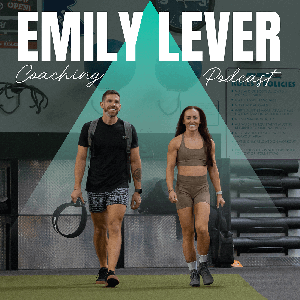


Is your metabolism really slow or has it simply adapted? In this episode, we unpack what drives your daily calorie burn, why weight loss can become harder over time, and how muscle mass, everyday movement, and changing energy needs affect progress. We also explore practical ways to move past a plateau without defaulting to fewer calories or more cardio and why the scale shouldn't be your only measure of success. 5 Key Takeaways
"You have to remember the scale is a total number. As you get leaner and you have less fat, it's not about the number of pounds on the scale, it's about the percentage of your body fat that you are losing." - Emily
Connect with Emily and AJ:
Website: https://www.emilylevercoaching.com/
Instagram: https://www.instagram.com/bedellever/
References
https://link.springer.com/article/10.1186/s44410-025-00011-9
https://pubmed.ncbi.nlm.nih.gov/31377851/
Enjoyed the Episode?
If this conversation resonated with you, make sure to subscribe, leave a review, and share this episode with a friend who's stuck in the start-over cycle. Your support helps more people find the podcast and build healthier habits that last.
Until next time—keep showing up, stay consistent, and remember: small steps add up to big change.
Building muscle isn't just about getting stronger, it plays an important role in your metabolic health. In this episode, we break down insulin resistance, explain how resistance training helps your muscles use glucose, and explore why strength training and cardio work best together. We also unpack common blood sugar tests and share practical habits, from balanced meals to after-dinner walks, that support better insulin sensitivity without chasing perfection. 5 Key Takeaways
"Resistance training gives your muscles a reason to use glucose, and it also improves the entire system." - Emily
Connect with Emily and AJ:
Website: https://www.emilylevercoaching.com/
Instagram: https://www.instagram.com/bedellever/
References
https://link.springer.com/article/10.1186/s44410-025-00011-9
https://pubmed.ncbi.nlm.nih.gov/31377851/
Enjoyed the Episode?
If this conversation resonated with you, make sure to subscribe, leave a review, and share this episode with a friend who's stuck in the start-over cycle. Your support helps more people find the podcast and build healthier habits that last.
Until next time—keep showing up, stay consistent, and remember: small steps add up to big change.
This episode covers practical strategies for staying healthy while traveling from hydration and jet lag management to balanced eating and alcohol on vacation. Emily and AJ share personal anecdotes from their trip to Italy and Hawaii, offering actionable tips on electrolytes, compression socks, sleep adjustments, and how to enjoy local cuisine without derailing your goals. The overarching message: vacation should leave you restored, not needing a second vacation to recover from the first.
5 Key Takeaways:
"If you are somebody who's going on vacation and coming home being like, 'I feel like I need a vacation from vacation,' then in my opinion, you're not doing it right. You're doing vacation wrong." - Emily
Connect with Emily and AJ:
Website: https://www.emilylevercoaching.com/
Instagram: https://www.instagram.com/bedellever/
References
https://link.springer.com/article/10.1186/s44410-025-00011-9
https://pubmed.ncbi.nlm.nih.gov/31377851/
Enjoyed the Episode?
If this conversation resonated with you, make sure to subscribe, leave a review, and share this episode with a friend who's stuck in the start-over cycle. Your support helps more people find the podcast and build healthier habits that last.
Until next time—keep showing up, stay consistent, and remember: small steps add up to big change.
Travel doesn't have to mean throwing your health habits out the window. In this episode, Emily and AJ share their practical playbook for staying active, hydrated, and grounded while traveling, especially with kids. From finding creative workout solutions without a gym (resistance bands, sandbags, swimming, and even pool games with the kids) to understanding the counterintuitive science of in-flight hydration, this episode reframes vacation fitness as an opportunity to adapt rather than abandon your routine. Whether you're navigating jet lag, hunting for a gym membership abroad, or just trying to drink enough water on a long flight, these tips prove it doesn't have to be all-or-nothing.
5 Key Takeaways
"People oftentimes will be like, "Well, I don't want water retention, so I'm not gonna drink on a plane." Literally, drinking on the plane prevents water retention." - Emily
Connect with Emily and AJ:
Website: https://www.emilylevercoaching.com/
Instagram: https://www.instagram.com/bedellever/
References
https://link.springer.com/article/10.1186/s44410-025-00011-9
https://pubmed.ncbi.nlm.nih.gov/31377851/
Enjoyed the Episode?
If this conversation resonated with you, make sure to subscribe, leave a review, and share this episode with a friend who's stuck in the start-over cycle. Your support helps more people find the podcast and build healthier habits that last.
Until next time—keep showing up, stay consistent, and remember: small steps add up to big change.
Wearables are everywhere, Apple Watches, Fitbits, Oura Rings, Garmins, WHOOP bands, but how much can you actually trust the data they give you? In this episode, we break down what these devices are really measuring, what they're merely calculating, and where the accuracy starts to fall apart. We cover step counting accuracy across devices, how optical heart rate sensors work, the massive variability in calorie burn estimates, and why sleep tracking caps out around 75% accuracy even on the most hyped devices. Along the way, we get into a lively debate about perceived exertion versus objective data, the dangers of letting a number dictate your meals or your training, and why one host's Apple Watch told her to "work out today" while she was mid-set on the leg press. The bottom line: let the data inform you, follow trends over absolute numbers, and always remember, you are not a number.
5 Key Takeaways
"These numbers and markers, they are a tool, but you are so much more complex than a tool. You are not a number." - Emily
Connect with Emily and AJ:
Website: https://www.emilylevercoaching.com/
Instagram: https://www.instagram.com/bedellever/
References
https://link.springer.com/article/10.1186/s44410-025-00011-9
https://pubmed.ncbi.nlm.nih.gov/31377851/
Enjoyed the Episode?
If this conversation resonated with you, make sure to subscribe, leave a review, and share this episode with a friend who's stuck in the start-over cycle. Your support helps more people find the podcast and build healthier habits that last.
Until next time—keep showing up, stay consistent, and remember: small steps add up to big change.
In this episode, Emily and AJ break down how to navigate restaurant menus without abandoning your nutrition goals. Rather than an all-or-nothing approach, they teach a practical framework, identify your protein source first, add vegetables, choose a carb, and account for hidden fats, so you can enjoy dining out as part of a consistent lifestyle. They also cover menu buzzwords, easy swaps, the truth about "healthy" salads, how alcohol affects hunger and fat burning, and why skipping meals or labeling foods as "good" or "bad" backfires.
5 Key Takeaways
"Foods do not have morals. There are no bad foods and there are no good foods. It is all how you use them and the portions that you consume them in." - AJ
Connect with Emily and AJ:
Website: https://www.emilylevercoaching.com/
Instagram: https://www.instagram.com/bedellever/
References
https://link.springer.com/article/10.1186/s44410-025-00011-9
https://pubmed.ncbi.nlm.nih.gov/31377851/
Enjoyed the Episode?
If this conversation resonated with you, make sure to subscribe, leave a review, and share this episode with a friend who's stuck in the start-over cycle. Your support helps more people find the podcast and build healthier habits that last.
Until next time—keep showing up, stay consistent, and remember: small steps add up to big change.
Sarcopenia, the gradual loss of muscle mass and function, affects everyone as they get older, typically beginning in our late 30s to early 40s. In this episode, we break down why it happens, what's actually proven to combat it, and how to build a realistic plan that doesn't require living in the gym. From the role of resistance training, protein, and vitamin D, to why the scale is the wrong measuring stick for progress, this conversation covers everything you need to stay strong and functional for life.
5 Key Takeaways:
"Your body isn't going to build something or do something unless it has to adapt. So you need to give it something to adapt to." - AJ
Connect with Emily and AJ:
Website: https://www.emilylevercoaching.com/
Instagram: https://www.instagram.com/bedellever/
References
https://link.springer.com/article/10.1186/s44410-025-00011-9
https://pubmed.ncbi.nlm.nih.gov/31377851/
Enjoyed the Episode?
If this conversation resonated with you, make sure to subscribe, leave a review, and share this episode with a friend who's stuck in the start-over cycle. Your support helps more people find the podcast and build healthier habits that last.
Until next time—keep showing up, stay consistent, and remember: small steps add up to big change.
This week, we dive into why runners, and endurance athletes of all kinds, should be incorporating resistance training into their routines. We break down how lifting complements running by improving running economy, reducing injury risk, strengthening connective tissue, and building the muscular support your joints need to handle thousands of impacts per run. We also cover specific movements to prioritize, how to program lifting around your running schedule, and why strength training shouldn't compete with your endurance goals, it should support them.
5 Key Takeaways:
"What if becoming stronger actually helps you run more efficiently, produce more force, you tolerate your training better, especially if you're doing something like really endurance, like an Ironman or a marathon. Your training is intense and takes a toll, so whatever you can do to help you tolerate and manage that better, and potentially reduce your risk of injuries." - AJ
Connect with Emily and AJ
Website: https://www.emilylevercoaching.com/
Instagram: https://www.instagram.com/bedellever/
References
https://link.springer.com/article/10.1186/s44410-025-00011-9
https://pubmed.ncbi.nlm.nih.gov/31377851/
Enjoyed the Episode?
If this conversation resonated with you, make sure to subscribe, leave a review, and share this episode with a friend who's stuck in the start-over cycle. Your support helps more people find the podcast and build healthier habits that last.
Until next time—keep showing up, stay consistent, and remember: small steps add up to big change.
In this episode, the Emily and AJ dig into the gut-brain connection, busting the myth that gut-produced serotonin directly controls your mood, and explaining how exercise redirects blood flow away from the GI tract, causing the nausea, cramping, and bathroom emergencies endurance athletes know all too well. They close out with practical guidance on tuning nutrition, hydration, and training around your body's individual GI responses rather than chasing a one-size-fits-all "perfect plan."
5 Key Takeaways:
"Remember that your body is a very intricate system, and you can't always isolate nutrition from stress. They truly go hand-in-hand, and you also can't isolate digestion from your nervous system. So if you're looking at it that way, you basically can't isolate performance from recovery either." - Emily
Connect with Emily and AJ
Website: https://www.emilylevercoaching.com/
Instagram: https://www.instagram.com/bedellever/
References
https://link.springer.com/article/10.1186/s44410-025-00011-9
https://pubmed.ncbi.nlm.nih.gov/31377851/
Enjoyed the Episode?
If this conversation resonated with you, make sure to subscribe, leave a review, and share this episode with a friend who's stuck in the start-over cycle. Your support helps more people find the podcast and build healthier habits that last.
Until next time—keep showing up, stay consistent, and remember: small steps add up to big change.
Ever felt butterflies before a big presentation, or a stomach-drop when you're stressed? That's not "all in your head", it's the gut-brain axis at work. In this episode, we break down the science of how your brain and gut constantly talk to each other through the enteric nervous system, the vagus nerve, and the HPA axis. We cover why blood flow matters for digestion, how stress and cortisol shape your gut health, and why everyone's stress response looks different, plus practical takeaways on eating around workouts and managing chronic stress for better digestion.
5 Key Takeaways
"My point is recovery exists in all aspects of stress. Stress is actually a very positive thing. It's how we change. It's how we grow. It's just what we do afterwards to help recover from that in other forms."- Emily
Connect with Emily and AJ
Website: https://www.emilylevercoaching.com/
Instagram: https://www.instagram.com/bedellever/
References
https://link.springer.com/article/10.1186/s44410-025-00011-9
https://pubmed.ncbi.nlm.nih.gov/31377851/
Enjoyed the Episode?
If this conversation resonated with you, make sure to subscribe, leave a review, and share this episode with a friend who's stuck in the start-over cycle. Your support helps more people find the podcast and build healthier habits that last.
Until next time—keep showing up, stay consistent, and remember: small steps add up to big change.