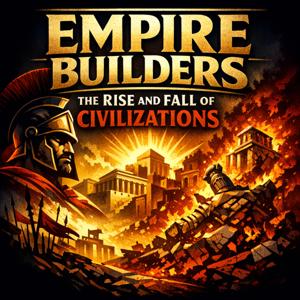
What does it mean for an entire world to end? In the 12th century BCE, a cataclysm swept across the Eastern Mediterranean. The mighty empires of the Hittites, Mycenaeans, and Egyptians faltered. Cities burned, trade routes vanished, and writing itself disappeared from entire regions. Was this a single, violent apocalypse, or a complex unraveling that ultimately made way for something new?
This episode journeys into the twilight of the Late Bronze Age, examining the "perfect storm" of potential causes. We sift through the evidence for the enigmatic "Sea Peoples," analyze climate data pointing to severe drought, and explore theories of systemic interdependence leading to cascading failure. We move from the ruins of Ugarit to the abandoned palaces of Pylos, listening for echoes of the final days.
Listeners will gain a profound understanding of civilizational fragility. This is not a simple tale of invasion and collapse, but a case study in how interconnected, sophisticated systems can become uniquely vulnerable. The darkness of the subsequent "Greek Dark Ages" gives way to a crucial insight: collapse can be a crucible, forcing the recombination of ideas and technologies into novel forms.
Sometimes, the end is just a different kind of beginning.
#BronzeAgeCollapse #SeaPeoples #AncientApocalypse #Hittites #Mycenaeans #SystemsCollapse #Archaeology
Hosted by Ibnul Jaif Farabi. Produced by Light Knot Studios (lightknotstudios.com).