Empires Before The Fall

Empires Before The Fall

Download on the App Store

Empires Before The Fall episodes

  • The limestone creature Tiglath‑Pileser brought home that had no name
    Tiglath‑Pileser I returns to Ashur with a mysterious limestone image no one can name - what did he really bring home?

    The limestone creature Tiglath‑Pileser brought home that had no name

    In this episode, we follow the annals and artifacts that record a king's strange act: a landlocked ruler boards a ship at Arvad, kills an unnamed sea creature, and installs its limestone likeness at Ashur's gates. What does that choice tell us about memory, empire, and the limits of language?

    Person: Tiglath‑Pileser I
    Date: reign 1115-1076 BC
    Location: Ashur; Phoenician port of Arvad; Mediterranean
    Object: limestone gate sculptures; annals on eight-sided clay prisms; copper plates (recorded, not found)
    Word: nāhiru

    - Tiglath‑Pileser I records boarding a ship at Arvad and killing a creature in the Mediterranean described with the word nāhiru.
    - Two white limestone figures of the creature stood at Ashur's gates for three thousand years, encountered daily by passersby and scribes who did not settle on a name.
    - His annals were carved on eight-sided clay prisms with year-by-year campaign subdivisions and reference an additional set of copper plates deposited in Cilicia.
    - Scholars proposed the nāhiru might mean narwhal, but that identification has never been confirmed in the surviving record.
    - The king chose durable media-prisms, copper, limestone-to make his deeds last, even as the copper plates and stone sculptures did not survive intact.

    To listen to this podcast ad-free and access premium episodes, try our subscription with a 14-day free trial at obomedia.com.

    © 2026 OBOMEDIA. All rights reserved.
    This episode and its content (audio, text, and related materials) are the exclusive property of OBOMEDIA and are protected by applicable copyright laws. Reproduction, distribution, editing, or commercial use, in whole or in part, without prior written permission from OBOMEDIA is prohibited. For permissions, licensing, and business inquiries: [email protected].

    16 min
  • The stuffed moose that contradicted Buffon's climate theory
    A stuffed moose sent to Paris to challenge Buffon’s climate theory sparks scientific debate - what happens next?

    The stuffed moose that contradicted Buffon's climate theory

    In this episode, we follow the arrival of a stuffed moose in Paris and the wider intellectual debate it collided with. The episode traces how naturalists, philosophers, and psychiatrists carried the language of “degeneration” from animal size to human hierarchy, asking how scientific authority helped turn botanical and zoological claims into frameworks for classifying people.

    Person: Georges-Louis Leclerc, Comte de Buffon
    Person: Thomas Jefferson
    Person: Bénédict Morel
    Date: 1788 (moose arrival), 1749 (Buffon first volume), 1785 (Jefferson Notes on the State of Virginia), 1857 (Morel Treatise on Degeneration)
    Topic: Degeneration, classification, transmission of scientific authority

    - Buffon published Histoire Naturelle beginning in 1749 and argued the New World’s climate produced smaller, less vigorous animals and people.
    - Thomas Jefferson compiled species measurements in Notes on the State of Virginia and arranged for a stuffed moose to be shipped to Paris to refute Buffon.
    - The stuffed moose arrived in spring 1788 after months of logistics and expense by the American minister to France; Buffon died three months later without revising his theory.
    - Philosophers and scientists-like Kant and Blumenbach-borrowed and repurposed the language of degeneration and race, adding taxonomies and authority to the concept.
    - French psychiatrist Bénédict Morel recorded decades of family histories and published Treatise on Degeneration in 1857, applying degeneration to human heredity and social order.

    To listen to this podcast ad-free and access premium episodes, try our subscription with a 14-day free trial at obomedia.com.

    © 2026 OBOMEDIA. All rights reserved.
    This episode and its content (audio, text, and related materials) are the exclusive property of OBOMEDIA and are protected by applicable copyright laws. Reproduction, distribution, editing, or commercial use, in whole or in part, without prior written permission from OBOMEDIA is prohibited. For permissions, licensing, and business inquiries: [email protected].
    18 min
  • The CDC Alert Wasn't the Start - a Hidden Eight‑Year Silence Built AIDS
    A hidden pandemic spread silently for decades from Congo to U.S. cities via Haiti. How did HIV build an epidemic beneath medicine’s radar?

    The CDC Alert Wasn't the Start - a Hidden Eight‑Year Silence Built AIDS

    In this episode, we trace the biological and historical factors that let HIV circulate undetected for decades before the CDC’s 1981 notice. The episode follows the virus from its genetic origin into colonial cities, through population movements to Haiti and the United States, and asks how eight years of clinical latency let an epidemic grow unseen.

    Person: Robert Rayford
    Date: 1969
    Location: St. Louis, Missouri
    Topic: HIV origin and early spread
    Event: CDC first alert in 1981

    - Genetic sequencing traces HIV‑1 group M’s common ancestor to circa 1910 in the Congo Basin, centuries before the first CDC report.
    - Rapid urbanization and sex work in Kinshasa created dense transmission networks and high syphilis prevalence that amplified early spread.
    - June 30, 1960 independence and the arrival of ~4,500 Haitian workers created a plausible route for the virus to reach Haiti.
    - Researchers link Haitian travel to the U.S. and estimate HIV was circulating in New York and San Francisco gay communities by the 1970s.
    - HIV’s average eight‑year asymptomatic, transmissible period meant infections from the early 1970s produced AIDS cases around 1980, before anyone had named the disease.

    To listen to this podcast ad-free and access premium episodes, try our subscription with a 14-day free trial at obomedia.com.

    © 2026 OBOMEDIA. All rights reserved.
    This episode and its content (audio, text, and related materials) are the exclusive property of OBOMEDIA and are protected by applicable copyright laws. Reproduction, distribution, editing, or commercial use, in whole or in part, without prior written permission from OBOMEDIA is prohibited. For permissions, licensing, and business inquiries: [email protected].
    15 min
  • The CIA memo that insisted Saigon would hold-then the capital fell
    A March 5 CIA-Army memo said Saigon would hold - forty-seven days later it collapsed. How did Washington get it so wrong?

    The CIA memo that insisted Saigon would hold-then the capital fell

    In this episode, we lay out the timeline and decisions that framed the last weeks of South Vietnam. You’ll hear how intelligence, politics, and battlefield shocks intersected and why those intersections left key questions unanswered.

    Person: President Nguyễn Văn Thiệu
    Date: March 5, 1975 memo; April-April 30, 1975 events
    Location: Saigon (South Vietnam)
    Event: Hồ Chí Minh Campaign and rapid southern advance
    Topic: CIA and Army Intelligence assessments versus battlefield reality

    - March 5, 1975: CIA and Army Intelligence formally told Washington South Vietnam could hold through at least 1976.
    - March 10, 1975: General Văn Tiến Dũng launched the Hồ Chí Minh Campaign, capturing Buôn Ma Thuột the same day.
    - Mid-April 1975: Five PAVN corps, fifteen divisions, tanks and artillery encircled Saigon with the frontline twenty-six miles from downtown.
    - April 21, 1975: President Thiệu resigned and warned the United States it had asked South Vietnam to do “an impossible thing.”
    - Congressional cuts, emergency aid requests, and the fear that evacuation would signal collapse shaped U.S. decisions as the city rapidly unraveled.

    To listen to this podcast ad-free and access premium episodes, try our subscription with a 14-day free trial at obomedia.com.

    © 2026 OBOMEDIA. All rights reserved.
    This episode and its content (audio, text, and related materials) are the exclusive property of OBOMEDIA and are protected by applicable copyright laws. Reproduction, distribution, editing, or commercial use, in whole or in part, without prior written permission from OBOMEDIA is prohibited. For permissions, licensing, and business inquiries: [email protected].

    19 min
  • The Arctic temperature gaps erased the fifteen‑year pause
    A global thermometer stalled for fifteen years - climate scientists chase where the missing heat went in the oceans; did the Arctic hold the answer?

    The Arctic temperature gaps erased the fifteen‑year pause

    In this episode, we trace how a seeming pause in global surface temperatures from 1998-2012 became a scientific puzzle and what researchers did to locate the missing heat. We follow the choices, the data gaps, and the expanding ocean measurements that reframed the conversation: if the surface didn’t warm, where did the energy go?

    Person: Thomas Stocker
    Institution: University of Fairbanks and Peking University team
    Date: 1998-2012 (hiatus period)
    Event: 2017 paper filling Arctic station gaps
    Topic: Ocean heat redistribution and data gaps

    - 1998’s strong El Niño created a temperature spike that became the baseline from which the 15‑year slowdown was measured.
    - Scientists noted surface warming slowed after that spike, prompting debate over whether a true pause had occurred.
    - Observations showed sea level rise and Arctic ice loss continued, implying excess energy was still being trapped.
    - Studies linked Pacific Decadal Oscillation, strengthened trade winds, and Atlantic warming to moving heat from the surface into the subsurface ocean.
    - A 2017 study reported that adding missing Arctic temperature stations removed the apparent hiatus from the surface record.

    To listen to this podcast ad-free and access premium episodes, try our subscription with a 14-day free trial at obomedia.com.

    © 2026 OBOMEDIA. All rights reserved.
    This episode and its content (audio, text, and related materials) are the exclusive property of OBOMEDIA and are protected by applicable copyright laws. Reproduction, distribution, editing, or commercial use, in whole or in part, without prior written permission from OBOMEDIA is prohibited. For permissions, licensing, and business inquiries: [email protected].

    18 min
  • The Mauna Loa CO₂ reading topped 417 ppm and still let coal demand climb
    A Mauna Loa CO₂ reading tops 417 ppm as global coal demand hits a new record-how can clean energy surge while the climate ledger keeps worsening?

    The Mauna Loa CO₂ reading topped 417 ppm and still let coal demand climb

    In this episode, we lay out the measurements and moments that made 2021 unusually clear: multiple independent records-from a volcano in Hawaii to cherry blossoms in Kyoto-converge on a single question about scale and timing. What happens when societal responses and physical signals move in opposite directions?

    Person: Charles David Keeling
    Date: April 2021
    Location: Mauna Loa Observatory, Hawaii
    Topic: Atmospheric carbon dioxide concentration (417 ppm)
    Event: 2021 convergence of climate indicators

    - Keeling installed an infrared gas analyzer at Mauna Loa in March 1958 to sample clean Pacific air and began a continuous CO₂ record.
    - Mauna Loa recorded about 315 ppm in 1958 and reached 417 ppm by April 2021, roughly 50% above pre-industrial levels.
    - The last time CO₂ was this high was ~3.6 million years ago, when sea levels were about 24 meters higher and temperatures ~4°C warmer.
    - In 2021, Kyoto cherry blossoms reached full bloom on March 26-the earliest in 1,200 years of continuous records-while North American pollen seasons lengthened and concentrations rose.
    - Late June-early July 2021 saw a western North America heat dome with Lytton, BC hitting 49.6°C; attribution analysis found the event at least 150 times rarer without human-induced climate change.

    To listen to this podcast ad-free and access premium episodes, try our subscription with a 14-day free trial at obomedia.com.

    © 2026 OBOMEDIA. All rights reserved.
    This episode and its content (audio, text, and related materials) are the exclusive property of OBOMEDIA and are protected by applicable copyright laws. Reproduction, distribution, editing, or commercial use, in whole or in part, without prior written permission from OBOMEDIA is prohibited. For permissions, licensing, and business inquiries: [email protected].
    19 min
  • The rumor of Nader's death that made his son execute the royal heirs
    A regent hears a false rumor of Nader Shah's death and orders executions of heirs - what will greet the returning conqueror?

    The rumor of Nader's death that made his son execute the royal heirs

    In this episode we tell the specific story of a decision made while Nader Shah was in India and the immediate consequences that reached his court in Iran. We follow how a single false report, a young regent's choices, and the arrival of the conqueror back from Delhi shaped a perilous family and political dynamic. What did that moment do to the man, his son, and the fragile empire they had built?

    Person: Nader Qoli (later Nader Shah)
    Person: Reza Qoli Mirza
    Person: Tahmasp; Abbas the Third
    Date: 1739 (rumor and executions); 1741 (forest incident)
    Location: Delhi; Khorasan; Mazandaran forests
    Event: Battle of Karnal; sack of Delhi; seizure of Mughal treasury (700 million rupees)

    - Nader Shah left India in 1739 with vast loot including the Peacock Throne and the Koh-i-Noor, and announced three years of tax exemption back home.
    - While Nader was returning, his son Reza Qoli Mirza governed as regent and received a false report that Nader had died.
    - Acting on that report, Reza Qoli ordered the execution of the Safavid captive Tahmasp and Tahmasp’s nine-year-old son Abbas the Third.
    - News that Nader was alive arrived shortly after; Reza Qoli’s wife (Tahmasp’s sister) committed suicide upon learning her brother and nephew had been killed by her husband’s orders.
    - Nader returned to a court “drenched in blood,” kept Reza Qoli close rather than executing him, and the unspoken rupture between father and son followed them into the Mazandaran campaign.

    To listen to this podcast ad-free and access premium episodes, try our subscription with a 14-day free trial at obomedia.com.

    © 2026 OBOMEDIA. All rights reserved.
    This episode and its content (audio, text, and related materials) are the exclusive property of OBOMEDIA and are protected by applicable copyright laws. Reproduction, distribution, editing, or commercial use, in whole or in part, without prior written permission from OBOMEDIA is prohibited. For permissions, licensing, and business inquiries: [email protected].
    20 min
  • The name he never spoke toppled an empire and rerouted history
    A dying great khan at Diaoyu Castle in 1259 refuses to name a successor-what happens next? Search: Mongol Empire.

    The name he never spoke toppled an empire and rerouted history

    In this episode, we follow the immediate aftermath of Möngke Khan’s death at a siege in 1259 and the succession crisis that followed. We trace how rival assemblies, dispersed princes, and a diverted campaign in the west combined to reshape imperial borders and power-so what exactly unfolded next?

    Person: Möngke Khan
    Date: 1259-1260
    Location: Diaoyu Castle; Karakorum; Kaiping; Ain Jalut
    Event: Competing kurultai and the Battle of Ain Jalut
    Topic: Succession crisis within the Mongol Empire

    - Möngke Khan dies at the walls of Diaoyu Castle in the summer of 1259 without naming a successor, leaving the empire’s legitimacy in limbo.
    - Three principal brothers-Hulagu in the Middle East, Kublai campaigning in southern China, and Ariq Böke at Karakorum-are scattered across the empire when Möngke dies.
    - Ariq Böke seizes the administrative center, calls a kurultai at Karakorum, and is proclaimed great khan by those present using formal Mongol procedure.
    - Kublai, absent from Karakorum, holds his own assembly at Kaiping with the support of nearly every senior prince and commander in North China and Manchuria.
    - While the brothers prepare for civil war, Hulagu’s reduced force in Syria under Kitbuqa is defeated at Ain Jalut in 1260 and Hulagu’s nearby army does not march to reinforce it.

    To listen to this podcast ad-free and access premium episodes, try our subscription with a 14-day free trial at obomedia.com.

    © 2026 OBOMEDIA. All rights reserved.
    This episode and its content (audio, text, and related materials) are the exclusive property of OBOMEDIA and are protected by applicable copyright laws. Reproduction, distribution, editing, or commercial use, in whole or in part, without prior written permission from OBOMEDIA is prohibited. For permissions, licensing, and business inquiries: [email protected].
    19 min
  • The order to burn the Venetian quarter that handed Constantinople back to Nicaea
    A general burned the Venetian quarter and handed Constantinople to Nicaea-what did that morning cost the returning Roman state?

    The order to burn the Venetian quarter that handed Constantinople back to Nicaea

    In this episode we lay out how a Roman state in exile reclaimed Constantinople after fifty-seven years and what changes in identity and power made that possible. We trace the exile from April 1204 through Nicaea’s consolidation in Anatolia to the decisive July and December 1261 actions that reopened the city-what tradeoffs and decisions shaped this restoration?

    Person: Alexios Strategopoulos
    Event: Entry into Constantinople and burning of the Venetian quarter
    Date: July 1261; Order carried out December 25, 1261
    Location: Constantinople; Nicaea (Bithynia)
    Person: John III Doukas Vatatzes

    - April 1204: crusaders sack Constantinople, creating the Latin Empire and scattering Byzantine institutions into rival successor states.
    - Theodore Laskaris establishes the court at Nicaea, secures patriarchal coronation by 1208, and claims imperial legitimacy in exile.
    - Theodore and successors survive early defeats, rely on shifting alliances (including Kaloyan’s victory over the Latins) and military wins to hold Anatolia.
    - John III (reigned 1222-1254) expands Nicaea’s power through warfare, diplomacy, and marriage alliances, consolidating territory and recognition.
    - In 1261 General Alexios Strategopoulos enters Constantinople with no siege and orders the Venetian quarter burned, an action that reveals the transformed aims and costs of the restoration.

    To listen to this podcast ad-free and access premium episodes, try our subscription with a 14-day free trial at obomedia.com.

    © 2026 OBOMEDIA. All rights reserved.
    This episode and its content (audio, text, and related materials) are the exclusive property of OBOMEDIA and are protected by applicable copyright laws. Reproduction, distribution, editing, or commercial use, in whole or in part, without prior written permission from OBOMEDIA is prohibited. For permissions, licensing, and business inquiries: [email protected].
    16 min
  • The Tianjin stamp that exposed Belgium's absence of imperial intent
    A stamped Belgian claim on the Tianjin riverbank sat nearly empty for decades - what was Belgium actually doing as an imperial power?

    The Tianjin stamp that exposed Belgium's absence of imperial intent

    In this episode, we lay out a series of facts about Belgium’s imperial posture from the nineteenth to the twentieth century, contrasting royal ventures with government reluctance and tracing how private and state roles shaped overseas possessions. What does a deserted Tianjin parcel reveal about Belgium’s broader approach to empire?

    Person: Leopoldo II
    Date: 7 November 1900
    Location: Tianjin riverbank
    Event: One hundred hectares proclaimed Belgian soil and left nearly empty for three decades
    Topic: Belgian colonial policy and the Congo Free State

    - Leopold I proposed buying Cuba in 1837 and contracted to colonize Hawaii in 1843, both efforts failing to produce Belgian settlement.
    - Belgian governments from 1830 into the twentieth century documented a position of expansion avoidance: “survive first, expand never.”
    - Leopold II privately acquired and ruled the Congo Free State as his personal property after the 1885 Berlin recognition, separate from the Belgian state.
    - The Belgian parliament saw overseas territories primarily as financial and political liabilities, resisting state-led colonial expansion.
    - In 1908, under international pressure, the Belgian state absorbed the Congo Free State, shifting control from Leopold’s private rule to a state-backed “trinité coloniale.”

    To listen to this podcast ad-free and access premium episodes, try our subscription with a 14-day free trial at obomedia.com.

    © 2026 OBOMEDIA. All rights reserved.
    This episode and its content (audio, text, and related materials) are the exclusive property of OBOMEDIA and are protected by applicable copyright laws. Reproduction, distribution, editing, or commercial use, in whole or in part, without prior written permission from OBOMEDIA is prohibited. For permissions, licensing, and business inquiries: [email protected].
    16 min

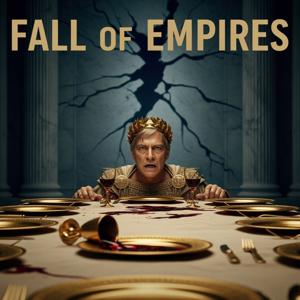
About Empires Before The Fall

From the publisher's feed

Sometimes a place feels older than its ruins. You stand where thousands once lived, ruled, celebrated, and vanished, and for a moment the silence feels occupied. Empires Before The Fall explores that…