
Sign up to save your podcasts
Or

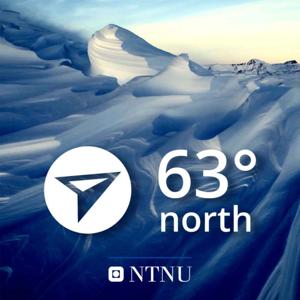

This episode originally aired on January 27, 2021.
Krill eyeballs. The werewolf effect. Diel vertical migration. Arctic marine biologists really talk about these things.
There’s a reason for that — when it comes to the polar night, when humans see only velvety darkness, krill eyeballs see things a little differently. And when the sun has been gone for months, during the darkest periods of the polar night, the moon does unexpected things to marine organisms. Learn more about what biologists are figuring out about the workings of the polar night — and what it means at a time when the Arctic is warming at a breakneck pace.
Our guests for this episode were Jørgen Berge, Geir Johnsen, Laura Hobbs and Jonathan H. Cohen. You can see a transcript of the episode here.
Fridtjof Nansen’s book about his Arctic expedition is called Farthest North. You can also read about the other influences his pioneering journey had on science here.
You can also read about Geir Johnsen’s different research projects in a series of articles from Norwegian SciTech News.
The findings of the polar night team are so surprising that they actually wrote a textbook about it, edited by Jørgen Berge, Geir Johnsen and Jonathan H. Cohen. The book is titled Polar Night Marine Ecology: Life and Light in the Dead of Night.
Here are some of the polar night research articles:
Berge, J., Renaud, P. E., Darnis, G. et al. (2015) In the dark: A review of ecosystem processes during the Arctic polar night. Progress in Oceanography, 139: 258-271
Ludvigsen, M., Berge, J., Geoffroy, M. et al. (2018) Use of an Autonomous Surface Vehicle reveals small-scale diel vertical migrations of zooplankton and susceptibility to light pollution under low solar irradiance. Science Advances 4: eaap9887
Hobbs L, Cottier FR, Last KS, Berge J (2018) Pan-Arctic diel vertical migration during the polar night. Mar Ecol Prog Ser 605:61-72.
Berge, Jørgen; Geoffroy, Maxime; Daase, Malin; Cottier, et al.(2020) Artificial light during the polar night disrupts Arctic fish and zooplankton behavior down to 200 m depth. Communications Biology. 3 (102), 10.1038/s42003-020-0807-6
Hosted on Acast. See acast.com/privacy for more information.
 View all episodes
 By NTNU

4.8
1313 ratings
This episode originally aired on January 27, 2021.
Krill eyeballs. The werewolf effect. Diel vertical migration. Arctic marine biologists really talk about these things.
There’s a reason for that — when it comes to the polar night, when humans see only velvety darkness, krill eyeballs see things a little differently. And when the sun has been gone for months, during the darkest periods of the polar night, the moon does unexpected things to marine organisms. Learn more about what biologists are figuring out about the workings of the polar night — and what it means at a time when the Arctic is warming at a breakneck pace.
Our guests for this episode were Jørgen Berge, Geir Johnsen, Laura Hobbs and Jonathan H. Cohen. You can see a transcript of the episode here.
Fridtjof Nansen’s book about his Arctic expedition is called Farthest North. You can also read about the other influences his pioneering journey had on science here.
You can also read about Geir Johnsen’s different research projects in a series of articles from Norwegian SciTech News.
The findings of the polar night team are so surprising that they actually wrote a textbook about it, edited by Jørgen Berge, Geir Johnsen and Jonathan H. Cohen. The book is titled Polar Night Marine Ecology: Life and Light in the Dead of Night.
Here are some of the polar night research articles:
Berge, J., Renaud, P. E., Darnis, G. et al. (2015) In the dark: A review of ecosystem processes during the Arctic polar night. Progress in Oceanography, 139: 258-271
Ludvigsen, M., Berge, J., Geoffroy, M. et al. (2018) Use of an Autonomous Surface Vehicle reveals small-scale diel vertical migrations of zooplankton and susceptibility to light pollution under low solar irradiance. Science Advances 4: eaap9887
Hobbs L, Cottier FR, Last KS, Berge J (2018) Pan-Arctic diel vertical migration during the polar night. Mar Ecol Prog Ser 605:61-72.
Berge, Jørgen; Geoffroy, Maxime; Daase, Malin; Cottier, et al.(2020) Artificial light during the polar night disrupts Arctic fish and zooplankton behavior down to 200 m depth. Communications Biology. 3 (102), 10.1038/s42003-020-0807-6
Hosted on Acast. See acast.com/privacy for more information.
766 Listeners

512 Listeners
959 Listeners
413 Listeners

821 Listeners

223 Listeners
331 Listeners
363 Listeners

2,244 Listeners
477 Listeners

925 Listeners
462 Listeners
116 Listeners

1,897 Listeners
349 Listeners