
Sign up to save your podcasts
Or

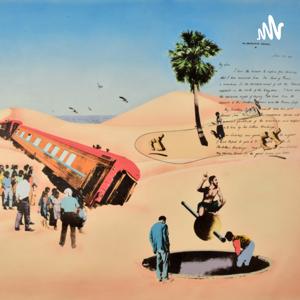


Part I of the conversation between Trish Kahle speaks and Victor Ehikhamenor, a Nigerian artist, photographer, and writer, about his installation The Wealth of Nations, and the practice and politics of representing oil and nation in Nigeria.
Victor Ehikhamenor is a Nigerian artist, photographer, and writer. Ehikhamenor has been prolific in producing abstract, symbolic, and politically/historically motivated works. A 2020 National Artist in Residence at the Neon Museum in Las Vegas, Nevada, Ehikhamenor is a 2016 Rockefeller Foundation Bellagio Fellow and has held several solo exhibitions and his work has been included in numerous group exhibitions and biennales, ranging from the 57th Venice Biennale as part of the Nigerian Pavilion (2017), to the 5th Mediations Biennale in Poznan, Poland (2016), the 12th Dak’art Biennale in Dakar, Senegal (2016), and the Biennale Jogja XIII, Indonesia (2015). As a writer, he has published fiction and critical essays in global academic journals, magazines, and newspapers, such as the New York Times, the BBC, CNN Online, and the Washington Post, among others. His works are housed in private and public collections around the world, including the Museum of World Art, Netherlands; the Modern Forms Collection, London; The Peggy Cooper Cafritz Collection, Washington, D.C., and Access Bank Plc, Nigeria. Ehikhamenor is the founder of Angels and Muse in Lagos, Nigeria, a thought laboratory dedicated to the promotion and development of contemporary African art and literature.
Part II of the conversation between Trish Kahle speaks and Victor Ehikhamenor, a Nigerian artist, photographer, and writer, about his installation The Wealth of Nations, and the practice and politics of representing oil and nation in Nigeria.
Victor Ehikhamenor is a Nigerian artist, photographer, and writer. Ehikhamenor has been prolific in producing abstract, symbolic, and politically/historically motivated works. A 2020 National Artist in Residence at the Neon Museum in Las Vegas, Nevada, Ehikhamenor is a 2016 Rockefeller Foundation Bellagio Fellow and has held several solo exhibitions and his work has been included in numerous group exhibitions and biennales, ranging from the 57th Venice Biennale as part of the Nigerian Pavilion (2017), to the 5th Mediations Biennale in Poznan, Poland (2016), the 12th Dak’art Biennale in Dakar, Senegal (2016), and the Biennale Jogja XIII, Indonesia (2015). As a writer, he has published fiction and critical essays in global academic journals, magazines, and newspapers, such as the New York Times, the BBC, CNN Online, and the Washington Post, among others. His works are housed in private and public collections around the world, including the Museum of World Art, Netherlands; the Modern Forms Collection, London; The Peggy Cooper Cafritz Collection, Washington, D.C., and Access Bank Plc, Nigeria. Ehikhamenor is the founder of Angels and Muse in Lagos, Nigeria, a thought laboratory dedicated to the promotion and development of contemporary African art and literature.
Part I of the conversation between Vicky Googasian and Santiago Acosta, a Postdoctoral Fellow at SUNY-Old Westbury about Venezuelan oil literature, about his work on a book project entitled, "We Are Like Oil: An Ecology of the Venezuelan Culture Boom, 1973-1983."
Santiago Acosta is a scholar and poet working at the intersections of literature, visual culture, and political ecology. He holds a Ph.D. in Latin American and Iberian Cultures from Columbia University and is currently a Postdoctoral Fellow at SUNY-Old Westbury. His book project, "We Are Like Oil: An Ecology of the Venezuelan Culture Boom, 1973-1983", examines the relationship between the visual arts, cultural institutions, and state-led ecological transformations in Venezuela during the 1970s oil boom. His poetry collection El próximo desierto (The coming desert) won the 2018 José Emilio Pacheco Literature Prize “City and Nature,” awarded by the Guadalajara International Book Fair (FIL) and the Museum of Environmental Sciences of Guadalajara University.
Part I of the conversation between Vicky Googasian and Santiago Acosta, a Postdoctoral Fellow at SUNY-Old Westbury about Venezuelan oil literature, about his work on a book project entitled, "We Are Like Oil: An Ecology of the Venezuelan Culture Boom, 1973-1983."
Santiago Acosta is a scholar and poet working at the intersections of literature, visual culture, and political ecology. He holds a Ph.D. in Latin American and Iberian Cultures from Columbia University and is currently a Postdoctoral Fellow at SUNY-Old Westbury. His book project, "We Are Like Oil: An Ecology of the Venezuelan Culture Boom, 1973-1983", examines the relationship between the visual arts, cultural institutions, and state-led ecological transformations in Venezuela during the 1970s oil boom. His poetry collection El próximo desierto (The coming desert) won the 2018 José Emilio Pacheco Literature Prize “City and Nature,” awarded by the Guadalajara International Book Fair (FIL) and the Museum of Environmental Sciences of Guadalajara University.
Joachim Krug, coach to Qatari athletes since 1982, spoke to Professor Danyel Reiche, Georgetown University in Qatar, about how the FIFA World Cup 2022 has changed Qatar’s sporting landscape.
Joachim Krug is an experienced athletics and sports professional who has worked with the Qatar Athletics Federation and national team for the past four decades and 6 Olympic Games. He holds a degree in Physical Education from the University of Cologne in Germany and has helped to advise and shape sports policy and procedures at competitive levels across local, regional, and international sporting competitions, helping Qatar to develop male and female sports and athletics since his arrival to Doha in 1982.
Hosted on Acast. See acast.com/privacy for more information.
GUQ Professor Danyel Reiche spoke to Simon Kuper, Financial Times columnist and bestselling author, about Kuper's new book "The Barcelona Complex," as well as the links between Qatar and FC Barcelona, and how Lionel Messi’s recent transfer from FC Barcelona to Paris Saint-Germain can be related to the Qatar FIFA World Cup 2022.
Simon Kuper(born in Kampala, Uganda in 1969) was educated at Oxford University and Harvard. He writes a weekly column for the Financial Times. He is British but lives with his wife and three children in Paris. His books include "Soccer Against the Enemy" (1994), "Ajax, The Dutch, The War: Football in Europe During the Second World War" (2003), and Soccernomics (co-authored with Stefan Szymanski, 2009). Kuper’s biography of the British-KGB double agent George Blake, "Spies, Lies, and Exile," was published by the New Press in May 2021. His book "The Barcelona Complex," about FC Barcelona, appears in August 2021 with Penguin Press.
Hosted on Acast. See acast.com/privacy for more information.
In this episode, BeIn Sports presenter Richard Keys talks about his career in sports broadcasting and the Qatar World Cup 2022.
Richard Keys has been one of the most established TV sports presenters in the UK with a continuous presence of more than 40 years. He has worked for the BBC, ITV, CHANNEL 4, SKY Sports, talk SPORT, beIN Sports, FOX SPORTS, ESPN STAR SPORTS and has presented well over 4,500 matches. Currently, he is based in Doha working for beIN Sports, presenting among others the popular Keys and Gray show. He shares his personal views on current sports news on his blog.
Read more about the CIRS project on "Building a Legacy: Qatar FIFA World Cup 2022": https://bit.ly/CIRS2022
Hosted on Acast. See acast.com/privacy for more information.
In this episode, Trish Kahle, Victoria Googasian, and Firat Oruc revisit a primary source they use in their own scholarly work in the historical archive, fiction, and film through the lens of the lived experience of energy. By showcasing how different disciplines interact with texts and sources, they explore points of convergences and key interdisciplinary concepts in interpreting everyday energy.
In this episode, Trish Kahle speaks with Diana Montaño, to discuss how a varied, diverse group of Mexicans made sense of a new technology—and sometimes made trouble with it. We also discuss sources and methods for conducting historical research at the level of everyday life.
In this episode, Firat Oruc, Assistant Professor at GUQ, speaks with Anto Mohsin, Assistant Professor of Science and Technology Studies at Northwestern University in Qatar, about electrical energy in everyday urban life in Doha and its intersections with the history, cultural memory, development, and future of the city.
From the publisher's feed