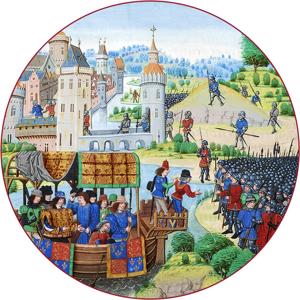
A peasant is a pre-industrial agricultural laborer or farmer with limited land ownership, especially one living in the Middle Ages under feudalism and paying rent, tax, fees, or services to a landlord. In Europe, peasants were divided[by whom?] into three classes according to their personal status: slave, serf, and free tenant. Peasants hold title to land either in fee simple or by any of several forms of land tenure, among them socage, quit-rent, leasehold, and copyhold.
In a colloquial sense, "peasant" often has a pejorative meaning that is therefore seen as insulting and controversial in some circles, even when referring to farm laborers in the developing world; as early as in 13th-century Germany the word also meant "villain, rustic, robber". In 21st-century English, the term includes the pejorative sense of "an ignorant, rude, or unsophisticated person". The word rose to renewed popularity in the 1940s-1960s as a collective term, often referring to rural populations of developing countries in general - as the "semantic successor to 'native', incorporating all its condescending and racial overtones".
The word peasantry is commonly used in a non-pejorative sense as a collective noun for the rural population in the poor and developing countries of the world.Via Campesina, an organization representing about 200,000,000 farm-workers' rights around the world, self-defines as an "International Peasant's Movement" as of 2019. The United Nations Human Rights Council prominently utilizes the term "peasant" in a non-pejorative sense in its 2018 Declaration on the Rights of Peasants and Other People Working in Rural Areas. In general English-language literature, the use of "peasant" has been in steady decline since 1970.
More precise terms that describe current farm laborers without land ownership are farmworker or campesino, tenant farmer, and sharecropper.



 View all episodes