
Sign up to save your podcasts
Or

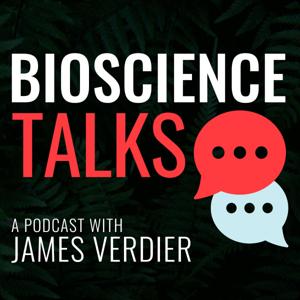

Scientists have long debated the best methods to achieve sound findings. In recent decades, hypothesis-driven frameworks have been enshrined in textbooks and school courses, with iterative and inductive approaches often taking a back seat. However, the advent of big data poses a challenge to the established dogma, as large data sets often require broad collaborations and make traditional hypothesis-driven approaches less tractable. For this episode of BioScience Talks, we spoke with Michigan State University professors Kendra Cheruvelil, Georgina Montgomery, Kevin Elliott, and Patricia Soranno. Their interdisciplinary work highlights the changing scientific landscape, in which large data sets and new computational methods encourage a more iterative approach to science.
 View all episodes
 By American Institute of Biological Sciences

4
1313 ratings
Scientists have long debated the best methods to achieve sound findings. In recent decades, hypothesis-driven frameworks have been enshrined in textbooks and school courses, with iterative and inductive approaches often taking a back seat. However, the advent of big data poses a challenge to the established dogma, as large data sets often require broad collaborations and make traditional hypothesis-driven approaches less tractable. For this episode of BioScience Talks, we spoke with Michigan State University professors Kendra Cheruvelil, Georgina Montgomery, Kevin Elliott, and Patricia Soranno. Their interdisciplinary work highlights the changing scientific landscape, in which large data sets and new computational methods encourage a more iterative approach to science.

38,078 Listeners
26,999 Listeners
1,484 Listeners
770 Listeners
411 Listeners

822 Listeners

6,453 Listeners
364 Listeners

112,101 Listeners

56,530 Listeners

16,399 Listeners

5,532 Listeners