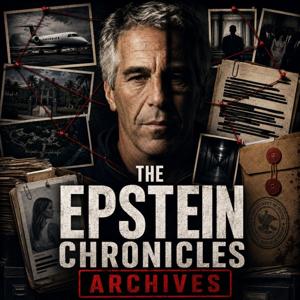
Epstein Chronicles: The Archives

Epstein Chronicles: The Archives

Download on the App Store

Epstein Chronicles: The Archives episodes

  • Jeffrey Epstein and the Early Bitcoin Power Network (Part 2)
    Newly released records show that Jeffrey Epstein cultivated a surprisingly deep relationship with the emerging cryptocurrency world years after his 2008 conviction, positioning himself as an investor, connector and adviser while Bitcoin and other digital assets were still in their infancy. The records detail his dealings with crypto entrepreneur Brock Pierce, who introduced Epstein to early investment opportunities, including Coinbase, and show Epstein discussing Bitcoin with figures such as Peter Thiel and former Treasury Secretary Larry Summers. Epstein ultimately put millions of dollars into crypto-related ventures and maintained relationships with people at the center of the industry, while also using those connections to expand his access to powerful figures in finance, technology and politics. The documents also show Epstein communicating with Steve Bannon, the former Trump adviser, about cryptocurrency contacts and people connected to Pierce’s network.

    The records also reveal that Epstein viewed cryptocurrency as more than an investment opportunity and apparently saw it as a potential instrument of geopolitical influence. In 2013, correspondence involving former Norwegian prime minister Thorbjørn Jagland discussed the possibility of presenting Russian President Vladimir Putin with a proposal involving cryptocurrency and attracting investment to Russia; Epstein’s calendar subsequently included an entry to prepare a “Putin Paper.” There is no public evidence that Epstein ultimately met Putin to deliver the proposal, but the episode adds another layer to the increasingly documented picture of Epstein operating simultaneously across finance, technology and international political circles. Taken together, the records show that Epstein was not simply observing the early cryptocurrency boom from the sidelines: he was investing in it, introducing people within it and attempting to place himself at the intersection of digital finance and global power.

    to contact me:

    [email protected]


    source:


    Epstein’s secret crypto ties include Trump ally, Putin pitch | Miami Herald
    13 min
  • Jeffrey Epstein and the Early Bitcoin Power Network (Part 1)
    Newly released records show that Jeffrey Epstein cultivated a surprisingly deep relationship with the emerging cryptocurrency world years after his 2008 conviction, positioning himself as an investor, connector and adviser while Bitcoin and other digital assets were still in their infancy. The records detail his dealings with crypto entrepreneur Brock Pierce, who introduced Epstein to early investment opportunities, including Coinbase, and show Epstein discussing Bitcoin with figures such as Peter Thiel and former Treasury Secretary Larry Summers. Epstein ultimately put millions of dollars into crypto-related ventures and maintained relationships with people at the center of the industry, while also using those connections to expand his access to powerful figures in finance, technology and politics. The documents also show Epstein communicating with Steve Bannon, the former Trump adviser, about cryptocurrency contacts and people connected to Pierce’s network.

    The records also reveal that Epstein viewed cryptocurrency as more than an investment opportunity and apparently saw it as a potential instrument of geopolitical influence. In 2013, correspondence involving former Norwegian prime minister Thorbjørn Jagland discussed the possibility of presenting Russian President Vladimir Putin with a proposal involving cryptocurrency and attracting investment to Russia; Epstein’s calendar subsequently included an entry to prepare a “Putin Paper.” There is no public evidence that Epstein ultimately met Putin to deliver the proposal, but the episode adds another layer to the increasingly documented picture of Epstein operating simultaneously across finance, technology and international political circles. Taken together, the records show that Epstein was not simply observing the early cryptocurrency boom from the sidelines: he was investing in it, introducing people within it and attempting to place himself at the intersection of digital finance and global power.

    to contact me:

    [email protected]


    source:


    Epstein’s secret crypto ties include Trump ally, Putin pitch | Miami Herald
    12 min
  • The Unsealed Epstein Grand Jury Transcript From 2019 in New York (Part 5)
    The 2019 New York federal grand jury transcripts capture the final prosecutorial push that led to the arrest of Jeffrey Epstein on sex-trafficking charges in the Southern District of New York. The transcripts reflect prosecutors laying out a sweeping pattern of alleged conduct, including the recruitment and exploitation of underage girls, the use of intermediaries, and the systematic nature of the abuse network. Witness testimony, documentary evidence, and financial records were presented to establish probable cause, directly contradicting the long-standing narrative that Epstein was a lone offender whose crimes were limited to Florida. These proceedings culminated in the July 2019 indictment, marking the first time federal prosecutors in New York formally moved against Epstein despite years of prior allegations and investigative leads.

    The transcripts have now been newly unsealed under the Epstein Transparency Act, a move that has reignited scrutiny over what federal authorities knew—and when. Their release sheds light on investigative decisions, evidentiary thresholds, and the scope of information presented to the grand jury, while also highlighting gaps that critics argue point to earlier prosecutorial failures. Survivors and transparency advocates have emphasized that the unsealing is significant not only for what it reveals about Epstein’s conduct, but for what it exposes about institutional hesitation, delayed accountability, and the broader protection mechanisms that allowed Epstein to evade federal charges for years. While redactions remain, the disclosure represents a rare window into the mechanics of a case that many believe should have been brought long before 2019.


    to contact me:

    [email protected]


    source:

    EFTA00008529.pdf
    12 min
  • The Unsealed Epstein Grand Jury Transcript From 2019 in New York (Part 4)
    The 2019 New York federal grand jury transcripts capture the final prosecutorial push that led to the arrest of Jeffrey Epstein on sex-trafficking charges in the Southern District of New York. The transcripts reflect prosecutors laying out a sweeping pattern of alleged conduct, including the recruitment and exploitation of underage girls, the use of intermediaries, and the systematic nature of the abuse network. Witness testimony, documentary evidence, and financial records were presented to establish probable cause, directly contradicting the long-standing narrative that Epstein was a lone offender whose crimes were limited to Florida. These proceedings culminated in the July 2019 indictment, marking the first time federal prosecutors in New York formally moved against Epstein despite years of prior allegations and investigative leads.

    The transcripts have now been newly unsealed under the Epstein Transparency Act, a move that has reignited scrutiny over what federal authorities knew—and when. Their release sheds light on investigative decisions, evidentiary thresholds, and the scope of information presented to the grand jury, while also highlighting gaps that critics argue point to earlier prosecutorial failures. Survivors and transparency advocates have emphasized that the unsealing is significant not only for what it reveals about Epstein’s conduct, but for what it exposes about institutional hesitation, delayed accountability, and the broader protection mechanisms that allowed Epstein to evade federal charges for years. While redactions remain, the disclosure represents a rare window into the mechanics of a case that many believe should have been brought long before 2019.


    to contact me:

    [email protected]


    source:

    EFTA00008529.pdf
    12 min
  • The Unsealed Epstein Grand Jury Transcript From 2019 in New York (Part 3)
    The 2019 New York federal grand jury transcripts capture the final prosecutorial push that led to the arrest of Jeffrey Epstein on sex-trafficking charges in the Southern District of New York. The transcripts reflect prosecutors laying out a sweeping pattern of alleged conduct, including the recruitment and exploitation of underage girls, the use of intermediaries, and the systematic nature of the abuse network. Witness testimony, documentary evidence, and financial records were presented to establish probable cause, directly contradicting the long-standing narrative that Epstein was a lone offender whose crimes were limited to Florida. These proceedings culminated in the July 2019 indictment, marking the first time federal prosecutors in New York formally moved against Epstein despite years of prior allegations and investigative leads.

    The transcripts have now been newly unsealed under the Epstein Transparency Act, a move that has reignited scrutiny over what federal authorities knew—and when. Their release sheds light on investigative decisions, evidentiary thresholds, and the scope of information presented to the grand jury, while also highlighting gaps that critics argue point to earlier prosecutorial failures. Survivors and transparency advocates have emphasized that the unsealing is significant not only for what it reveals about Epstein’s conduct, but for what it exposes about institutional hesitation, delayed accountability, and the broader protection mechanisms that allowed Epstein to evade federal charges for years. While redactions remain, the disclosure represents a rare window into the mechanics of a case that many believe should have been brought long before 2019.


    to contact me:

    [email protected]


    source:

    EFTA00008529.pdf
    12 min
  • The Unsealed Epstein Grand Jury Transcript From 2019 in New York (Part 2)
    The 2019 New York federal grand jury transcripts capture the final prosecutorial push that led to the arrest of Jeffrey Epstein on sex-trafficking charges in the Southern District of New York. The transcripts reflect prosecutors laying out a sweeping pattern of alleged conduct, including the recruitment and exploitation of underage girls, the use of intermediaries, and the systematic nature of the abuse network. Witness testimony, documentary evidence, and financial records were presented to establish probable cause, directly contradicting the long-standing narrative that Epstein was a lone offender whose crimes were limited to Florida. These proceedings culminated in the July 2019 indictment, marking the first time federal prosecutors in New York formally moved against Epstein despite years of prior allegations and investigative leads.

    The transcripts have now been newly unsealed under the Epstein Transparency Act, a move that has reignited scrutiny over what federal authorities knew—and when. Their release sheds light on investigative decisions, evidentiary thresholds, and the scope of information presented to the grand jury, while also highlighting gaps that critics argue point to earlier prosecutorial failures. Survivors and transparency advocates have emphasized that the unsealing is significant not only for what it reveals about Epstein’s conduct, but for what it exposes about institutional hesitation, delayed accountability, and the broader protection mechanisms that allowed Epstein to evade federal charges for years. While redactions remain, the disclosure represents a rare window into the mechanics of a case that many believe should have been brought long before 2019.


    to contact me:

    [email protected]


    source:

    EFTA00008529.pdf
    12 min
  • The Unsealed Epstein Grand Jury Transcript From 2019 in New York (Part 1)
    The 2019 New York federal grand jury transcripts capture the final prosecutorial push that led to the arrest of Jeffrey Epstein on sex-trafficking charges in the Southern District of New York. The transcripts reflect prosecutors laying out a sweeping pattern of alleged conduct, including the recruitment and exploitation of underage girls, the use of intermediaries, and the systematic nature of the abuse network. Witness testimony, documentary evidence, and financial records were presented to establish probable cause, directly contradicting the long-standing narrative that Epstein was a lone offender whose crimes were limited to Florida. These proceedings culminated in the July 2019 indictment, marking the first time federal prosecutors in New York formally moved against Epstein despite years of prior allegations and investigative leads.

    The transcripts have now been newly unsealed under the Epstein Transparency Act, a move that has reignited scrutiny over what federal authorities knew—and when. Their release sheds light on investigative decisions, evidentiary thresholds, and the scope of information presented to the grand jury, while also highlighting gaps that critics argue point to earlier prosecutorial failures. Survivors and transparency advocates have emphasized that the unsealing is significant not only for what it reveals about Epstein’s conduct, but for what it exposes about institutional hesitation, delayed accountability, and the broader protection mechanisms that allowed Epstein to evade federal charges for years. While redactions remain, the disclosure represents a rare window into the mechanics of a case that many believe should have been brought long before 2019.


    to contact me:

    [email protected]


    source:

    EFTA00008529.pdf
    12 min
  • Jes Staley And His Motion To Dismiss The Epstein Survivor Lawsuit (Part 4)
    Jes Staley, the former JPMorgan executive, filed a motion to dismiss the lawsuit brought against him by survivors of Jeffrey Epstein's abuse. However, U.S. District Judge Jed Rakoff denied this motion, allowing the case to proceed to pre-trial evidence gathering..


    Staley is accused of protecting Epstein during his tenure at JPMorgan, where he worked from 1979 to 2013. The bank claims that Staley was instrumental in maintaining Epstein's business relationship with JPMorgan despite Epstein's criminal activities. JPMorgan seeks to make Staley financially responsible for any damages the bank might incur from other related lawsuits and to recover compensation paid to him from 2006 to 2013. Staley has denied these allegations, stating that JPMorgan is using him as a scapegoat for its own supervisory failures and claims he was unaware of Epstein’s criminal behavior​.


    to contact me:

    [email protected]


    source:

    Microsoft Word - MTD Mem. of Law - (11148357.16).docx (courtlistener.com)
    19 min
  • Jes Staley And His Motion To Dismiss The Epstein Survivor Lawsuit (Part 3)
    Jes Staley, the former JPMorgan executive, filed a motion to dismiss the lawsuit brought against him by survivors of Jeffrey Epstein's abuse. However, U.S. District Judge Jed Rakoff denied this motion, allowing the case to proceed to pre-trial evidence gathering..


    Staley is accused of protecting Epstein during his tenure at JPMorgan, where he worked from 1979 to 2013. The bank claims that Staley was instrumental in maintaining Epstein's business relationship with JPMorgan despite Epstein's criminal activities. JPMorgan seeks to make Staley financially responsible for any damages the bank might incur from other related lawsuits and to recover compensation paid to him from 2006 to 2013. Staley has denied these allegations, stating that JPMorgan is using him as a scapegoat for its own supervisory failures and claims he was unaware of Epstein’s criminal behavior​.


    to contact me:

    [email protected]


    source:

    Microsoft Word - MTD Mem. of Law - (11148357.16).docx (courtlistener.com)
    11 min
  • Jes Staley And His Motion To Dismiss The Epstein Survivor Lawsuit (Part 2)
    Jes Staley, the former JPMorgan executive, filed a motion to dismiss the lawsuit brought against him by survivors of Jeffrey Epstein's abuse. However, U.S. District Judge Jed Rakoff denied this motion, allowing the case to proceed to pre-trial evidence gathering..


    Staley is accused of protecting Epstein during his tenure at JPMorgan, where he worked from 1979 to 2013. The bank claims that Staley was instrumental in maintaining Epstein's business relationship with JPMorgan despite Epstein's criminal activities. JPMorgan seeks to make Staley financially responsible for any damages the bank might incur from other related lawsuits and to recover compensation paid to him from 2006 to 2013. Staley has denied these allegations, stating that JPMorgan is using him as a scapegoat for its own supervisory failures and claims he was unaware of Epstein’s criminal behavior​.


    to contact me:

    [email protected]


    source:

    Microsoft Word - MTD Mem. of Law - (11148357.16).docx (courtlistener.com)
    13 min

About Epstein Chronicles: The Archives

From the publisher's feed

The Epstein Chronicles Archives is a collection of episodes from The Epstein Chronicles, preserving years of coverage, commentary, reporting, and analysis on the Jeffrey Epstein case. …