Welcome to the MINEX Forum podcast.
In the next thirty minutes, we're going to walk through a story that most Western policymakers are still sleeping on—but that Beijing, Moscow, Brussels, and Washington are waking up to at pace.
Central Asia is not simply growing. It is repositioning itself at the very heart of the global critical raw materials race. And the mining sector is no longer a background variable in that story. It is the plot itself.
In June 2026, the European Bank for Reconstruction and Development published its latest regional economic outlook. It projects that Kazakhstan, Kyrgyzstan, Mongolia, Tajikistan, Turkmenistan, and Uzbekistan will record the highest growth rates of any EBRD member states—5.6 per cent this year, 5.3 per cent next. Those are the headlines.
But three months earlier, the OECD released a report that tells a much more consequential story. Beneath the macro numbers lies a region repositioning itself as the critical minerals supplier to the green and digital economy. We're talking about antimony, graphite, tungsten, uranium, lithium—the metals on which Europe's technological sovereignty depends.
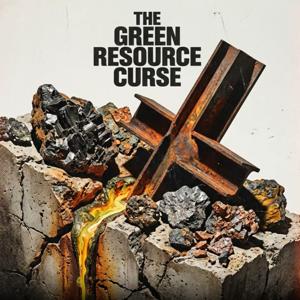
The question is not whether Central Asia will grow. The question is whether the region can translate an extraordinary minerals endowment into durable prosperity—or whether it rehearses the resource curse that has constrained other commodity-rich regions.
Today, we're going to walk through that story country by country, opportunity by opportunity, and challenge by challenge. We'll look at what Tajikistan's doing with green energy and AI. We'll examine the geopolitical tremors shaking Kyrgyzstan's mining sector. We'll understand why Kazakhstan's scale matters to the West's industrial future. And we'll see how Uzbekistan is attempting to pivot from extraction to value-added processing.
By the end of this conversation, you'll understand why platforms like the MINEX Forum—and the conversations that happen in rooms like ours—have become central to the critical minerals agenda itself.
Let's begin.