
Sign up to save your podcasts
Or



Send us Fan Mail
In this episode of the Estates Made Simple podcast, Gordon VanderLeek and Jenna Carvello delve into the critical role of powers of attorney in estate planning. They emphasize the need for understanding legal terms, adherence to restrictions, and best practices in estate management. Transparency, informal accounting, and the responsibilities of executors are key themes discussed.
Key Takeaways:
Hosts:
Gordon VanderLeek
Give your family a legacy of protection - Wills, Estates and Trusts.
VanderLeek Law
Facebook
LinkedIn
Instagram
Jenna Carvalho
The smartest way to choose an executor.
Guardian Estate Company
Facebook
LinkedIn
Instagram
Please note, Estates Made Simple is for informational purposes only and is not to be considered legal, tax, or financial advice. We recommend you seek individualized advice for your unique situation with qualified professionals.
Send us Fan Mail
Summary:
In this episode, Jenna & Gordon discuss ways to reduce risk as an executor or administrator of an estate. They emphasize the importance of seeking specific advice from qualified professionals and provide three easy and often overlooked ways to minimize risk.
They cover the following topics: posting a notice to creditors and claimants in the paper, obtaining releases from beneficiaries, and obtaining clearance certificates from the Canada Revenue Agency (CRA).
Key points:
Hosts:
Gordon VanderLeek
Give your family a legacy of protection - Wills, Estates and Trusts.
VanderLeek Law
Facebook
LinkedIn
Instagram
Jenna Carvalho
The smartest way to choose an executor.
Guardian Estate Company
Facebook
LinkedIn
Instagram
Please note, Estates Made Simple is for informational purposes only and is not to be considered legal, tax, or financial advice. We recommend you seek individualized advice for your unique situation with qualified professionals.
Send us Fan Mail
Summary:
In this episode, Gordon and Jenna discuss the practical aspects of estate administration, focusing on what happens between the time someone dies and when probate is obtained.
They address the common concern that banks freeze accounts after someone's death and explore the expenses that need to be paid during this period. Gordon and Jenna emphasize that although accounts are generally frozen, banks often allow certain transactions to cover necessary expenses. They also touch upon the importance of planning to ensure smooth estate administration and provide insights on negotiating with banks and creditors.
Key points:
Hosts:
Gordon VanderLeek
Give your family a legacy of protection - Wills, Estates and Trusts.
VanderLeek Law
Facebook
LinkedIn
Instagram
Jenna Carvalho
The smartest way to choose an executor.
Guardian Estate Company
Facebook
LinkedIn
Instagram
Please note, Estates Made Simple is for informational purposes only and is not to be considered legal, tax, or financial advice. We recommend you seek individualized advice for your unique situation with qualified professionals.
Send us Fan Mail
Summary:
In this episode, Jenna and Gordon discuss the important considerations when appointing an executor who resides in a different province. They explain the bond requirements, which act as an insurance policy to protect the beneficiaries of the estate. Jenna and Gordon emphasize the need for careful planning and highlight potential issues that can arise if the bonding requirement is not met. They also provide insights into waiving the bond, obtaining beneficiary consent, and the associated costs.
Key points:
Hosts:
Gordon VanderLeek
Give your family a legacy of protection - Wills, Estates and Trusts.
VanderLeek Law
Facebook
LinkedIn
Instagram
Jenna Carvalho
The smartest way to choose an executor.
Guardian Estate Company
Facebook
LinkedIn
Instagram
Please note, Estates Made Simple is for informational purposes only and is not to be considered legal, tax, or financial advice. We recommend you seek individualized advice for your unique situation with qualified professionals.
Send us Fan Mail
Summary:
In this episode, Gordon & Jenna discuss testamentary intent and the impact of additional notes on estate administration. They explore the legal implications of handwritten notes found in the deceased's home or changes made directly on the will. They highlight the changes in the law regarding testamentary intent and the court's willingness to consider extrinsic evidence to determine the deceased's intentions.
Gordon & Jenna emphasize the importance of clear will drafting to avoid ambiguity. They address the role of the executor when encountering additional notes and provide guidance on seeking legal advice to assess their validity and potential impact on the estate distribution.
Key points:
Hosts:
Gordon VanderLeek
Give your family a legacy of protection - Wills, Estates and Trusts.
VanderLeek Law
Facebook
LinkedIn
Instagram
Jenna Carvalho
The smartest way to choose an executor.
Guardian Estate Company
Facebook
LinkedIn
Instagram
Please note, Estates Made Simple is for informational purposes only and is not to be considered legal, tax, or financial advice. We recommend you seek individualized advice for your unique situation with qualified professionals.
Send us Fan Mail
Summary:
In this podcast episode, Gordon & Jenna discuss the challenges of finding missing beneficiaries in estate administration, particularly in situations where the deceased did not leave a will. They explore various strategies for locating beneficiaries, including online searches, social media profiles, and speaking to family members, friends, and old employers. They emphasize the importance of being creative in approach and not relying solely on traditional methods of communication. They suggest placing notices in newspapers and online to expand the search, and highlight the value of engaging the services of a professional investigator as a last resort.
It is important to keep wills up-to-date and to include clauses that address the possibility of missing beneficiaries. The hosts also recommend keeping a spreadsheet with a contact list of all beneficiaries to save costs and time.
Key points:
Hosts:
Gordon VanderLeek
Give your family a legacy of protection - Wills, Estates and Trusts.
VanderLeek Law
Facebook
LinkedIn
Instagram
Jenna Carvalho
The smartest way to choose an executor.
Guardian Estate Company
Facebook
LinkedIn
Instagram
Please note, Estates Made Simple is for informational purposes only and is not to be considered legal, tax, or financial advice. We recommend you seek individualized advice for your unique situation with qualified professionals.
Send us Fan Mail
Summary:
In this podcast episode, Gordon & Jenna discuss the topic of Registered Education Savings Plans (RESPs) and their application in estate administration. They start with an introduction to RESPs and explain the government's rules regarding their contribution limits, maximum lifetime contribution limit, and how grants are taxed. They also explain the different types of plans - single, family, and group plans.
The interesting aspect of RESPs is that if there is no successor subscriber named for the plan, it falls into the residue of the estate, and the grant money can be returned to the government. This can raise questions about how to divide the residue of the estate. Executors need to ensure that the funds stay for the benefit of the child or grandchild.
Key Points:
Hosts:
Gordon VanderLeek
Give your family a legacy of protection - Wills, Estates and Trusts.
VanderLeek Law
Facebook
LinkedIn
Instagram
Jenna Carvalho
The smartest way to choose an executor.
Guardian Estate Company
Facebook
LinkedIn
Instagram
Please note, Estates Made Simple is for informational purposes only and is not to be considered legal, tax, or financial advice. We recommend you seek individualized advice for your unique situation with qualified professionals.
Send us Fan Mail
Summary:
In this podcast episode, Jenna & Gordon discuss taxes after an individual passes away. They emphasize the importance of seeking specialized advice from an accountant to help with dealing with taxes and estate distributions. Jenna & Gordon suggest being careful while distributing the estate to ensure that there is enough money to pay any taxes owed. They also mention that getting the clearance certificate from the CRA can take time, and it is important to know the deadlines and obligations related to tax filings.
They also distinguish the taxation system in Canada from that in the US, where there is an estate tax. In Canada, there is no specific estate tax, but there is a deemed disposition of all assets as of the date of death, which can lead to a significant tax liability in the terminal return. The hosts highlight that there may be a rollover for a surviving spouse or partner, which can be a consideration when determining tax implications.
Key points:
Hosts:
Gordon VanderLeek
Give your family a legacy of protection - Wills, Estates and Trusts.
VanderLeek Law
Facebook
LinkedIn
Instagram
Jenna Carvalho
The smartest way to choose an executor.
Guardian Estate Company
Facebook
LinkedIn
Instagram
Please note, Estates Made Simple is for informational purposes only and is not to be considered legal, tax, or financial advice. We recommend you seek individualized advice for your unique situation with qualified professionals.
Send us Fan Mail
Summary:
In this podcast episode, Jenna & Gordon discuss the topic of what assets make up an estate. They discuss assets that pass outside of the estate, such as assets with beneficiary designations or joint holder status. They highlight that it's important to understand what assets are inside and outside of the estate for estate administration purposes.
Jenna & Gordon discuss the importance of understanding beneficiary designations in estate planning. They highlight some common issues that can arise when beneficiary designations are not properly planned. They provide examples and tips for executors and individuals with long-term disabilities or blended families to ensure that beneficiary designations align with their wishes and avoid unintended consequences.
Key Points:
Hosts:
Gordon VanderLeek
Give your family a legacy of protection - Wills, Estates and Trusts.
VanderLeek Law
Facebook
LinkedIn
Instagram
Jenna Carvalho
The smartest way to choose an executor.
Guardian Estate Company
Facebook
LinkedIn
Instagram
Please note, Estates Made Simple is for informational purposes only and is not to be considered legal, tax, or financial advice. We recommend you seek individualized advice for your unique situation with qualified professionals.
Send us Fan Mail
Summary:
In this episode, Gordon & Jenna discuss estate administration from the perspective of a beneficiary, which is a different angle compared to their usual focus on the role of the executor and fiduciary responsibility. They provide tips and insights for beneficiaries, starting with the importance of patience in the estate administration process.
They emphasize the importance of effective communication between beneficiaries and executors, and the role of legal advice in resolving issues related to estate administration. They also highlight the need for beneficiaries to be proactive in protecting their rights, particularly in cases where there may be financial dependency or concerns about the validity of the will.
Key Points:
Hosts:
Gordon VanderLeek
Give your family a legacy of protection - Wills, Estates and Trusts.
VanderLeek Law
Facebook
LinkedIn
Instagram
Jenna Carvalho
The smartest way to choose an executor.
Guardian Estate Company
Facebook
LinkedIn
Instagram
Please note, Estates Made Simple is for informational purposes only and is not to be considered legal, tax, or financial advice. We recommend you seek individualized advice for your unique situation with qualified professionals.
From the publisher's feed
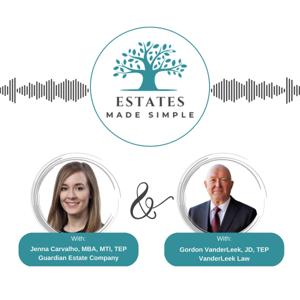
Welcome to the “Estates Made Simple” Podcast, hosted by Gordon VanderLeek, a licensed lawyer specializing in wills, estates and trusts, along with guest experts and co-hosts. We are a bi-weekly…